Chef Isabel
Duelos y Quebrantos Manchegos
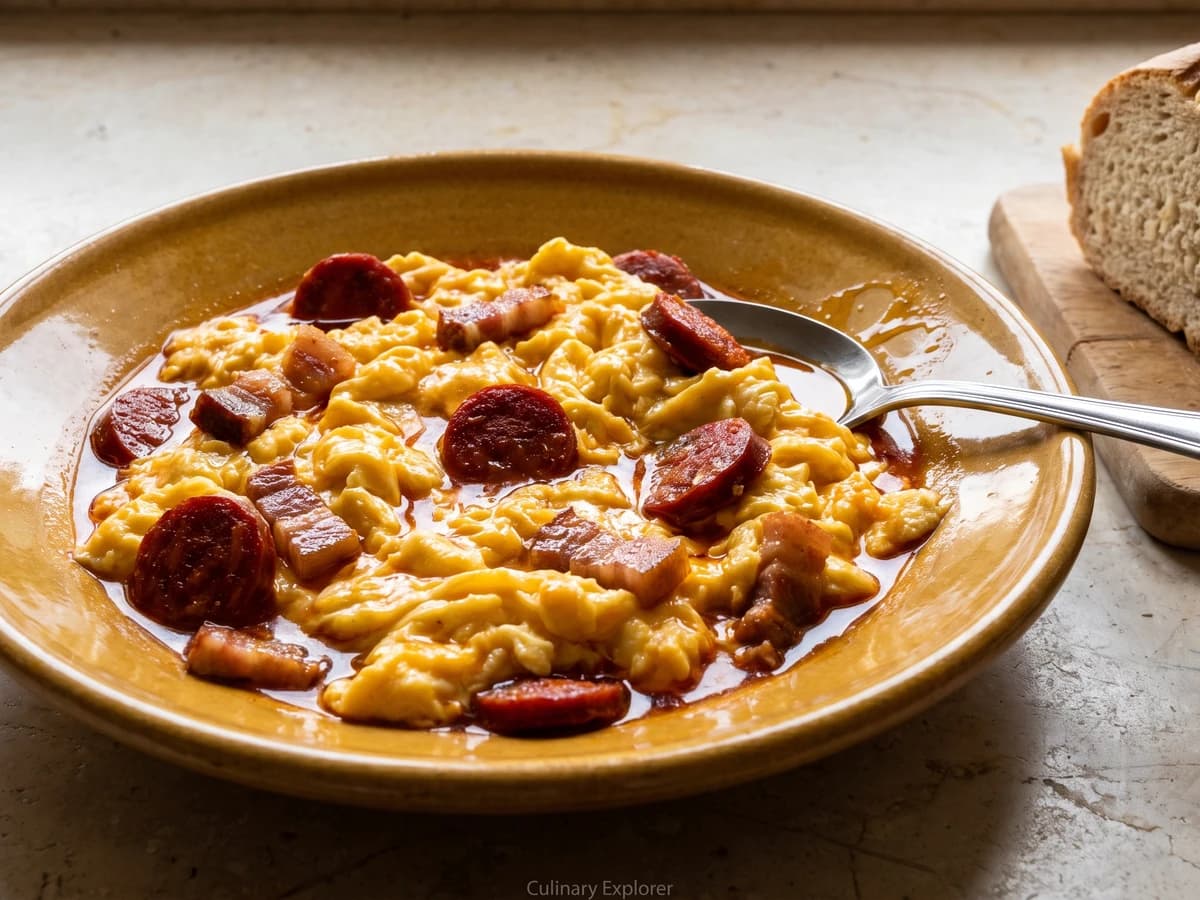
Duelos y quebrantos is Castilla-La Mancha in one pan: chorizo and bacon rendered slowly, then eggs folded through until soft, the plain Saturday meal Cervantes set on Don Quixote's table.
A cooking platform built around craft, culture, and the stories behind what we eat.
Created by
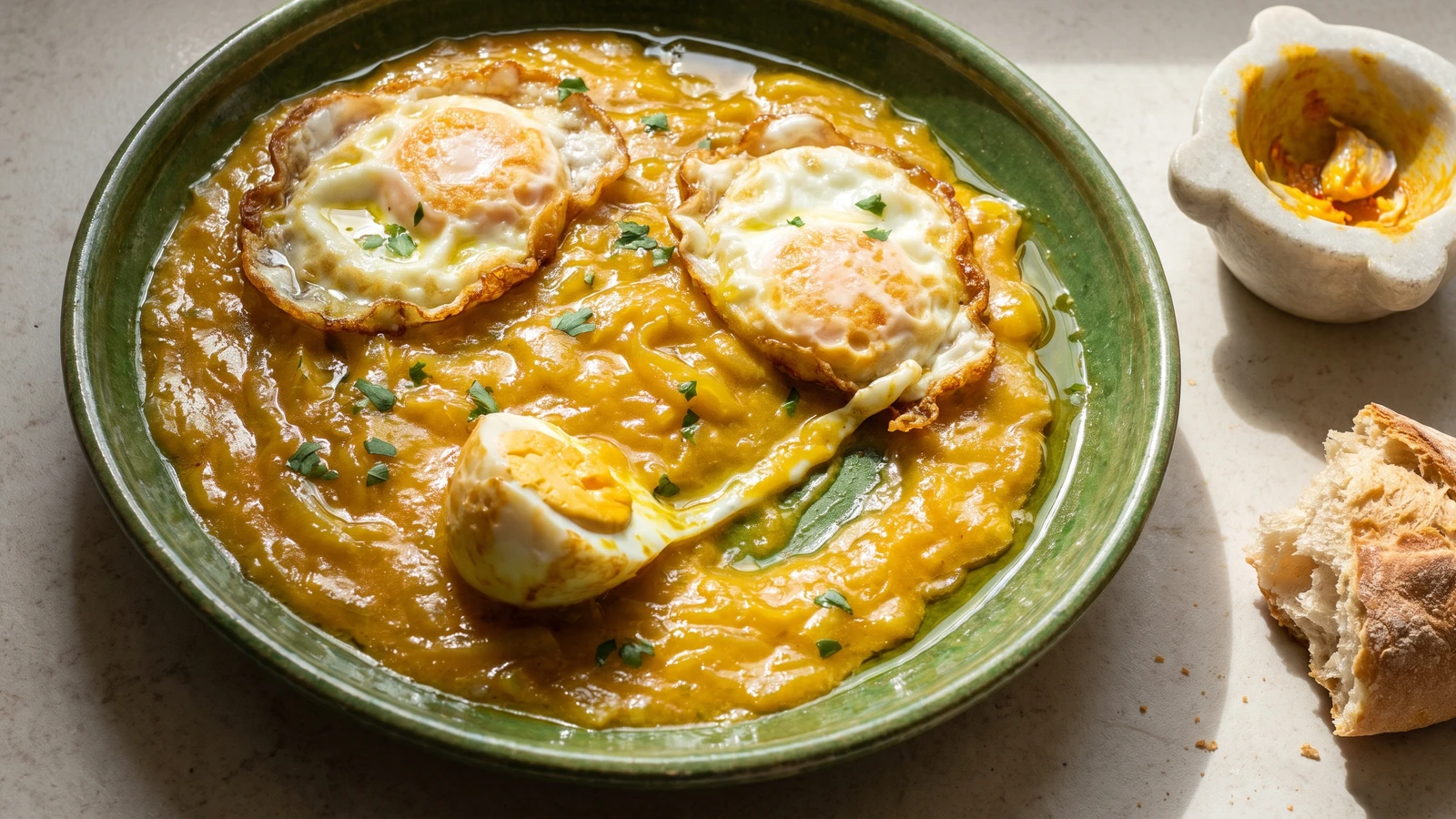
Jaén's thrifty egg stew turns hard-boiled halves golden in olive oil, then settles them into a garlic-and-saffron sauce, with the mortar doing the work that a long ingredient list never could.
Huevos guisados de Jaén are Andalusian home cooking from the olive country: hard-boiled eggs, halved, lightly floured and fried in olive oil, then settled into a golden onion, garlic, and saffron sauce. The flour-fried halves distinguish them from eggs poached directly in tomato or broth. Their edges take on a thin crust, the yolks stay whole, and the sauce clings instead of sliding away.
The majado, the mortar-pounded seasoning paste, decides the dish. Pound the garlic, saffron, parsley, and salt until the garlic turns creamy and the saffron stains everything deep yellow, then loosen that paste with a little stock. Chopping the ingredients and dropping them separately into the pan leaves a sharper, thinner sauce. Cook the onion slowly, add the majado, and give the eggs only a short, quiet simmer so the whites don't toughen.
No hace falta haber pisado España. You don't need to have set foot in Spain. Picual olive oil gives the peppery finish Jaén knows, but any fresh extra virgin olive oil will carry the dish. If saffron is beyond reach, a Spanish kitchen may use a small pinch of colorante alimentario; it supplies the gold but none of saffron's fragrance or gentle bitterness. My Margin has one useful warning beside this recipe: dry the boiled eggs before flouring them, or the coating slips and the oil spits. Siempre sale, si lo sigues, it turns out if you follow it.
Huevos guisados belong to Jaén, in inland Andalucía, where eggs, flour, garlic, and abundant olive oil made a practical meatless casserole for days of vigil and lean household weeks. Boiling and flour-frying the eggs before they entered the cazuela made an inexpensive ingredient substantial enough to share and gave the broth a little body. The garlic, parsley, and saffron majado belongs to the Andalusian mortar tradition, and keeps this sauce golden rather than tomato-red.
Quantity
8
Quantity
45g
35g for coating and 10g for the sauce
Quantity
180ml
for shallow-frying, with 30ml reserved for the sauce
Quantity
180g
finely diced
Quantity
12g, about 3 medium cloves
peeled
Quantity
0.1g, about 20 threads
Quantity
8g
finely chopped and divided
Quantity
75ml
Quantity
300ml
Quantity
1
Quantity
6g
divided
| Ingredient | Quantity |
|---|---|
| large eggs | 8 |
| plain flour35g for coating and 10g for the sauce | 45g |
| extra virgin olive oil, preferably Picualfor shallow-frying, with 30ml reserved for the sauce | 180ml |
| yellow onionfinely diced | 180g |
| garlicpeeled | 12g, about 3 medium cloves |
| saffron threads | 0.1g, about 20 threads |
| flat-leaf parsleyfinely chopped and divided | 8g |
| dry white wine | 75ml |
| unsalted light chicken or vegetable stock, or water | 300ml |
| bay leaf | 1 |
| fine sea saltdivided | 6g |
Put the eggs in a saucepan and cover them with cold water by 3cm. Bring to a boil, lower the heat to a steady simmer, and cook for 9 minutes. Transfer them immediately to cold water for 10 minutes, then peel and halve them lengthwise. Pat every half completely dry, especially the cut face.
Put the garlic, saffron, 6g of the parsley, 2g of the salt, and 1 teaspoon of the measured olive oil into a mortar. Pound patiently until the garlic becomes a smooth yellow paste with no large pieces remaining. Work in 30ml of the stock. This majado is what gives the sauce depth, so pound it rather than merely chopping the ingredients.
Spread 35g of the flour on a plate. Coat the dry egg halves lightly on every side and shake off every loose speck. Heat the remaining olive oil in a 24cm frying pan over medium heat to about 170°C. Fry the eggs in two batches, cut-side down first, for 60 to 90 seconds, then for about 30 seconds on the curved side. They should be lightly golden, not dark or leathery. Lift them onto kitchen paper. Strain the oil and measure 30ml back into the pan.
Set the pan with the reserved 30ml oil over low heat. Add the onion and 2g of the salt. Cook for 12 to 15 minutes, stirring regularly, until very soft and deep gold without browned, crisp edges. Stir in the remaining 10g flour and cook for 1 minute, moving it through the oil so no raw flour remains.
Pour in the wine and scrape the bottom of the pan. Let it bubble for 2 minutes, until reduced by roughly half. Add the remaining 270ml stock, the garlic-and-saffron majado, and the bay leaf. Stir until smooth, then simmer gently for 8 to 10 minutes. The sauce is ready when it lightly coats a spoon but still runs freely. Taste and add the remaining salt as needed.
Arrange the fried egg halves in the sauce with the cut sides facing upward. Spoon a little sauce over them, lower the heat, and cook at the faintest simmer for 5 minutes. Do not turn them or boil them hard, because fully cooked whites toughen quickly. Remove the bay leaf, rest the pan off the heat for 5 minutes, and finish with the reserved parsley. Serve with bread for the sauce.
1 serving (about 235g)
Culinary guides, cultural storytelling, and the editorial depth that makes cooking meaningful.
Discover Culinary ExplorerChef Isabel
Duelos y quebrantos is Castilla-La Mancha in one pan: chorizo and bacon rendered slowly, then eggs folded through until soft, the plain Saturday meal Cervantes set on Don Quixote's table.
Chef Isabel
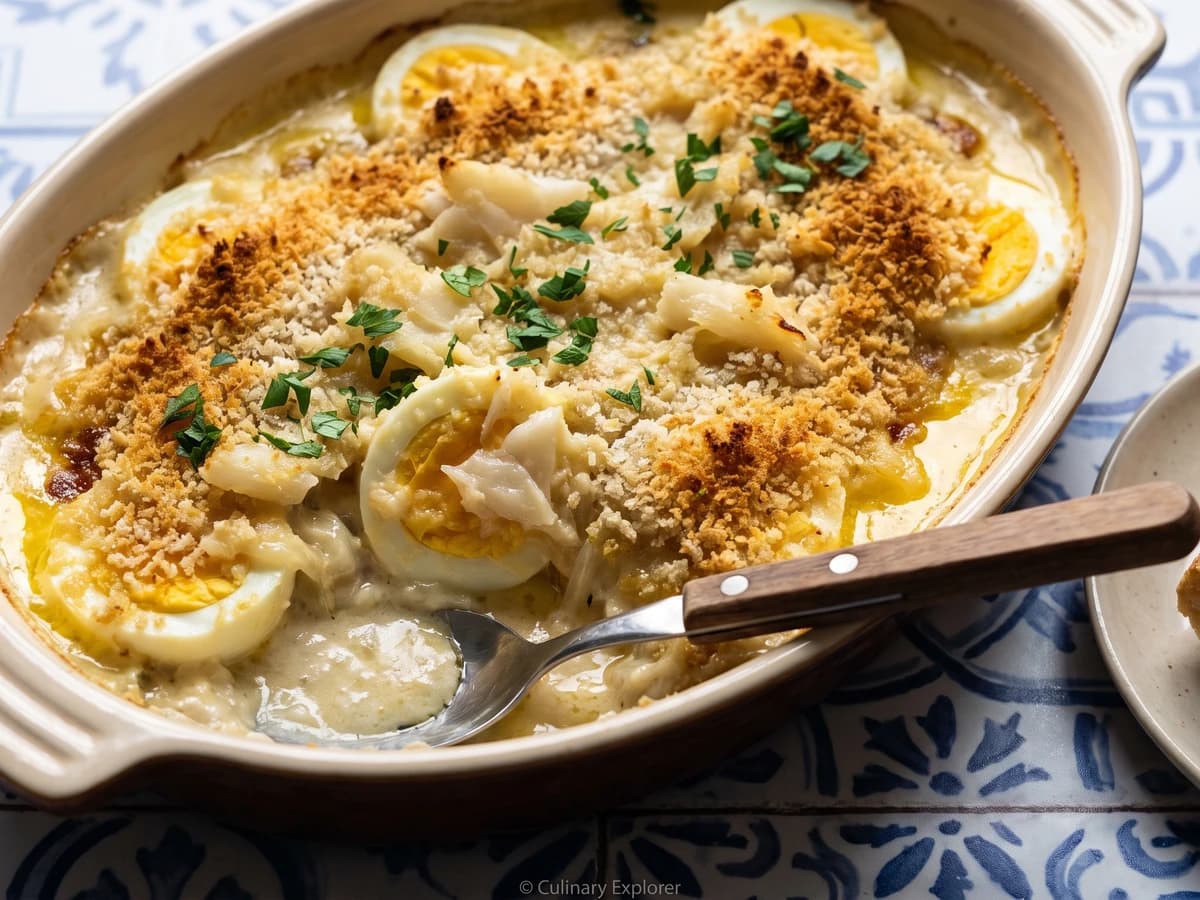
Donostia's baked eggs sit beneath a slow, sweet onion and bacalao sauce, with a fine breadcrumb crust browned under the grill. Desalt the cod properly and the rest is straightforward.
Chef Isabel
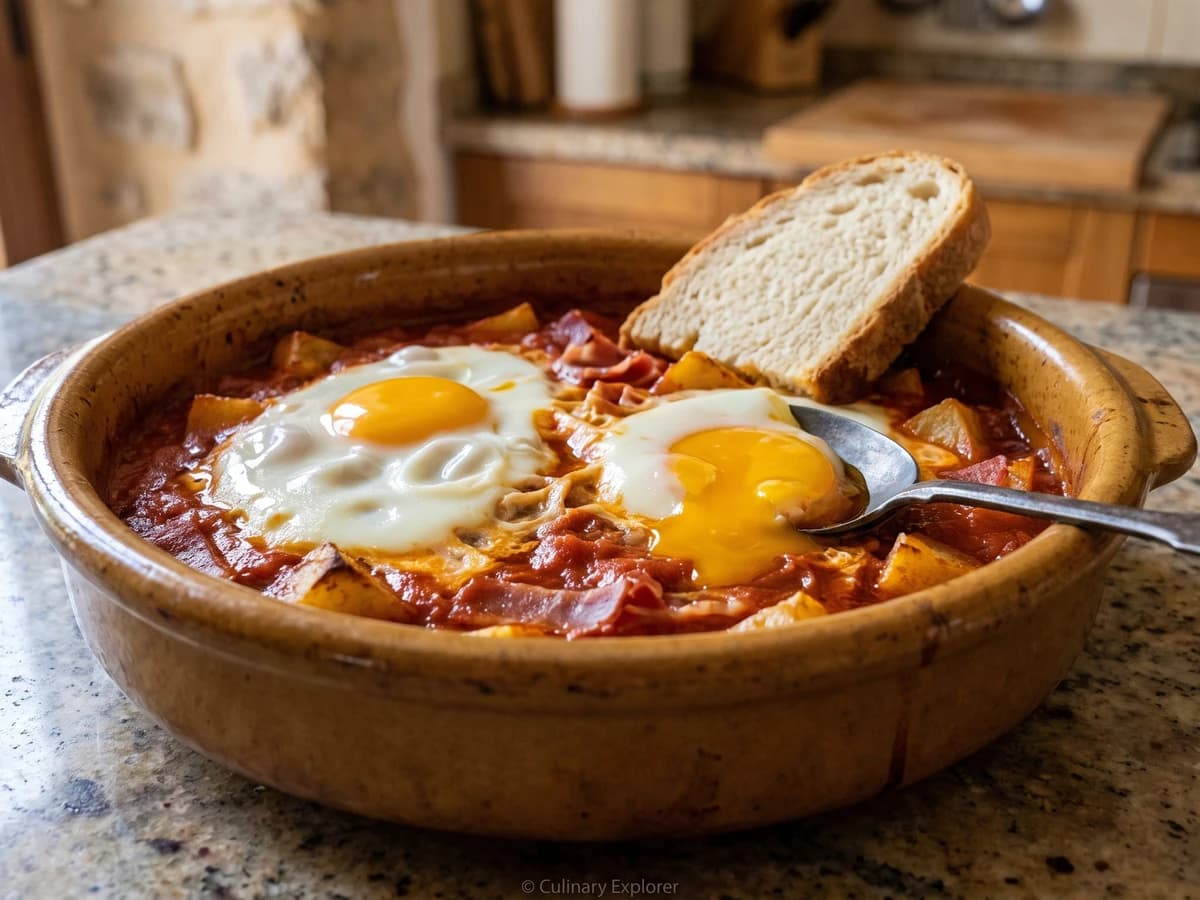
Extremadura sets eggs into a thick bed of fried potato, tomato sofrito, jamón, and its own smoky pimentón, then bakes them just until the whites hold and the yolks stay soft.
Chef Isabel
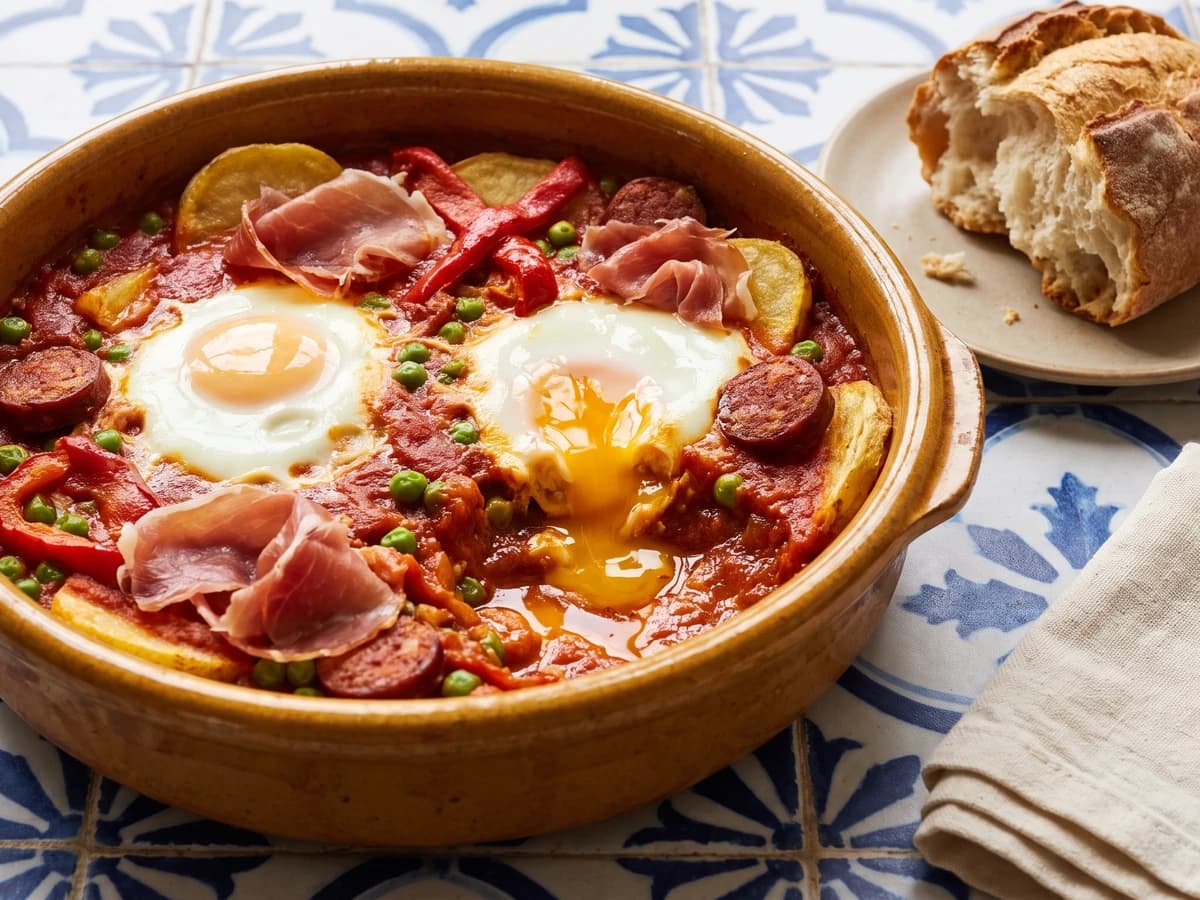
Huevos a la flamenca are Seville in a cazuela: eggs baked over a dark, sweet tomato sofrito with potatoes, peas, peppers, jamón and chorizo, pulled while the whites set and the yolks still run.