Chef Isabel
Aceitunas Aliñadas Andaluzas
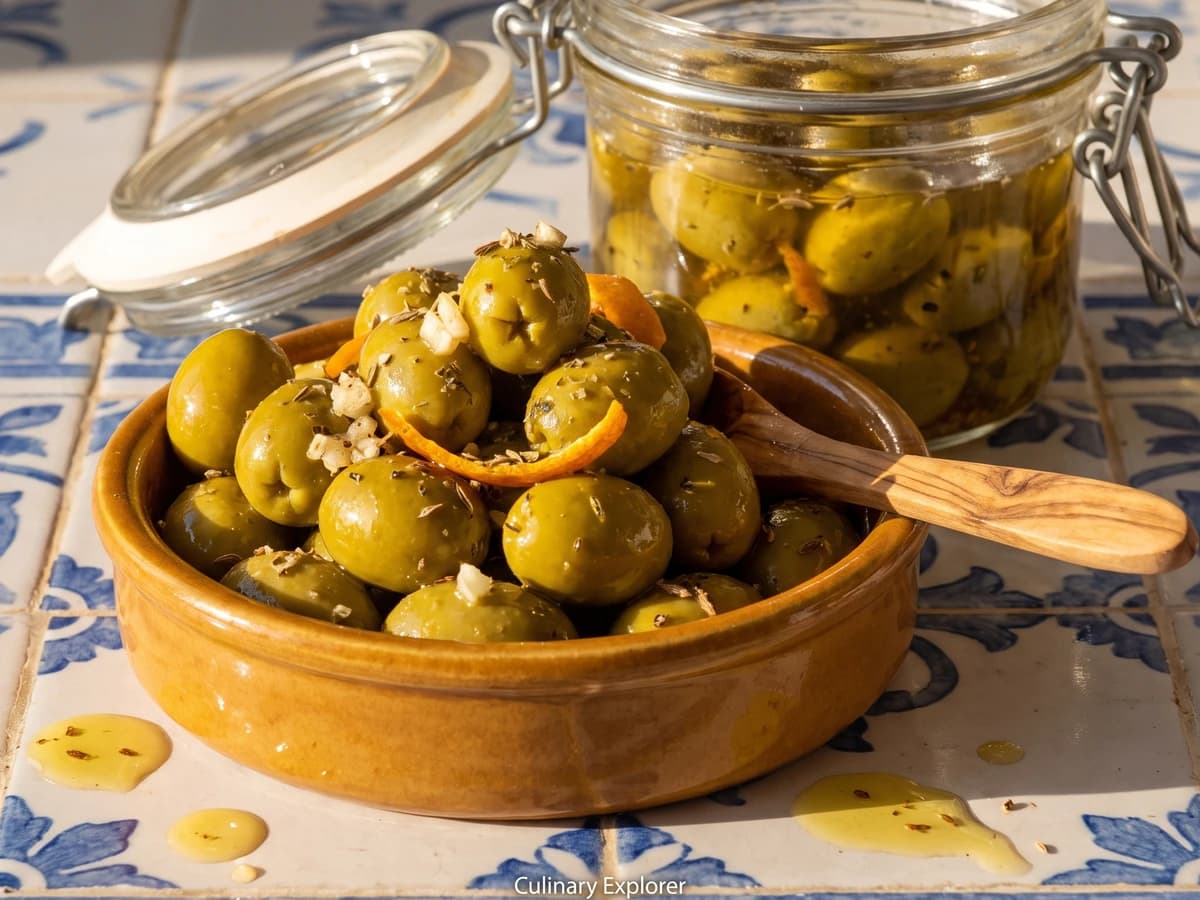
Andalucía's green olives are cracked just enough to drink in garlic, cumin, oregano and sherry vinegar, then left two days until the brine turns fragrant and every bite carries the aliño.
A cooking platform built around craft, culture, and the stories behind what we eat.
Created by
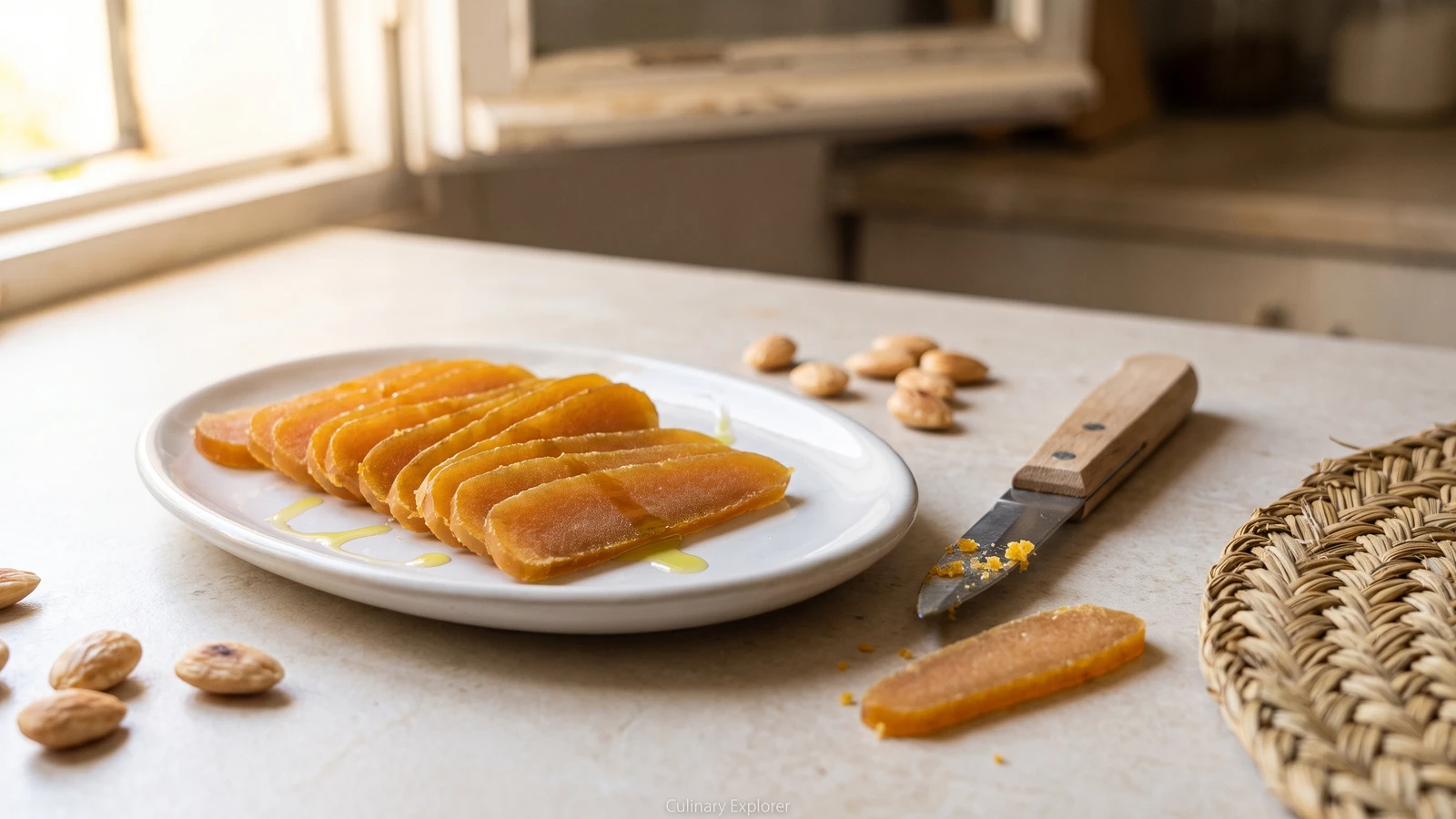
Murcia's Mar Menor turns whole grey mullet roe into a firm amber salazón with salt, gentle pressure, and a slow cold dry, ready for thin slices, olive oil, and almonds.
Huevas de mújol en salazón are Murcian, especially tied to the fishing and salt pans around Mar Menor. The intact paired roe sacs are salted, pressed, and dried until firm and amber, with the clean, concentrated taste of the sea. This isn't mojama, which is cured tuna loin, and hueva de atún is darker, meatier, and stronger. Mullet roe has its own fine grain and gentle richness.
The salt time decides it. Bury a 300-gram roe sac for exactly 24 hours, press it lightly, then dry it cold until it has lost roughly one-third of its starting weight. Too long under salt and it becomes hard and fiercely salty. Stop the drying while the middle is still soft and it won't slice cleanly or keep safely. Pésalo, no lo adivines, weigh it, don't guess. That one habit gives you the answer your fingers cannot yet know.
Far from Murcia, ask for whole striped mullet or flathead grey mullet roe, two market names for the same fish, and make sure the sac is intact. Buy it commercially frozen and approved for raw or cured preparation, because salt curing alone isn't a reliable parasite treatment. If only tuna roe is available, the same method makes hueva de atún, a proper southeastern salazón but a different one. My notebook's margin says to write down the raw weight before the salt touches it. Do that, keep it cold, and it comes out.
Huevas de mújol belong to the salazones of Murcia, shaped by the salt pans of San Pedro del Pinatar and mullet drawn from Mar Menor through encañizadas, the fixed fishing labyrinths set in the lagoon's channels. Roman fish-salting vats at Puerto de Mazarrón record the long preserving economy of this coast, where salt kept valuable catches after the fishing day had passed. Unlike caviar, the eggs remain inside their natural paired sac and cure as one piece, which is why the finished hueva is sliced rather than spooned.
Quantity
300g
commercially frozen for raw or curing use, thawed in the refrigerator
Quantity
1.5kg
for packing; most will be discarded
Quantity
15ml
for serving
Quantity
60g
lightly toasted, for serving
| Ingredient | Quantity |
|---|---|
| intact paired grey mullet roe saccommercially frozen for raw or curing use, thawed in the refrigerator | 300g |
| coarse non-iodized sea saltfor packing; most will be discarded | 1.5kg |
| extra virgin olive oil (optional)for serving | 15ml |
| Marcona almonds (optional)lightly toasted, for serving | 60g |
Thaw the roe completely in the refrigerator, never on the counter. The two lobes should remain joined and enclosed in an unbroken membrane, with a clean marine smell and no slime, sourness, or dark soft patches. If the sac is split, salt enters too quickly and the roe cures unevenly; use another one.
Rinse the roe briefly under very cold running water. Remove loose membrane or clotted blood from the outside without piercing the sac, then dry it thoroughly with clean kitchen paper. Weigh it and write down the number. For this 300-gram roe, the finished target is 190 to 200 grams.
Spread a 2-centimetre layer of coarse salt in a snug nonreactive container. Lay the roe flat without folding it, then cover it completely with the remaining salt, leaving at least 2 centimetres above and around every side. Refrigerate at 2°C to 4°C for exactly 24 hours. Don't press it yet.
Lift the roe from the salt and brush it clean. Rinse it for no more than 10 seconds under very cold water, then pat it completely dry. Place it between two sheets of baking parchment on a rimmed tray, cover with a small flat board, and set a 1-kilogram weight evenly on top. Refrigerate for 12 hours. The pressure should flatten the roe gently, not squeeze the eggs through the membrane.
Remove the weight and parchment, blot the roe dry, and set it on a clean wire rack over a tray. Leave it uncovered on an upper refrigerator shelf at 2°C to 4°C, protected from drips and raw foods. Turn it once each day and weigh it after the fourth day. It usually needs 5 to 7 days, but the scale decides: stop at 190 to 200 grams, when the surface is dry, the edges are amber, and the thick end feels firm with a slight give.
Wrap the finished roe closely in fresh parchment and place it in a covered container. Refrigerate for 24 hours before cutting. This rest lets the remaining moisture settle evenly through the roe, so a slice bends slightly instead of breaking at the dry edge.
Let the hueva stand out of the refrigerator for 10 minutes, then cut across it into slices 1 to 2 millimetres thick with a very sharp knife. Arrange the slices loosely, add a fine thread of olive oil, and serve with the toasted almonds. Taste before adding anything else. The salt and the roe have already done the seasoning.
1 serving (about 26g)
Culinary guides, cultural storytelling, and the editorial depth that makes cooking meaningful.
Discover Culinary ExplorerChef Isabel
Andalucía's green olives are cracked just enough to drink in garlic, cumin, oregano and sherry vinegar, then left two days until the brine turns fragrant and every bite carries the aliño.
Chef Isabel
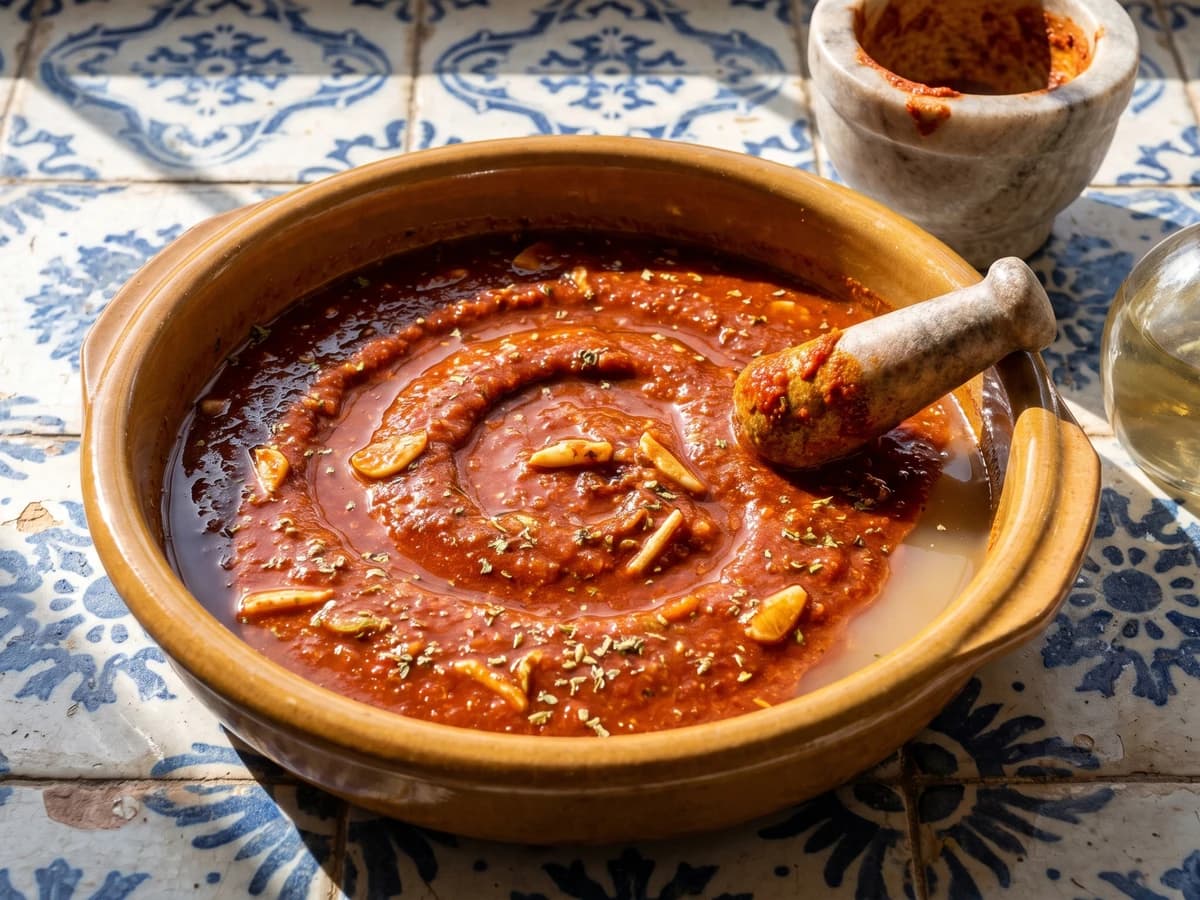
Andalucía's sharp, brick-red marinade brings vinegar, garlic, oregano, cumin and pimentón to fish and pork; pound the seasonings first, then give the acid time to carry them through.
Chef Isabel
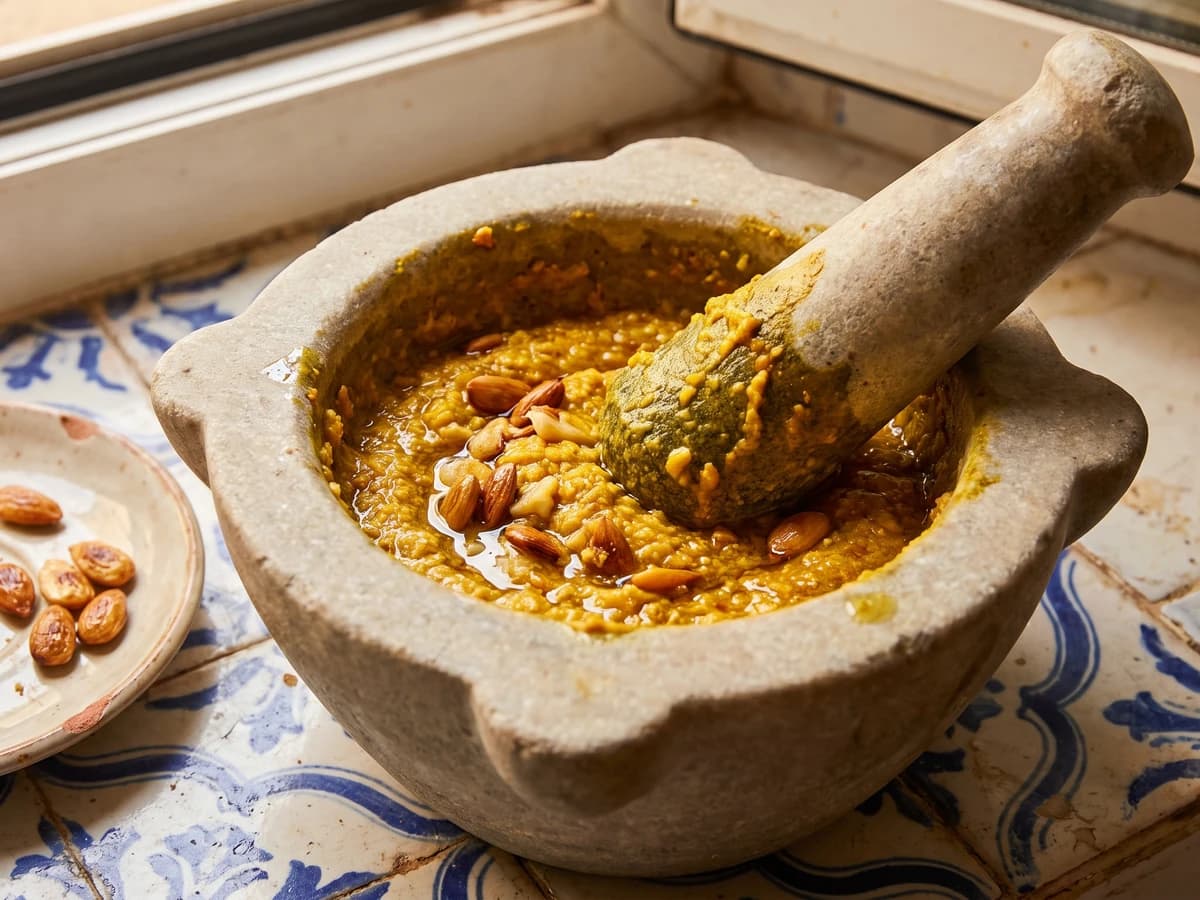
Almería's ajopollo turns fried garlic, almonds, bread and saffron into a golden mortar paste that gives modest fish and potato guisos their body, richness and unmistakable southern depth.
Chef Isabel
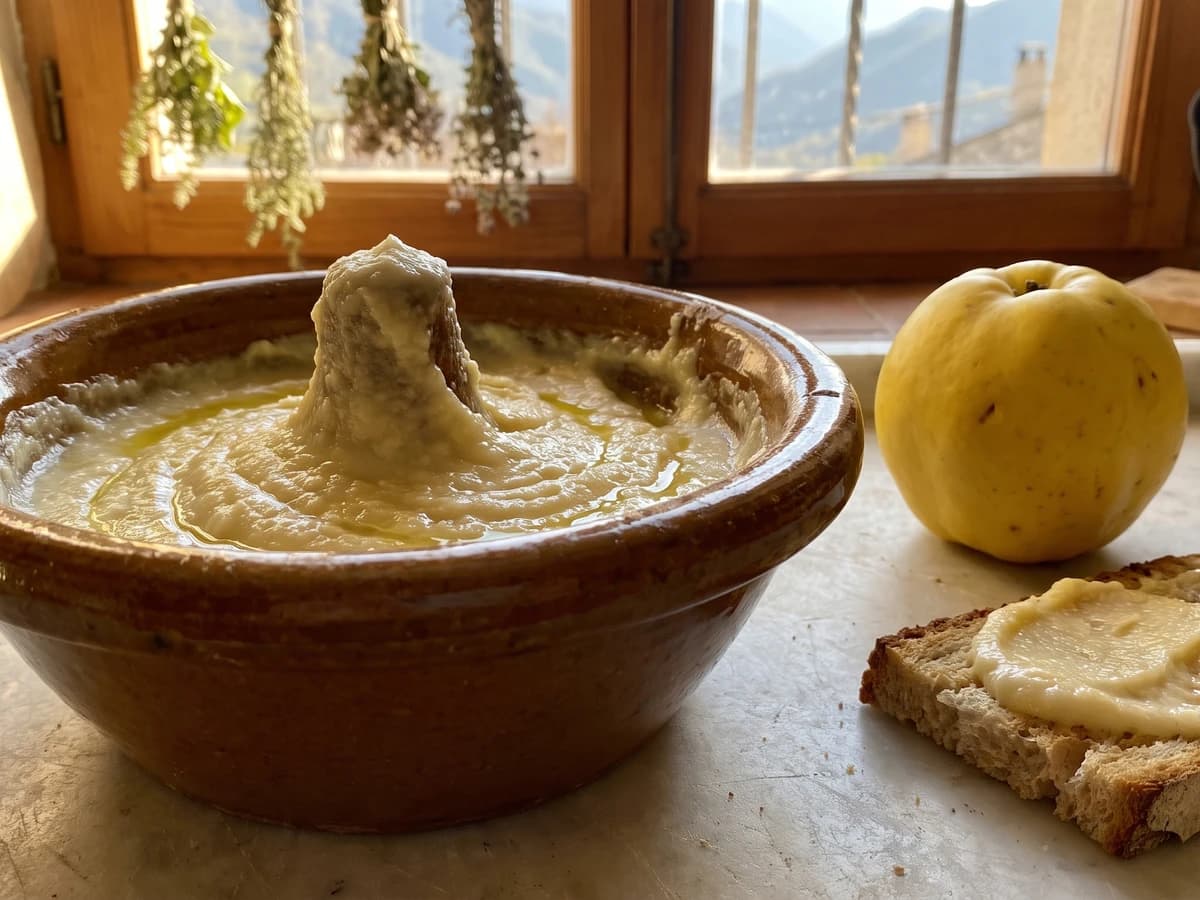
Allioli de codony belongs to the Catalan Pyrenees: boiled quince, raw garlic, salt, and olive oil worked into a thick, fragrant sauce for grilled meat, sausages, bread, and the autumn table.