Chef Isabel
Aceitunas Aliñadas Andaluzas
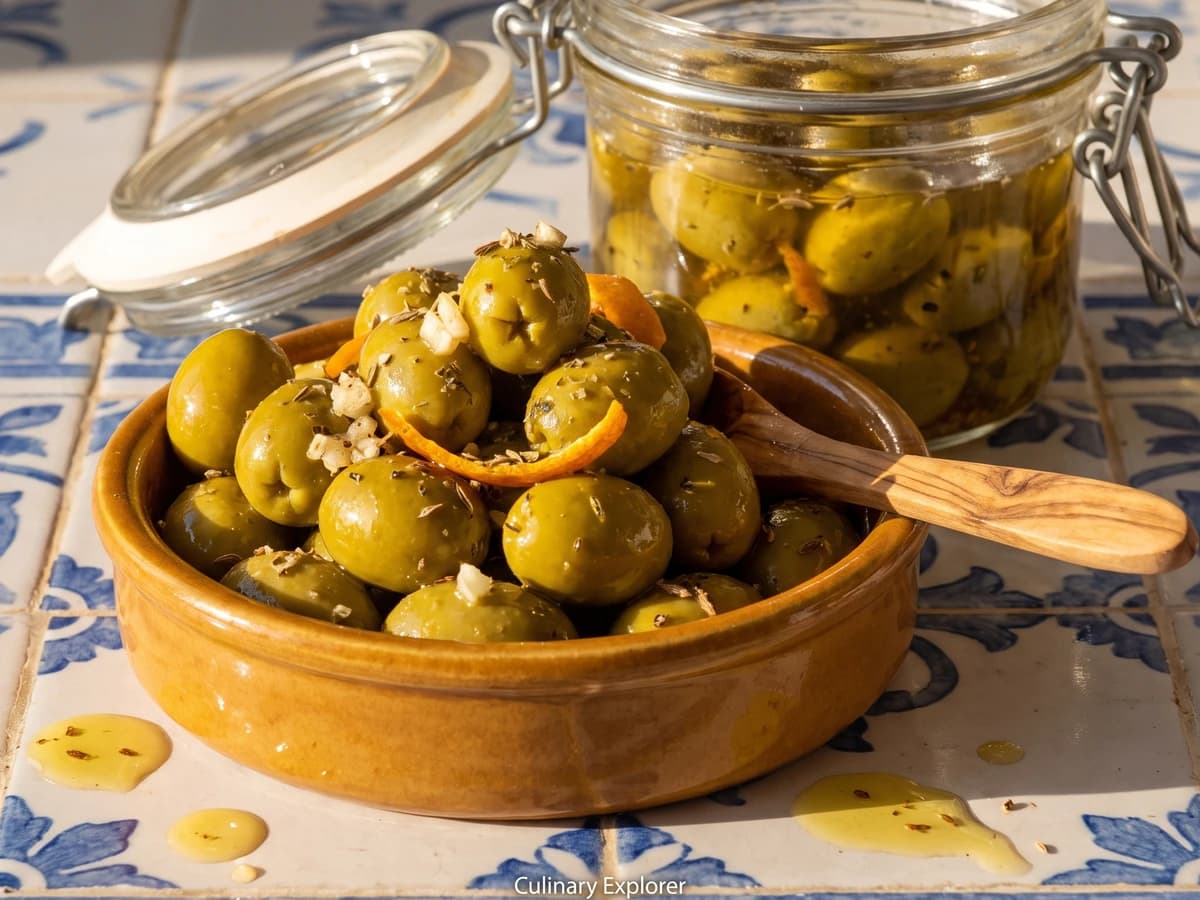
Andalucía's green olives are cracked just enough to drink in garlic, cumin, oregano and sherry vinegar, then left two days until the brine turns fragrant and every bite carries the aliño.
A cooking platform built around craft, culture, and the stories behind what we eat.
Created by
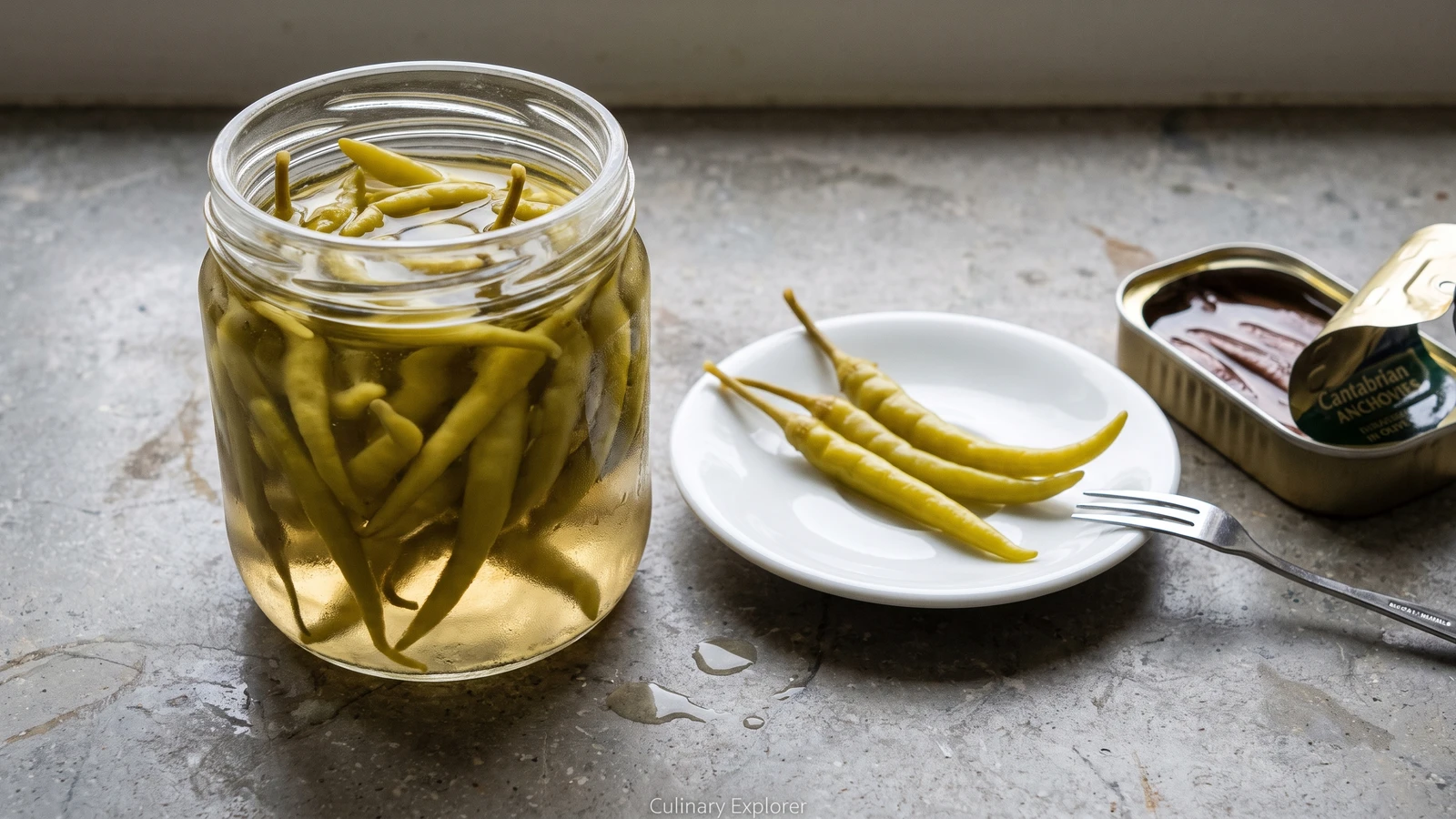
Ibarra's slender green piparras, packed raw under cool white wine vinegar brine, stay mild, firm and gently tangy, exactly what a proper Donostia Gilda needs.
Guindillas de Ibarra en vinagre are Basque, from Ibarra in Gipuzkoa: young piparras preserved whole in white wine vinegar, water and salt until their bright green settles to olive and their grassy bite turns gently tangy. The thin skin, narrow body and mild heat make this a different pickle from a thick pepperoncino or a fierce green chilli. It is the backbone of a proper Gilda, not decoration on the skewer.
The method that decides the jar is simple. Dissolve the salt, cool the liquid completely, then add the vinegar and cover the raw peppers. Hot brine cooks their delicate walls and leaves them limp. Keep them under the liquid and give them time. Pésalo, no lo adivines, weigh it, don't guess, because the balance of vinegar, water and salt is what preserves their clean, mild character.
If Ibarra piparras don't grow where you are, use the youngest, narrowest mild green frying chillies you can find. Turkish sivri biber is the closest useful substitute, with shishito at a pinch. The first may carry more heat, while shishitos are shorter, wrinklier and less tidy on a Gilda. The jar cannot honestly bear Ibarra's name, but the method remains sound. No hace falta haber pisado España.
Give them two weeks before judging them, and three or four if you can wait. My margin beside this preserve says only, "brine cold, peppers under." Do those two things and it comes out. Siempre sale, si lo sigues.
Ibarra lies in Tolosaldea, Gipuzkoa, where the mild, humid Atlantic climate helped shape a long, thin pepper with tender skin and very little heat. Preserving the short summer crop in vinegar carried it through the rest of the year and made jars of piparras a fixture of the Basque pantry. In Donostia, the pickle joined a green olive and salted anchovy on the Gilda pintxo, named for the film character because the skewer was said to be green, salty and a little spicy.
Quantity
300g, about 30 to 36
washed, dried and stems trimmed to 1cm
Quantity
375ml
labelled 5% acidity or higher
Quantity
375ml
Quantity
15g
| Ingredient | Quantity |
|---|---|
| fresh piparras de Ibarrawashed, dried and stems trimmed to 1cm | 300g, about 30 to 36 |
| white wine vinegarlabelled 5% acidity or higher | 375ml |
| filtered water | 375ml |
| fine non-iodized sea salt | 15g |
Wash two 750ml preserving jars and their lids in hot soapy water, rinse well, then scald them with boiling water and leave them to drain. Rinse the piparras under cool water and dry them carefully. Discard any with splits, bruises or soft patches, then trim each stalk to about 1cm without cutting into the pepper.
Put the water and salt in a small non-reactive saucepan. Warm gently, stirring, just until the salt dissolves. Remove from the heat and let the salted water cool completely, about 30 minutes, then stir in the white wine vinegar. The brine must be cool before it meets the peppers. Pour it hot and their thin walls soften instead of keeping that tender snap.
Pack the piparras into the cool jars, some upright and some curved around the sides, without crushing them. Leave about 2cm of space below each rim. Keep the peppers whole; pricking or splitting them lets the brine flood the hollow centres and makes them soften sooner.
Pour in the cool brine until every piparra is covered, leaving 1cm of headspace. Tap each jar gently against a folded cloth to release trapped air, then hold the peppers beneath the liquid with a small glass pickle weight if they float. Close the lids, label the jars with the date and refrigerate immediately.
Leave the jars unopened in the refrigerator for at least 14 days. By then the bright green will have settled to olive, the raw grassy edge will be gone, and the vinegar will have reached the centre. They become rounder and more settled after three to four weeks. Take them out with a clean fork and keep the rest beneath the brine.
1 serving (about 150g)
Culinary guides, cultural storytelling, and the editorial depth that makes cooking meaningful.
Discover Culinary ExplorerChef Isabel
Andalucía's green olives are cracked just enough to drink in garlic, cumin, oregano and sherry vinegar, then left two days until the brine turns fragrant and every bite carries the aliño.
Chef Isabel
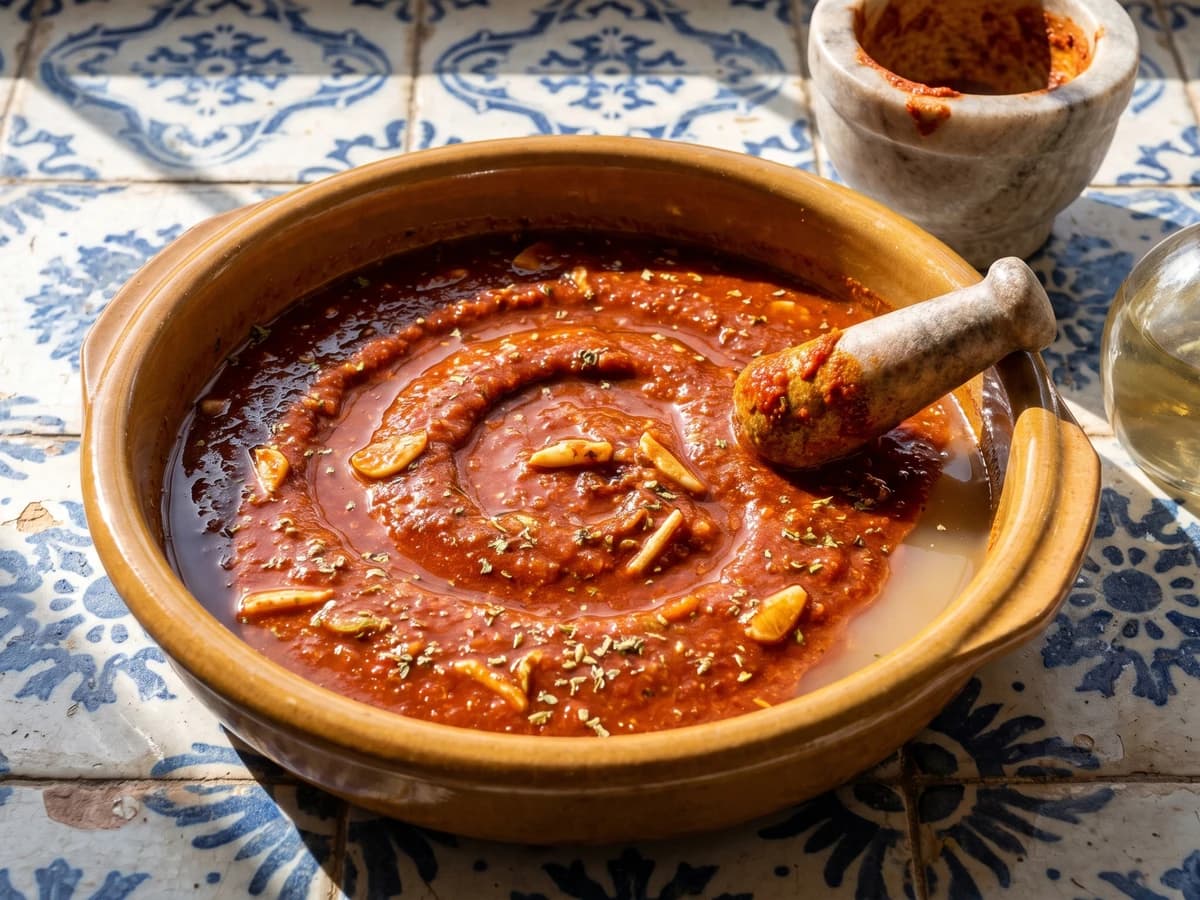
Andalucía's sharp, brick-red marinade brings vinegar, garlic, oregano, cumin and pimentón to fish and pork; pound the seasonings first, then give the acid time to carry them through.
Chef Isabel
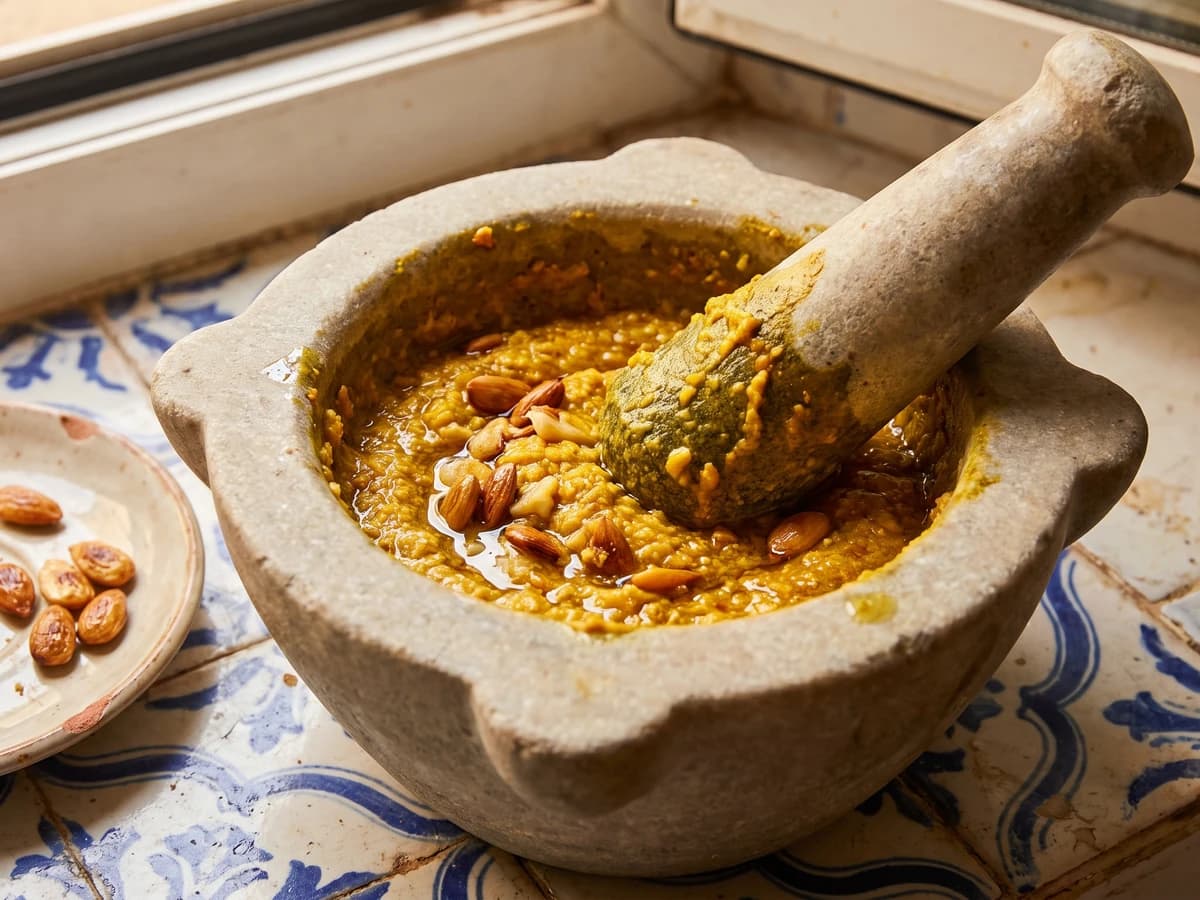
Almería's ajopollo turns fried garlic, almonds, bread and saffron into a golden mortar paste that gives modest fish and potato guisos their body, richness and unmistakable southern depth.
Chef Isabel
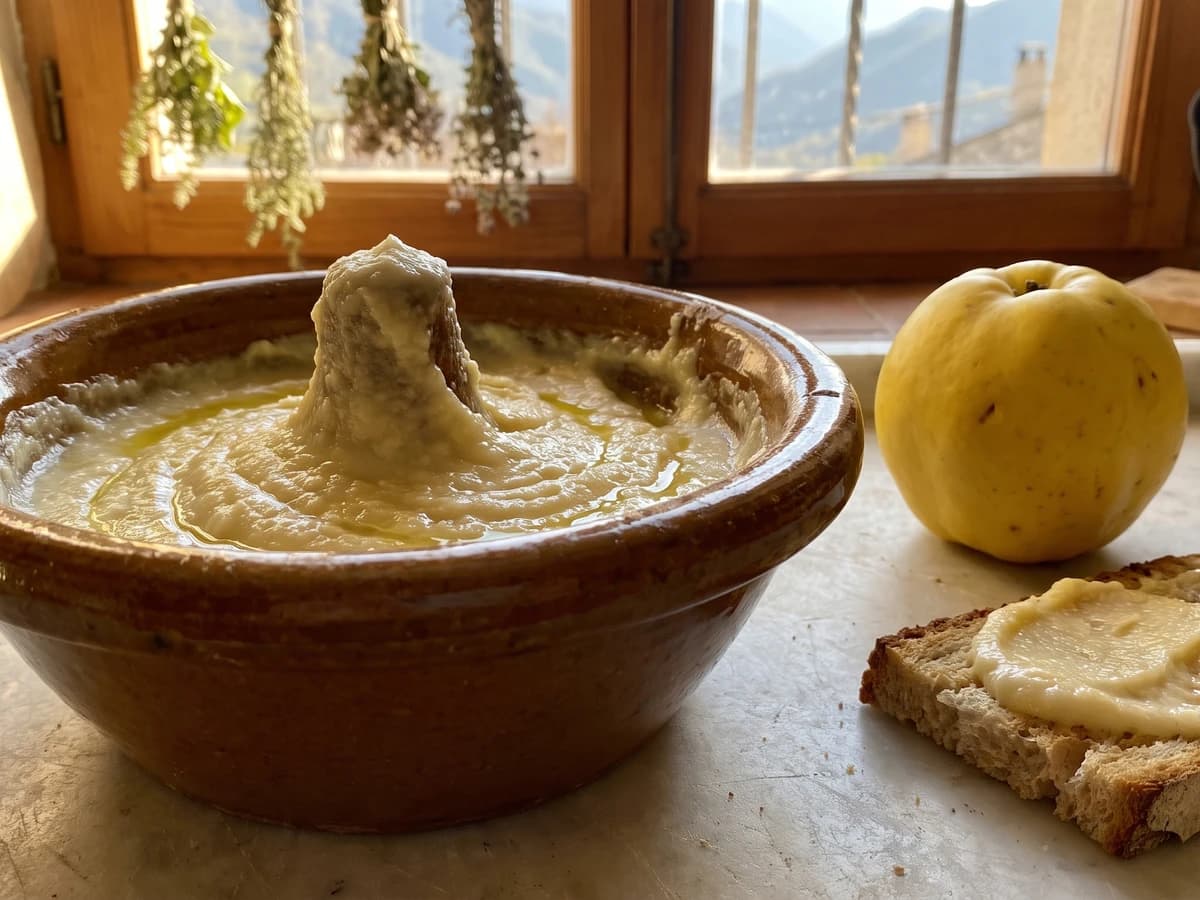
Allioli de codony belongs to the Catalan Pyrenees: boiled quince, raw garlic, salt, and olive oil worked into a thick, fragrant sauce for grilled meat, sausages, bread, and the autumn table.