Chef Isabel
Abanico Ibérico a la Plancha
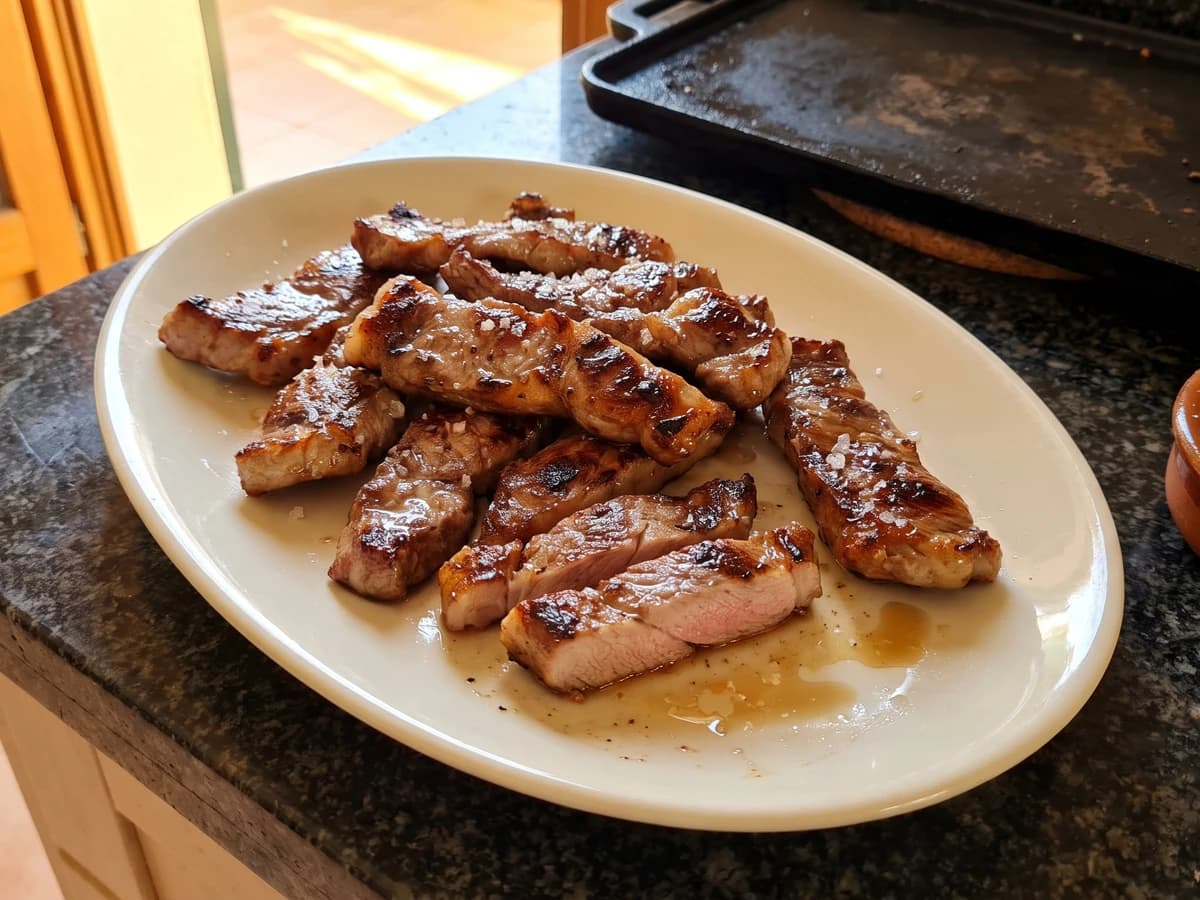
Extremadura's dehesa gives us this fan-shaped, marbled rib cut: salt it at the last moment, lay it on a fierce plancha, and count in seconds so the centre stays juicy.
A cooking platform built around craft, culture, and the stories behind what we eat.
Created by
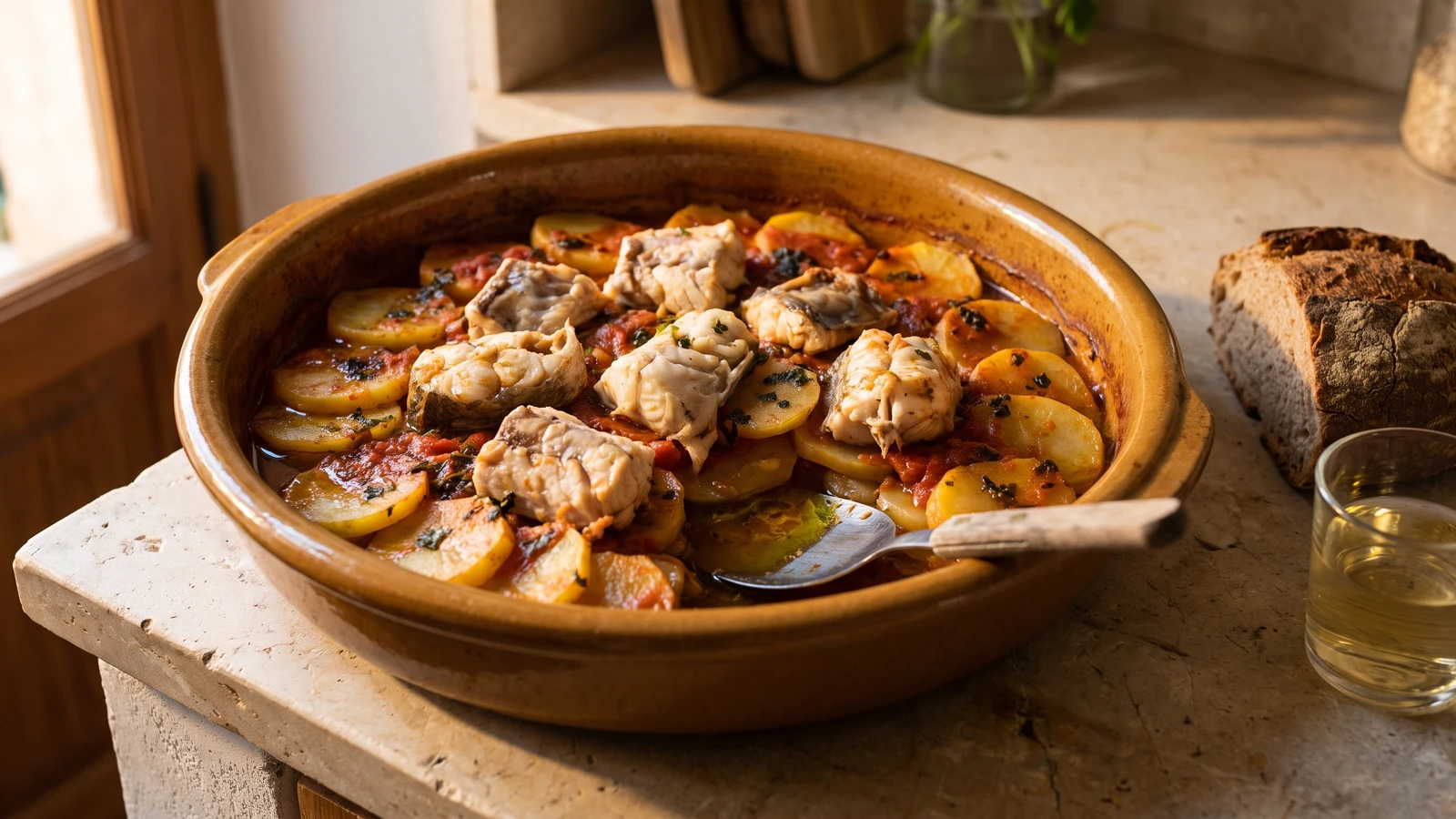
Greixonera de peix is Mallorca's earthenware fish bake: firm pieces of mixed rock fish, potatoes, a patient tomato sofrito, garlic, and parsley, cooked just until the flesh parts cleanly from the bone.
Greixonera de peix is Mallorcan, a shallow bake of mixed rock fish, potatoes, tomato, garlic, and parsley cooked in the broad earthenware pot that gives the dish its name. The catch changes with the market, as island catches do, but the greixonera, the slow sofrito, and fish cooked on the bone are what hold the dish together. This is supper from Mallorca's fishing coast, not a fish stew moved carelessly into the oven.
The method that decides it is simple: start the potatoes before the fish goes in. Potatoes need time to soften in the tomato, wine, and fish juices; the fish does not. Put everything in together and either the potatoes stay hard or the fish dries while you wait for them. Give the potatoes thirty minutes, then nestle in evenly sized fish portions and bake only until the flesh parts cleanly from the bone.
If cap-roig, anfós, or other Mallorcan rock fish never reach your market, use thick bone-in pieces of hake, monkfish, or sea bass. One good species is better than a tired frozen mixture. The broth will be a little cleaner and less deeply flavored than one made from several rock fish, but it will still be recognizably the same dish. No hace falta haber pisado España.
Cook the sofrito, the slow onion and tomato base, until thick enough that the oil shows around its edges. Then trust the oven. The Margin beside this recipe says only that the fish goes in last, underlined twice. Siempre sale, si lo sigues, it turns out if you follow it.
Along Mallorca's fishing coast, mixed rock fish went into a greixonera, the broad earthenware casserole that spreads oven heat gently across a shallow layer. The fish could change with the catch, while tomato, garlic, parsley, olive oil, and the clay vessel gave the preparation its continuity. The same vessel also names Mallorca's ensaïmada pudding, so greixonera identifies the pot before it identifies what is cooked in it.
Quantity
1kg cleaned
scaled, gutted, and cut into 6 to 8 even portions
Quantity
650g
peeled and sliced 4mm thick
Quantity
250g
finely sliced
Quantity
450g
halved and grated, skins discarded
Quantity
4 cloves
divided
Quantity
25g
finely chopped
Quantity
100ml
divided
Quantity
2g
Quantity
100ml
Quantity
150ml
Quantity
10g
divided
Quantity
1g
| Ingredient | Quantity |
|---|---|
| mixed firm rock fish on the bone, such as cap-roig, anfós, or mollscaled, gutted, and cut into 6 to 8 even portions | 1kg cleaned |
| waxy potatoespeeled and sliced 4mm thick | 650g |
| onionfinely sliced | 250g |
| ripe tomatoeshalved and grated, skins discarded | 450g |
| garlicdivided | 4 cloves |
| flat-leaf parsleyfinely chopped | 25g |
| extra virgin olive oildivided | 100ml |
| pebre bord de tap de cortí, or sweet pimentón | 2g |
| dry white wine | 100ml |
| unsalted fish stock or water | 150ml |
| fine sea saltdivided | 10g |
| freshly ground black pepper | 1g |
Heat the oven to 190°C conventional, 170°C fan, or 375°F. Check that every fish portion is roughly 4 to 5cm thick so it cooks at the same rate. Pat the fish dry, season it with 4g of the salt and half the pepper, and leave it in the refrigerator while you build the base. Bring the greixonera to room temperature and follow its maker's instructions for soaking or preheating; earthenware dislikes sudden changes of temperature.
Warm 60ml of the olive oil in a 28cm frying pan over low heat. Add the onion and 2g salt, then cook for 18 to 20 minutes, stirring now and then, until soft and dark gold. Mince 2 garlic cloves, add them, and cook for 1 minute. Stir in the grated tomato and cook gently for another 18 to 22 minutes, until the mixture is thick, sweet, and nearly dry, with oil showing around the edges. Take the pan off the heat and stir in the pebre bord so it smells warm and fruity without scorching.
Coat the base of a 30 to 32cm greixonera with 30ml olive oil. Arrange the potato slices in two loose overlapping layers and season with 3g salt and the remaining pepper. Spread half the sofrito over them, then pour in the wine and fish stock. Cover tightly with a lid or foil and bake for 30 minutes. A knife should pass through a potato slice with slight resistance; it should not yet fall apart.
While the potatoes bake, pound the remaining 2 garlic cloves with 1g salt in a mortar until smooth. Work in the chopped parsley and the final 10ml olive oil to make a loose picada, the garlic and herb mixture that seasons the fish from the surface down. A knife and small bowl will do if you have no mortar, but mince everything very finely.
Uncover the greixonera and arrange the fish portions over the potatoes in a single layer, leaving a little space between them. Spoon over the remaining sofrito, then spread the picada across the fish. Return the pot to the oven uncovered for 18 to 22 minutes. The sauce should bubble around the edges, the potato tips should be gold, and the fish should look opaque at its thickest point and part cleanly from the bone. A thermometer inserted away from the bone should read 63°C or 145°F.
Set the greixonera on a dry wooden board or folded cloth, never a cold or wet surface, and rest it for 8 minutes. The potatoes will drink in a little more of the tomato-rich liquid while the fish settles. Carry the pot to the table and serve one fish portion with plenty of potatoes and the juices spooned from underneath. Tal como se hace allí.
1 serving (about 450g)
Culinary guides, cultural storytelling, and the editorial depth that makes cooking meaningful.
Discover Culinary ExplorerChef Isabel
Extremadura's dehesa gives us this fan-shaped, marbled rib cut: salt it at the last moment, lay it on a fierce plancha, and count in seconds so the centre stays juicy.

Chef Isabel
Aletría Murciana is Murcia's humble noodle guiso: fine fideos, pork ribs, potato, saffron, and a dark sweet sofrito. Get that base right and the pot knows where it's going.

Chef Isabel
Andrajos are Andalucía's dough-rag stew from Jaén and Granada: a slow rabbit guiso thickened with torn sheets of flour dough, rolled thin so they cook tender instead of gummy.
Chef Isabel
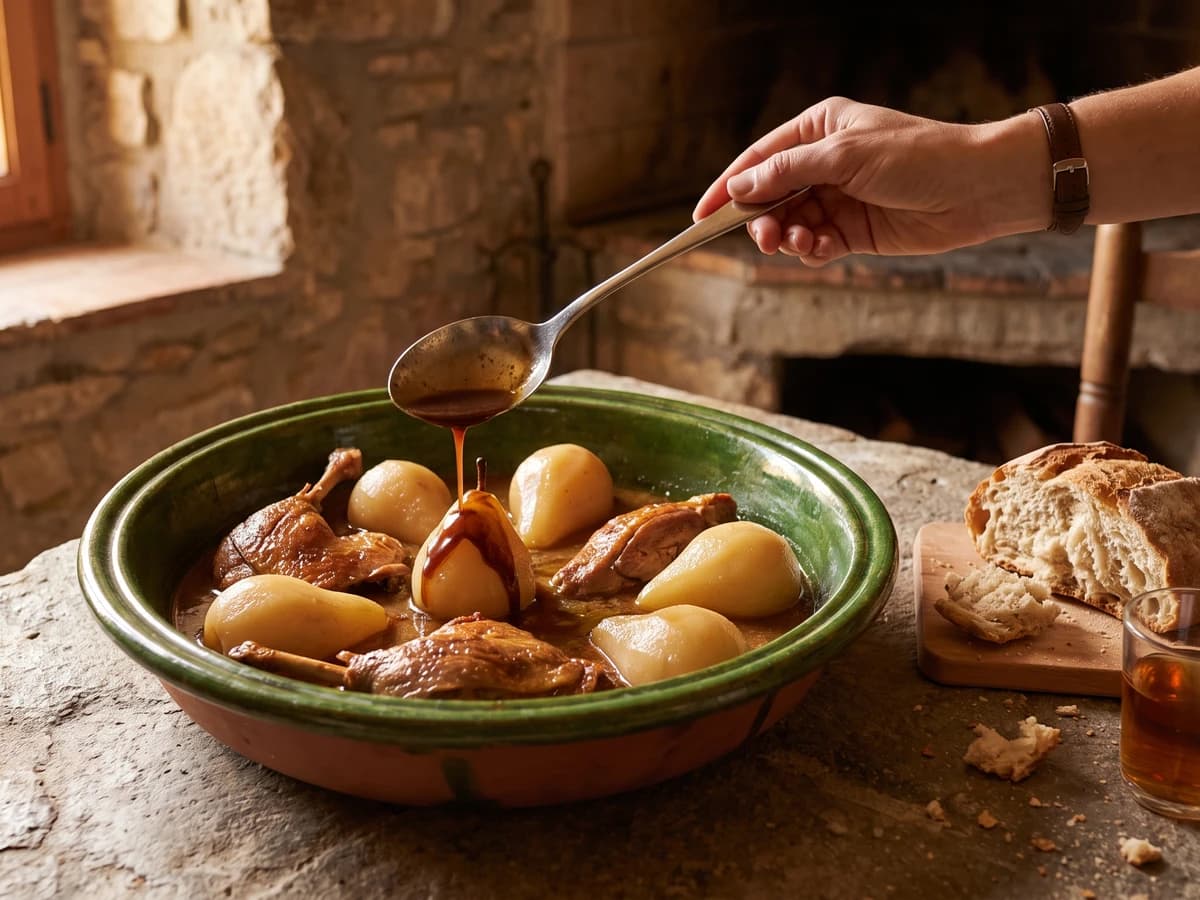
Ànec amb peres is Catalan celebration cooking: duck braised in a dark sofregit, firm autumn pears added near the end, and an almond-garlic picada that turns the juices into a close, glossy sauce.