Chef Isabel
Abanico Ibérico a la Plancha
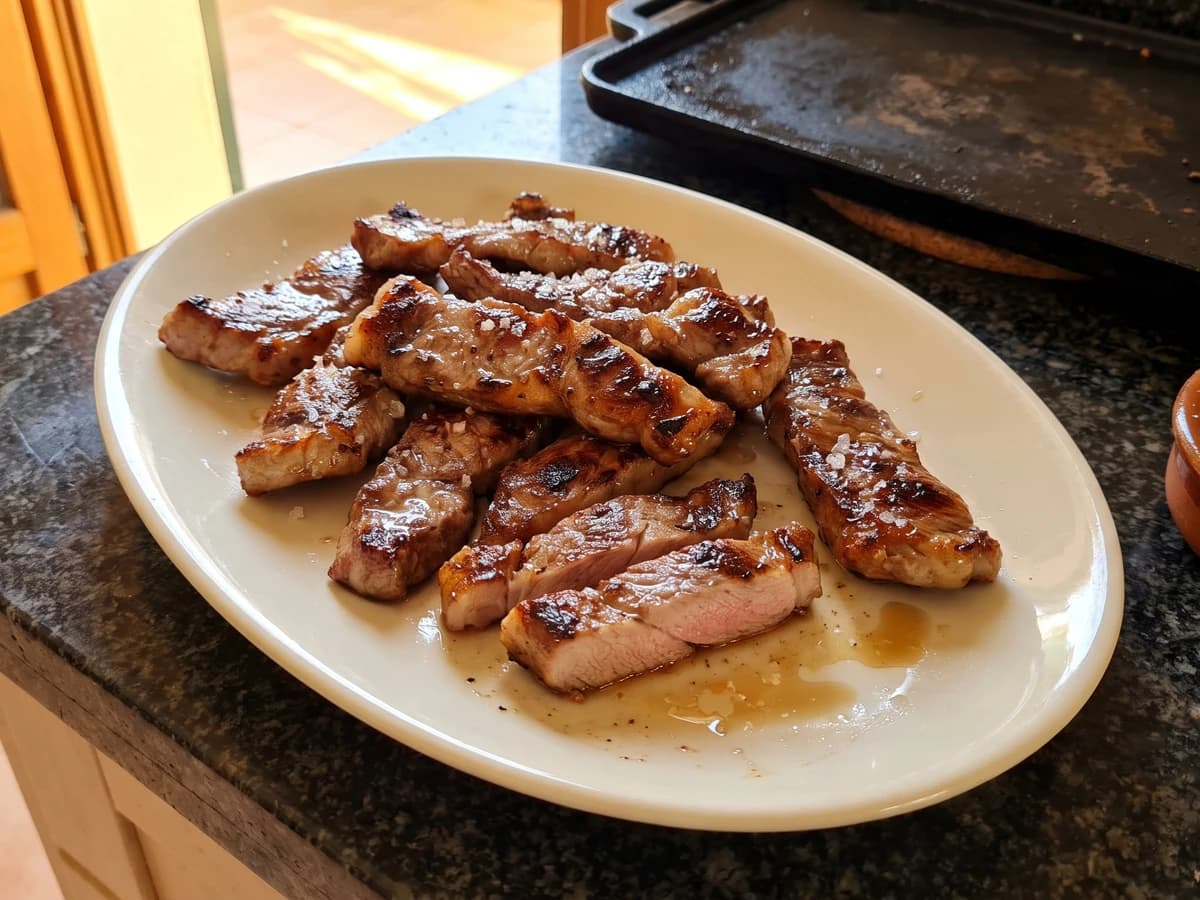
Extremadura's dehesa gives us this fan-shaped, marbled rib cut: salt it at the last moment, lay it on a fierce plancha, and count in seconds so the centre stays juicy.
A cooking platform built around craft, culture, and the stories behind what we eat.
Created by
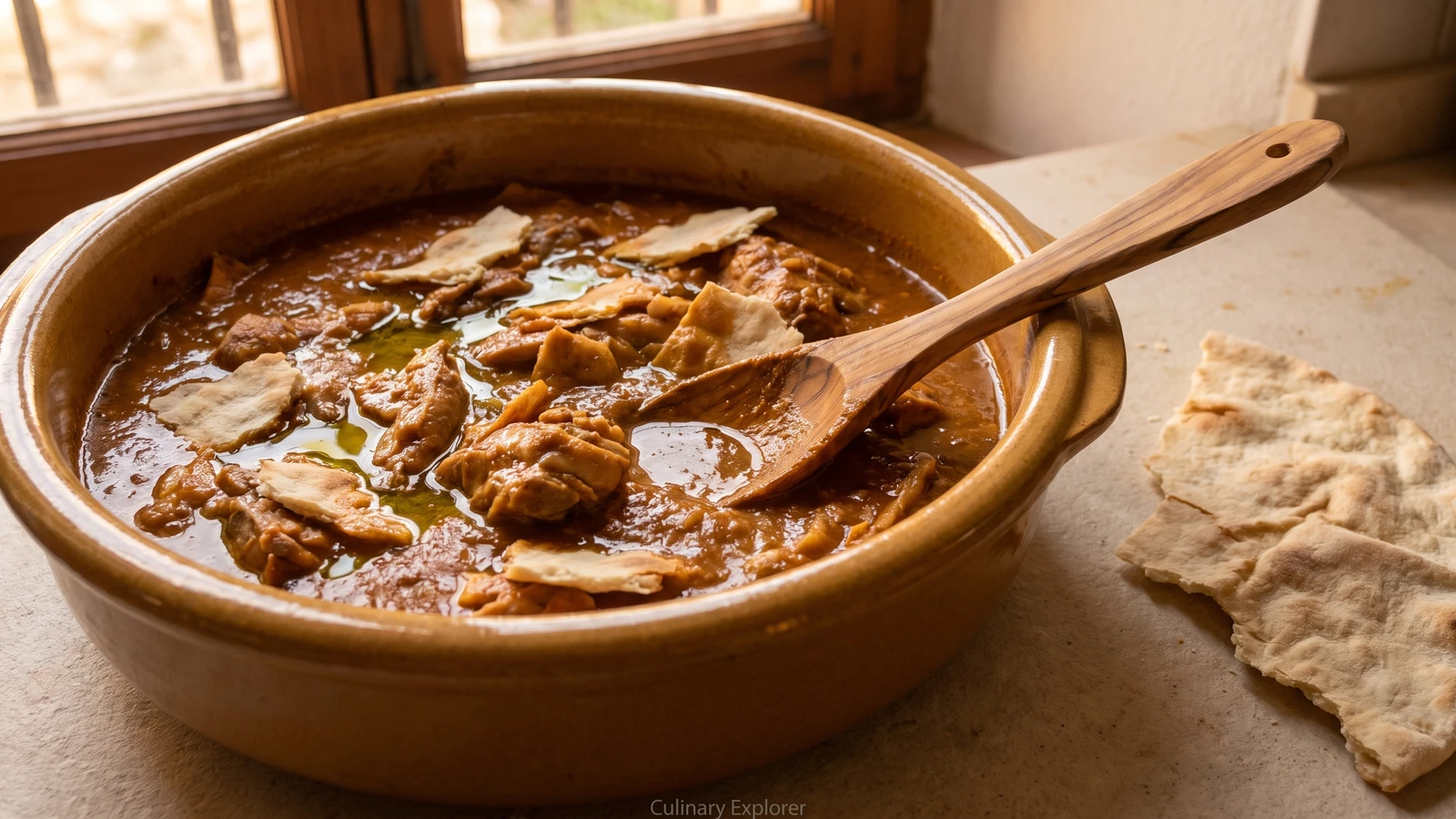
Gazpachos manchegos are La Mancha's hot galianos: rabbit and partridge cooked tender in their own broth, then thickened with torn torta cenceña until every piece is supple but still distinct.
Gazpachos manchegos, also called galianos, belong to La Mancha: a hot stew of rabbit, hare, or partridge and torn torta cenceña, the hard yeastless flatbread that drinks the game broth without disappearing. The shared name fools people. This is not Andalucía's cold tomato gazpacho. It is inland cocina de cuchara, spoon food, made to carry hunters and shepherds through a hard day and to feed a full table from one pot.
First brown the game well, then cook the onion, green pepper, garlic, and tomato low until the sofrito, the slow vegetable base, is dark, sweet, and nearly dry. But the point that decides the dish is the torta. Restore the broth to 1.4 litres before it goes in, add the torn bread in stages, and stop cooking while the pieces are supple but still distinct. They keep drinking as the pot rests. Cook past that and the galianos become paste, which is filling but isn't the dish.
Far from La Mancha, bake the cenceña yourself from flour, water, and salt until completely dry. If partridge is impossible to find, bone-in chicken thigh is the honest substitute a Manchego home would use. The broth becomes gentler and a little fattier, so skim it well. No hace falta haber pisado España. My margin says, "Measure the broth, then watch the bread." Siempre sale, si lo sigues.
Gazpachos manchegos belong to the pastoral and hunting country of Albacete, Cuenca, and Ciudad Real, where shepherds and hunters simmered whatever small game the monte provided. The yeastless torta cenceña could be baked hard, carried dry, and torn into the pot to turn a little broth into a full meal. The dish is also called galianos, and its use of rabbit, hare, or partridge marks it as the hot gazpacho of La Mancha, not the raw tomato soup of Andalucía.
Quantity
1 (about 1.2kg)
jointed into 10 to 12 pieces
Quantity
1 (about 450g)
quartered
Quantity
18g
divided
Quantity
1g
Quantity
80ml
Quantity
200g
finely chopped
Quantity
180g
seeded and finely chopped
Quantity
20g
finely chopped
Quantity
300g
grated, skins discarded
Quantity
4g
Quantity
2
Quantity
1g
Quantity
2 litres
Quantity
up to 300ml
for adjusting the broth
Quantity
350g
broken into irregular 3 to 4cm pieces
| Ingredient | Quantity |
|---|---|
| farmed rabbitjointed into 10 to 12 pieces | 1 (about 1.2kg) |
| partridgequartered | 1 (about 450g) |
| fine sea saltdivided | 18g |
| freshly ground black pepper | 1g |
| extra virgin olive oil | 80ml |
| onionfinely chopped | 200g |
| green Italian frying peppersseeded and finely chopped | 180g |
| garlicfinely chopped | 20g |
| ripe tomatoesgrated, skins discarded | 300g |
| sweet pimentón | 4g |
| bay leaves | 2 |
| dried thyme | 1g |
| cold water | 2 litres |
| boiling water (optional)for adjusting the broth | up to 300ml |
| torta cenceñabroken into irregular 3 to 4cm pieces | 350g |
Pat the rabbit and partridge dry. Season every piece with 12g of the salt and all the black pepper, working it into the joints. Leave the remaining 6g salt beside the stove so it goes into the pot in measured stages, not by guesswork. Pésalo, no lo adivines.
Heat the olive oil in a wide, heavy casserole over medium-high heat. Brown the rabbit and partridge in two batches so the pieces sit in one layer. Give them 4 to 5 minutes on each broad side, about 16 to 18 minutes altogether, until the surfaces are deep gold and the bottom of the pot carries a dark brown coating. Transfer the browned pieces to a tray.
Lower the heat to medium-low. Add the onion, green pepper, and 4g of the remaining salt to the same oil. Cook for 15 to 18 minutes, stirring often and scraping up the browned meat juices, until the vegetables are soft, dark gold, and sweet. Add the garlic and cook for 2 minutes. Add the grated tomato and cook for another 12 to 15 minutes, until almost no watery liquid remains and the oil begins to show around the edges. Take the pot off the heat, stir in the pimentón for 20 seconds, and do not let it scorch.
Return the rabbit and partridge to the casserole with any juices from the tray. Add the bay leaves, thyme, and 2 litres of cold water. Bring slowly to a boil, skim away the grey foam, then lower the heat and hold the pot at a gentle simmer, partially covered, for 50 to 70 minutes. The game is ready when it has reached at least 74°C at the thickest joint and the leg meat pulls easily from the bone. Wild game may need another 20 to 30 minutes.
Lift the game onto a tray and discard the bay leaves. When the meat is cool enough to handle, pull it from the bones in generous bite-sized pieces, keeping the rabbit and partridge distinct rather than shredding them finely. Check carefully for the partridge's small bones. Transfer the broth and softened vegetables to a heatproof measuring jug. You need exactly 1.4 litres. Simmer it down if there is more, or add boiling water if there is less. Return the measured broth and all the picked meat to the casserole.
Bring the broth back to a calm simmer. Scatter in one third of the torn torta cenceña and fold it through gently. Repeat twice, waiting about 1 minute between additions so every piece meets the broth. Simmer uncovered for 8 to 12 minutes, turning from the bottom every minute so nothing catches. Stop when the bread is flexible all the way through but still has clear, irregular edges, with a shallow gloss of broth gathering between the pieces. This is the point that decides the dish.
Take the casserole off the heat and let it stand for 5 minutes. The torta will drink the last loose broth and the stew will settle enough to mound softly on a spoon. Taste and add the final 2g salt only if it needs it. If the mixture has tightened too far, fold through 50 to 100ml boiling water. Carry the casserole straight to the table and serve at once.
1 serving (about 500g)
Culinary guides, cultural storytelling, and the editorial depth that makes cooking meaningful.
Discover Culinary ExplorerChef Isabel
Extremadura's dehesa gives us this fan-shaped, marbled rib cut: salt it at the last moment, lay it on a fierce plancha, and count in seconds so the centre stays juicy.

Chef Isabel
Aletría Murciana is Murcia's humble noodle guiso: fine fideos, pork ribs, potato, saffron, and a dark sweet sofrito. Get that base right and the pot knows where it's going.
Chef Isabel
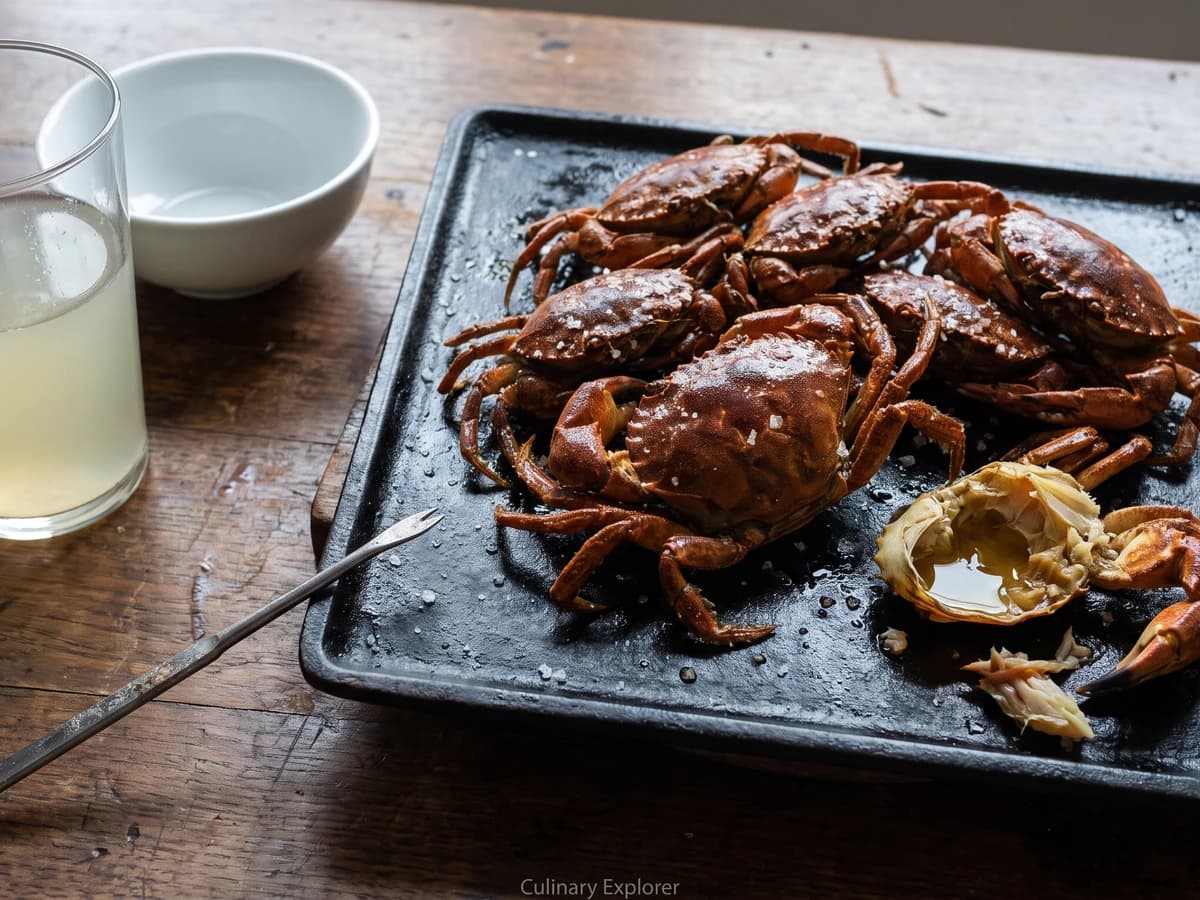
Asturias puts its small velvet crabs straight on a fierce plancha with salt and oil, keeping the shell liquor sweet and briny. Dry them well, cook them fast, and bring plenty of napkins.

Chef Isabel
Andrajos are Andalucía's dough-rag stew from Jaén and Granada: a slow rabbit guiso thickened with torn sheets of flour dough, rolled thin so they cook tender instead of gummy.