
Chef Jeong-sun
Agwi-jjim (Braised Monkfish with Bean Sprouts)
Firm monkfish buried under crisp soybean sprouts, minari, and a red gochugaru sauce thickened at the end; Masan's market dish asks for heat, timing, and a steady hand.
A cooking platform built around craft, culture, and the stories behind what we eat.
Created by
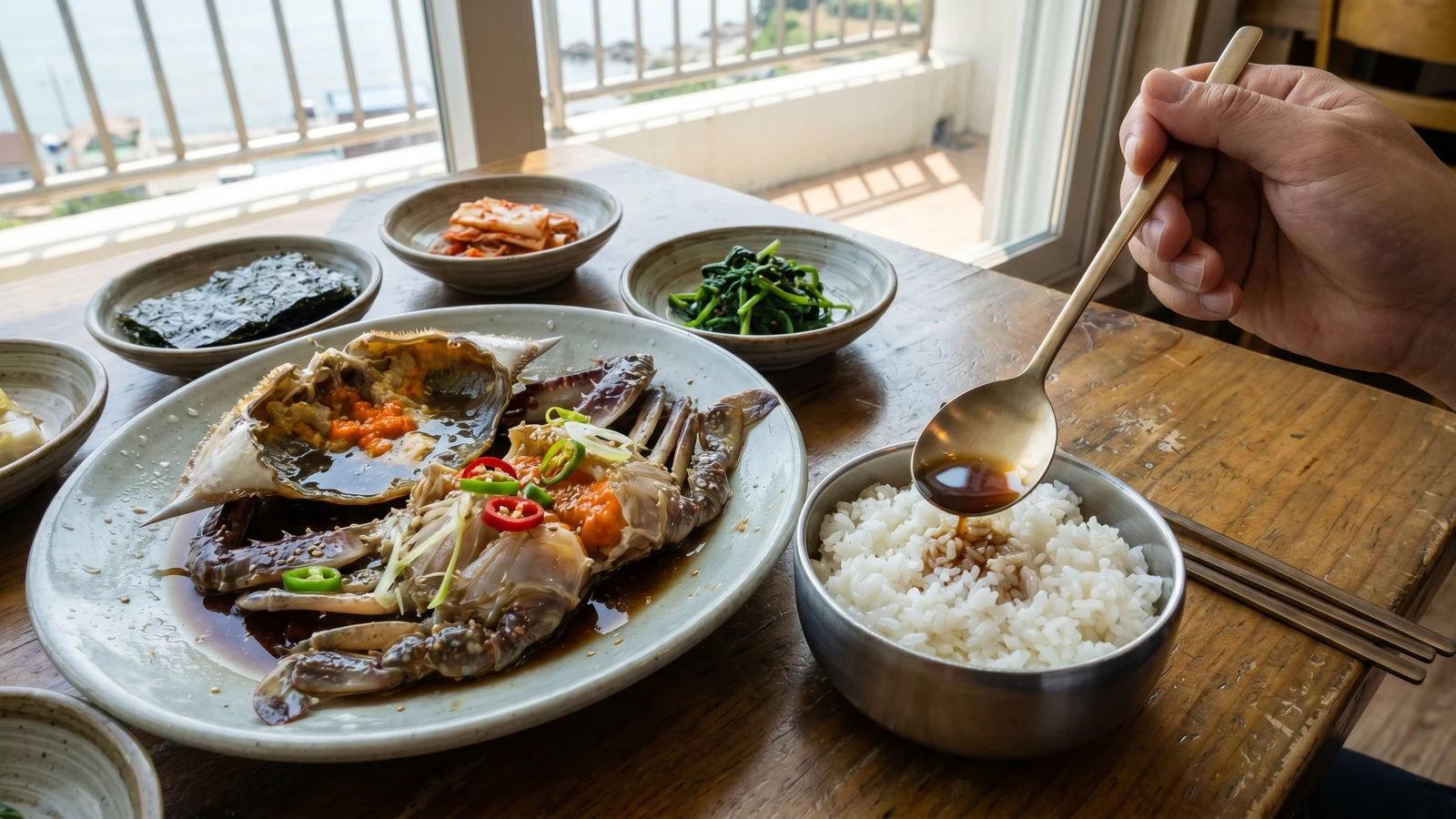
Raw flower crab cured in a clean soy brine, boiled and cooled before it ever touches the shell, then poured over twice until the sweet flesh and orange roe steal the rice bowl.
At the west-coast markets, flower crabs have their own calendar. Spring females carry orange roe under the shell; autumn crabs are heavier with meat. The good ones are restless, heavy for their size, and smell like clean seawater. If the crab smells tired, my teacher Master Seong-nyeo would have looked at it once and turned her basket around. She was right.
Ganjang-gejang lives or dies by two things: cold and repetition. The soy brine is boiled with pear, ginger, garlic, kelp, and a little rice wine, then cooled completely before it ever touches the crab. After one day, the brine is drained, boiled again, cooled again, and poured back over. People skip that second boil because they are impatient. Then they wonder why the flavor turns muddy. The crab is raw, so the brine must be disciplined.
I won't tell you this is easy. It asks for live or properly handled crabs, a cold refrigerator, clean hands, and enough patience not to pour warm brine because dinner is coming. But when the shell opens and the roe mixes with rice, everyone at the table goes quiet for a moment. That is not drama. That is the rice bowl losing an argument it was always going to lose.
Gejang belongs to the older Korean practice of preserving seafood in jang, soy sauce or fermented bean seasonings, and Hong Man-seon's Sallim gyeongje, compiled around 1715, records methods for keeping crab in seasoned soy. Later household manuals such as the 1809 Gyuhap chongseo show that crab preserved in soy belonged to home kitchens, not only restaurant tables. Ganjang-gejang is especially tied to Korea's west and south coasts, including Jeolla and Yeosu, where flower crab seasons made it a local specialty before modern refrigeration made it a chilled dish served far beyond the coast.
Quantity
4 crabs, about 1.2 to 1.5kg total
Quantity
2 teaspoons
for scrubbing the shells
Quantity
4 cups
Quantity
2 1/2 cups
not soup soy sauce
Quantity
1 cup
Quantity
1/2 cup
Quantity
1/4 cup
Quantity
2 tablespoons
Quantity
1/2, about 200g
cored and chopped
Quantity
1 small
quartered
Quantity
8 cloves
lightly crushed
Quantity
40g
sliced
Quantity
2
Quantity
1 piece, about 4 inches square
Quantity
6
heads and guts removed
Quantity
3
snipped open
Quantity
1 teaspoon
Quantity
2
Quantity
1
thinly sliced, for serving
Quantity
1
thinly sliced, for serving
Quantity
1
thinly sliced, for serving
Quantity
1 teaspoon
for serving
Quantity
to serve
| Ingredient | Quantity |
|---|---|
| live female flower crabs (kkotge) or live blue crabs | 4 crabs, about 1.2 to 1.5kg total |
| coarse sea saltfor scrubbing the shells | 2 teaspoons |
| water | 4 cups |
| Korean brewed soy sauce (jin-ganjang)not soup soy sauce | 2 1/2 cups |
| cheongju, mirim, or dry rice wine | 1 cup |
| soju | 1/2 cup |
| sugar | 1/4 cup |
| maesil-cheong (Korean green plum syrup) (optional) | 2 tablespoons |
| Korean pearcored and chopped | 1/2, about 200g |
| onionquartered | 1 small |
| garliclightly crushed | 8 cloves |
| fresh gingersliced | 40g |
| dried shiitake mushrooms | 2 |
| dried kelp (dasima) | 1 piece, about 4 inches square |
| large dried anchovies (myeolchi) (optional)heads and guts removed | 6 |
| dried red chiliessnipped open | 3 |
| whole black peppercorns | 1 teaspoon |
| dried jujubes (optional) | 2 |
| scallionthinly sliced, for serving | 1 |
| green chilithinly sliced, for serving | 1 |
| red chilithinly sliced, for serving | 1 |
| toasted sesame seedsfor serving | 1 teaspoon |
| freshly cooked short-grain rice | to serve |
Buy live flower crabs if you can, especially spring females with orange roe under the shell. Autumn crabs are good too, often meatier, but do not make ganjang-gejang with crab that died before you bought it or with seafood that smells sharp, ammoniac, or tired. Cook the month you're standing in. If the crabs are poor today, make a cooked crab stew instead and wait for better ones.
Combine the water, soy sauce, cheongju, soju, sugar, pear, onion, garlic, ginger, shiitakes, kelp, anchovies if using, dried chilies, peppercorns, and jujubes in a large pot. Bring to a boil, then lower to a steady simmer. Pull the kelp out after 8 minutes so it does not turn the brine slick and bitter. Simmer 20 minutes total, turn off the heat, stir in the maesil-cheong if using, and strain. The brine should taste too salty to drink but rounded by the fruit and aromatics, because the crab will release its own liquid as it cures.
Set the strained brine in an ice bath, then refrigerate until it is 40 F (4 C) or colder. Do not hurry this. Hot or warm brine cooks the surface of the raw crab, dulls the sweet flesh, and gives you a half-spoiled texture instead of a clean cure. Notebook 42 says: cold brine first, patience second.
Keep the crabs cold until you are ready to clean them. If they are very active, put them in the freezer for 30 minutes to quiet them and protect your hands; this is not a safety step. Scrub the shells, legs, hinges, and aprons under cold running water with the coarse salt and a stiff brush. Rinse well, trim only the sharp leg tips if needed, and drain hard. Do not lift the top shell or remove the gills yet, because the crab needs to cure whole.
Place the crabs belly-up in a clean nonreactive container just large enough to hold them in one layer. Belly-up matters because the brine settles under the apron and reaches the body evenly. Pour the completely cold brine over the crabs until they are submerged, then weigh them down with a clean small plate or a sealed bag filled with extra brine. Cover and refrigerate 24 hours at 32 to 39 F (0 to 4 C).
After 24 hours, pour all the brine into a pot. Keep the crabs covered and cold in the refrigerator while you work. Bring the brine to a full boil and boil 5 minutes, skimming any foam. Cool it completely again to 40 F (4 C) or colder, then pour it back over the crabs. Refrigerate another 12 to 24 hours. This second boil and cold pour keeps the brine cleaner and deepens the seasoning without putting heat on the crab.
Serve after 36 to 48 hours of curing. Lift out one crab at a time, open the top shell carefully, and discard the gray feathery gills, mouth parts, and the small sand sac near the eyes. Cut the body into halves or quarters with kitchen shears. Arrange the pieces in a shallow dish, spoon over a little cold soy brine, and scatter scallion, green chili, red chili, and sesame seeds. Mix a spoonful of rice into the shell with the orange roe and crab paste. This is why Koreans call it bap-doduk, the rice thief.
Keep the crab submerged in brine and refrigerated, and eat it within 2 days after it is ready. For longer keeping, portion the crab with enough brine to cover and freeze up to 1 month, then thaw overnight in the refrigerator. Soy sauce is not a safety charm. This is raw seafood, so do not serve it to pregnant people, young children, older adults, or anyone with a weakened immune system.
1 serving (about 490g)
Culinary guides, cultural storytelling, and the editorial depth that makes cooking meaningful.
Discover Culinary ExplorerChef Jeong-sun
Firm monkfish buried under crisp soybean sprouts, minari, and a red gochugaru sauce thickened at the end; Masan's market dish asks for heat, timing, and a steady hand.

Chef Jeong-sun
A quick Korean rice bowl built on contrast: warm rice, cold popping flying-fish roe, chopped vegetables, gim, sesame oil, and the crisp rice bottom a hot stone bowl gives you.
Chef Jeong-sun
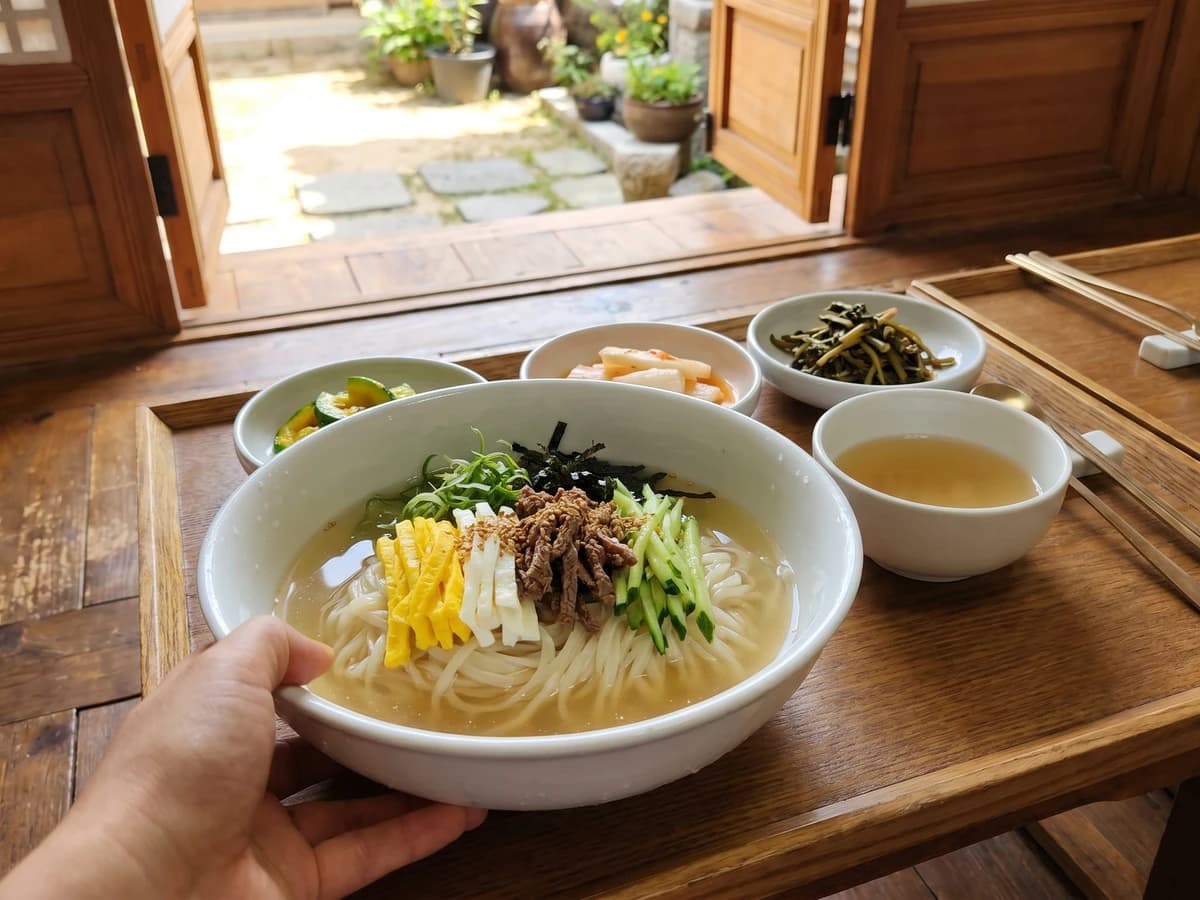
Andong's guest noodles, wheat and roasted soybean flour rolled thin, boiled and rinsed cold, then set in a clear chilled anchovy broth with careful strips of beef, egg, and cucumber.

Chef Jeong-sun
Andong's ritual-table rice served on an ordinary day: separate soy-sesame namul, warm rice, and clear radish soup, mixed without gochujang so every vegetable keeps its own voice.