
Chef Jeong-sun
Bibim-guksu (Spicy Mixed Noodles)
Cold somyeon tossed fast with chopped kimchi, cucumber, and a measured sweet-tart gochujang sauce; the summer noodle that asks for hard rinsing, quick hands, and no leftovers.
A cooking platform built around craft, culture, and the stories behind what we eat.
Created by
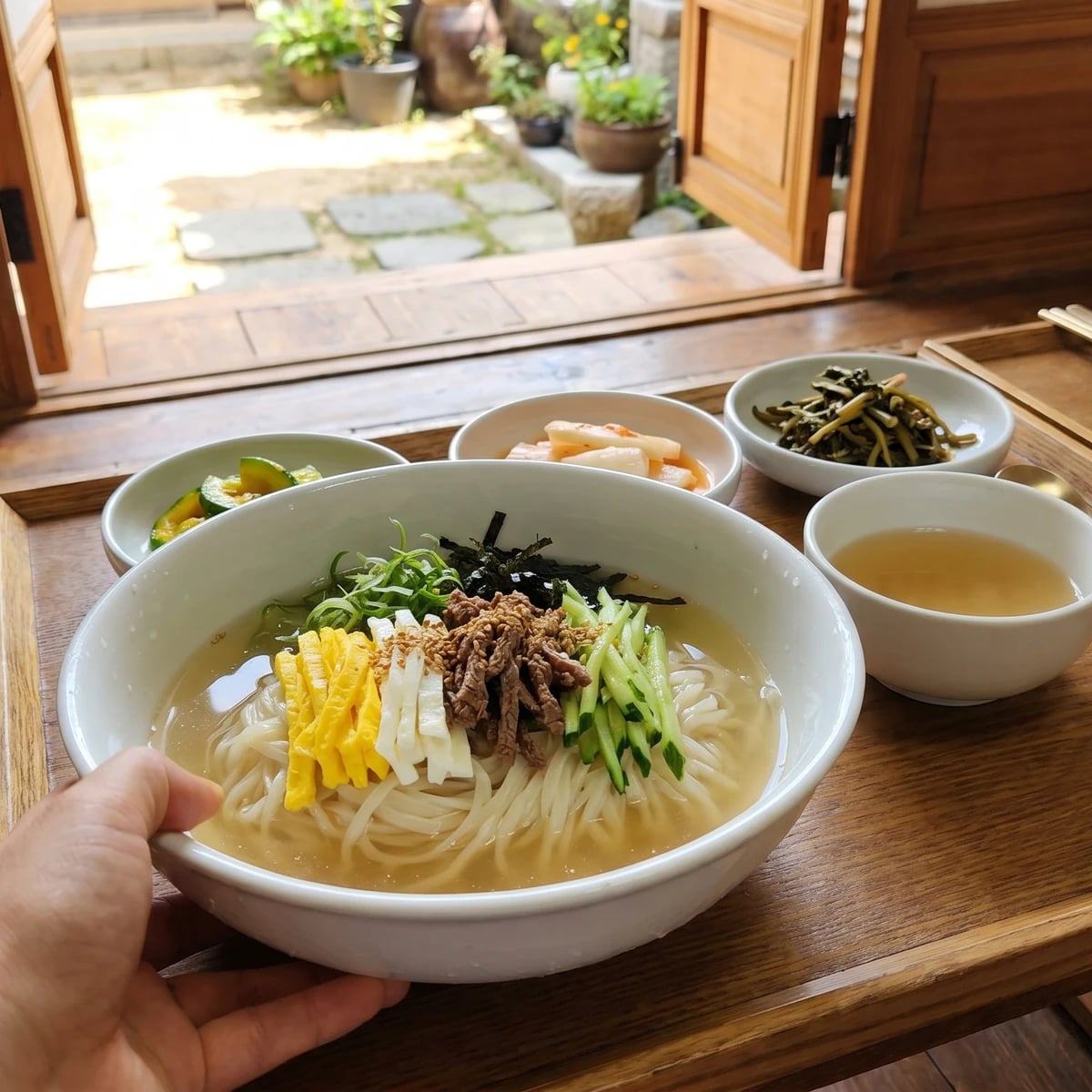
Andong's guest noodles, wheat and roasted soybean flour rolled thin, boiled and rinsed cold, then set in a clear chilled anchovy broth with careful strips of beef, egg, and cucumber.
Geonjin-guksu is a dish of hands. Not strong hands, careful ones. The dough has soybean flour in it, so it smells faintly nutty and rolls softer than plain wheat dough, but it punishes carelessness. Too wet and it tears. Too thick and the bowl becomes ordinary. Cut it thin, boil it fast, rinse it cold, and only then give it broth.
Andong served this kind of noodle to guests because wheat was not always a casual grain, and because the work showed regard. A guest could read the household in the strand: how thin the dough was rolled, how clear the broth stayed, how neatly the jidan (egg garnish) was cut. That sounds severe. It is also warm. A careful bowl says, you were expected.
The misunderstanding is to call this kalguksu and stop there. Kalguksu can be hearty and cloudy, cooked in its own broth. Geonjin-guksu is lifted out, rinsed, and served clean, often cool, so the broth stays clear and the noodle keeps its fine chew. I won't tell you this is a hurried dinner. Tonight it asks for rolling, cutting, and patience with cold water. Write it down. Memory is a borrowed bowl.
Andong geonjin-guksu is associated with Andong in Gyeongsangbuk-do, where Confucian household culture made guest food, ritual food, and careful table manners part of daily reputation, not palace display. The name points to the method: geonjida means to lift out, and the boiled noodles are rinsed before they meet a clean broth, unlike jemul-guksu or many kalguksu styles that keep the starch in the cooking liquid. The wheat-and-soybean-flour noodle is one marker of the Andong style, remembered as a special-occasion food when wheat was treated with more ceremony than it is now.
Quantity
2 cups, plus more for dusting
Quantity
1/2 cup
finely sifted
Quantity
1/2 teaspoon
for dough
Quantity
3/4 cup, plus 1 to 2 tablespoons if needed
Quantity
8 cups
for broth
Quantity
18
heads and guts removed
Quantity
1 piece, about 4 inches square
Quantity
1/2 small
peeled
Quantity
2
Quantity
1 tablespoon
Quantity
1/2 teaspoon, plus more to adjust
for broth
Quantity
1 teaspoon
for a clearer cool finish
Quantity
120g
brisket or eye of round
Quantity
1 teaspoon
for beef
Quantity
1/2 teaspoon
for beef
Quantity
1/2 teaspoon
for beef
Quantity
1/4 teaspoon
minced, for beef
Quantity
2 large
separated
Quantity
1 teaspoon
for cooking egg garnish
Quantity
1/2
julienned
Quantity
1/2 teaspoon
for cucumber
Quantity
1 teaspoon
for serving
Quantity
2
thinly sliced
Quantity
a small handful
cut into thin strips
| Ingredient | Quantity |
|---|---|
| all-purpose flour | 2 cups, plus more for dusting |
| roasted soybean flour (konggaru)finely sifted | 1/2 cup |
| fine sea saltfor dough | 1/2 teaspoon |
| warm water | 3/4 cup, plus 1 to 2 tablespoons if needed |
| waterfor broth | 8 cups |
| large dried anchovies (myeolchi)heads and guts removed | 18 |
| dried kelp (dasima) | 1 piece, about 4 inches square |
| onionpeeled | 1/2 small |
| scallion whites | 2 |
| soup soy sauce (guk-ganjang) | 1 tablespoon |
| fine sea saltfor broth | 1/2 teaspoon, plus more to adjust |
| rice vinegar (optional)for a clearer cool finish | 1 teaspoon |
| lean beefbrisket or eye of round | 120g |
| soy saucefor beef | 1 teaspoon |
| toasted sesame oilfor beef | 1/2 teaspoon |
| toasted sesame seedsfor beef | 1/2 teaspoon |
| garlicminced, for beef | 1/4 teaspoon |
| eggsseparated | 2 large |
| neutral oilfor cooking egg garnish | 1 teaspoon |
| English cucumberjulienned | 1/2 |
| fine sea saltfor cucumber | 1/2 teaspoon |
| toasted sesame seedsfor serving | 1 teaspoon |
| scallion greensthinly sliced | 2 |
| gim (roasted seaweed) (optional)cut into thin strips | a small handful |
Put 8 cups water, the prepared anchovies, kelp, onion, and scallion whites in a pot over medium heat. When the water comes to a gentle simmer, pull out the kelp right away so it does not turn the broth slick or bitter. Simmer the anchovies, onion, and scallion whites for 15 minutes more, then strain. Season with 1 tablespoon soup soy sauce and 1/2 teaspoon salt. Taste it cold later before adding more salt, because chilled broth tastes flatter than warm broth.
Cool the strained broth, then refrigerate it until cold, at least 1 hour. Taste again and adjust with up to 1/4 teaspoon more salt if it tastes dull. Add 1 teaspoon rice vinegar only if the broth needs a small clean edge. The broth should be savory and quiet, not sour. Let the noodles speak too.
Sift the wheat flour, roasted soybean flour, and 1/2 teaspoon salt into a wide bowl. Stir in 3/4 cup warm water with chopsticks, then knead by hand for 8 to 10 minutes until the dough becomes smooth and firm. Add extra water only 1 teaspoon at a time. Soybean flour makes the noodles tender and nutty, but too much water makes them tear when you roll them thin.
Wrap the dough and let it rest 30 minutes at room temperature. This is not idleness. The flour hydrates, the gluten relaxes, and the dough rolls without fighting you. Notebook 41 says the dough should feel like an earlobe after resting: soft enough to press, firm enough to spring back.
Put the beef in a small pot with enough water to cover and simmer gently until cooked through, about 18 minutes. Cool, shred thinly, and season with 1 teaspoon soy sauce, 1/2 teaspoon sesame oil, 1/2 teaspoon sesame seeds, and 1/4 teaspoon minced garlic. Salt the julienned cucumber with 1/2 teaspoon salt for 10 minutes, squeeze dry, and leave it crisp. Beat the egg whites and yolks separately, cook each in a thin sheet with a little oil, then cut into fine jidan (egg garnish) threads. These small cuts are the guest's welcome, so don't make them lazy.
Dust the work surface lightly with flour. Roll the dough into a sheet about 1.5 mm thick, thin enough to see the shadow of your hand but not so thin it tears. Dust, fold loosely, and cut into noodles about 2 mm wide. Shake them open and dust lightly. This dish lives or dies by this cut: thick noodles make it ordinary kalguksu, and these are banquet noodles.
Bring a large pot of water to a rolling boil. Drop in the noodles, stirring right away so they do not cling. Boil 3 to 4 minutes, until they float and the center no longer tastes floury. Do not cook them in the serving broth. Geonjin means they are lifted out, rinsed, and then given clean broth, which is why the bowl stays clear.
Drain the noodles and rinse under cold running water, rubbing them gently between both hands until the surface starch is gone and the strands feel clean and springy. Drain hard. This rinsing is the name of the dish, not a small preference. Skip it and you lose the clear broth and the fine texture.
Divide the cold noodles among 4 bowls and pour about 1 1/4 cups chilled broth into each bowl. Arrange the seasoned beef, cucumber, yellow and white jidan, scallion greens, sesame seeds, and gim if using. Serve at once, before the noodles swell. 손맛 is real; I measure it anyway, so the next person can put the same guest's bowl on the table.
1 serving (about 620g)
Culinary guides, cultural storytelling, and the editorial depth that makes cooking meaningful.
Discover Culinary Explorer
Chef Jeong-sun
Cold somyeon tossed fast with chopped kimchi, cucumber, and a measured sweet-tart gochujang sauce; the summer noodle that asks for hard rinsing, quick hands, and no leftovers.

Chef Jeong-sun
Hamhung's chewy starch noodles tossed cold in a measured sweet-hot gochujang sauce, not drowned in it, finished with crisp pear, cucumber, sesame, and either skate hoe or cold beef.

Chef Jeong-sun
Dark acorn and buckwheat noodles in a cold anchovy-kelp broth, set with separately seasoned greens and cucumber so the acorn's faint bitterness stays honest and clear.

Chef Jeong-sun
Jeju's celebration noodle bowl: wheat noodles in a milky pork broth, crowned with sliced boiled pork and scallion, plain enough to show whether the broth was tended properly.