
Chef Jeong-sun
Agwi-jjim (Braised Monkfish with Bean Sprouts)
Firm monkfish buried under crisp soybean sprouts, minari, and a red gochugaru sauce thickened at the end; Masan's market dish asks for heat, timing, and a steady hand.
A cooking platform built around craft, culture, and the stories behind what we eat.
Created by
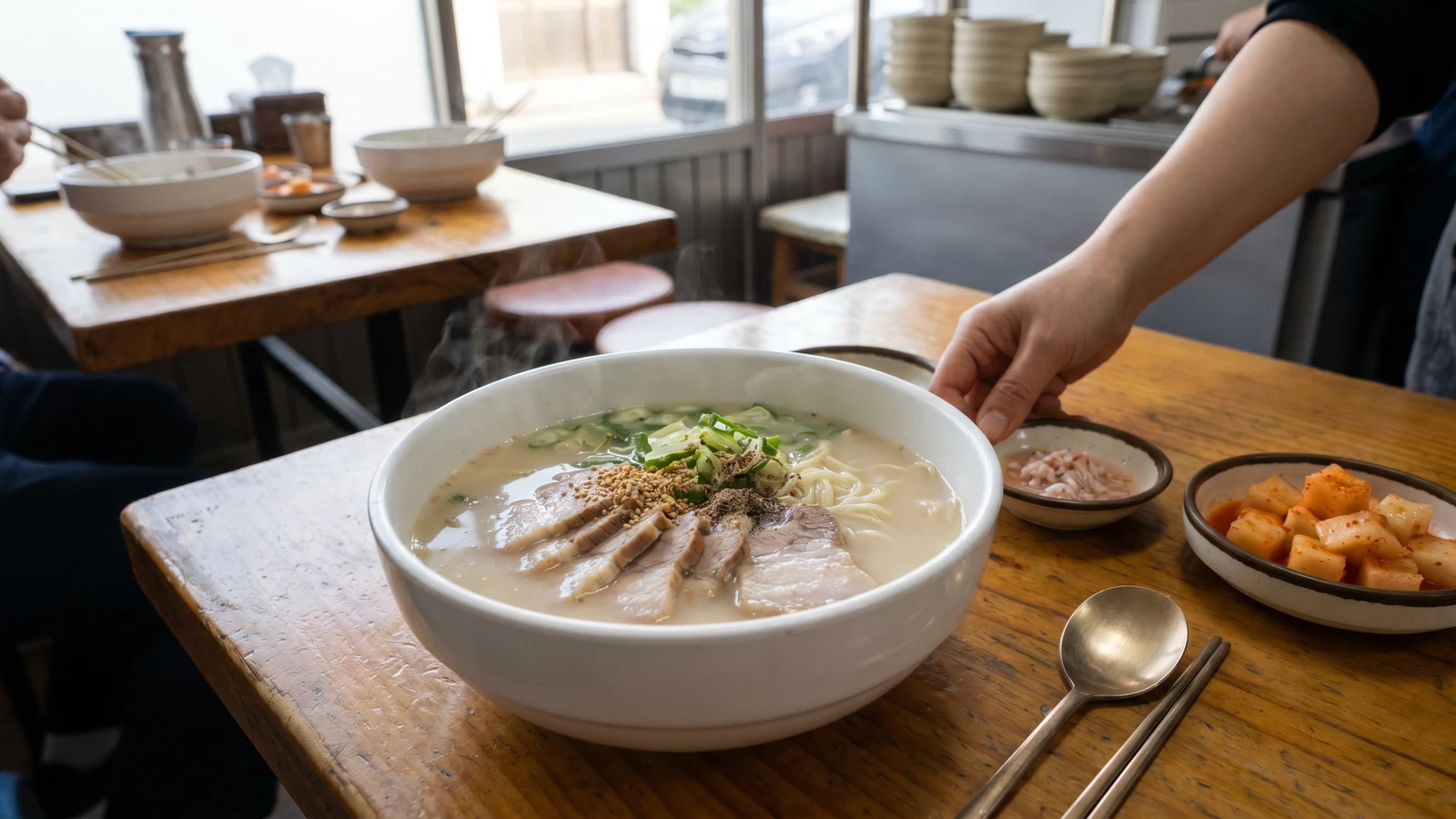
Jeju's celebration noodle bowl: wheat noodles in a milky pork broth, crowned with sliced boiled pork and scallion, plain enough to show whether the broth was tended properly.
Gogi-guksu lives or dies by the broth. Not the garnish, not a red sauce, not a pile of extras. A good bowl is pale and steady, made from pork bones and a piece of belly or shoulder simmered until the broth turns cloudy and full without becoming greasy. If you rush that pot, the bowl tells on you.
On Jeju, a pig was not casual food. It marked weddings, funerals, birthdays, and the days when a village table had to feed many hands. The meat was boiled for suyuk (sliced boiled pork), and the broth was not thrown away. Wheat noodles went into it, pork went back on top, and the bowl became generous without waste. That is good cooking. 음식은 생명에 대한 존중입니다. Food is respect for life.
Tonight this dish asks for time more than skill. Blanch the bones hard so the broth stays clean, simmer them gently so the marrow gives itself up, and season at the end, not the beginning. Salt too early and the pot tightens before you understand it. Measure the final seasoning, taste, and write it down. Memory is a borrowed bowl.
Gogi-guksu is a Jeju dish tied to the island's pork culture, especially communal occasions when a pig was butchered and every useful part was cooked, including the bones for broth and the boiled meat for suyuk. The dish became closely associated with Jeju City noodle shops in the twentieth century, when wheat noodles were easier to buy and pork-broth bowls moved from feast cooking into everyday restaurant food. It is not a palace dish, and it does not need that borrowed grandeur; its history belongs to island households, markets, and celebration tables.
Quantity
1.2kg
rinsed
Quantity
500g
kept in one piece
Quantity
14 cups
divided
Quantity
1 medium
halved
Quantity
1 small leek or 3 scallions
cut into large pieces
Quantity
8 cloves
lightly crushed
Quantity
1 thumb-size piece
sliced
Quantity
1 teaspoon
Quantity
2 tablespoons
Quantity
2 teaspoons, plus more as needed
Quantity
1 tablespoon
Quantity
1/2 teaspoon
finely minced
Quantity
600g fresh or 400g dried
Quantity
2
thinly sliced
Quantity
1 teaspoon
Quantity
1/4 teaspoon
Quantity
to serve
Quantity
to serve
Quantity
to serve
| Ingredient | Quantity |
|---|---|
| pork neck bones or back bonesrinsed | 1.2kg |
| pork belly or pork shoulderkept in one piece | 500g |
| cold waterdivided | 14 cups |
| onionhalved | 1 medium |
| small leek or scallionscut into large pieces | 1 small leek or 3 scallions |
| garliclightly crushed | 8 cloves |
| gingersliced | 1 thumb-size piece |
| whole black peppercorns | 1 teaspoon |
| cheongju or soju (optional) | 2 tablespoons |
| kosher salt | 2 teaspoons, plus more as needed |
| guk-ganjang (Korean soup soy sauce) | 1 tablespoon |
| saeujeot (salted fermented shrimp) (optional)finely minced | 1/2 teaspoon |
| fresh wheat noodles or dried somyeon or jungmyeon | 600g fresh or 400g dried |
| scallionsthinly sliced | 2 |
| toasted sesame seeds | 1 teaspoon |
| freshly ground black pepper | 1/4 teaspoon |
| gochugaru (Korean chili flakes) (optional) | to serve |
| saeujeot (salted fermented shrimp) (optional) | to serve |
| kimchi or kkakdugi (optional) | to serve |
Put the pork bones in a large bowl and cover with cold water for 30 minutes, changing the water once if it turns very red. This pulls out excess blood so the finished broth tastes clean rather than metallic. Rinse the pork belly or shoulder and keep it separate.
Put the bones in a large pot with 8 cups cold water. Bring to a hard boil and boil 8 minutes, until gray foam rises and the water looks dirty. Drain the bones, rinse them under warm running water, and scrub the pot clean. This is not fussiness. It is the difference between a milky broth and a muddy one.
Return the clean bones to the clean pot. Add 6 cups fresh cold water, the pork belly or shoulder, onion, leek or scallions, garlic, ginger, peppercorns, and cheongju or soju if using. Bring to a boil, then lower to a steady simmer with small bubbles breaking at the surface. Skim for the first 15 minutes, because the pot gives you one chance to take the roughness out.
After 55 to 70 minutes, check the pork belly or shoulder. A skewer should slide in without force, but the meat should still hold a clean slice. Lift it out, wrap loosely in foil or cover in a bowl, and let it rest. Leave the bones in the pot. Meat that stays in for the whole broth becomes dry and apologetic, and nobody at the table needs that.
Continue simmering the bones for 1 hour 45 minutes to 2 hours more, adding hot water if the level drops below the bones. Stir the bones once or twice, pressing them gently against the side of the pot. You are asking for body, not a violent boil. A rolling boil can make the broth greasy and harsh.
Strain the broth through a fine strainer into a clean pot. You should have about 8 cups. If you have less, add hot water; if you have much more, simmer it uncovered until it tastes full. Season with 2 teaspoons kosher salt, 1 tablespoon guk-ganjang, and 1/2 teaspoon minced saeujeot if using. Taste after each addition. The broth should be savory and pork-rich, but gentle enough that the noodles still taste like wheat.
Slice the rested pork across the grain into pieces about 5mm thick. Keep the slices covered so they do not dry out. If the pork is belly, trim only the loose excess fat, not every stripe. Jeju pork noodle soup should taste like pork, and fear of fat makes a thin bowl.
Bring a separate large pot of water to a boil. Cook fresh wheat noodles for 2 to 3 minutes, or dried somyeon or jungmyeon according to the package, usually 4 to 6 minutes. Stir so they do not clump. Drain and rinse briefly under warm running water to remove surface starch, then shake off the water well. If you leave the starch on, it muddies the broth you spent three hours cleaning.
Divide the noodles among four warmed bowls. Ladle about 2 cups hot broth over each portion. Lay 4 to 5 slices of pork on top, then scatter with sliced scallion, sesame seeds, and a little black pepper. Serve with gochugaru and saeujeot on the side so each person can season the pork, not bury the whole bowl.
1 serving (about 760g)
Culinary guides, cultural storytelling, and the editorial depth that makes cooking meaningful.
Discover Culinary ExplorerChef Jeong-sun
Firm monkfish buried under crisp soybean sprouts, minari, and a red gochugaru sauce thickened at the end; Masan's market dish asks for heat, timing, and a steady hand.

Chef Jeong-sun
A quick Korean rice bowl built on contrast: warm rice, cold popping flying-fish roe, chopped vegetables, gim, sesame oil, and the crisp rice bottom a hot stone bowl gives you.
Chef Jeong-sun
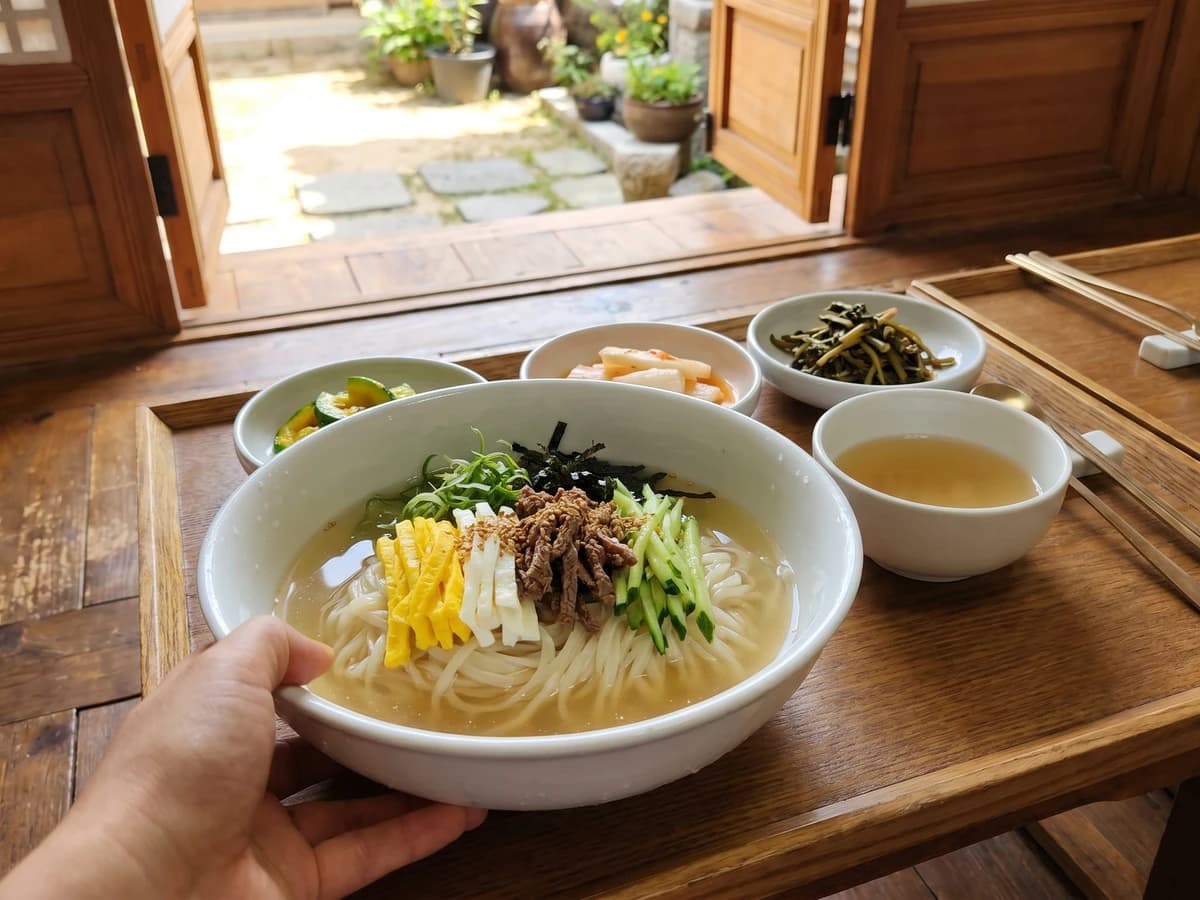
Andong's guest noodles, wheat and roasted soybean flour rolled thin, boiled and rinsed cold, then set in a clear chilled anchovy broth with careful strips of beef, egg, and cucumber.

Chef Jeong-sun
Andong's ritual-table rice served on an ordinary day: separate soy-sesame namul, warm rice, and clear radish soup, mixed without gochujang so every vegetable keeps its own voice.