
Chef Jeong-sun
Andong Geonjin-guksu (Rinsed Banquet Noodles)
Andong's guest noodles, wheat and roasted soybean flour rolled thin, boiled and rinsed cold, then set in a clear chilled anchovy broth with careful strips of beef, egg, and cucumber.
A cooking platform built around craft, culture, and the stories behind what we eat.
Created by
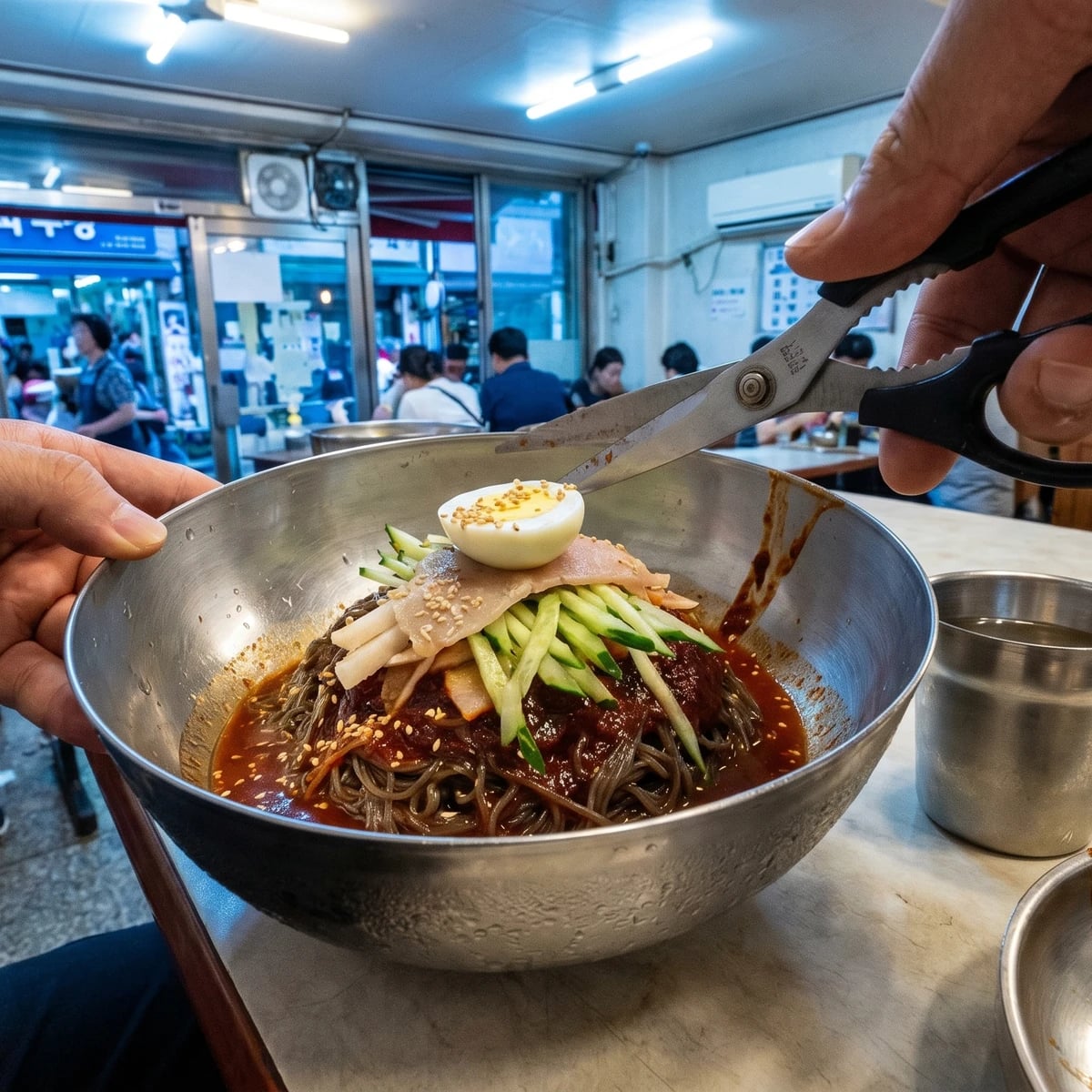
Hamhung's chewy starch noodles tossed cold in a measured sweet-hot gochujang sauce, not drowned in it, finished with crisp pear, cucumber, sesame, and either skate hoe or cold beef.
Bibim-naengmyeon is not Pyongyang naengmyeon with the broth forgotten. That is the first correction. Pyongyang asks for mild buckwheat and cold broth; Hamhung asks for elastic starch noodles and a sauce sharp enough to wake the jaw, with vinegar, gochugaru (Korean chili flakes), gochujang (red chili paste), pear, and a little sesame. One bowl soothes. This one argues a little, then makes you reach again.
This is summer food, but not soft food. The noodles must be boiled briefly, scrubbed under cold water until they feel squeaky, and dressed only when cold, so the sauce clings instead of soaking in. People bury it in gochujang and sugar until every strand tastes the same. Don't do that. The sauce should sting, sweeten, sour, and then step back so the noodle's chew and the pear's cold crunch still read clearly.
My teacher Master Seong-nyeo kept her Hamhung note separate from her Pyongyang note, because she said refugees carried cities in their bowls and we had no right to mix them lazily. Notebook 18 says 45 grams of sauce per portion to start, then one spoon more only if the noodles still look bare. If you have safe skate hoe (raw or fermented skate prepared for hoe), use it. If not, cold beef is an honest home-table answer. 손맛 is real. I still measure it, so it can be handed on.
Hamhung naengmyeon belongs to Hamhung and the wider Hamgyong region in what is now North Korea, where potato and sweet-potato starch noodles gave the dish a firm elastic chew unlike Pyongyang's buckwheat noodles. After the Korean War and the 1953 armistice, northern refugees opened naengmyeon shops in Seoul, and Ojang-dong became especially known for Hamhung-style bibim and hoe-naengmyeon topped with marinated skate. The names still carry the distinction: Pyongyang is known for mild cold broth, Hamhung for chewy noodles dressed in a hot, sweet, sour sauce.
Quantity
2 portions (about 200g dried or 360g fresh/frozen)
sweet potato or potato starch
Quantity
3 tablespoons
Quantity
1 tablespoon plus 1/2 teaspoon
divided
Quantity
3 tablespoons plus 1 teaspoon
divided, plus more to serve
Quantity
1 tablespoon
Quantity
1 tablespoon
divided
Quantity
1/2
2 tablespoons grated for sauce, remainder julienned
Quantity
1 tablespoon
grated
Quantity
1 small clove
grated to a paste
Quantity
1 teaspoon
Quantity
1 tablespoon
divided
Quantity
1/2 teaspoon
Quantity
1 cup plus 2 tablespoons
divided
Quantity
100g
cut into thin matchsticks
Quantity
1/2 teaspoon
divided, plus a pinch if seasoning skate
Quantity
1/2
julienned
Quantity
1
halved
Quantity
80 to 100g
thinly sliced
Quantity
as needed
for chilling the noodles
| Ingredient | Quantity |
|---|---|
| Hamhung-style naengmyeon noodlessweet potato or potato starch | 2 portions (about 200g dried or 360g fresh/frozen) |
| gochujang (Korean red chili paste) | 3 tablespoons |
| fine gochugaru (Korean chili flakes)divided | 1 tablespoon plus 1/2 teaspoon |
| rice vinegardivided, plus more to serve | 3 tablespoons plus 1 teaspoon |
| soy sauce | 1 tablespoon |
| sugardivided | 1 tablespoon |
| Korean pear2 tablespoons grated for sauce, remainder julienned | 1/2 |
| oniongrated | 1 tablespoon |
| garlicgrated to a paste | 1 small clove |
| toasted sesame oil | 1 teaspoon |
| toasted sesame seedsdivided | 1 tablespoon |
| gyeoja (Korean mustard) (optional) | 1/2 teaspoon |
| chilled beef broth or dongchimi brinedivided | 1 cup plus 2 tablespoons |
| Korean radish (mu)cut into thin matchsticks | 100g |
| kosher saltdivided, plus a pinch if seasoning skate | 1/2 teaspoon |
| English cucumberjulienned | 1/2 |
| hard-boiled egghalved | 1 |
| prepared skate hoe (hongeo hoe) or cold cooked beef brisketthinly sliced | 80 to 100g |
| crushed ice (optional)for chilling the noodles | as needed |
Stir together the gochujang, 1 tablespoon gochugaru, 2 tablespoons rice vinegar, soy sauce, 2 teaspoons sugar, grated pear, grated onion, garlic, sesame oil, 1 teaspoon crushed sesame seeds, gyeoja if using, and 2 tablespoons chilled broth or dongchimi brine. The sauce should cling to a spoon but fall in a slow ribbon. Refrigerate it 30 minutes. That rest matters because the gochugaru swells, the garlic settles, and the sauce stops tasting like separate ingredients.
Toss the radish matchsticks with 1 tablespoon rice vinegar, 1 teaspoon sugar, and 1/4 teaspoon salt. Let them sit 15 minutes, then squeeze lightly so they stay crisp but do not water down the noodles. Toss the cucumber with the remaining 1/4 teaspoon salt, rest 10 minutes, and squeeze dry. Julienne the pear last so it stays pale and cold.
If your prepared skate hoe is already seasoned, keep it cold and leave it alone. If it is plain hoe-grade skate or ray wing from a trusted fishmonger, toss it with 1 teaspoon rice vinegar, 1/2 teaspoon gochugaru, and a pinch of salt, then refrigerate 10 minutes. Do not use ordinary fish-counter skate raw. If using beef, slice it thin across the grain and keep it cold; warm beef wilts the bowl before it reaches the table.
Bring at least 3 liters of water to a hard boil. Loosen the noodles with your hands before they go in, then boil, stirring at once so they do not knot together. Fresh or frozen Hamhung-style starch noodles usually need 45 to 90 seconds; dried noodles need 3 to 4 minutes. They should be elastic and chewy, not soft.
Drain the noodles and rinse them under cold running water, rubbing them between your hands for 1 to 2 minutes until the surface starch is gone and the noodles feel squeaky. Drop them into ice water for 30 seconds, then drain hard and squeeze lightly. This is the step that makes the sauce cling cleanly instead of turning sticky.
Put one portion of cold noodles in a chilled mixing bowl and add 3 tablespoons sauce, about 45g. Toss with a gloved hand or chopsticks, lifting and separating the strands. Add up to 1 tablespoon more sauce per portion only if the noodles still look bare. They should be lacquered red, not swimming. Notebook 18 says to start there, and it is right.
Coil the dressed noodles into chilled stainless bowls. Top each bowl with cucumber, pickled radish, pear, half an egg, and the skate hoe or beef. Scatter the remaining sesame seeds over the top. Serve immediately with kitchen scissors and the remaining chilled beef broth or dongchimi brine on the side, so each person can add a spoon or two if the sauce tightens. Do not pour in so much that it becomes mul-naengmyeon; this bowl is meant to be mixed.
1 serving (about 650g)
Culinary guides, cultural storytelling, and the editorial depth that makes cooking meaningful.
Discover Culinary Explorer
Chef Jeong-sun
Andong's guest noodles, wheat and roasted soybean flour rolled thin, boiled and rinsed cold, then set in a clear chilled anchovy broth with careful strips of beef, egg, and cucumber.

Chef Jeong-sun
Cold somyeon tossed fast with chopped kimchi, cucumber, and a measured sweet-tart gochujang sauce; the summer noodle that asks for hard rinsing, quick hands, and no leftovers.

Chef Jeong-sun
Dark acorn and buckwheat noodles in a cold anchovy-kelp broth, set with separately seasoned greens and cucumber so the acorn's faint bitterness stays honest and clear.

Chef Jeong-sun
Jeju's celebration noodle bowl: wheat noodles in a milky pork broth, crowned with sliced boiled pork and scallion, plain enough to show whether the broth was tended properly.