Chef Isabel
Abanico Ibérico a la Plancha
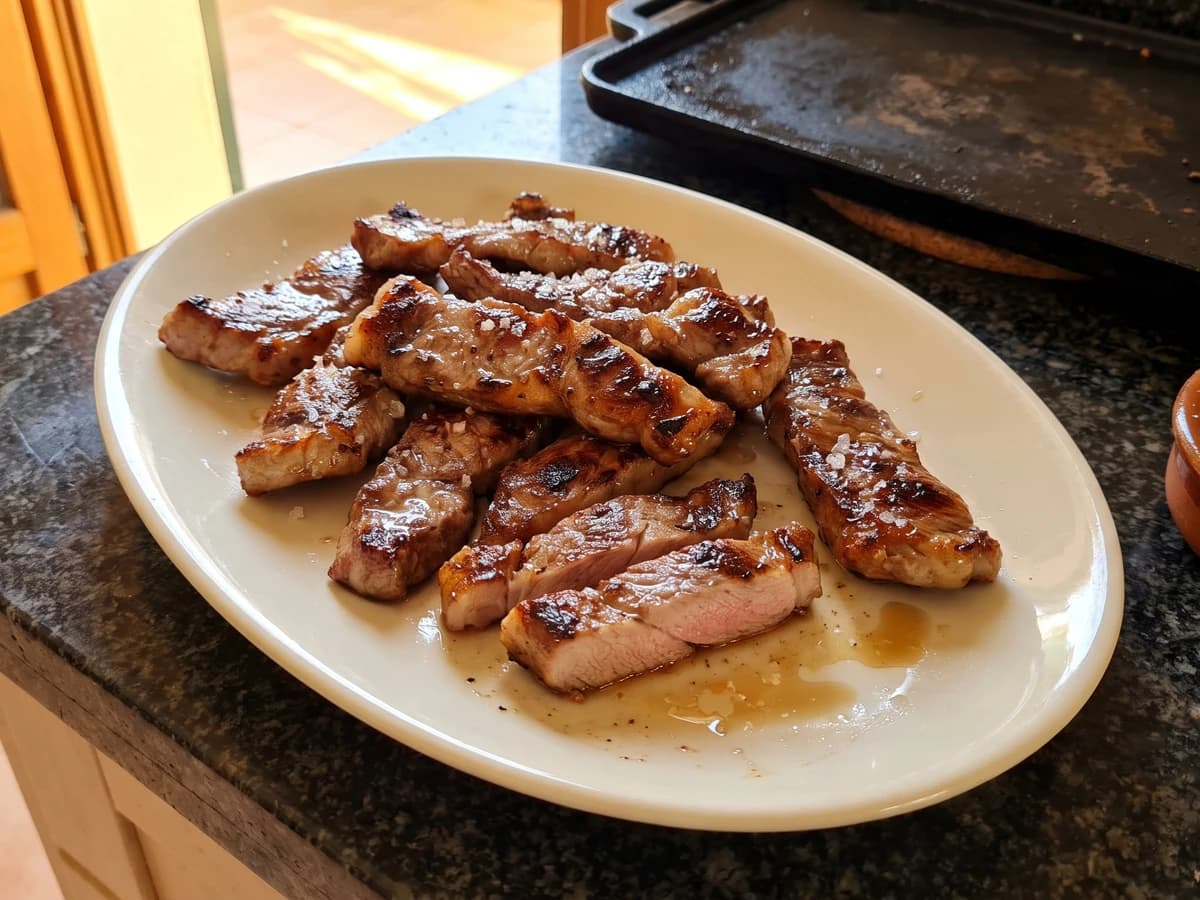
Extremadura's dehesa gives us this fan-shaped, marbled rib cut: salt it at the last moment, lay it on a fierce plancha, and count in seconds so the centre stays juicy.
A cooking platform built around craft, culture, and the stories behind what we eat.
Created by
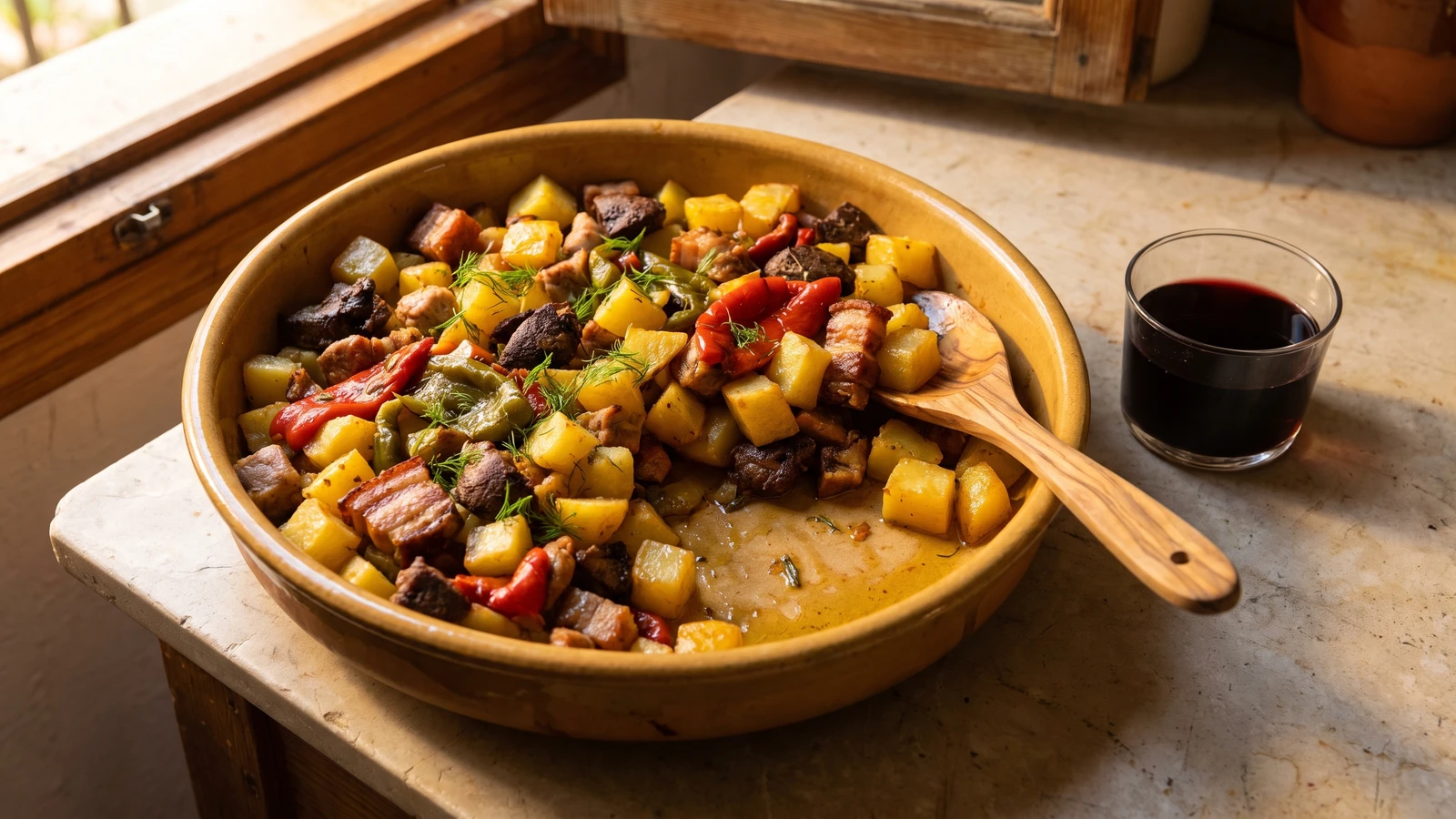
Frit mallorquí de matances is Mallorca’s slaughter-day panful: pork liver, lean meat, potatoes, peppers and wild fennel, each fried separately so every piece keeps its proper texture before the final toss.
Frit mallorquí de matances is Mallorca’s slaughter-day fry-up: fresh pork liver, lean pork and belly with fried potatoes, peppers, spring onion, garlic, bay and wild fennel. This is the pork-season frit, distinct from frit de freixura, its relative made with lamb offal. The scent of fonoll, fennel, and the mixture of meat, liver and crisp-edged potato make it unmistakably Mallorcan.
The method that decides it is simple: fry each part separately, then bring everything together for only a few minutes. Potatoes, peppers, lean pork and liver all release different amounts of water and need different cooking times. Crowd them into the pan together and the potatoes soften while the liver turns hard. Give each ingredient its turn and you get browned meat, tender liver and potatoes that still hold their edges.
Ask a butcher for fresh pork liver and use pork shoulder for the magre, the lean meat named in Mallorcan recipes. If pork liver truly can’t be found, lamb liver is the honest fallback, though it tastes darker and takes the dish away from matances. Cubanelle peppers stand in well for pale green Spanish frying peppers. For wild fennel, use the feathery tops from a fennel bulb; they’re gentler, so use the full measured amount. No hace falta haber pisado España.
Serve the frit as soon as the final toss is done, when the potatoes have taken on the seasoned oil but haven’t lost their edges. The Margin beside mine says only: fry apart, finish together. Siempre sale, si lo sigues.
Frit mallorquí belongs to Mallorca’s family of frits, dishes named for the act of frying rather than for one fixed ingredient list. The matances version was cooked during the winter household pig slaughter, when the liver and small fresh cuts needed using promptly while other meat was salted or worked into sobrassada and botifarró. Potatoes and peppers were later arrivals from the Americas, while wild fennel remained the island scent shared with older offal frits.
Quantity
900g
peeled and cut into 1.5cm dice
Quantity
350g
trimmed and cut into 1.5cm dice
Quantity
150g
rind removed and cut into 1.5cm dice
Quantity
250g
membrane and ducts removed and cut into 1.5cm dice
Quantity
300ml
for frying; most will be drained and reserved
Quantity
1 large (about 200g)
seeded and cut into 1.5cm pieces
Quantity
2 (about 160g)
seeded and cut into 1.5cm pieces
Quantity
1 bunch (about 150g)
trimmed and sliced into 1cm pieces
Quantity
6 cloves
skins left on and lightly crushed
Quantity
2
Quantity
1 (about 1g)
left whole
Quantity
15g
finely chopped and divided
Quantity
12g
divided
Quantity
2g
divided
| Ingredient | Quantity |
|---|---|
| all-purpose frying potatoes, such as Agria or Yukon Goldpeeled and cut into 1.5cm dice | 900g |
| boneless pork shouldertrimmed and cut into 1.5cm dice | 350g |
| fresh unsmoked pork bellyrind removed and cut into 1.5cm dice | 150g |
| fresh pork livermembrane and ducts removed and cut into 1.5cm dice | 250g |
| olive oilfor frying; most will be drained and reserved | 300ml |
| red bell pepperseeded and cut into 1.5cm pieces | 1 large (about 200g) |
| pale green Italian frying peppers or Cubanelle peppersseeded and cut into 1.5cm pieces | 2 (about 160g) |
| spring onionstrimmed and sliced into 1cm pieces | 1 bunch (about 150g) |
| garlicskins left on and lightly crushed | 6 cloves |
| bay leaves | 2 |
| small dried guindilla or other mild dried red chillileft whole | 1 (about 1g) |
| fresh wild fennel fronds or fennel-bulb topsfinely chopped and divided | 15g |
| fine sea saltdivided | 12g |
| freshly ground black pepperdivided | 2g |
Prepare the vegetables first, then use a separate board for the pork and liver. Keep every main ingredient close to 1.5cm across so it cooks at the same rate. Blot the shoulder, belly and liver thoroughly with kitchen paper and keep them in separate bowls. Wet meat releases water and goes grey in the pan instead of browning.
Heat the olive oil in a wide, heavy pan to about 170°C. A potato cube should bubble steadily as soon as it enters. Fry the potatoes in two batches, turning occasionally, for 10 to 12 minutes per batch. They’re ready when a knife enters without resistance and the edges are deep gold. Lift them onto a tray with a slotted spoon and season while hot with 4g of the salt. Carefully ladle all but 45ml of oil into a heatproof jug.
Set the pan over medium-high heat. Season the pork shoulder and belly with 3g salt and 1g black pepper. Add the belly first and cook for 4 to 5 minutes, until its fat is glossy and its edges have browned. Add the shoulder in a single layer and fry for 6 to 8 minutes, turning until browned and cooked through. If the pan is crowded, cook the shoulder in two batches. Lift both meats onto the tray with the potatoes.
Season the liver with 2g salt and the remaining 1g black pepper. Raise the heat and place the pieces in one uncrowded layer. Fry for 4 to 5 minutes, turning once or twice, until browned outside and cooked through but still tender. Pork liver should reach 71°C in the centre. Remove it promptly and keep it separate from the other cooked ingredients; leaving it in the pan while the vegetables cook would make it hard.
Spoon off excess fat so about 45ml remains in the pan. Lower the heat to medium and add the crushed garlic, bay leaves and whole guindilla. Cook for 30 seconds, then add both peppers and 2g salt. Fry for 5 minutes, stirring now and then. Add the spring onions and cook for another 4 to 5 minutes, until the peppers are tender with browned edges and the onions have gone soft. Stir in 10g of the chopped fennel for the final 30 seconds.
Return the belly, shoulder, liver and potatoes to the same pan. Add the final 1g salt and turn everything gently for 2 to 3 minutes, just long enough for the seasoned oil and fennel to coat every piece. Remove the bay leaves and guindilla. Scatter over the remaining 5g fennel and carry the pan straight to the table. The ingredients should remain distinct, not collapse into a hash.
1 serving (about 430g)
Culinary guides, cultural storytelling, and the editorial depth that makes cooking meaningful.
Discover Culinary ExplorerChef Isabel
Extremadura's dehesa gives us this fan-shaped, marbled rib cut: salt it at the last moment, lay it on a fierce plancha, and count in seconds so the centre stays juicy.

Chef Isabel
Aletría Murciana is Murcia's humble noodle guiso: fine fideos, pork ribs, potato, saffron, and a dark sweet sofrito. Get that base right and the pot knows where it's going.

Chef Isabel
Andrajos are Andalucía's dough-rag stew from Jaén and Granada: a slow rabbit guiso thickened with torn sheets of flour dough, rolled thin so they cook tender instead of gummy.
Chef Isabel
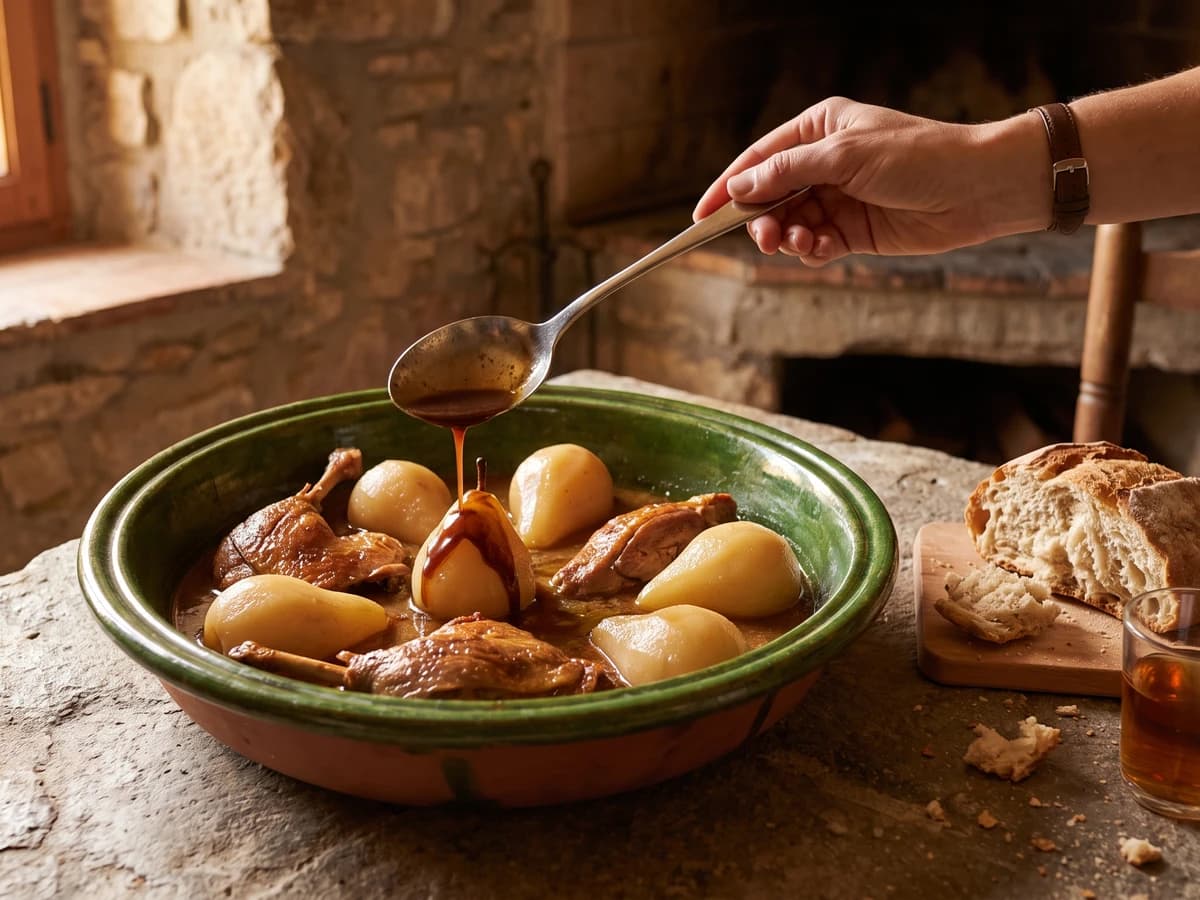
Ànec amb peres is Catalan celebration cooking: duck braised in a dark sofregit, firm autumn pears added near the end, and an almond-garlic picada that turns the juices into a close, glossy sauce.