Culinary Explorer
A cooking platform built around craft, culture, and the stories behind what we eat.
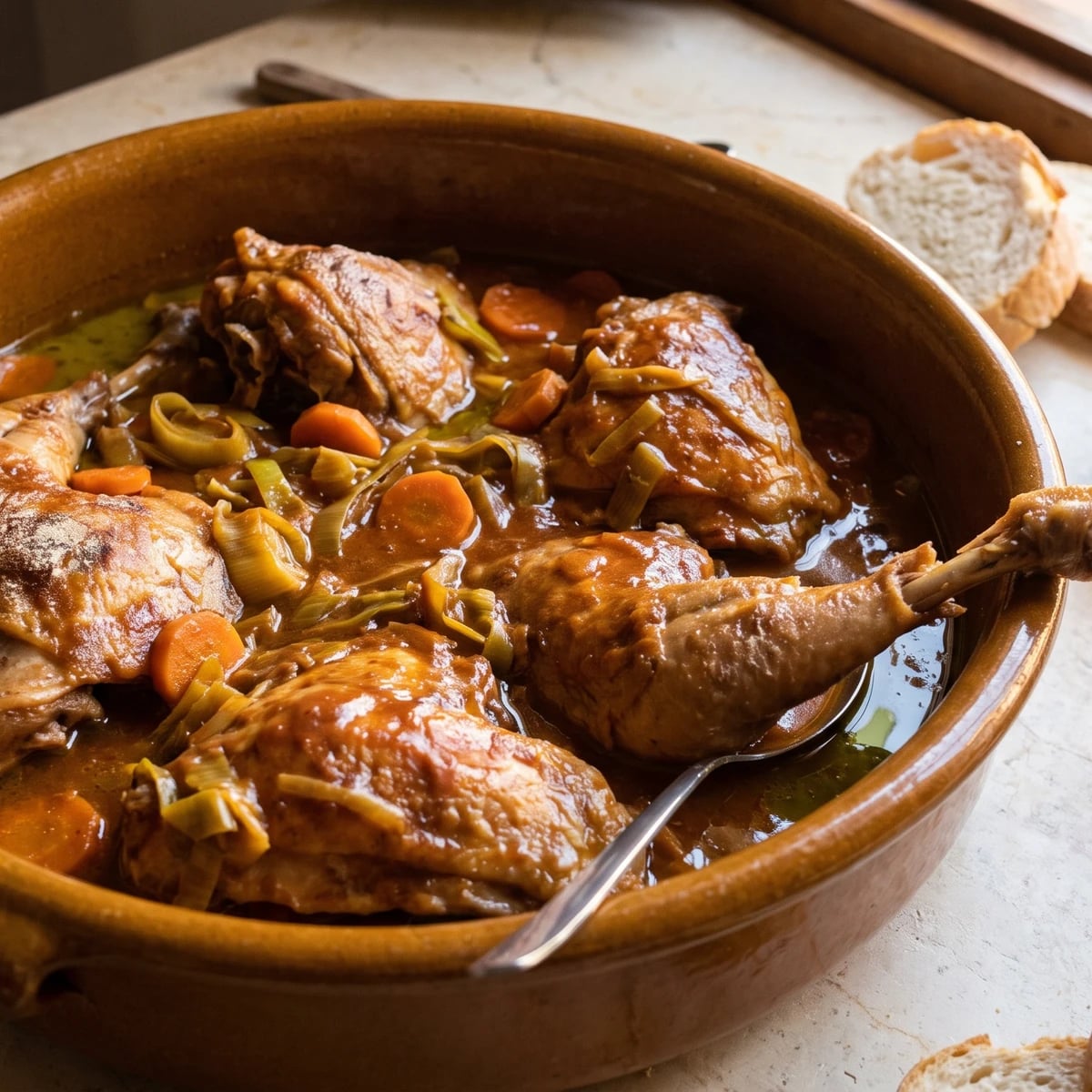
Faisán Estofado Manchego
Created by Chef Isabel
La Mancha gives lean pheasant the treatment it needs: a light coat of flour, deep browning, sweet leek-and-tomato sofrito, and a quiet braise that leaves the bird tender and the sauce glossy.
Faisán estofado manchego belongs to Castilla-La Mancha, where a lean game bird is browned under a light coat of flour, then tucked into leek, onion, carrot and tomato with local wine. It is an estofado, a covered stew, not an escabeche: the sauce is rounded by slow-cooked vegetables and wine, not led by vinegar. The flour takes on the browning from the pan and later gives the cooking liquor enough body to cling to the meat.
The braise decides it. Once the pheasant returns to the pot, let the liquid barely tremble. A hard boil tightens the breasts before the legs surrender, which is a poor bargain. I choose hen pheasants when I can because they are smaller and juicier than cocks. Check the breasts first, lift them when tender, and give the legs the extra time they need.
If pheasant is scarce where you are, use one 1.6kg free-range chicken, jointed the same way. The meat will be milder and a little fattier, and it needs only 45 to 55 minutes in the sauce. No hace falta haber pisado España, you don't need to have set foot in Spain. In the Margin beside this one I wrote, "the sauce may move; the bird mustn't knock about." Keep the simmer quiet and the measurements honest. Siempre sale, si lo sigues.
Ingredients
dressed hen pheasants
Quantity
2, 800g each
jointed into 12 bone-in breast, leg and wing pieces
fine sea salt
Quantity
16g
divided
freshly ground black pepper
Quantity
2g
| Ingredient | Quantity |
|---|---|
| dressed hen pheasantsjointed into 12 bone-in breast, leg and wing pieces | 2, 800g each |
| fine sea saltdivided | 16g |
| freshly ground black pepper | 2g |
Where cooking meets culture.
Culinary guides, cultural storytelling, and the editorial depth that makes cooking meaningful.
Discover Culinary Explorer