Chef Isabel
Abanico Ibérico a la Plancha
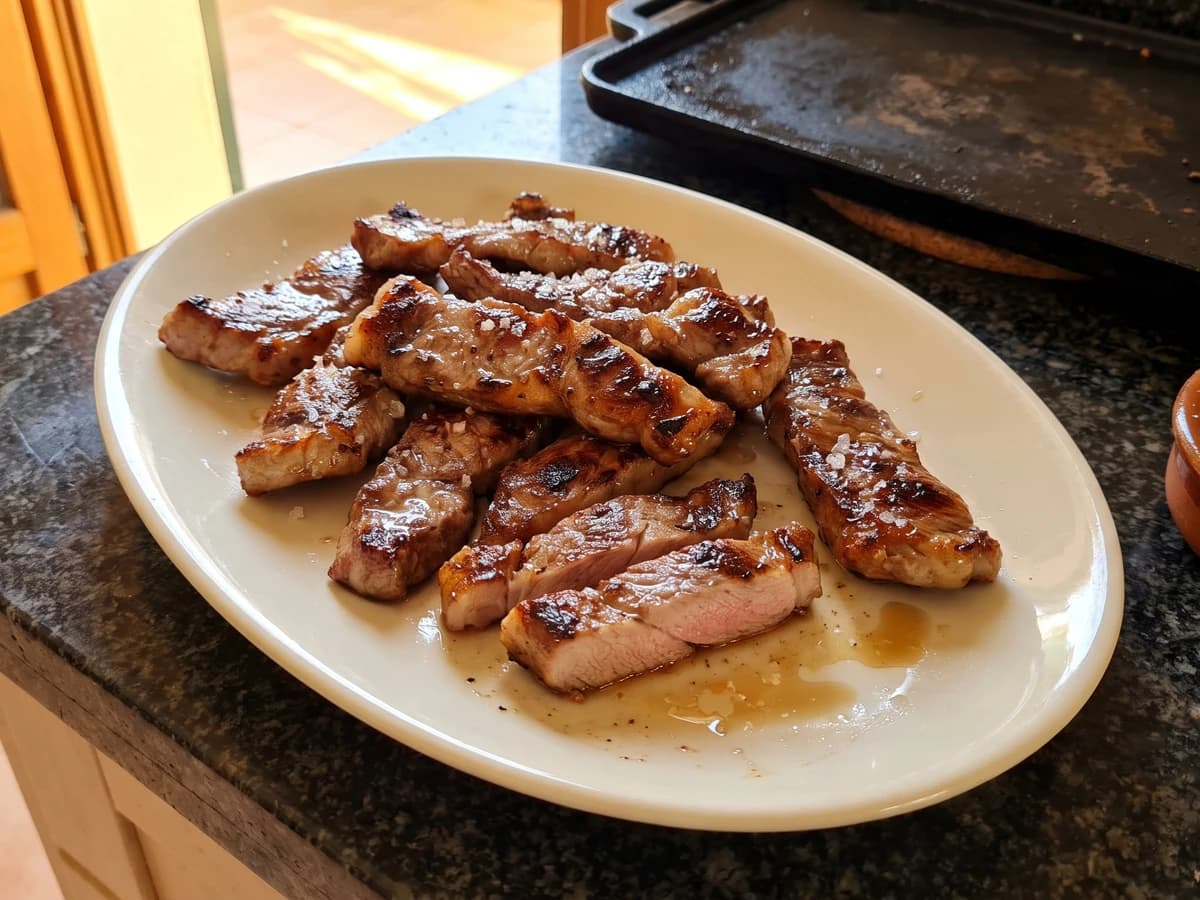
Extremadura's dehesa gives us this fan-shaped, marbled rib cut: salt it at the last moment, lay it on a fierce plancha, and count in seconds so the centre stays juicy.
A cooking platform built around craft, culture, and the stories behind what we eat.
Created by
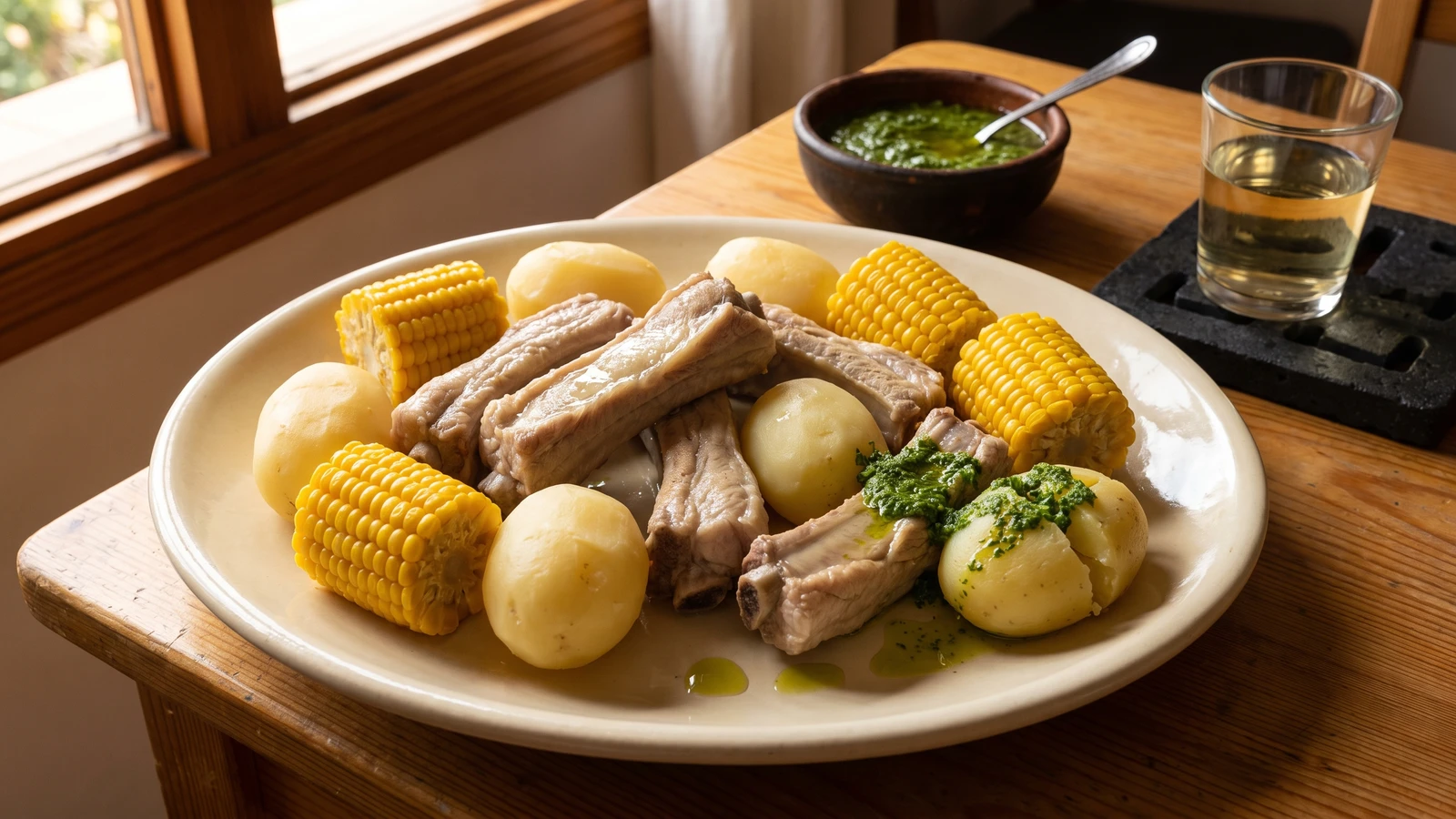
Tenerife’s country-table one-pot of salt-cured pork ribs, potatoes, and piñas de millo, whole corn cobs, boiled until tender and served with the sharp green bite of cilantro mojo.
Costillas con papas y piñas de millo belongs to Tenerife and the western Canary Islands: salt-cured pork ribs, whole potatoes, and corn cobs boiled in one pot, then served with a loose mojo de cilantro, the islands’ sharp green sauce. Piña means the cob here, not pineapple. The plate looks plain until the mojo lands on it, then the salty pork, sweet corn, soft potato, garlic, vinegar, and cilantro make sense together. This is generous food for a full family table, especially when there is something to celebrate and nobody wants to spend the day fussing over six pans.
The method that decides it is the desalting. Soak the costillas saladas for a full day in the refrigerator and change the cold water three times. Too short a soak leaves the entire pot fiercely salty; careless soaking at room temperature is unsafe. Once the ribs are ready, the cooking is patient and simple. Give the meat a head start, add the corn, then the potatoes last so they stay whole. I keep the mojo rough and pourable, with enough vinegar to cut the pork but not so much that it hides the cilantro.
No hace falta haber pisado España. If salted ribs are unavailable, rub 1.2kg fresh meaty pork ribs with exactly 30g coarse salt, cover and refrigerate for 24 hours, then rinse them and cook without the long water soak. They will taste less cured and the broth will be milder, so taste it before adding the potatoes and add 3g salt only if it is flat. Frozen corn-cob sections also work when fresh corn is poor, though the kernels will be softer and less milky. The Margin beside this one says only, "desala bien," desalt it properly. Do that, and the pot takes care of you.
Costillas con papas y piñas de millo belongs especially to Tenerife’s rural tables and guachinches, the modest places where wine growers served their own wine with plain, sustaining island food. The salted ribs reflect the old household need to preserve pork, while maize reached the Canaries through Atlantic trade and became millo in local speech. Its close-packed cob is called a piña, which is why the name means corn here, not pineapple.
Quantity
1.2kg
cut into pieces of 1 or 2 bones
Quantity
6 medium
husked and halved crosswise
Quantity
1.5kg
peeled and left whole
Quantity
16 litres for soaking, plus about 3.5 litres for cooking
Quantity
40g
washed and dried
Quantity
20g
peeled
Quantity
1 small (about 70g)
seeded and chopped
Quantity
1 small Canarian chile or 1/2 serrano (about 5g)
stemmed
Quantity
3g
Quantity
6g
Quantity
50ml
Quantity
150ml
| Ingredient | Quantity |
|---|---|
| salt-cured pork ribs (costillas saladas)cut into pieces of 1 or 2 bones | 1.2kg |
| fresh corn cobs (piñas de millo)husked and halved crosswise | 6 medium |
| small Canarian or yellow all-purpose potatoespeeled and left whole | 1.5kg |
| cold water | 16 litres for soaking, plus about 3.5 litres for cooking |
| fresh cilantro leaves and tender stemswashed and dried | 40g |
| garlicpeeled | 20g |
| green frying pepperseeded and chopped | 1 small (about 70g) |
| green Canarian chile or serrano chile (optional)stemmed | 1 small Canarian chile or 1/2 serrano (about 5g) |
| cumin seeds | 3g |
| coarse salt | 6g |
| white wine vinegar | 50ml |
| extra virgin olive oil | 150ml |
Twenty-four hours before cooking, put the salted ribs in a large nonreactive bowl and cover them with 4 litres of cold water. Refrigerate them throughout the soak. Drain and replace the water after 6, 12, and 18 hours, using 4 litres each time, then rinse the ribs well. This is the step that decides the dish: leave too much salt in the meat and it seasons the potatoes past saving.
Pound the cumin seeds and coarse salt in a mortar. Add the garlic and work it to a paste, then pound in the green pepper, optional chile, and cilantro a little at a time. Stir in the vinegar, followed by the olive oil, until the mojo is loose, green, and visibly flecked. A blender is fine if you pulse briefly rather than turning it into a smooth cream. Set aside while the pot cooks.
Put the rinsed ribs in an 8-litre pot and add about 3.5 litres of fresh cold water, enough to cover them by 3cm. Bring slowly to a boil over medium heat and skim off the grey foam. Lower the heat, partially cover, and simmer gently for 45 minutes. The meat should be beginning to soften but still hold firmly to the bone.
Add the halved corn cobs and return the liquid to a gentle simmer. Cook for 20 minutes, turning any floating pieces once so they cook evenly. Mature field corn needs this time; its kernels should swell and soften without leaving the cob.
Add the whole peeled potatoes, tucking them beneath the liquid without stirring the ribs about. Add a little boiling water only if they are not nearly covered. Simmer for 20 to 25 minutes, until a small knife passes cleanly through the centre of a potato and the ribs are tender at the bone. If the potatoes finish first, lift them out and give the ribs another 10 minutes.
Reserve 250ml of the cooking liquid, then drain the ribs, corn, and potatoes well. Arrange them together on a broad platter and let them settle for 5 minutes. Spoon a little cilantro mojo over one or two pieces and bring the rest to the table in a bowl. Each person adds their own. The potatoes should catch the sharp green sauce, the corn stays sweet, and the salted pork carries the plate. Siempre sale, si lo sigues.
1 serving (about 500g)
Culinary guides, cultural storytelling, and the editorial depth that makes cooking meaningful.
Discover Culinary ExplorerChef Isabel
Extremadura's dehesa gives us this fan-shaped, marbled rib cut: salt it at the last moment, lay it on a fierce plancha, and count in seconds so the centre stays juicy.

Chef Isabel
Aletría Murciana is Murcia's humble noodle guiso: fine fideos, pork ribs, potato, saffron, and a dark sweet sofrito. Get that base right and the pot knows where it's going.

Chef Isabel
Andrajos are Andalucía's dough-rag stew from Jaén and Granada: a slow rabbit guiso thickened with torn sheets of flour dough, rolled thin so they cook tender instead of gummy.
Chef Isabel
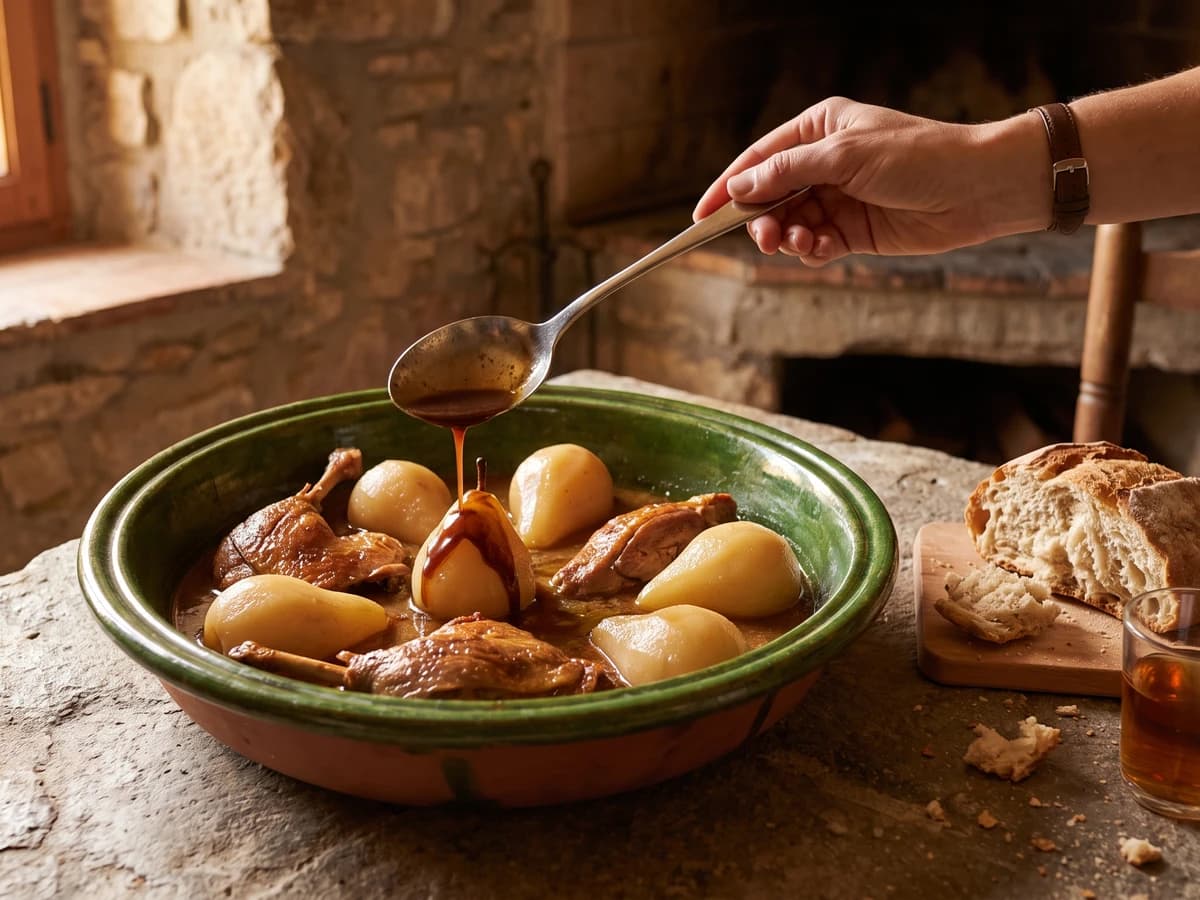
Ànec amb peres is Catalan celebration cooking: duck braised in a dark sofregit, firm autumn pears added near the end, and an almond-garlic picada that turns the juices into a close, glossy sauce.