Chef Isabel
Abanico Ibérico a la Plancha
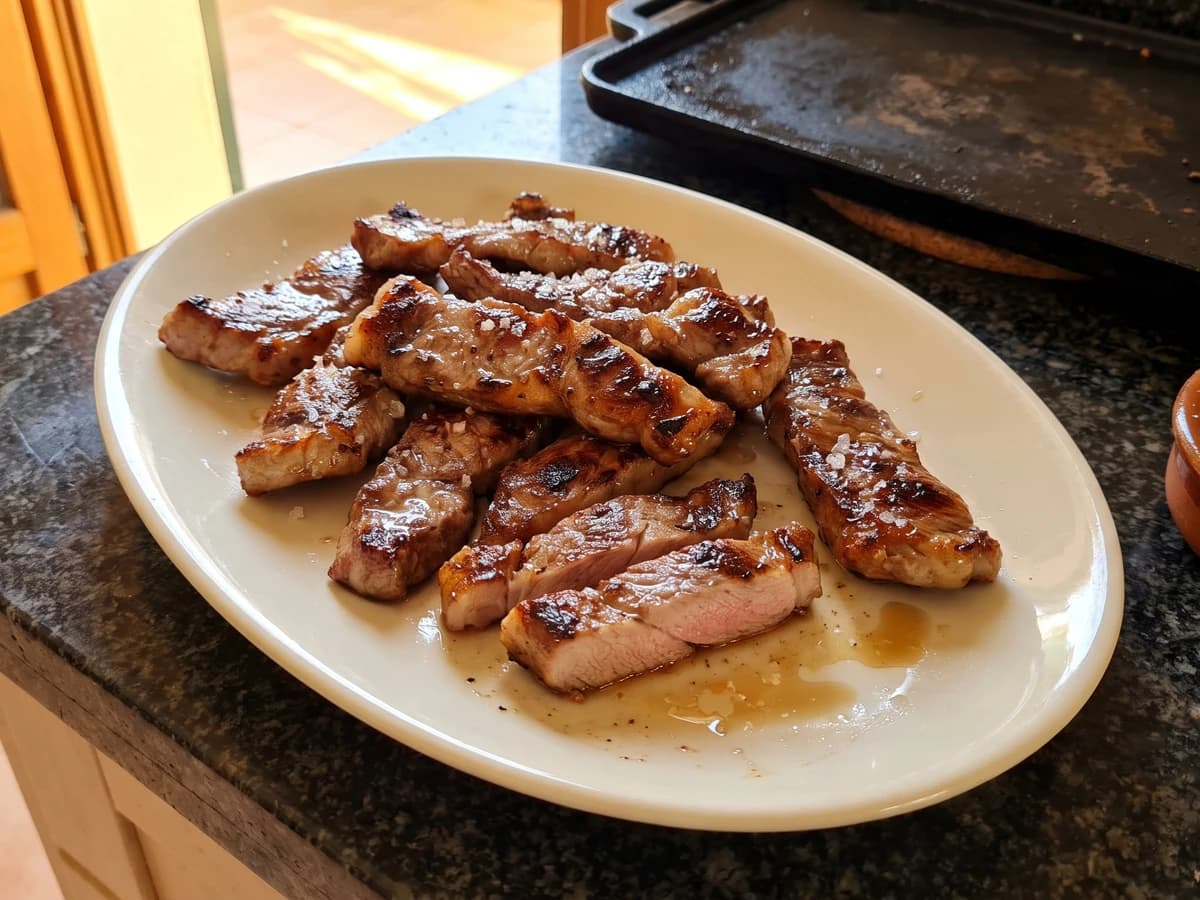
Extremadura's dehesa gives us this fan-shaped, marbled rib cut: salt it at the last moment, lay it on a fierce plancha, and count in seconds so the centre stays juicy.
A cooking platform built around craft, culture, and the stories behind what we eat.
Created by
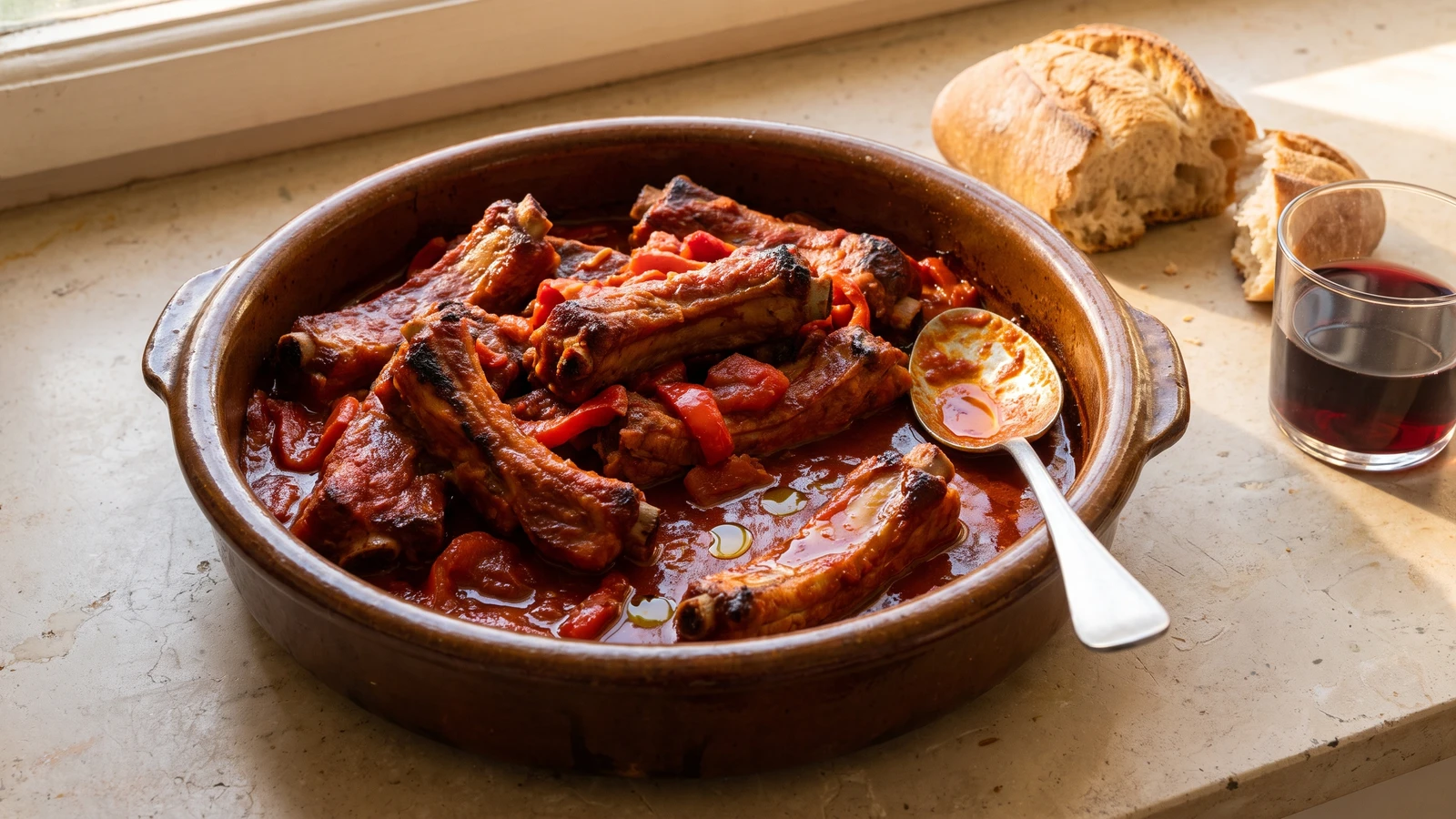
Riojan pork ribs settle into a dark, sweet sofrito of red pepper, tomato, pimentón and local wine, then braise slowly until the bones loosen and the sauce calls for a proper piece of bread.
Costillas a la Riojana are La Rioja's slow-braised pork ribs, browned first and then settled into a brick-red sauce of onion, red pepper, tomato, choricero pepper, sweet pimentón and local wine. Their Riojan surname is in that pepper-and-wine sauce: savory, gently sweet and thick enough to cling to the meat, never sugary and never painted on at the end. This is family-table food, with bread kept close because leaving that sauce behind would be foolish.
The method that decides the dish is the sofrito, the slow onion and pepper base. I cook it low until the onion turns dark gold and the pepper nearly collapses, then add the tomato and wait until its water is gone and the oil shows again around the edges. That patient cooking concentrates the sweetness. Pour wine into a pale, watery sofrito and the ribs will be tender, certainly, but the sauce will taste thin.
If pimiento choricero paste doesn't reach your shops, scrape 15g of pulp from two soaked ñoras. Ñora is a little sweeter and less fleshy, so the finished sauce will be brighter and slightly lighter. A dry young red from where you live can replace the Rioja wine, though you lose a little of the vineyard character. The Margin beside this recipe says only, "wait for the oil to return." Do that, keep the braise at a bare tremble, and the bones loosen without the meat turning stringy. Siempre sale, si lo sigues, it turns out if you follow it.
Costillas a la Riojana belong to the household cooking of La Rioja, where pork from the matanza, the household pig slaughter, met peppers dried or bottled after harvest and wine from the same villages. The pimiento choricero mattered because drying carried ripe-pepper sweetness through the cold months, long after the fresh crop had gone. In Riojan cooking, a la riojana names this red, savory larder of peppers, tomato, garlic and wine rather than one rigid sauce, so family pots differ in thickness but keep the same character.
Quantity
1.2kg
cut between the bones into individual ribs
Quantity
15g
divided
Quantity
2g
Quantity
45ml
divided
Quantity
250g
finely diced
Quantity
250g
seeded and cut into 1cm dice
Quantity
20g
finely chopped
Quantity
400g
fresh tomatoes grated and skins discarded, or canned tomatoes crushed
Quantity
15g
Quantity
5g
Quantity
200ml
Quantity
300ml, plus up to 100ml more if needed
Quantity
1
Quantity
240g
thickly sliced for serving
| Ingredient | Quantity |
|---|---|
| bone-in pork spare ribscut between the bones into individual ribs | 1.2kg |
| fine sea saltdivided | 15g |
| freshly ground black pepper | 2g |
| extra virgin olive oildivided | 45ml |
| yellow onionfinely diced | 250g |
| red bell pepperseeded and cut into 1cm dice | 250g |
| garlicfinely chopped | 20g |
| ripe tomatoes, or no-salt-added canned peeled tomatoesfresh tomatoes grated and skins discarded, or canned tomatoes crushed | 400g |
| pimiento choricero paste, or pulp from soaked dried ñoras | 15g |
| sweet pimentón | 5g |
| dry young Rioja red wine | 200ml |
| water | 300ml, plus up to 100ml more if needed |
| dried bay leaf | 1 |
| rustic bread (optional)thickly sliced for serving | 240g |
Pat the ribs dry. Season them evenly with 11g of the salt and all the black pepper. Heat 30ml of the olive oil in a wide heavy casserole over medium-high heat. Brown the ribs in three batches, giving each broad side two to three minutes until deeply colored. Allow fifteen to eighteen minutes in all. Transfer each batch to a plate; the meat should be browned outside but still raw near the bone.
Lower the heat to medium-low. Spoon off excess pork fat, leaving only a thin coating, then add the remaining 15ml olive oil. Add the onion, red pepper and remaining 4g salt. Cook for twenty to twenty-five minutes, stirring and scraping up the browned bits, until the onion is dark gold and the pepper is very soft. Add the garlic and cook for two minutes, just until its raw smell disappears.
Stir in the grated or crushed tomato and the choricero pepper paste. Cook over medium-low heat for fifteen to twenty minutes. The mixture is ready when it has darkened, a spoon drawn across the bottom leaves a clear trail, and small beads of oil return around the edges. This is the point that decides the sauce. Take the casserole off the heat, stir in the pimentón for twenty seconds, and move straight on so it cannot scorch.
Pour in the red wine and return the casserole to medium heat. Scrape the bottom well and simmer for six to eight minutes, until the wine has reduced by roughly half and its sharp raw smell has softened. The sauce should look loose but no longer watery.
Add 300ml water and the bay leaf, then return the ribs and every drop of juice from the plate. Settle the ribs into the sauce and bring it to a bare simmer. Cover tightly, lower the heat, and cook gently for seventy-five to ninety minutes, turning the ribs once after forty minutes. Add extra hot water in 25ml amounts only if the sauce threatens to catch. The ribs are ready when the meat has drawn back from the bone and a fork twists into it without resistance.
Lift the tender ribs onto a plate and discard the bay leaf. Simmer the sauce uncovered over medium heat for eight to twelve minutes, stirring often, until it coats the back of a spoon but still runs slowly from it. If it becomes too thick, loosen it with 15ml hot water. Return the ribs, turn them carefully through the sauce, and cook for two minutes. Rest the covered casserole off the heat for ten minutes, then serve with thick slices of bread.
1 serving (about 540g)
Culinary guides, cultural storytelling, and the editorial depth that makes cooking meaningful.
Discover Culinary ExplorerChef Isabel
Extremadura's dehesa gives us this fan-shaped, marbled rib cut: salt it at the last moment, lay it on a fierce plancha, and count in seconds so the centre stays juicy.

Chef Isabel
Aletría Murciana is Murcia's humble noodle guiso: fine fideos, pork ribs, potato, saffron, and a dark sweet sofrito. Get that base right and the pot knows where it's going.

Chef Isabel
Andrajos are Andalucía's dough-rag stew from Jaén and Granada: a slow rabbit guiso thickened with torn sheets of flour dough, rolled thin so they cook tender instead of gummy.
Chef Isabel
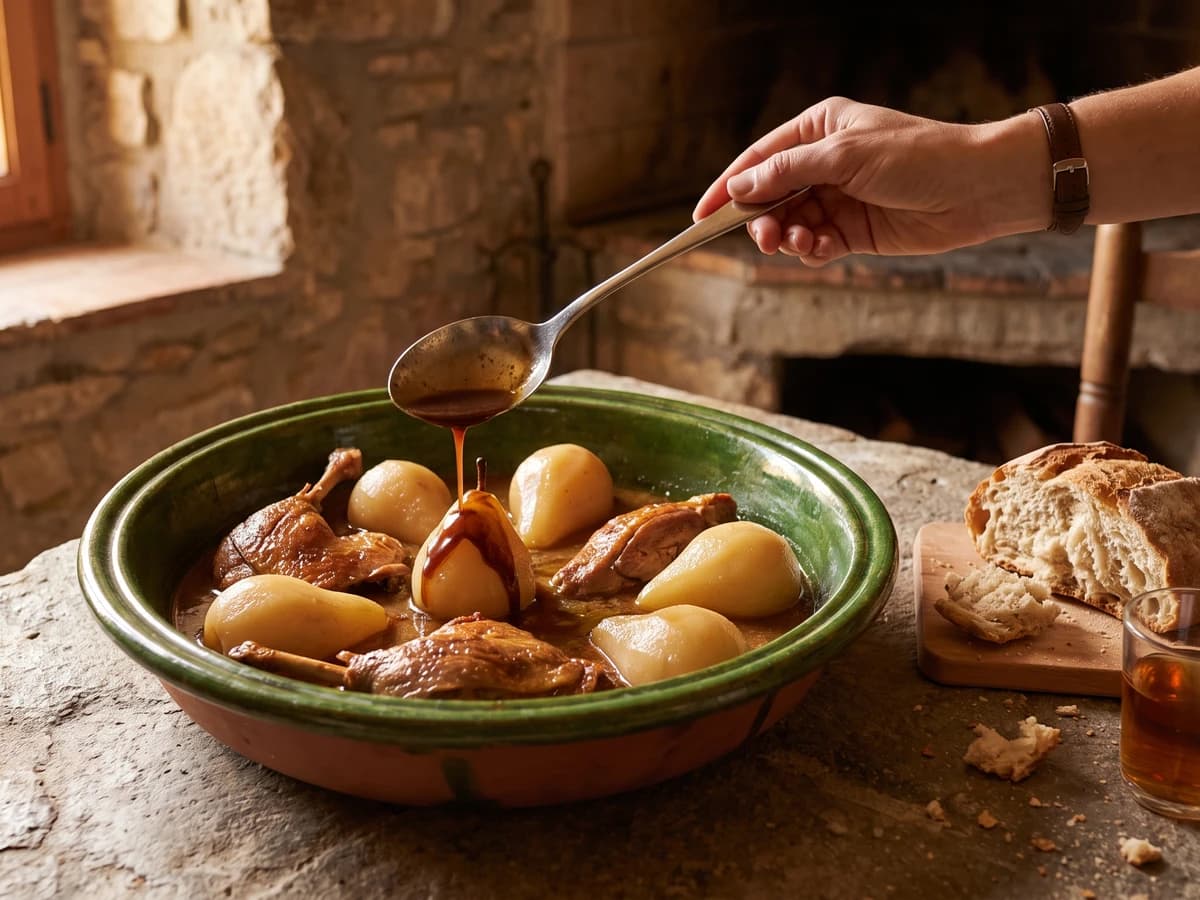
Ànec amb peres is Catalan celebration cooking: duck braised in a dark sofregit, firm autumn pears added near the end, and an almond-garlic picada that turns the juices into a close, glossy sauce.