Chef Isabel
Abanico Ibérico a la Plancha
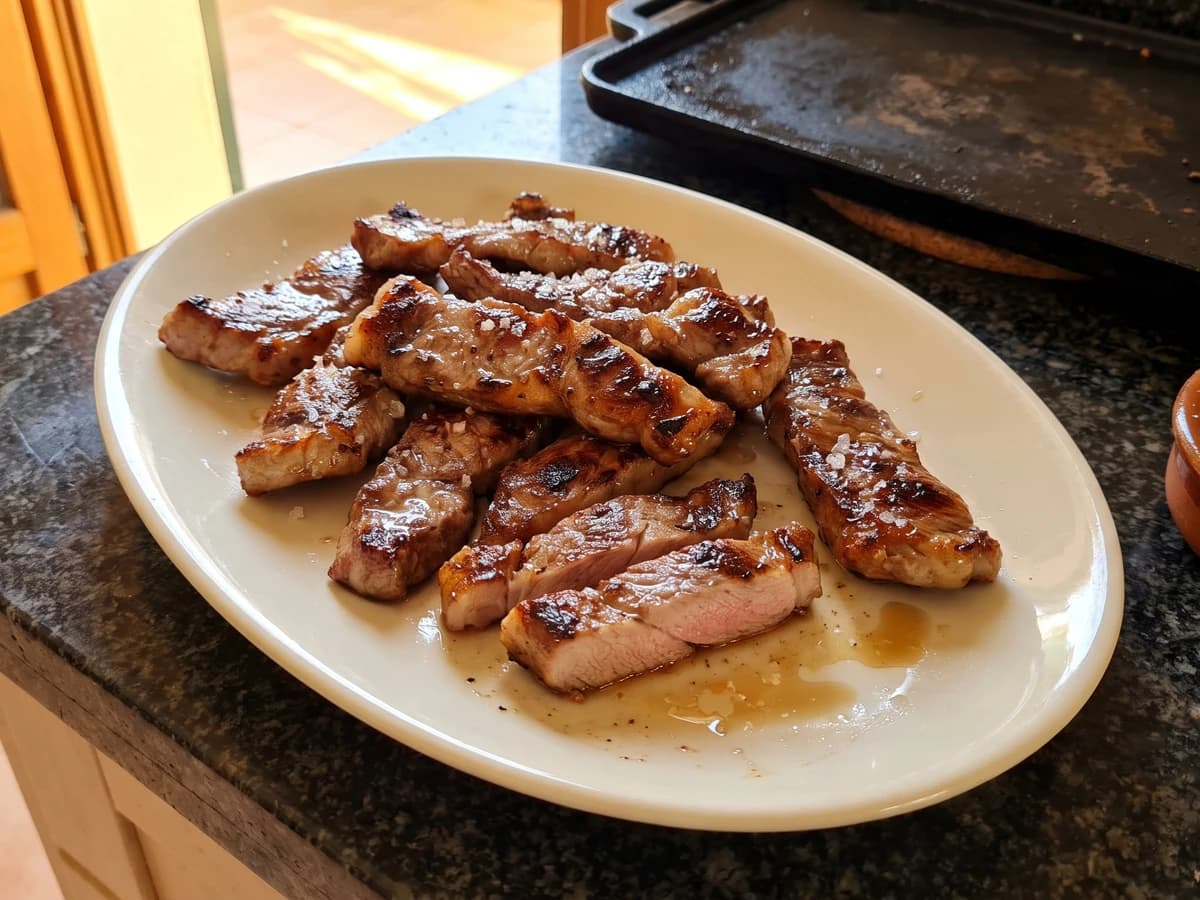
Extremadura's dehesa gives us this fan-shaped, marbled rib cut: salt it at the last moment, lay it on a fierce plancha, and count in seconds so the centre stays juicy.
A cooking platform built around craft, culture, and the stories behind what we eat.
Created by
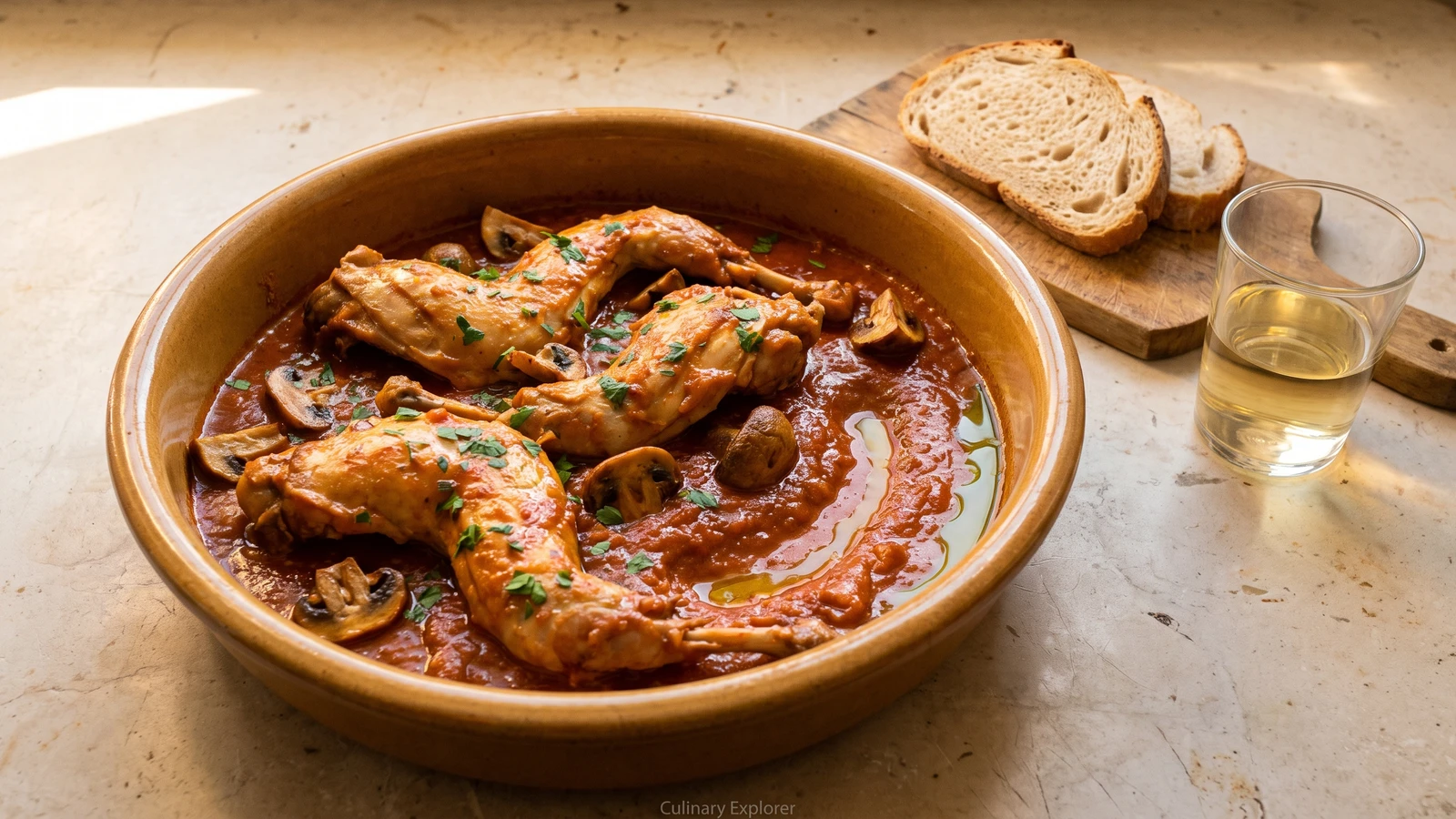
La Mancha's rabbit is browned and braised with white wine, mushrooms, and a slow tomato-onion sofrito. Cook that base until dark, sweet, and nearly dry, and the sauce takes care of itself.
La Mancha's conejo a la cazadora is rabbit browned and braised in dry white wine over onion, garlic, and tomato, with mushrooms and thyme from the monte, the scrubby hunting country. It isn't conejo al ajillo, where garlic leads. Here the cazadora sauce must be deep enough to cling to the meat, with browned mushrooms carrying the earthy side of the dish.
The sofrito decides it. Cook the onion low until it goes dark gold and jammy, then reduce the tomato until almost no water remains and the oil shows again at the edges. That slow cooking builds the sweetness beneath the wine. Turn up the heat to hurry it and you get pale onion, wet tomato, and a sauce that never quite becomes itself.
If rabbit is difficult to find where you are, use 1.4kg of bone-in chicken thighs and drumsticks. A Spanish home kitchen would make that change without ceremony. The sauce remains right, but chicken is richer and softer, without rabbit's lean, faintly sweet taste; begin checking it after 30 minutes of braising. Ordinary cultivated brown mushrooms can stand in for seasonal field mushrooms, though the sauce loses a little of its woodland perfume.
Keep the simmer gentle and let the finished casserole rest before serving. The meat relaxes, the sauce settles, and supper becomes easier than it looked at the beginning. The Margin beside this recipe says only, "el sofrito sin prisa," don't hurry the sofrito. Follow that and the rest behaves.
Across the Montes de Toledo and the wider hunting country of Castilla-La Mancha, rabbit and hare supplied rural tables with small game that could be stretched in a wine-and-tomato braise. A la cazadora names a household family of hunter-style preparations rather than one fixed sauce, so thyme, bay, garlic, and wine stay constant while the exact additions change from house to house. Mushrooms mark many Manchegan versions, but because they followed the rains and were never always available, other homes made the same dish with tomato, wine, and herbs alone.
Quantity
1, about 1.4kg
cut into 8 serving pieces
Quantity
15g
divided
Quantity
2g
Quantity
75ml
divided
Quantity
300g
cleaned and quartered
Quantity
300g
finely chopped
Quantity
15g
finely chopped
Quantity
350g
grated; use 300g crushed canned whole tomatoes when fresh ones are poor
Quantity
2g
Quantity
250ml
Quantity
300ml
Quantity
1
Quantity
4 sprigs
or 1 teaspoon dried thyme
Quantity
10g
finely chopped
| Ingredient | Quantity |
|---|---|
| farmed rabbitcut into 8 serving pieces | 1, about 1.4kg |
| fine sea saltdivided | 15g |
| freshly ground black pepper | 2g |
| extra virgin olive oildivided | 75ml |
| brown or white mushroomscleaned and quartered | 300g |
| onionfinely chopped | 300g |
| garlicfinely chopped | 15g |
| ripe tomatoesgrated; use 300g crushed canned whole tomatoes when fresh ones are poor | 350g |
| sweet pimentón | 2g |
| dry white wine, preferably Airén | 250ml |
| hot water or unsalted light chicken stock | 300ml |
| bay leaf | 1 |
| thymeor 1 teaspoon dried thyme | 4 sprigs |
| flat-leaf parsleyfinely chopped | 10g |
Pat the rabbit completely dry and check the cut edges for loose bone fragments. Season it with 10g of the salt and all the black pepper, rubbing both over every piece. Leave it at room temperature for 15 minutes while you prepare the vegetables. A dry surface browns; a wet one simply stews.
Heat 25ml of the olive oil in a wide, heavy casserole over medium-high heat. Add the mushrooms in one layer, season with 1g salt, and leave them undisturbed for 2 minutes. Turn and cook for another 3 to 4 minutes, until browned and their released liquid has evaporated. Lift them onto a plate.
Add another 25ml oil to the casserole. Brown the rabbit in two batches so the pieces have room, 2 to 3 minutes on each broad side, until properly golden. Don't try to cook it through yet. Transfer each batch to the mushroom plate, keeping every drop of juice.
Lower the heat to medium-low and add the remaining 25ml oil, the onion, and 2g salt. Cook for 15 minutes, stirring often, until the onion is dark gold, soft, and nearly jammy. Add the garlic and cook for 45 seconds. Take the casserole briefly off the heat, stir in the pimentón, then immediately add the tomato. Return it to low heat and cook for 10 to 12 minutes, until the tomato is darkened, almost dry, and the oil shows again around the edges. This slow sofrito, the onion-and-tomato base, decides the sauce. Rush it and the finished braise tastes thin.
Pour in the white wine and scrape the browned fond from the bottom. Boil for 3 minutes, until the sharp smell of raw alcohol has gone. Return the rabbit and its juices to the casserole, fitting the leg pieces low in the sauce. Add the hot water, bay leaf, and thyme. The liquid should reach roughly halfway up the meat, not cover it. Bring to a gentle simmer, cover, lower the heat, and cook for 30 to 35 minutes, turning the pieces once.
Return the browned mushrooms and cook uncovered for 12 to 15 minutes. The rabbit is ready when a fork enters the thigh joint easily and the thickest piece reaches at least 71°C away from the bone. The sauce should be glossy and thick enough to coat a spoon. If the meat is tender before the sauce has reduced, lift it out and boil the sauce alone for a few minutes. Remove the bay and thyme, taste, and use the remaining 2g salt only if needed.
Take the casserole off the heat, scatter over the parsley, and let the rabbit rest in its sauce for 10 minutes. Serve one leg or saddle piece per person with mushrooms and plenty of sofrito spooned over it. Bread belongs beside the casserole because leaving that sauce behind would be foolish. Siempre sale, si lo sigues.
1 serving (about 525g)
Culinary guides, cultural storytelling, and the editorial depth that makes cooking meaningful.
Discover Culinary ExplorerChef Isabel
Extremadura's dehesa gives us this fan-shaped, marbled rib cut: salt it at the last moment, lay it on a fierce plancha, and count in seconds so the centre stays juicy.

Chef Isabel
Aletría Murciana is Murcia's humble noodle guiso: fine fideos, pork ribs, potato, saffron, and a dark sweet sofrito. Get that base right and the pot knows where it's going.
Chef Isabel
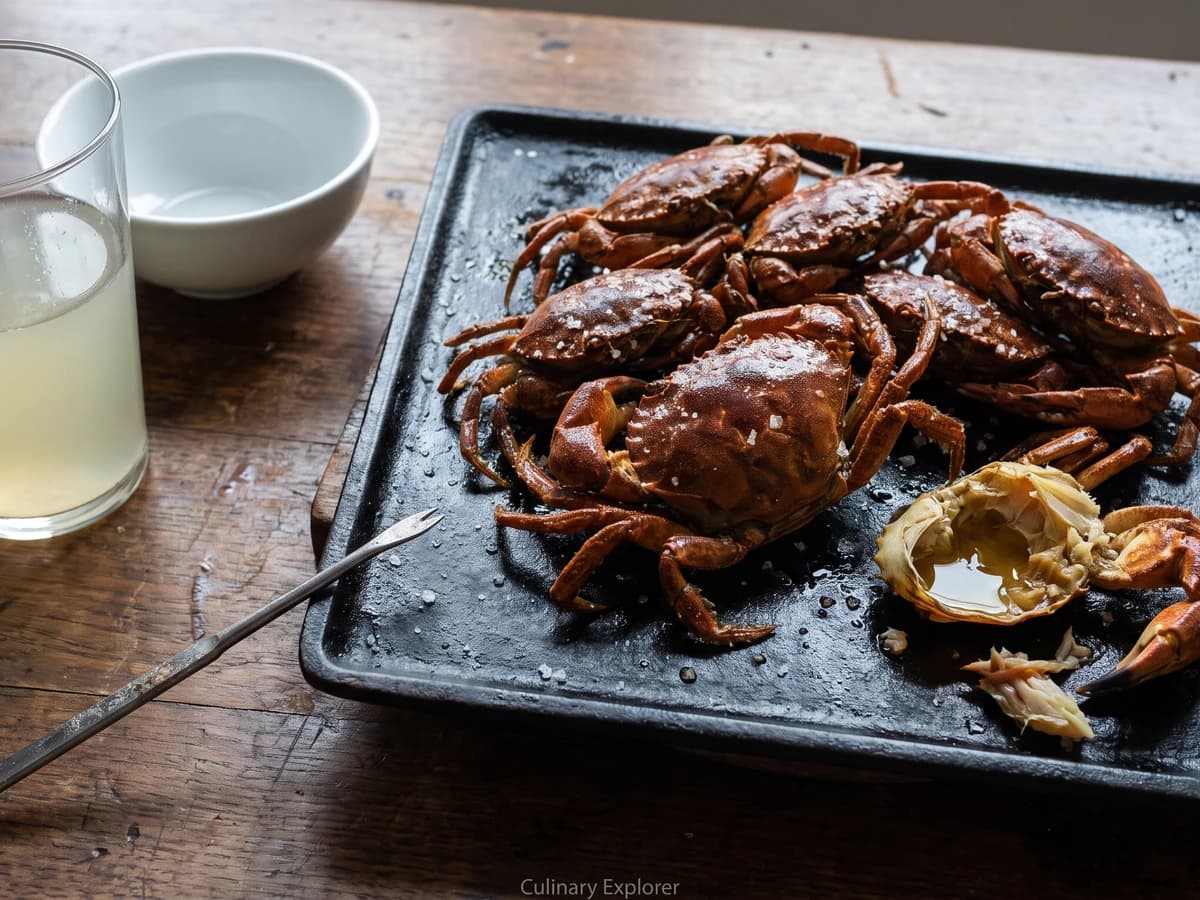
Asturias puts its small velvet crabs straight on a fierce plancha with salt and oil, keeping the shell liquor sweet and briny. Dry them well, cook them fast, and bring plenty of napkins.

Chef Isabel
Andrajos are Andalucía's dough-rag stew from Jaén and Granada: a slow rabbit guiso thickened with torn sheets of flour dough, rolled thin so they cook tender instead of gummy.