Chef Isabel
Abanico Ibérico a la Plancha
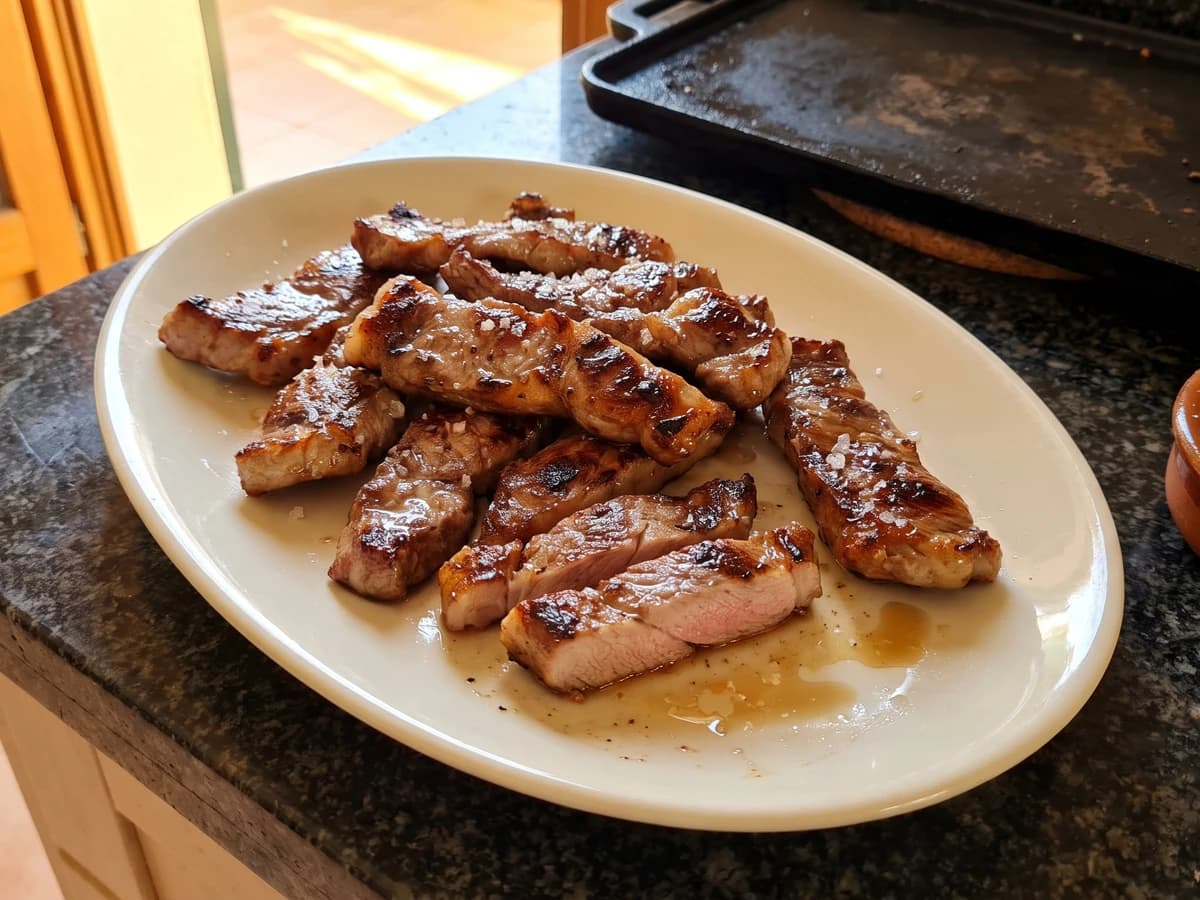
Extremadura's dehesa gives us this fan-shaped, marbled rib cut: salt it at the last moment, lay it on a fierce plancha, and count in seconds so the centre stays juicy.
A cooking platform built around craft, culture, and the stories behind what we eat.
Created by
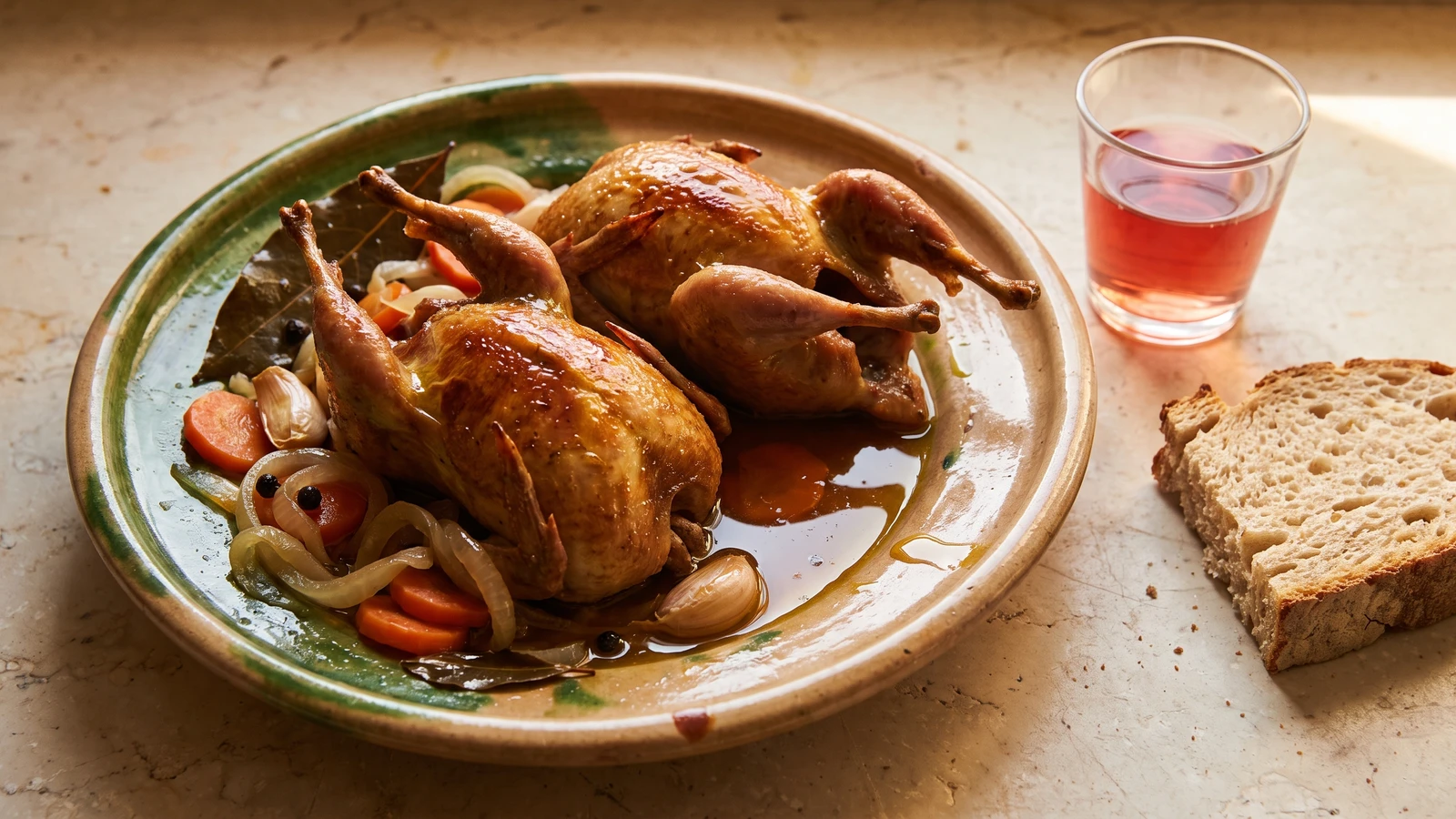
In the Ebro lands of Aragón and Navarra, browned quail rests in a fragrant escabeche of olive oil, wine vinegar, garlic, bay, onion, and carrot, then grows better overnight.
Codornices en escabeche belong to the Ebro country of Aragón and Navarra, where small game birds are browned whole, cooked gently with onion, carrot, garlic, bay, wine vinegar, and olive oil, then left to rest in that sharp, fragrant liquor. That rest makes it escabeche. This isn't roasted quail with a little vinegar tipped over at the end. The seasoning must pass through the meat, and only time will carry it there.
The point that decides the dish is the heat after the vinegar goes in. Keep the liquid at a bare simmer and stop cooking as soon as the quail is done. A hard boil dries those small breasts before the legs soften, while the vinegar loses its clean edge. Let the birds cool in the escabeche, refrigerate them submerged, and give them at least twelve hours. A full day is better. The oil, vinegar, game juices, and softened vegetables settle into one another while you do nothing at all, which is a useful sort of cooking.
Farmed quail, fresh or properly thawed from frozen, works very well far from Aragón. If quail simply isn't sold where you are, use bone-in chicken thighs and extend the gentle cooking time; what you have then is pollo en escabeche, a proper household dish in its own right, but not codornices. My Margin has one instruction beside this recipe: cook today, judge tomorrow. Siempre sale, si lo sigues.
Quail arrived over the grain fields of Aragón and Navarra in seasonal flights, so a successful hunt could provide more delicate birds than a household could eat at once; escabeche let the cooked catch keep while its flavor deepened. The name descends through Andalusi Arabic from sikbaj, a vinegar-based Persian dish, but across Iberia it became a preserving method built from oil, vinegar, aromatics, and gentle cooking. Small game suited the method particularly well because the seasoned liquor penetrated it quickly without requiring a long braise.
Quantity
8 (1.2 to 1.4kg total)
giblets removed and birds patted dry
Quantity
12g
divided
Quantity
1g
Quantity
200ml
Quantity
300g
thinly sliced
Quantity
180g
cut into 5mm rounds
Quantity
12 cloves
unpeeled and lightly crushed
Quantity
4
Quantity
4 small sprigs
Quantity
3g
Quantity
250ml
Quantity
180ml
6% acidity
Quantity
250ml
| Ingredient | Quantity |
|---|---|
| oven-ready whole quailgiblets removed and birds patted dry | 8 (1.2 to 1.4kg total) |
| fine sea saltdivided | 12g |
| freshly ground black pepper | 1g |
| extra virgin olive oil | 200ml |
| yellow onionsthinly sliced | 300g |
| carrotscut into 5mm rounds | 180g |
| garlicunpeeled and lightly crushed | 12 cloves |
| bay leaves | 4 |
| thyme | 4 small sprigs |
| whole black peppercorns | 3g |
| dry white wine | 250ml |
| white wine vinegar6% acidity | 180ml |
| water | 250ml |
Check the cavities for any remaining giblets and pull out stray pinfeathers. Don't rinse the birds; water scatters raw poultry juices around the sink and prevents good browning. Pat them thoroughly dry, tuck the wing tips underneath, and season inside and out with 10g of the salt and all the ground pepper. Leave them for 15 minutes while you slice the vegetables.
Heat the olive oil in a wide, heavy, nonreactive casserole over medium-high heat. Brown the quail in two batches so the pan stays hot, turning them with tongs until the breasts, backs, and legs are a deep even gold, 6 to 8 minutes per batch. You're building flavor here, not cooking them through. Lift each batch to a plate and keep all the oil in the casserole.
Lower the heat to medium-low. Add the onions, carrots, and reserved 2g salt to the oil. Cook for 10 to 12 minutes, stirring now and then, until the onion is soft and translucent with a little gold at the edges. It should not become a dark sofrito, the slow cooked onion base used for stews. Add the garlic, bay, thyme, and peppercorns and cook for 1 minute, just until the garlic smells sweet.
Pour in the white wine and scrape the browned bits from the bottom with a wooden spoon. Let it bubble uncovered for 3 minutes. Add the vinegar and water, then bring the liquid only to a gentle simmer. Taste a cooled spoonful. It should be distinctly sharp because the oil, meat, and overnight rest will soften it; if it tastes timid now, the finished escabeche will be flat.
Return the quail and any juices from the plate to the casserole, arranging the birds breast side up in a snug layer. Spoon vegetables and liquid over them, cover, and cook at the barest simmer for 18 to 22 minutes. Turn each bird once after 10 minutes. The escabeche should tremble, never boil hard. Stop when the thickest part of a thigh reaches 74°C and the leg moves readily at its joint.
Take the casserole off the heat and leave it uncovered for 20 minutes. Transfer the quail, vegetables, and all the escabeche to a snug glass or glazed ceramic container. The birds should sit mostly beneath the liquid; if a little breast remains exposed, turn the birds after 6 hours rather than diluting the escabeche. Cover and refrigerate within 2 hours of finishing the cooking.
Rest the quail in the refrigerator for at least 12 hours and preferably 24 to 48 hours. Bring them out 30 minutes before serving so the olive oil loosens and the vinegar opens up. Arrange two quail per person with the softened onion, carrot, and garlic, then spoon the escabeche over everything. Serve cool or at room temperature with plain bread or boiled potatoes to catch the liquor.
1 serving (about 470g)
Culinary guides, cultural storytelling, and the editorial depth that makes cooking meaningful.
Discover Culinary ExplorerChef Isabel
Extremadura's dehesa gives us this fan-shaped, marbled rib cut: salt it at the last moment, lay it on a fierce plancha, and count in seconds so the centre stays juicy.

Chef Isabel
Aletría Murciana is Murcia's humble noodle guiso: fine fideos, pork ribs, potato, saffron, and a dark sweet sofrito. Get that base right and the pot knows where it's going.
Chef Isabel
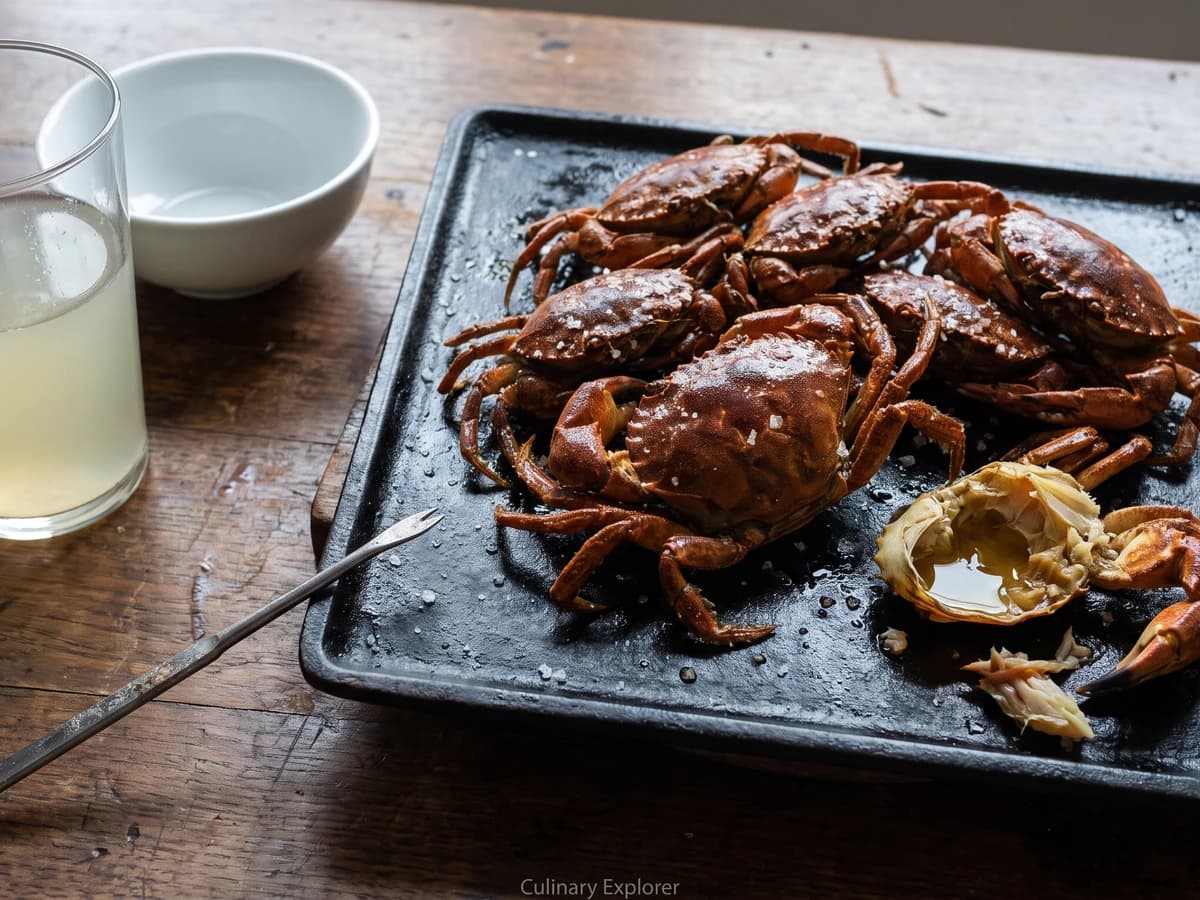
Asturias puts its small velvet crabs straight on a fierce plancha with salt and oil, keeping the shell liquor sweet and briny. Dry them well, cook them fast, and bring plenty of napkins.

Chef Isabel
Andrajos are Andalucía's dough-rag stew from Jaén and Granada: a slow rabbit guiso thickened with torn sheets of flour dough, rolled thin so they cook tender instead of gummy.