Chef Isabel
Abanico Ibérico a la Plancha
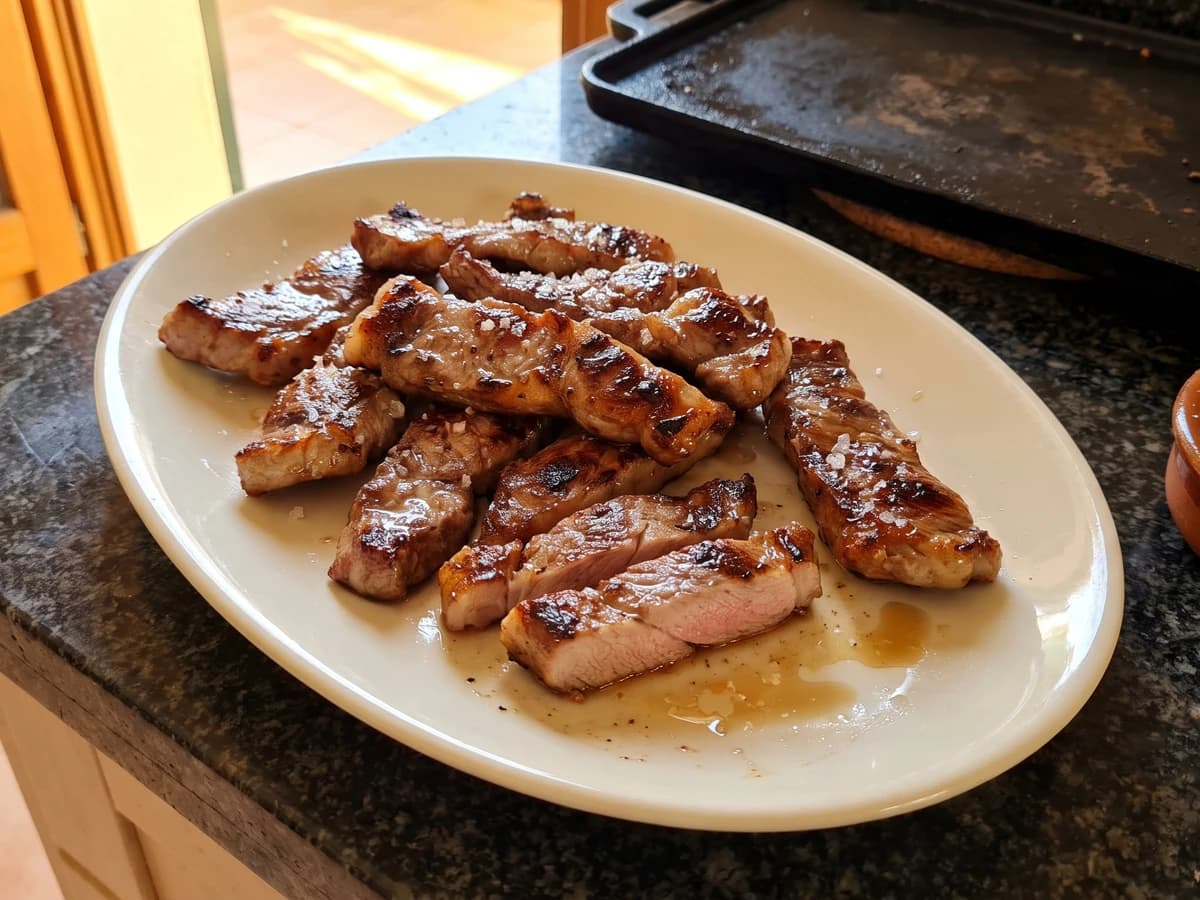
Extremadura's dehesa gives us this fan-shaped, marbled rib cut: salt it at the last moment, lay it on a fierce plancha, and count in seconds so the centre stays juicy.
A cooking platform built around craft, culture, and the stories behind what we eat.
Created by
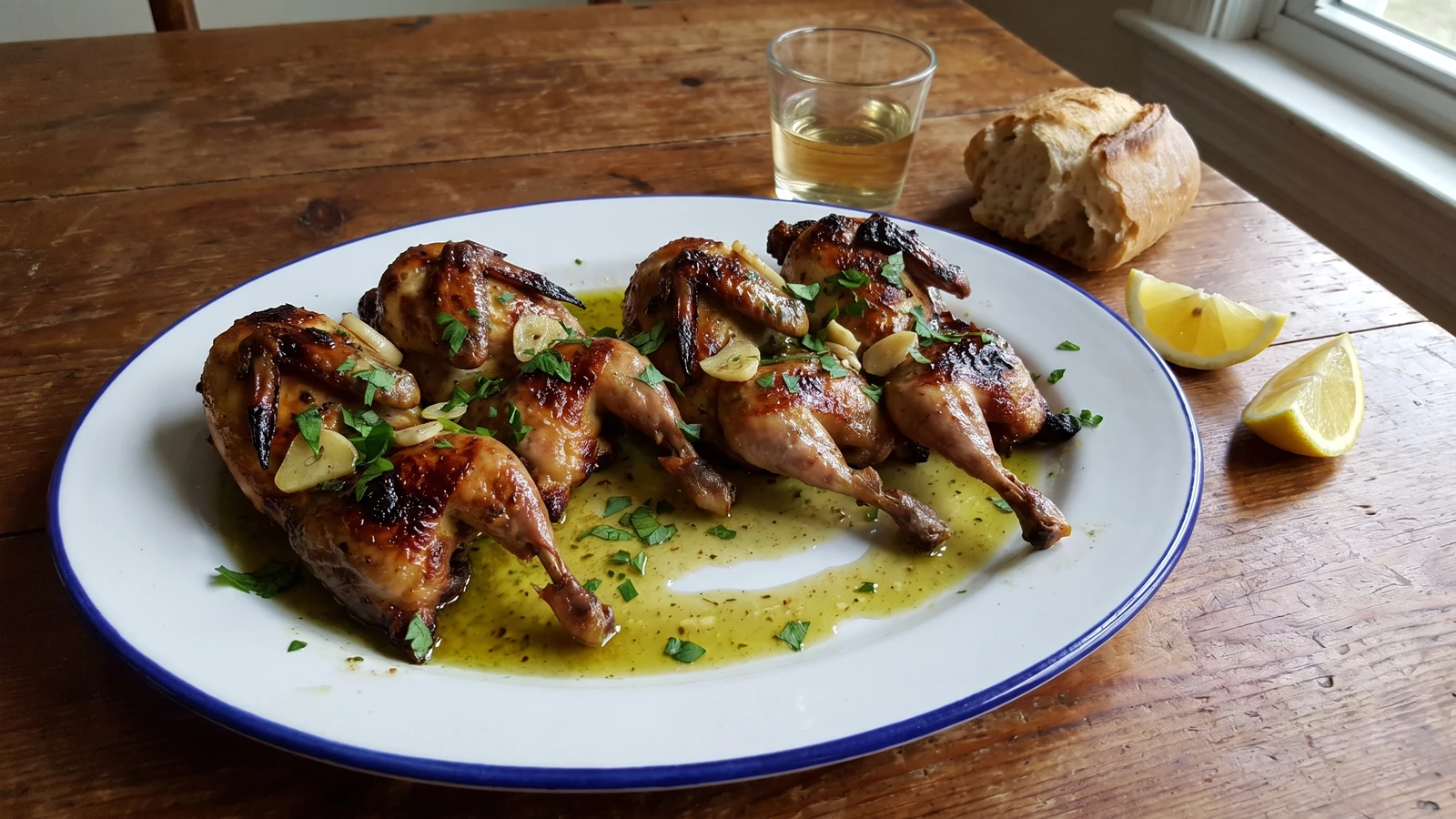
Castilla-La Mancha puts small game straight in the pan: quail scented with garlic and parsley, browned hard, then finished briefly with white wine and lemon so the meat stays juicy.
Codornices al ajillo belongs to Castilla-La Mancha, where small game is home cooking: quail split open, rubbed with a garlic and parsley majado, a pounded seasoning paste, browned in olive oil, then finished quickly with white wine and lemon. This is al ajillo, not escabeche. Garlic and browned pan juices lead; the lemon should wake the sauce, not pickle the bird. It is fast because quail is lean and small, not because the method is careless.
The step that decides it is the browning. After the short marinade, scrape away the loose garlic and blot the quail dry before it meets the hot pan. Garlic paste stuck to wet skin burns while the bird turns pale underneath. Brown the pieces uncrowded, then lower the heat and add fresh sliced garlic for the sauce. You get dark edges, juicy meat, and garlic that tastes sweet rather than scorched.
If quail is scarce where you are, use a small chicken weighing about 1kg, cut into eight pieces. The sauce remains right, though the meat will be milder and needs a longer finish. No hace falta haber pisado España, you don't need to have set foot in Spain. The Margin beside this recipe says el ajo, después del dorado, garlic after the browning. Keep that order and it comes out. Siempre sale, si lo sigues.
The dry cereal plains of Castilla-La Mancha have long been caza menor, small-game, country, with quail, partridge, and rabbit feeding rural tables as well as hunting parties. Quail taken around the grain harvest and during the media veda, the late-summer small-game season, suited quick pan cooking because the little bird is lean and easily dried out. Al ajillo was eaten straight from the pan with its garlic and wine juices, unlike escabeche, whose stronger vinegar liquor was meant to preserve game for later.
Quantity
8, about 150-180g each
split lengthwise into halves
Quantity
12 cloves (about 45g peeled)
6 crushed and 6 thinly sliced
Quantity
20g
15g roughly chopped and 5g finely chopped
Quantity
90ml
30ml for the marinade, 40ml for searing, and 20ml for the sauce
Quantity
8g
Quantity
1g
Quantity
1
Quantity
120ml
Quantity
60ml
Quantity
1
halved, 30ml juice squeezed and the remainder cut into wedges
| Ingredient | Quantity |
|---|---|
| oven-ready quailsplit lengthwise into halves | 8, about 150-180g each |
| garlic6 crushed and 6 thinly sliced | 12 cloves (about 45g peeled) |
| fresh flat-leaf parsley15g roughly chopped and 5g finely chopped | 20g |
| extra virgin olive oil30ml for the marinade, 40ml for searing, and 20ml for the sauce | 90ml |
| fine sea salt | 8g |
| freshly ground black pepper | 1g |
| dried bay leaf | 1 |
| dry white wine, preferably young Airén | 120ml |
| water | 60ml |
| large lemonhalved, 30ml juice squeezed and the remainder cut into wedges | 1 |
Set each quail breast-side down. With poultry shears, cut along both sides of the backbone and remove it, then open the bird and cut through the breastbone to make two halves. Pat all 16 halves dry with kitchen paper. If the butcher has already split them, so much the better; nothing is lost.
Pound the 6 crushed garlic cloves, 15g roughly chopped parsley, 8g salt, and 1g pepper in a mortar until you have a coarse majado, a pounded garlic and herb paste. Work in 30ml olive oil. Rub it over the quail, cover, and refrigerate for 30 minutes.
Lift the quail from the marinade and scrape away any loose pieces of garlic and parsley. Discard the raw marinade. Blot the surface lightly and let the birds stand for 10 minutes while the pan heats. Wet meat steams, and wet garlic burns before the quail takes colour. This small correction decides the dish.
Heat a 30cm heavy frying pan over medium-high heat. Add 20ml olive oil and lay in half the quail, skin-side down, without crowding. Press each piece against the pan for a few seconds, then sear for 3 to 4 minutes until the skin is deep gold with darker edges. Turn and cook the bone side for 2 minutes. Transfer to a plate, add the remaining 20ml searing oil, and brown the second batch. The meat will not yet be cooked through.
Lower the heat to medium and add the remaining 20ml olive oil, the 6 sliced garlic cloves, and the bay leaf. Cook for 60 to 90 seconds, stirring, until the garlic is pale gold and smells sweet. Pour in the wine, scrape up every browned bit, and boil for about 2 minutes, until reduced by roughly one-third. Add the 60ml water and 30ml lemon juice.
Return the quail to the pan in one layer, skin-side up, along with any juices from the plate. Cover and simmer gently for 5 minutes. Uncover, turn the pieces for 2 minutes, then turn them skin-side up again and cook for another 1 to 2 minutes, until the thickest part of the breast reaches 74°C (165°F). Transfer the quail to a platter and rest for 3 minutes. Remove the bay leaf, bubble the sauce for 1 minute if it looks loose, and stir in the remaining 5g parsley. Spoon the garlic and lemon sauce over the birds and serve with the lemon wedges.
1 serving (about 240g)
Culinary guides, cultural storytelling, and the editorial depth that makes cooking meaningful.
Discover Culinary ExplorerChef Isabel
Extremadura's dehesa gives us this fan-shaped, marbled rib cut: salt it at the last moment, lay it on a fierce plancha, and count in seconds so the centre stays juicy.

Chef Isabel
Aletría Murciana is Murcia's humble noodle guiso: fine fideos, pork ribs, potato, saffron, and a dark sweet sofrito. Get that base right and the pot knows where it's going.
Chef Isabel
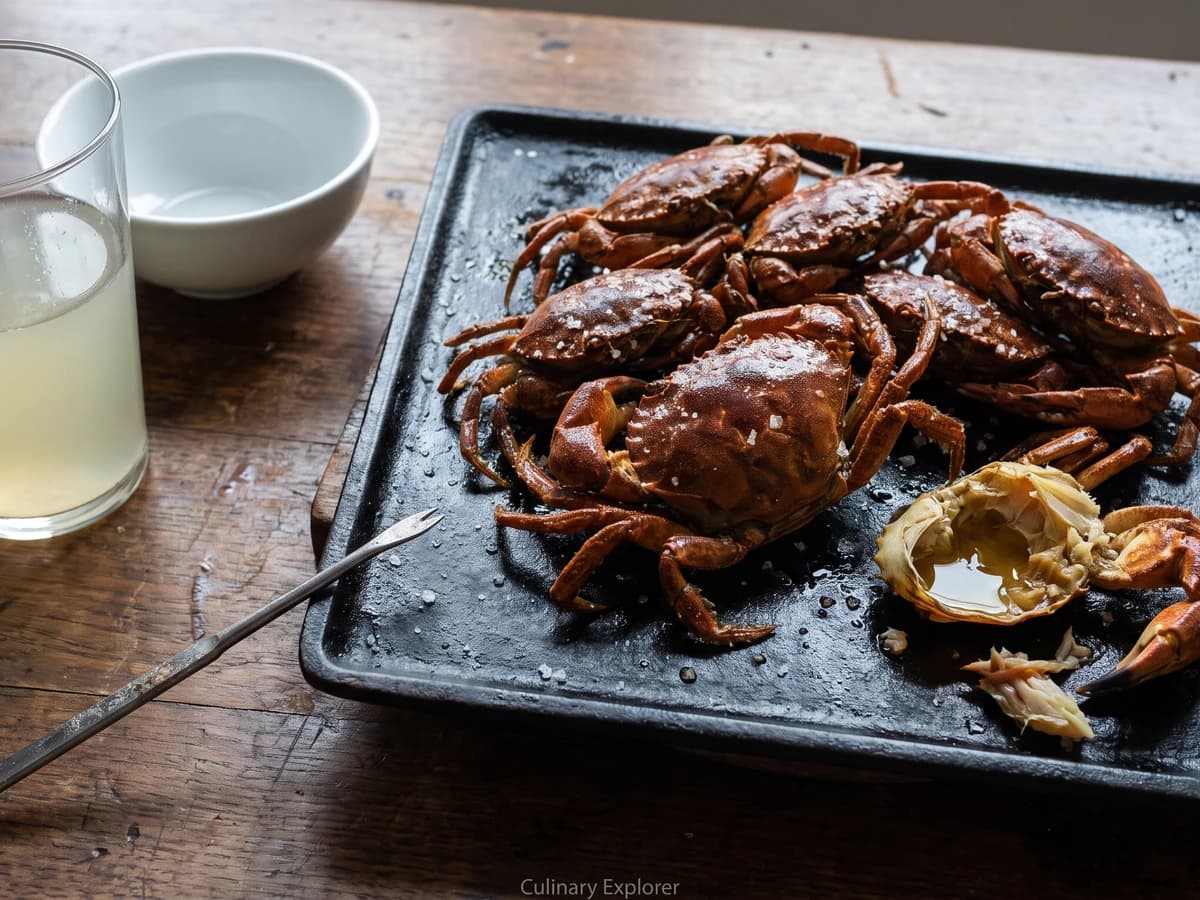
Asturias puts its small velvet crabs straight on a fierce plancha with salt and oil, keeping the shell liquor sweet and briny. Dry them well, cook them fast, and bring plenty of napkins.

Chef Isabel
Andrajos are Andalucía's dough-rag stew from Jaén and Granada: a slow rabbit guiso thickened with torn sheets of flour dough, rolled thin so they cook tender instead of gummy.