Chef Isabel
Abanico Ibérico a la Plancha
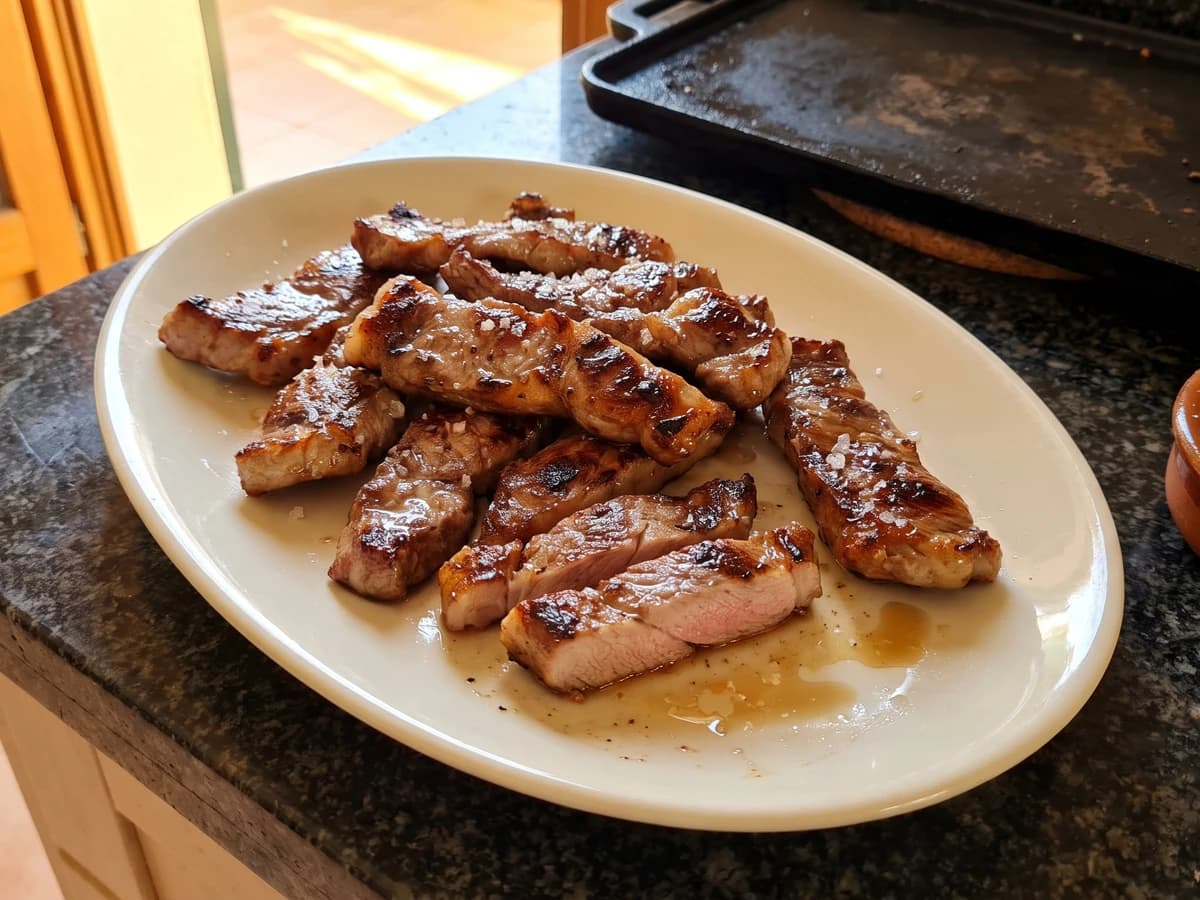
Extremadura's dehesa gives us this fan-shaped, marbled rib cut: salt it at the last moment, lay it on a fierce plancha, and count in seconds so the centre stays juicy.
A cooking platform built around craft, culture, and the stories behind what we eat.
Created by
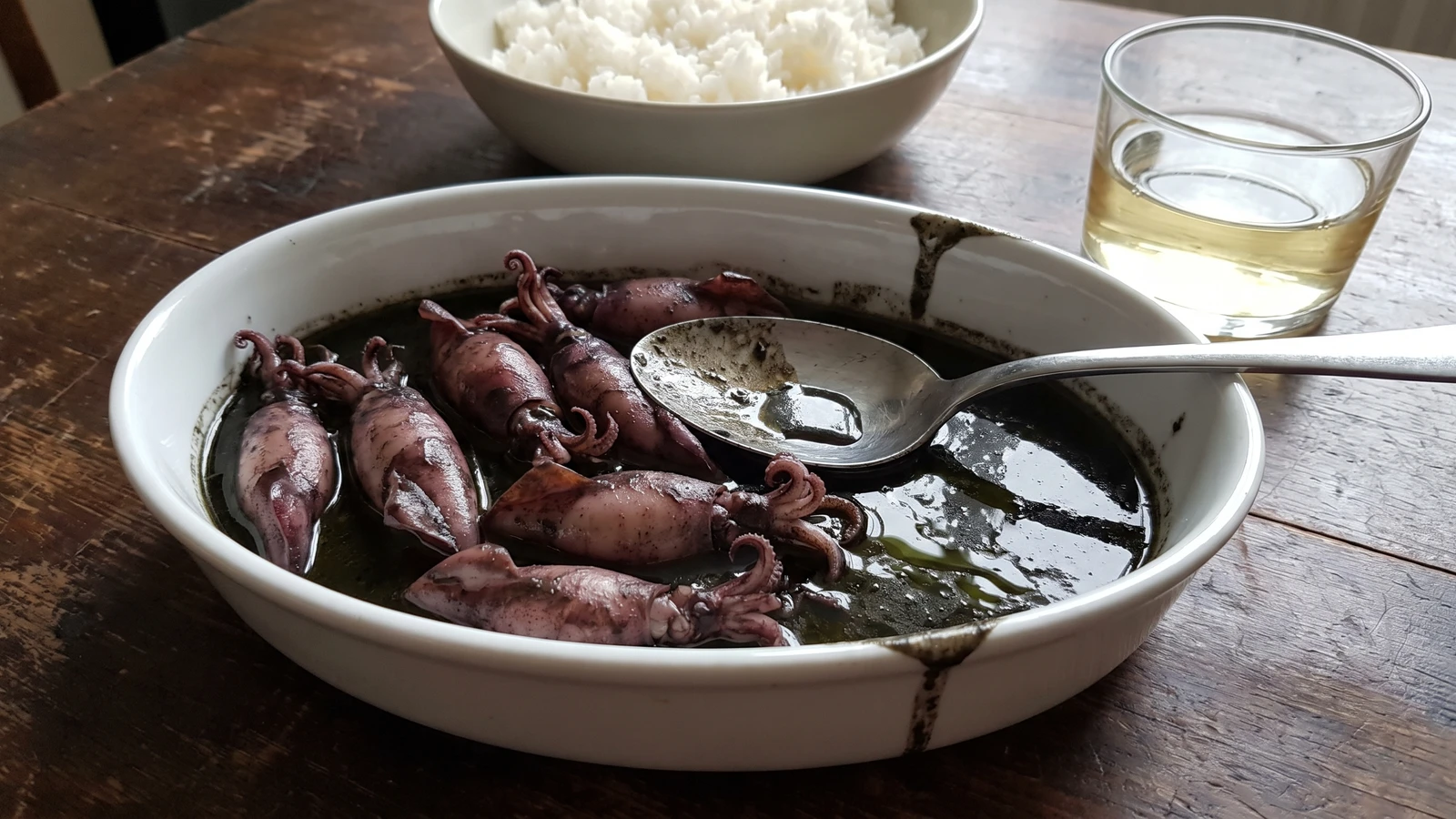
Basque chipirones en su tinta turn small whole squid and their ink into a glossy black stew, built on onion cooked slowly until sweet and served with plain white rice for every last spoonful.
Chipirones en su tinta belong to the Basque Country: small squid, their bodies kept whole and tucked with their own tentacles, braised in a black sauce of ink and onion. The sweetness of that onion against the deep marine ink is what makes the dish. It isn't merely squid coloured black; the sauce must be smooth, glossy, and substantial enough to cling.
Cook the sofrito, the slow onion base, lower and longer than impatience likes. Let the onion and green pepper go dark gold and almost jammy before the wine or ink touches them. That slow cooking removes their water and builds the sweetness that rounds the ink's mineral edge. Rush it, and the sauce stays sharp and thin.
If you're far from a Basque fish counter, frozen baby squid or small calamari are the right answer. Thaw them in the refrigerator, dry them very well, and use food-grade ink sachets. The squid will be a little softer and release more water, but the sauce will still come out properly. If only large squid are available, cut them into broad pieces and call the result calamares en su tinta. Good food, but not chipirones.
Blend and strain the sauce, then let the squid finish gently in it until tender. The Margin in my notebook says, "black enough to shine," which is less poetic than useful: grey sauce needs more ink, and dull sauce needs reducing. Serve it with plain white rice for every spoonful of that sauce.
Along the Basque coast, small squid caught one by one on a potera, a hooked jig, are especially prized and known as chipirones de potera. Cooking them in their own ink kept the whole catch in the pot, while long-cooked onion turned the defensive ink into a sweet, dark sauce with enough body for bread or rice. In Euskara the dish is txipiroiak beren tintan, squid in their ink, a fixture of home tables and cooking societies from Bizkaia to Gipuzkoa.
Quantity
1kg
about 16 to 20, with 8 to 12cm mantles; cleaned with bodies intact and tentacles and ink sacs reserved
Quantity
16g total
4 x 4g sachets, or reserved ink supplemented with sachets
Quantity
600g
finely sliced
Quantity
120g
seeded and finely chopped
Quantity
10g
finely sliced
Quantity
150g
grated; or use drained and crushed canned whole tomato
Quantity
60ml
divided
Quantity
25g
crust included, torn into small pieces
Quantity
150ml
Quantity
300ml
Quantity
6g
divided, plus more only if needed
Quantity
600g cooked
for serving
| Ingredient | Quantity |
|---|---|
| whole small squidabout 16 to 20, with 8 to 12cm mantles; cleaned with bodies intact and tentacles and ink sacs reserved | 1kg |
| food-grade squid ink4 x 4g sachets, or reserved ink supplemented with sachets | 16g total |
| yellow onionsfinely sliced | 600g |
| green Italian frying pepperseeded and finely chopped | 120g |
| garlicfinely sliced | 10g |
| ripe tomatograted; or use drained and crushed canned whole tomato | 150g |
| extra virgin olive oildivided | 60ml |
| day-old country breadcrust included, torn into small pieces | 25g |
| dry white wine | 150ml |
| water or light unsalted fish stock | 300ml |
| fine sea saltdivided, plus more only if needed | 6g |
| plain white rice (optional)for serving | 600g cooked |
Set a fine sieve over a small bowl. Pull each head and tentacle cluster gently from its mantle so the body stays whole. Lift the slender silver-black ink sac from the innards and place it in the sieve. Cut the tentacles from the head just below the eyes, push out the hard beak from their centre, and discard the eyes and innards. Pull the transparent quill from each mantle, rinse the cavity briefly in cold water, and dry everything thoroughly.
Tuck each set of tentacles loosely inside its matching mantle, leaving room for the squid to contract. Secure the opening with a wooden cocktail stick. Set aside any tentacles that do not fit and cook them beside the filled bodies. Do not pack them tightly or the mantles may split.
Heat 20ml of the olive oil in a wide heavy casserole over medium-high heat. Sear the dried squid in two or three batches, about 45 seconds on each side, just until the skins take a little colour. Transfer them to a plate. Keep every dark juice they release; it belongs in the sauce.
Lower the heat and add the remaining 40ml olive oil, the onions, green pepper, and 4g of the salt. Cook gently for 35 to 40 minutes, stirring often and scraping up the squid juices, until the vegetables are dark gold, jammy, and almost dry. This sofrito, the slow onion base, decides the dish: its sweetness rounds the mineral edge of the ink. If the onions catch before softening, add one tablespoon of water and keep going.
Add the garlic and cook for 2 minutes without browning it. Stir in the grated tomato and torn bread, then cook for 8 to 10 minutes, until the tomato has lost its raw smell and no watery liquid remains. Pour in the wine and boil gently for about 4 minutes, until reduced by half.
Whisk the measured ink into the water or light fish stock. Press the reserved natural ink sacs through the sieve into this liquid, then discard the membranes. Pour the black liquid into the casserole and simmer for 12 minutes. Blend with an immersion blender until completely smooth, then pass the sauce through a fine sieve and return it to the casserole. It should be black, glossy, and thick enough to lightly coat a spoon.
Return the squid and every collected juice to the sauce. Bring it to the barest simmer, cover partly, and cook gently for 20 minutes. Test the thickest mantle with a fine skewer; it should yield easily. If still springy, continue in 5-minute intervals, up to about 30 minutes. Add a spoonful of water if the sauce tightens too far. If it remains thin, lift out the tender squid and reduce the sauce uncovered before returning them.
Taste only now, because packaged ink carries salt, and add the remaining salt only as needed. Rest the casserole off the heat for 10 minutes, remove every cocktail stick, and arrange the whole chipirones in their sauce. Serve with plain white rice to catch it. Siempre sale, si lo sigues. It turns out, if you follow it.
1 serving (about 530g)
Culinary guides, cultural storytelling, and the editorial depth that makes cooking meaningful.
Discover Culinary ExplorerChef Isabel
Extremadura's dehesa gives us this fan-shaped, marbled rib cut: salt it at the last moment, lay it on a fierce plancha, and count in seconds so the centre stays juicy.

Chef Isabel
Aletría Murciana is Murcia's humble noodle guiso: fine fideos, pork ribs, potato, saffron, and a dark sweet sofrito. Get that base right and the pot knows where it's going.

Chef Isabel
Andrajos are Andalucía's dough-rag stew from Jaén and Granada: a slow rabbit guiso thickened with torn sheets of flour dough, rolled thin so they cook tender instead of gummy.
Chef Isabel
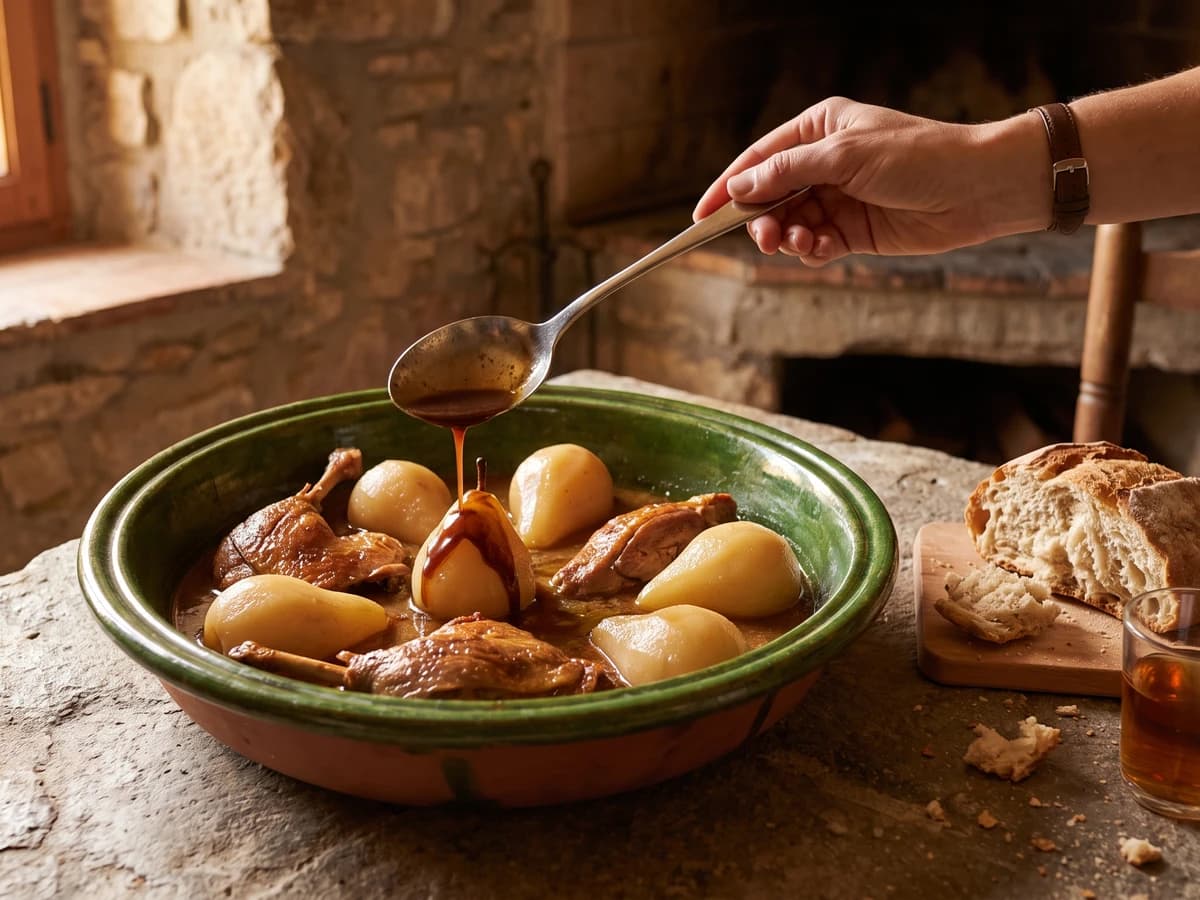
Ànec amb peres is Catalan celebration cooking: duck braised in a dark sofregit, firm autumn pears added near the end, and an almond-garlic picada that turns the juices into a close, glossy sauce.