Chef Isabel
Abanico Ibérico a la Plancha
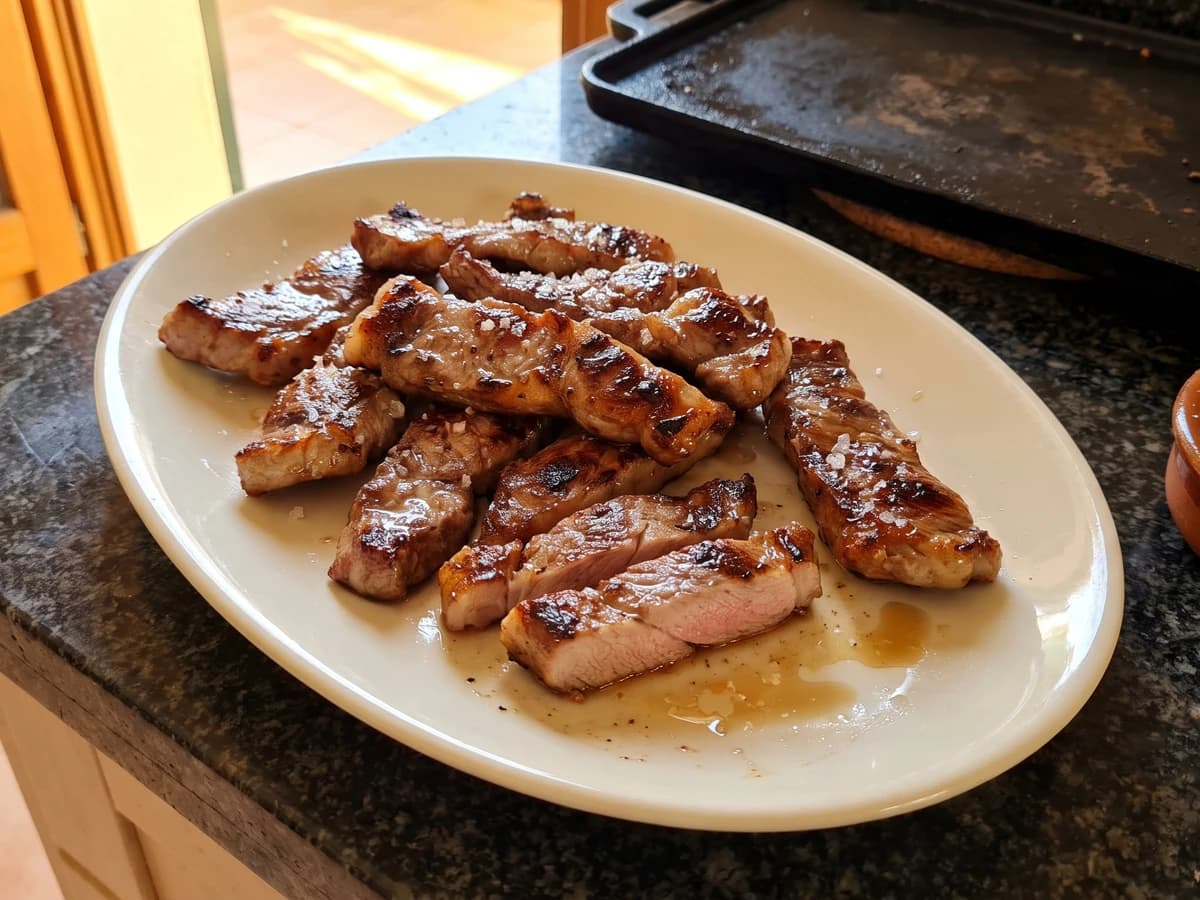
Extremadura's dehesa gives us this fan-shaped, marbled rib cut: salt it at the last moment, lay it on a fierce plancha, and count in seconds so the centre stays juicy.
A cooking platform built around craft, culture, and the stories behind what we eat.
Created by
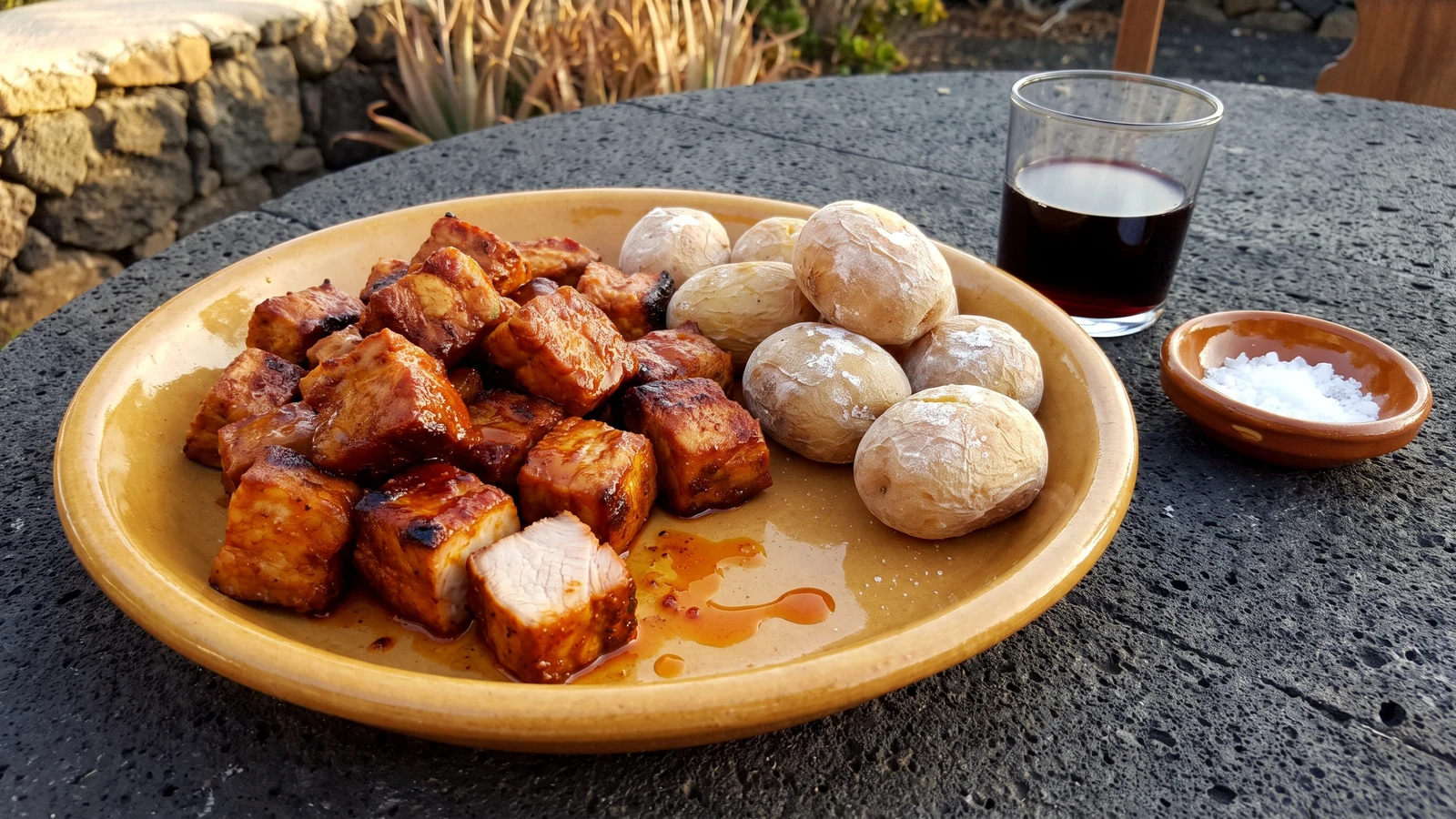
Carne fiesta is Tenerife's romería pork: garlicky, wine-sharp and stained red with pimentón, marinated overnight, fried in batches, then finished in its adobo beside salt-wrinkled papas arrugadas.
Carne fiesta canaria is Tenerife's romería pork, made for the island's pilgrimage festivals and the tables that gather around them. Cubes of pork spend the night in a red adobo of garlic, wine, vinegar, pimentón, oregano, thyme and picona pepper. They're fried until deeply browned, then briefly simmered in that same adobo and served with papas arrugadas, salt-wrinkled potatoes. That sequence makes it carne fiesta, not merely pork fried with garlic.
The step that decides it is draining the meat and frying it in small batches. Tip wet, crowded pork into one pan and it boils pale in its marinade. Let the excess adobo run off, give every cube room to touch the hot pan, and the edges brown before the reserved liquid goes back in. The sauce then reduces around the pork instead of drowning it. The Margin beside this recipe says only, "three batches," because impatience is the usual culprit.
If you can't find a Canarian pimienta picona, use one small dried cayenne. It gives clean heat without the pepper's fuller fruitiness, so the result is a little less rounded but still recognizably the dish. An unoaked dry white wine can stand in for island wine as well. No hace falta haber pisado España, you don't need to have set foot in Spain. Drain it well, don't crowd the pan, and siempre sale, si lo sigues. It turns out if you follow it.
Carne fiesta is tied above all to Tenerife's romerías, pilgrimage festivals where decorated carts, music and shared food fill the road, and to ventorrillos, the temporary stalls that feed the crowd. Its name is literal: meat for the fiesta, practical pork cut small, held in a robust adobo and fried in batches for many people. The customary papas arrugadas place it firmly in the Canarian potato larder, while each household adjusts the garlic, herbs and picona pepper without changing the method.
Quantity
1.2kg
trimmed of hard exterior fat and cut into 3cm cubes
Quantity
30g
peeled
Quantity
18g
Quantity
14g
Quantity
4g
Quantity
2g
Quantity
2g
Quantity
1 (about 1g)
stemmed and seeded
Quantity
2
broken in half
Quantity
180ml
Quantity
60ml
Quantity
130ml
30ml for the adobo and 100ml for frying
Quantity
1kg
scrubbed and left unpeeled
Quantity
150g
for the potatoes
Quantity
1.5 litres
for the potatoes
| Ingredient | Quantity |
|---|---|
| boneless pork neck or well-marbled pork shouldertrimmed of hard exterior fat and cut into 3cm cubes | 1.2kg |
| garlicpeeled | 30g |
| fine sea salt | 18g |
| sweet pimentón | 14g |
| dried oregano | 4g |
| dried thyme | 2g |
| freshly ground black pepper | 2g |
| dried pimienta picona or small dried cayennestemmed and seeded | 1 (about 1g) |
| bay leavesbroken in half | 2 |
| dry Canarian white wine or another unoaked dry white wine | 180ml |
| white wine vinegar | 60ml |
| extra virgin olive oil30ml for the adobo and 100ml for frying | 130ml |
| small waxy potatoesscrubbed and left unpeeled | 1kg |
| coarse sea saltfor the potatoes | 150g |
| cold waterfor the potatoes | 1.5 litres |
Trim away only the hard exterior fat, leaving the fine marbling that keeps the pork juicy. Cut the meat into even 3cm cubes and place it in a nonreactive bowl. Pésalo, no lo adivines, weigh it rather than guessing, because the measured salt and acid are balanced for this amount of pork.
Pound the garlic, fine salt and dried pepper in a mortar until you have a rough paste. Work in the pimentón, oregano, thyme and black pepper, then stir in the wine, vinegar and 30ml olive oil. Add the broken bay leaves. This is the adobo, the seasoned wine-and-vinegar marinade that gives carne fiesta its red colour and sharp, herbal depth.
Pour the adobo over the pork and turn every piece until coated. Cover and refrigerate for at least 12 hours and no longer than 24 hours, turning it once if you remember. The overnight rest carries the garlic, herbs and vinegar through the meat instead of leaving the seasoning only on its surface.
Set a sieve over a bowl and drain the pork for 15 minutes, reserving every drop of adobo. Pick out the bay leaves and keep them with the liquid. Don't rinse or wipe the meat clean, but let the loose marinade run off. Wet pork boils in the pan and turns grey; drained pork browns, and that browning is the method that decides the dish.
Heat 40ml of the remaining olive oil in a wide heavy frying pan over medium-high heat. Add one-third of the pork in a single uncrowded layer. Leave it untouched for 2 minutes, then turn and fry for another 4 to 5 minutes, until well browned on several sides. Transfer it to a plate. Repeat twice, adding 30ml oil before each new batch.
Leave about 30ml oil in the pan and discard any excess. Carefully pour in the reserved adobo and bay leaves. Bring it to a full boil for 3 minutes, scraping the browned bits from the base, then return the pork and its resting juices. Lower the heat and simmer uncovered for 8 to 10 minutes, turning twice, until the sauce is glossy and clings to the meat. The centre of the largest piece should reach 75°C. If the sauce remains loose, lift out the pork and boil it for another 2 minutes before returning the meat.
While the pork rests covered off the heat, put the scrubbed potatoes in a saucepan with 1.5 litres cold water and 150g coarse salt. Bring to a boil and cook uncovered for 20 to 25 minutes, until a thin skewer enters the centre without resistance. If your pot needs more water to cover them, add water mixed with salt at the same ratio of 100g salt per litre.
Drain the potatoes completely, return them to the dry pan and set them over low heat for 2 to 3 minutes. Shake the pan often until the skins wrinkle and a fine white salt crust appears. Rewarm the pork gently for 2 minutes and remove the bay leaves. Spoon the carne fiesta and its clinging adobo onto a platter with the papas arrugadas beside it. Serve at once, with bread for the red oil left on the plate.
1 serving (about 340g)
Culinary guides, cultural storytelling, and the editorial depth that makes cooking meaningful.
Discover Culinary ExplorerChef Isabel
Extremadura's dehesa gives us this fan-shaped, marbled rib cut: salt it at the last moment, lay it on a fierce plancha, and count in seconds so the centre stays juicy.

Chef Isabel
Aletría Murciana is Murcia's humble noodle guiso: fine fideos, pork ribs, potato, saffron, and a dark sweet sofrito. Get that base right and the pot knows where it's going.

Chef Isabel
Andrajos are Andalucía's dough-rag stew from Jaén and Granada: a slow rabbit guiso thickened with torn sheets of flour dough, rolled thin so they cook tender instead of gummy.
Chef Isabel
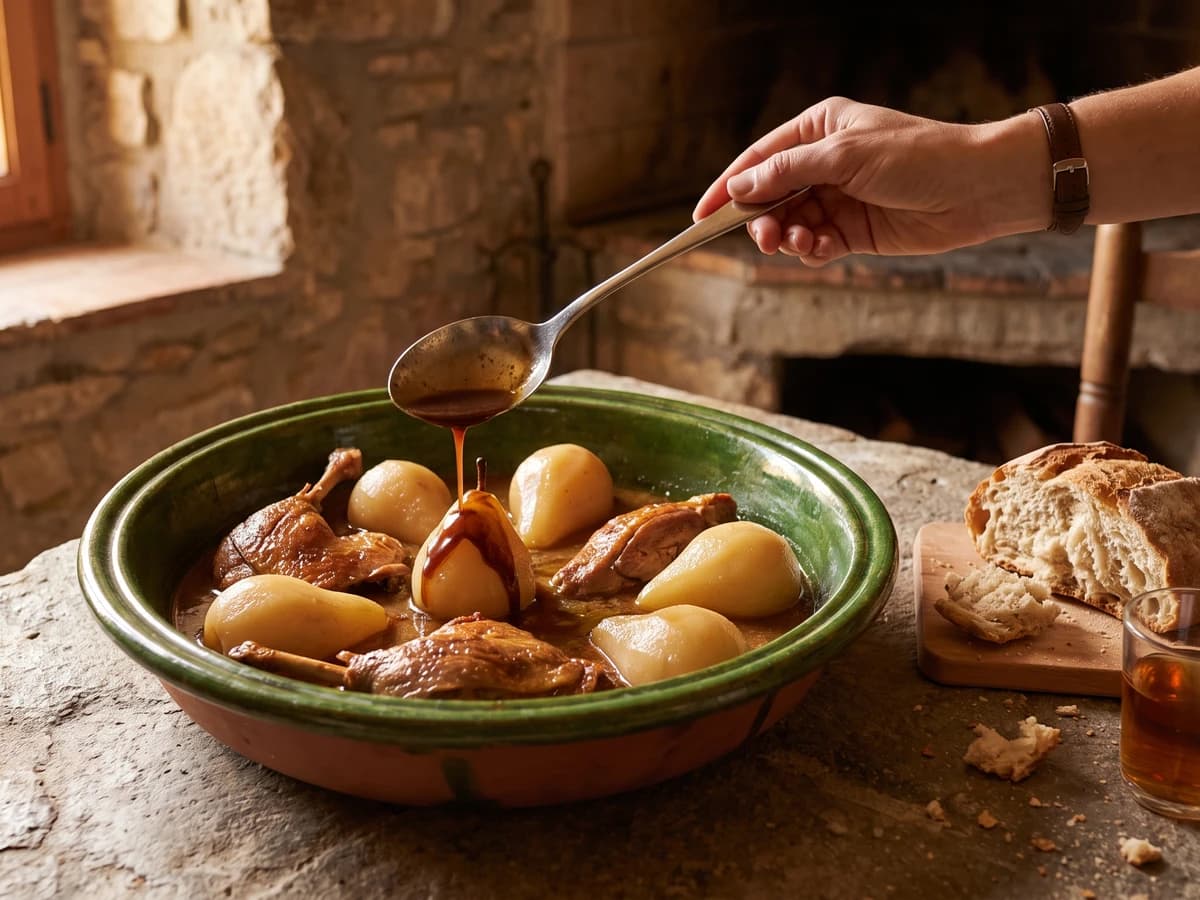
Ànec amb peres is Catalan celebration cooking: duck braised in a dark sofregit, firm autumn pears added near the end, and an almond-garlic picada that turns the juices into a close, glossy sauce.