Chef Isabel
Abanico Ibérico a la Plancha
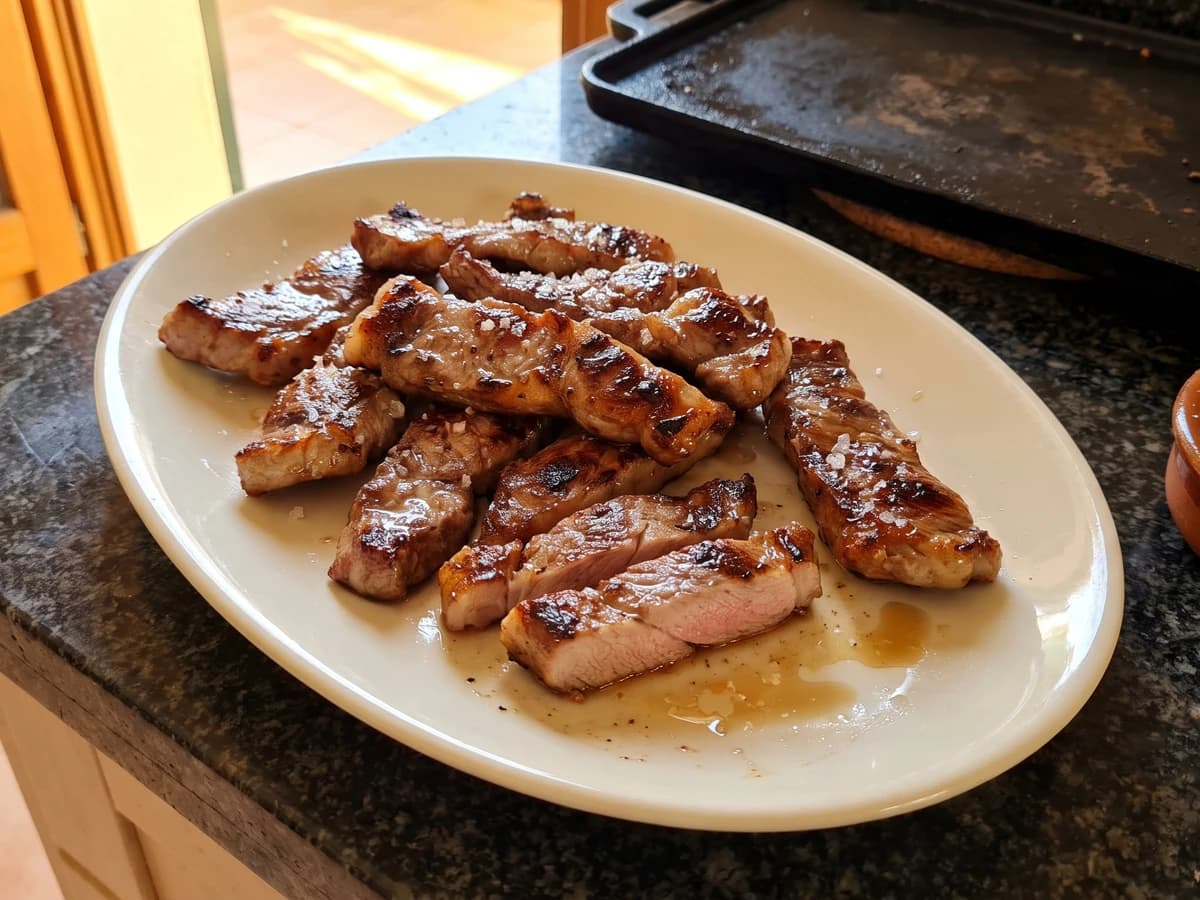
Extremadura's dehesa gives us this fan-shaped, marbled rib cut: salt it at the last moment, lay it on a fierce plancha, and count in seconds so the centre stays juicy.
A cooking platform built around craft, culture, and the stories behind what we eat.
Created by
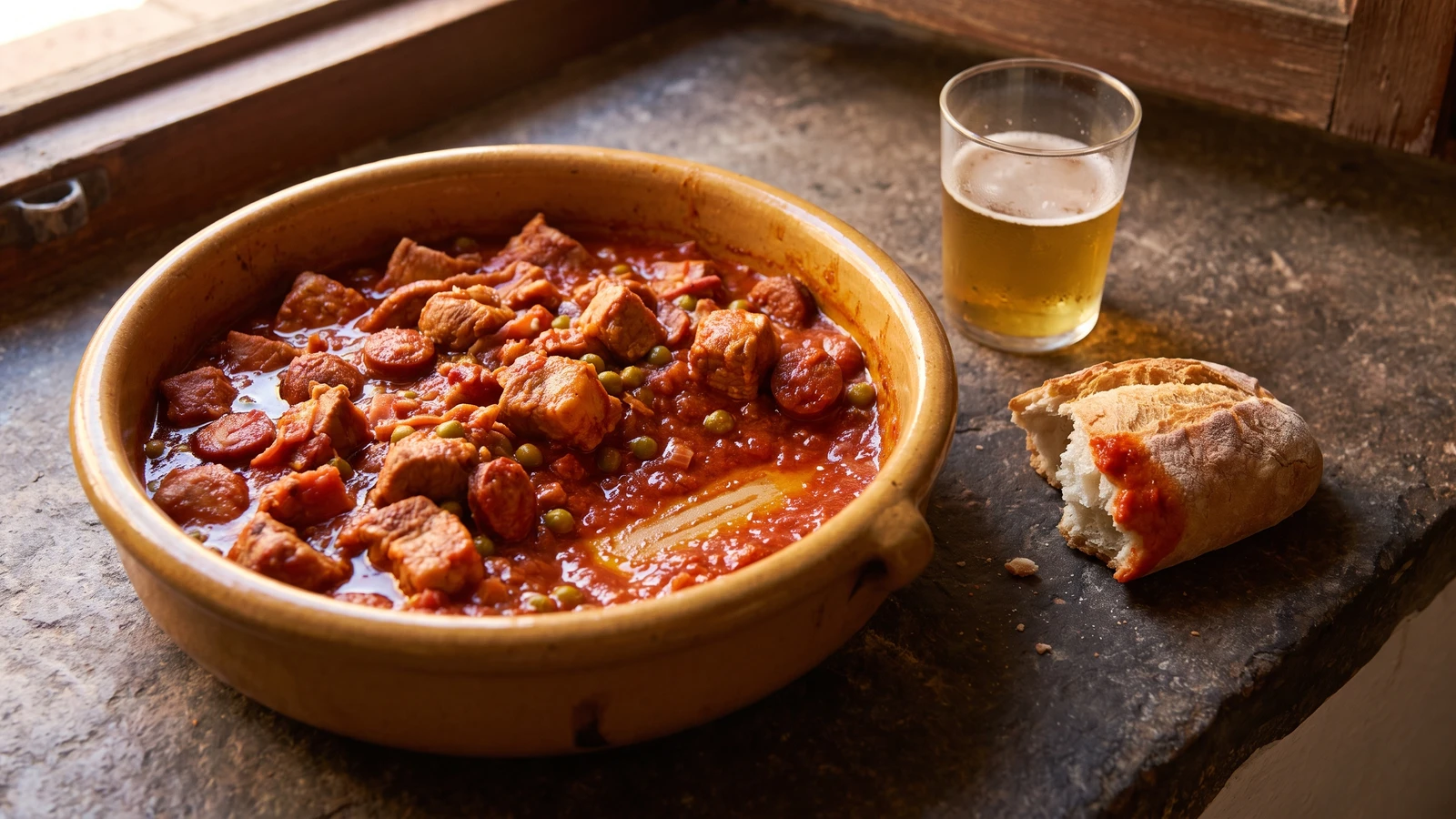
Carcamusas are Toledo in a cazuela: pork braised in tomato with peas, jamón, chorizo and a small bite of guindilla, served as a tapa beside a caña or as supper with plenty of bread.
Carcamusas are Toledo's tavern stew, rooted firmly in Castilla-La Mancha: pieces of pork cooked tender in a thick tomato sauce with peas, jamón, chorizo and just enough guindilla to warm the mouth. That particular meeting of fresh pork and the cured larder makes it carcamusas, not simply another pork stew. In Toledo it arrives in a small cazuela beside a caña, but at home it makes a full supper once bread reaches the table.
The method that decides it is the sofrito, the slow onion base, followed by a proper reduction of the tomato. Cook the onion until dark gold and sweet, then let the tomato lose its raw smell and thicken until the oil shows at the edge. Rush that part and the sauce stays watery and sharp. Give it those few honest minutes and it clings to the pork as it should.
No hace falta haber pisado España, you don't need to have set foot in Spain. If Spanish cooking chorizo is difficult to find, use the same weight of Portuguese chouriço; it will be a little smokier but keeps the necessary cured pork, garlic and paprika character. Prosciutto can stand in for jamón serrano, though the finished sauce will taste slightly sweeter and less salty. Frozen peas are not a disgrace here. They are dependable, and many Toledo kitchens reach for them.
Rest the cazuela for ten minutes before serving, because the sauce tightens and the pork settles. My Margin beside this one says only, "pan cerca," keep bread nearby. Siempre sale, si lo sigues, it turns out if you follow it.
Carcamusas belong specifically to the city of Toledo in Castilla-La Mancha, and their origin is tied to Bar Ludeña, where José Ludeña made the pork-and-tomato stew a house specialty. The customary account says the name joins carcas, the older male regulars, with musas, the younger women who also gathered there, though the explanation survives as tavern lore rather than a formal record. From that counter the dish entered Toledo's tasca tradition, served in a clay cazuela with bread for gathering every bit of sauce.
Quantity
800g
trimmed and cut into 2.5cm pieces
Quantity
5g, divided
plus more only if needed
Quantity
1g
Quantity
45ml
Quantity
200g
finely diced
Quantity
3 large cloves (about 12g)
finely chopped
Quantity
1 small (about 0.3g)
crushed; substitute 1/4 teaspoon cayenne flakes if needed
Quantity
120g
casing removed and cut into 1cm coins
Quantity
125ml
Quantity
500g
Quantity
1
Quantity
200ml
Quantity
100g
cut into short strips
Quantity
150g
used straight from the freezer
| Ingredient | Quantity |
|---|---|
| boneless pork shoulder or pork collartrimmed and cut into 2.5cm pieces | 800g |
| fine sea saltplus more only if needed | 5g, divided |
| freshly ground black pepper | 1g |
| extra virgin olive oil | 45ml |
| onionfinely diced | 200g |
| garlicfinely chopped | 3 large cloves (about 12g) |
| dried guindillacrushed; substitute 1/4 teaspoon cayenne flakes if needed | 1 small (about 0.3g) |
| Spanish cooking chorizocasing removed and cut into 1cm coins | 120g |
| dry white wine | 125ml |
| canned crushed tomatoes or tomate triturado | 500g |
| bay leaf | 1 |
| water | 200ml |
| jamón serranocut into short strips | 100g |
| frozen peasused straight from the freezer | 150g |
Pat the pork dry so it browns instead of shedding water into the pan. Toss it with 4g of the salt and all the black pepper, then leave it for ten minutes while you prepare the onion, garlic, chorizo and jamón.
Heat 30ml of the olive oil in a wide, heavy casserole over medium-high heat. Brown the pork in two batches, leaving space between the pieces, for 3 to 4 minutes per batch. Turn each piece only when the first side has taken on a deep brown crust. Transfer the pork and its juices to a plate; it should still be raw inside.
Lower the heat to medium-low and add the remaining 15ml oil, the onion and the reserved 1g salt. Cook for 12 to 15 minutes, stirring often, until the onion is dark gold, soft and almost jammy. Add the garlic and crushed guindilla and cook for 1 minute, just until fragrant. Don't let the garlic brown.
Add the chorizo and cook for 2 minutes, until its red oil begins to stain the onion. Pour in the white wine and scrape the browned pork residue from the bottom with a wooden spoon. Let the wine bubble for 3 to 4 minutes, until reduced by about half and no longer smells raw.
Stir in the crushed tomatoes and bay leaf. Cook uncovered over medium-low heat for 12 to 15 minutes, stirring frequently, until the tomato turns dark brick-red, loses its raw acidity and becomes thick enough for a spoon to leave a brief trail across the bottom. A few beads of red oil should appear at the edge. This reduction is what gives carcamusas a sauce that clings rather than a thin tomato broth.
Return the pork and its juices to the casserole and stir in 200ml water. Bring it to a gentle simmer, then cover with the lid slightly ajar and lower the heat. Cook for 35 to 45 minutes, stirring every ten minutes, until the pork yields easily to a fork but still holds its shape. Add 30ml water if the sauce begins catching before the meat is tender.
Add the frozen peas and jamón serrano. Simmer uncovered for 7 to 10 minutes, until the peas are tender and the sauce is glossy and thick enough to coat every piece of pork. Remove the bay leaf. Taste before adding any more salt; the cured meats will have done most of that work.
Take the casserole off the heat and leave it uncovered for 10 minutes. The sauce will settle and thicken around the meat. Spoon the carcamusas into a cazuela or deep plates, making sure each serving gets pork, chorizo, jamón and peas. Serve with plenty of bread. As a tapa, offer a smaller portion beside a cold caña.
1 serving (about 450g)
Culinary guides, cultural storytelling, and the editorial depth that makes cooking meaningful.
Discover Culinary ExplorerChef Isabel
Extremadura's dehesa gives us this fan-shaped, marbled rib cut: salt it at the last moment, lay it on a fierce plancha, and count in seconds so the centre stays juicy.

Chef Isabel
Aletría Murciana is Murcia's humble noodle guiso: fine fideos, pork ribs, potato, saffron, and a dark sweet sofrito. Get that base right and the pot knows where it's going.

Chef Isabel
Andrajos are Andalucía's dough-rag stew from Jaén and Granada: a slow rabbit guiso thickened with torn sheets of flour dough, rolled thin so they cook tender instead of gummy.
Chef Isabel
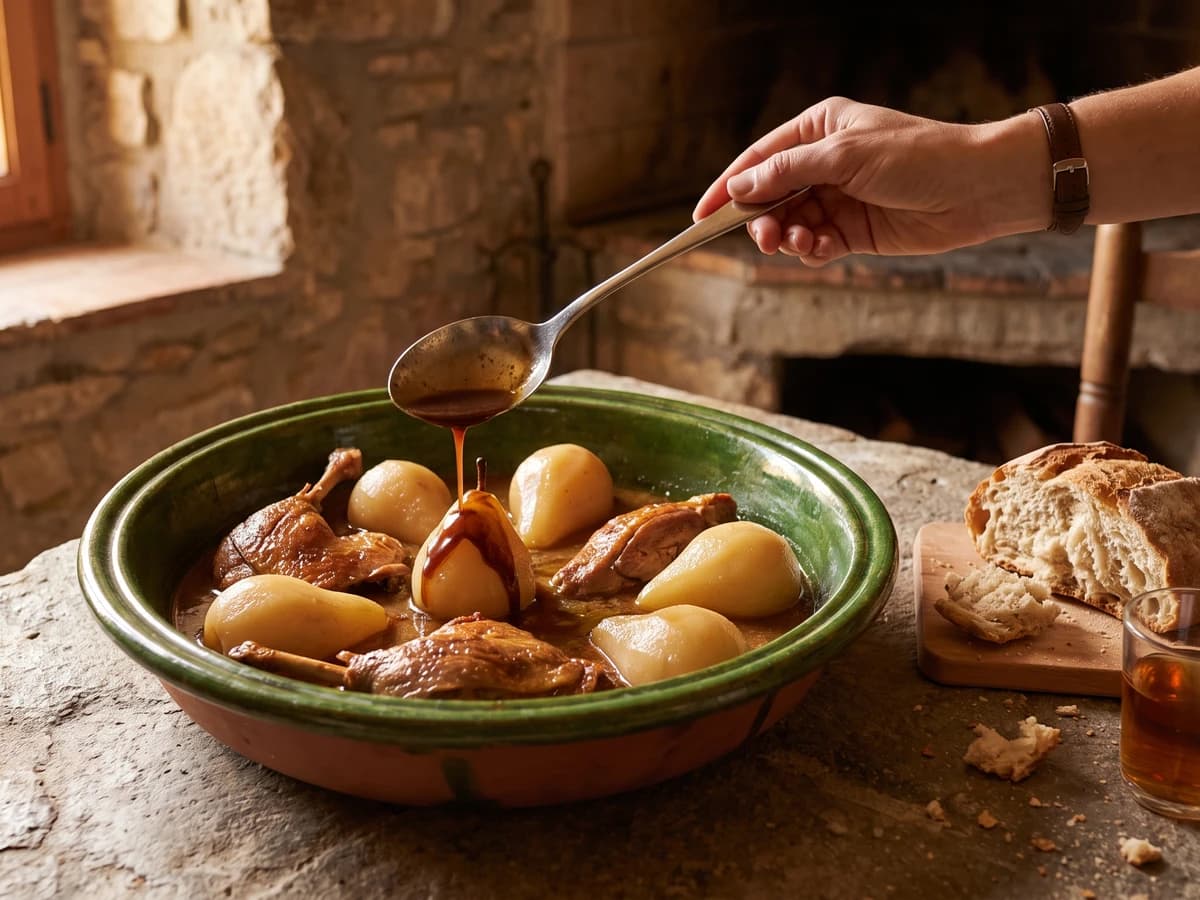
Ànec amb peres is Catalan celebration cooking: duck braised in a dark sofregit, firm autumn pears added near the end, and an almond-garlic picada that turns the juices into a close, glossy sauce.