Chef Isabel
Abanico Ibérico a la Plancha
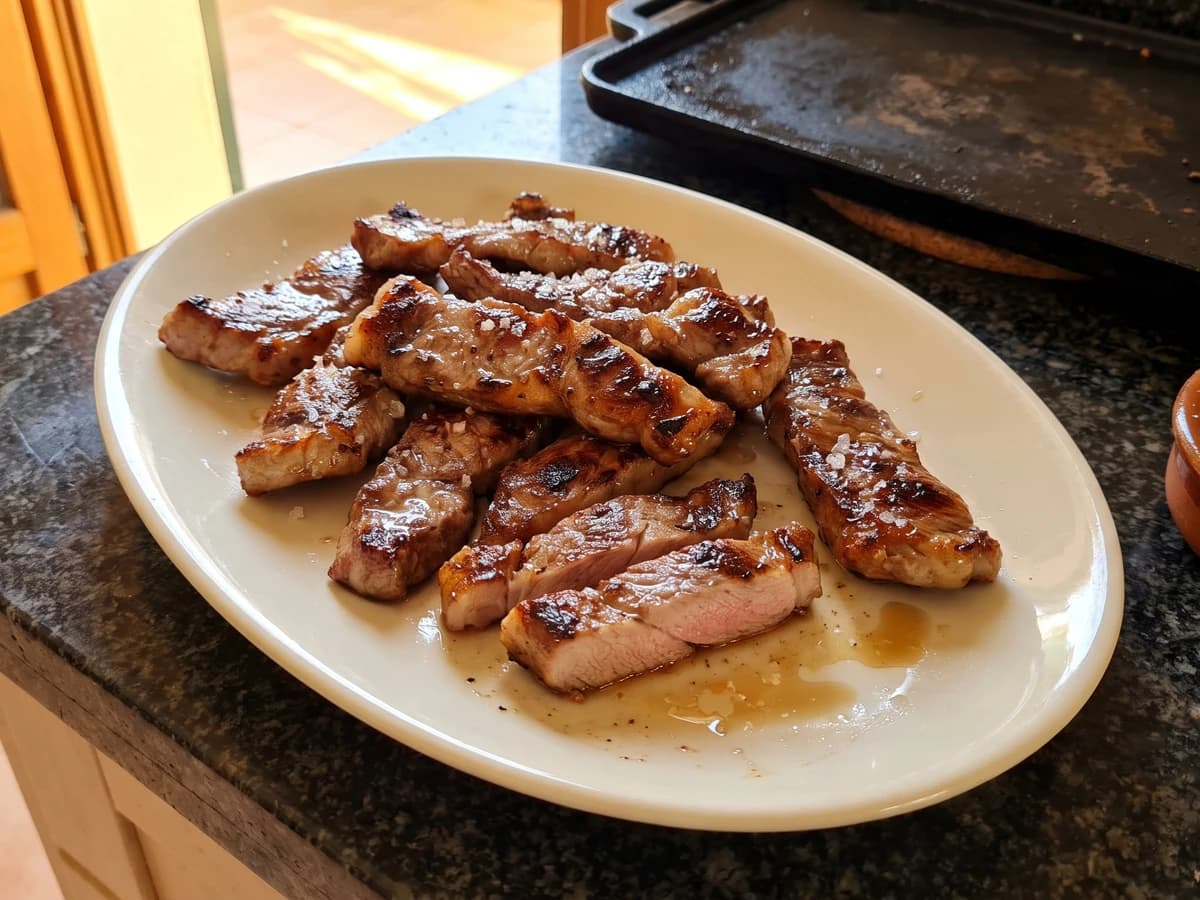
Extremadura's dehesa gives us this fan-shaped, marbled rib cut: salt it at the last moment, lay it on a fierce plancha, and count in seconds so the centre stays juicy.
A cooking platform built around craft, culture, and the stories behind what we eat.
Created by
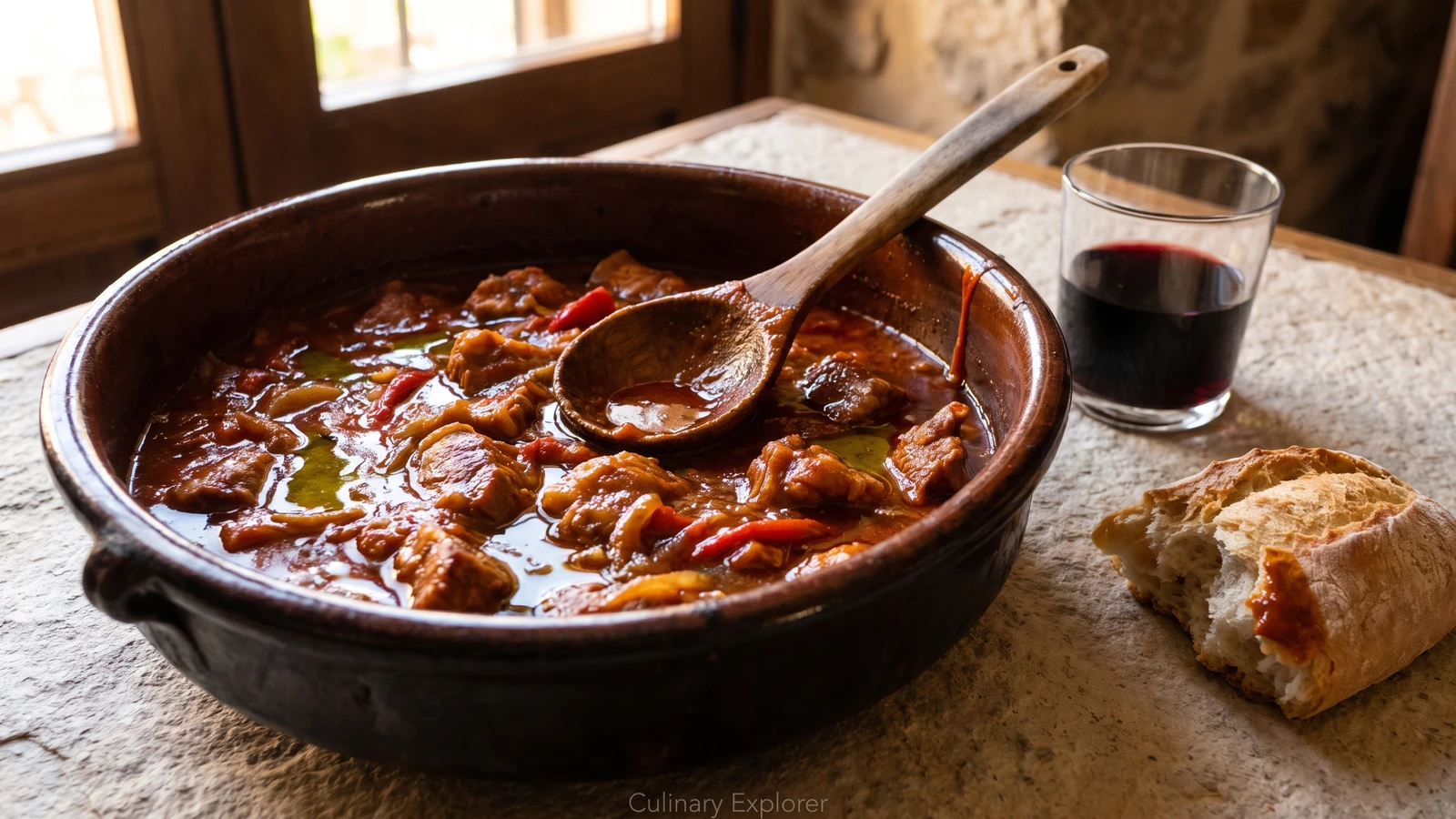
Extremadura's pork caldereta is a one-pot country stew of browned Iberian pork, slow sofrito, wine, and pimentón, finished with a garlic-and-liver majado that gives the sauce its dark, savoury body.
Caldereta Extremeña de Cerdo Ibérico belongs to Extremadura's dehesa country: well-marbled pork browned and simmered with pimentón de la Vera, white wine, bay, and a slow onion, pepper, and tomato base. At the end, a majado, the garlic-and-liver picada, thickens the cooking liquor into a dark, savoury sauce. That pimentón and the little bit of liver make this Extremaduran, not just another pork stew.
The step that decides it is the sofrito, the slow vegetable base. Cook the onion and pepper low, add the tomato, then wait until it is dark, sweet, almost dry, and the oil begins to show around the edges. That slow cooking removes the raw water and builds the sweetness beneath the pork. Rush it and the meat simmers in wet vegetables instead of a proper sauce. The liver shouldn't shout from the bowl; fry it briefly, pound it smooth with garlic and bread, then let it disappear into the stew.
If Ibérico pork doesn't reach your market, use a well-marbled pork shoulder or collar from a good butcher. You lose some of the sweet, nutty depth carried by the Ibérico fat, but the dish keeps its shape. Pork liver matters, though chicken liver will do at a pinch and gives a milder sauce. My notebook's margin says to leave the finished pot alone for twenty minutes before serving. The sauce settles, the pork drinks a little back, and everything tastes more joined together. Siempre sale, si lo sigues.
Caldereta belongs to the pastoral cooking of Extremadura; its name comes from the caldero, the iron pot in which shepherds slowly cooked the tougher cuts of sheep or goat during transhumance. In the dehesa, the pork version became closely tied to the matanza, when fresh Iberian pork and liver were available together, and the liver majado both used the whole animal and gave body to a humble sauce of water and wine.
Quantity
1.2kg
cut into 4cm pieces
Quantity
150g
trimmed and cut into 3cm pieces
Quantity
75ml
Quantity
40g
cut into cubes
Quantity
6 cloves
4 left whole and 2 finely chopped
Quantity
250g
finely chopped
Quantity
180g
seeded and finely chopped
Quantity
300g fresh or 250g canned
fresh tomatoes grated or canned tomatoes crushed
Quantity
10g
Quantity
1g
Quantity
250ml
Quantity
600ml, plus up to 100ml if needed
Quantity
2
Quantity
1g
Quantity
16g
divided
Quantity
2g
| Ingredient | Quantity |
|---|---|
| boneless Iberian pork shoulder or collarcut into 4cm pieces | 1.2kg |
| pork livertrimmed and cut into 3cm pieces | 150g |
| extra virgin olive oil | 75ml |
| day-old rustic breadcut into cubes | 40g |
| garlic4 left whole and 2 finely chopped | 6 cloves |
| onionsfinely chopped | 250g |
| red pepperseeded and finely chopped | 180g |
| ripe tomatoes or canned whole tomatoesfresh tomatoes grated or canned tomatoes crushed | 300g fresh or 250g canned |
| pimentón de la Vera dulce | 10g |
| pimentón de la Vera picante (optional) | 1g |
| dry white wine | 250ml |
| hot water | 600ml, plus up to 100ml if needed |
| bay leaves | 2 |
| dried thyme | 1g |
| fine sea saltdivided | 16g |
| freshly ground black pepper | 2g |
Pat the pork dry and season it with 12g of the salt and all the black pepper. Leave it for twenty minutes while you prepare the vegetables. Dry meat browns; wet meat boils in its own water, and there is no mystery in that.
Heat the olive oil in a wide, heavy casserole over medium heat. Fry the bread cubes and 4 whole garlic cloves for 3 to 4 minutes, turning them until evenly golden, then lift them into a mortar or small blender. Season the liver with 2g salt and brown it in the same oil for about 1 minute per side. The middle may remain rosy because it cooks again later. Add the liver to the bread and garlic.
Raise the heat to medium-high. Brown the pork in three batches so the pieces have room, about 5 minutes per batch, turning until they carry a deep brown crust on several sides. Transfer each batch to a bowl and keep every drop of juice. If the pan crowds, the temperature falls and the pork goes grey.
Lower the heat and add the onions, red pepper, and remaining 2g salt to the casserole. Cook gently for 20 minutes, stirring often, until the vegetables are very soft and the onion is deep gold. Add the 2 chopped garlic cloves and cook for 1 minute. Stir in the tomato and cook for another 15 to 18 minutes, until the sofrito is dark, sweet, almost dry, and the oil shows at its edges. This is the step that decides the stew. Don't rush it.
Take the casserole off the heat and stir in the sweet pimentón and the picante pimentón, if using, for 20 seconds. Return it to the heat, pour in the wine, and scrape the browned meat juices from the base. Boil for 4 to 5 minutes, until the wine has reduced by about half. Pimentón scorches quickly, so the brief moment away from direct heat keeps it smoky and sweet instead of bitter.
Return the pork and its collected juices to the casserole. Add the bay leaves, thyme, and 600ml hot water. The liquid should come nearly, but not completely, over the meat. Bring it to a gentle simmer, cover with the lid slightly ajar, and cook over low heat for 75 to 90 minutes. Turn the pork once or twice. Add up to 100ml more hot water only if the base threatens to catch. The meat is ready when a fork enters easily but the pieces still hold together.
Remove 150ml cooking liquid and add it to the reserved liver, fried bread, and garlic. Pound or blend until completely smooth, with no visible grains of liver. Stir this majado back into the casserole and simmer uncovered for 15 to 20 minutes, stirring gently near the base, until the sauce coats the pork and a spoon drawn through it leaves a brief path. The final simmer cooks the liver through and removes any raw edge.
Remove the bay leaves, take the casserole off the heat, and let the caldereta rest uncovered for 20 minutes. A little pimentón-stained oil will gather at the edges and the sauce will settle around the meat. Serve with plain boiled or fried potatoes, or good country bread for the sauce. Tal como se hace allí, nothing decorative is needed.
1 serving (about 450g)
Culinary guides, cultural storytelling, and the editorial depth that makes cooking meaningful.
Discover Culinary ExplorerChef Isabel
Extremadura's dehesa gives us this fan-shaped, marbled rib cut: salt it at the last moment, lay it on a fierce plancha, and count in seconds so the centre stays juicy.

Chef Isabel
Aletría Murciana is Murcia's humble noodle guiso: fine fideos, pork ribs, potato, saffron, and a dark sweet sofrito. Get that base right and the pot knows where it's going.

Chef Isabel
Andrajos are Andalucía's dough-rag stew from Jaén and Granada: a slow rabbit guiso thickened with torn sheets of flour dough, rolled thin so they cook tender instead of gummy.
Chef Isabel
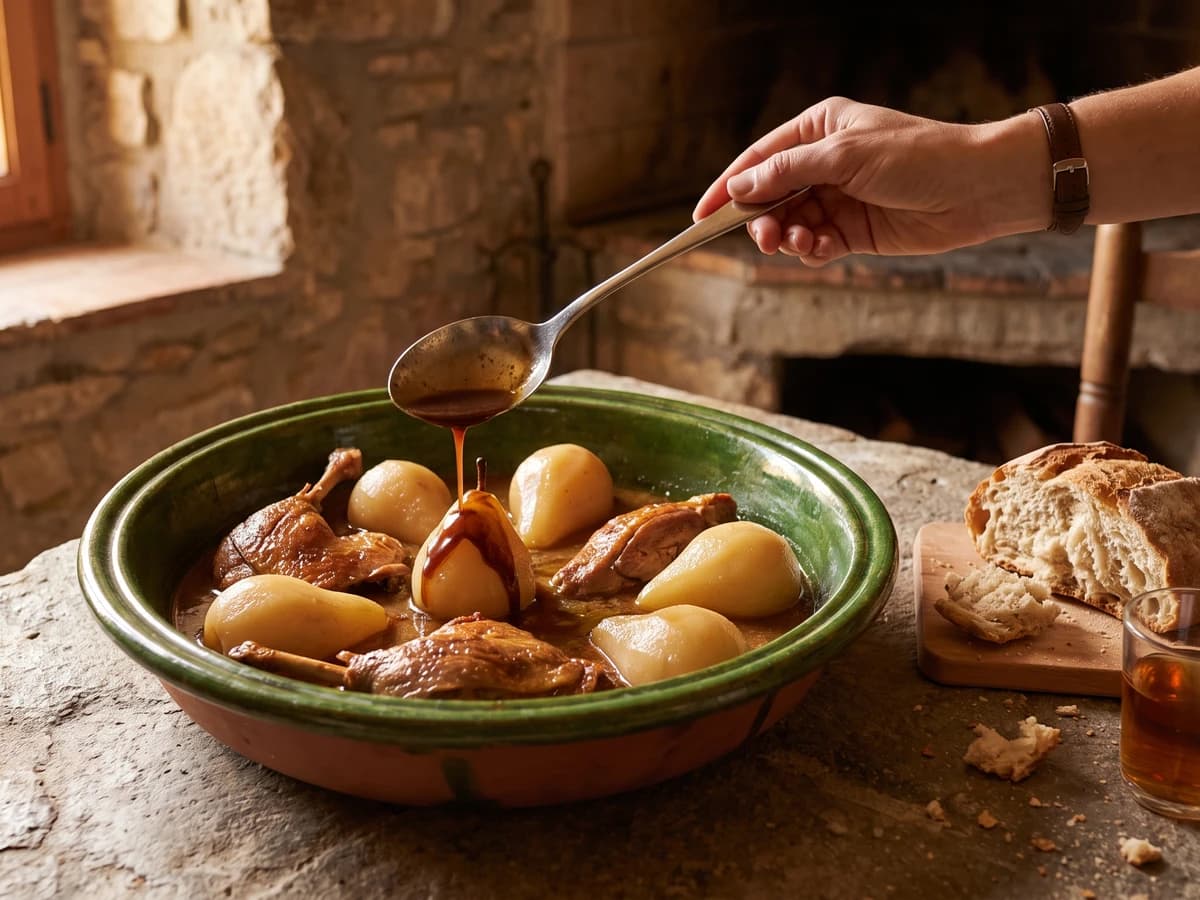
Ànec amb peres is Catalan celebration cooking: duck braised in a dark sofregit, firm autumn pears added near the end, and an almond-garlic picada that turns the juices into a close, glossy sauce.