Chef Isabel
Aceitunas Aliñadas Andaluzas
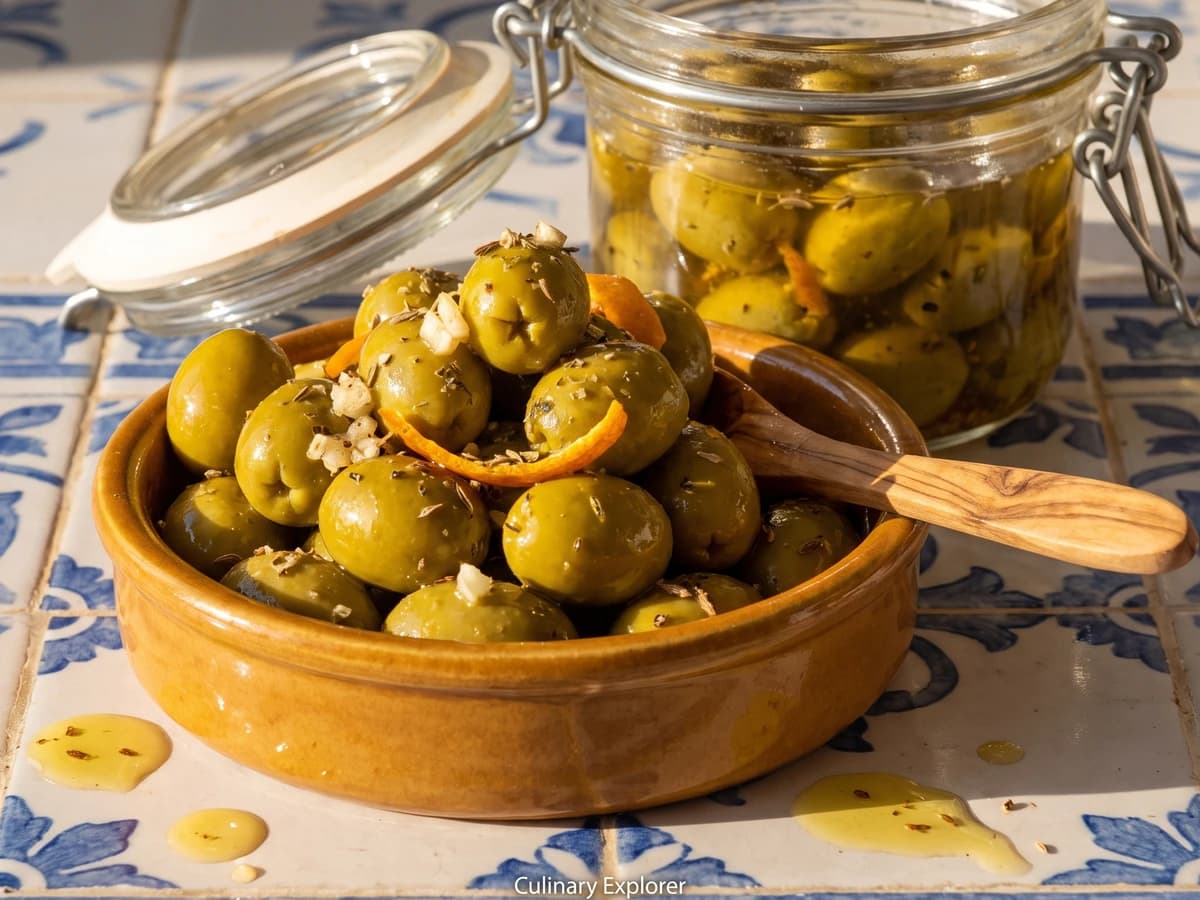
Andalucía's green olives are cracked just enough to drink in garlic, cumin, oregano and sherry vinegar, then left two days until the brine turns fragrant and every bite carries the aliño.
A cooking platform built around craft, culture, and the stories behind what we eat.
Created by
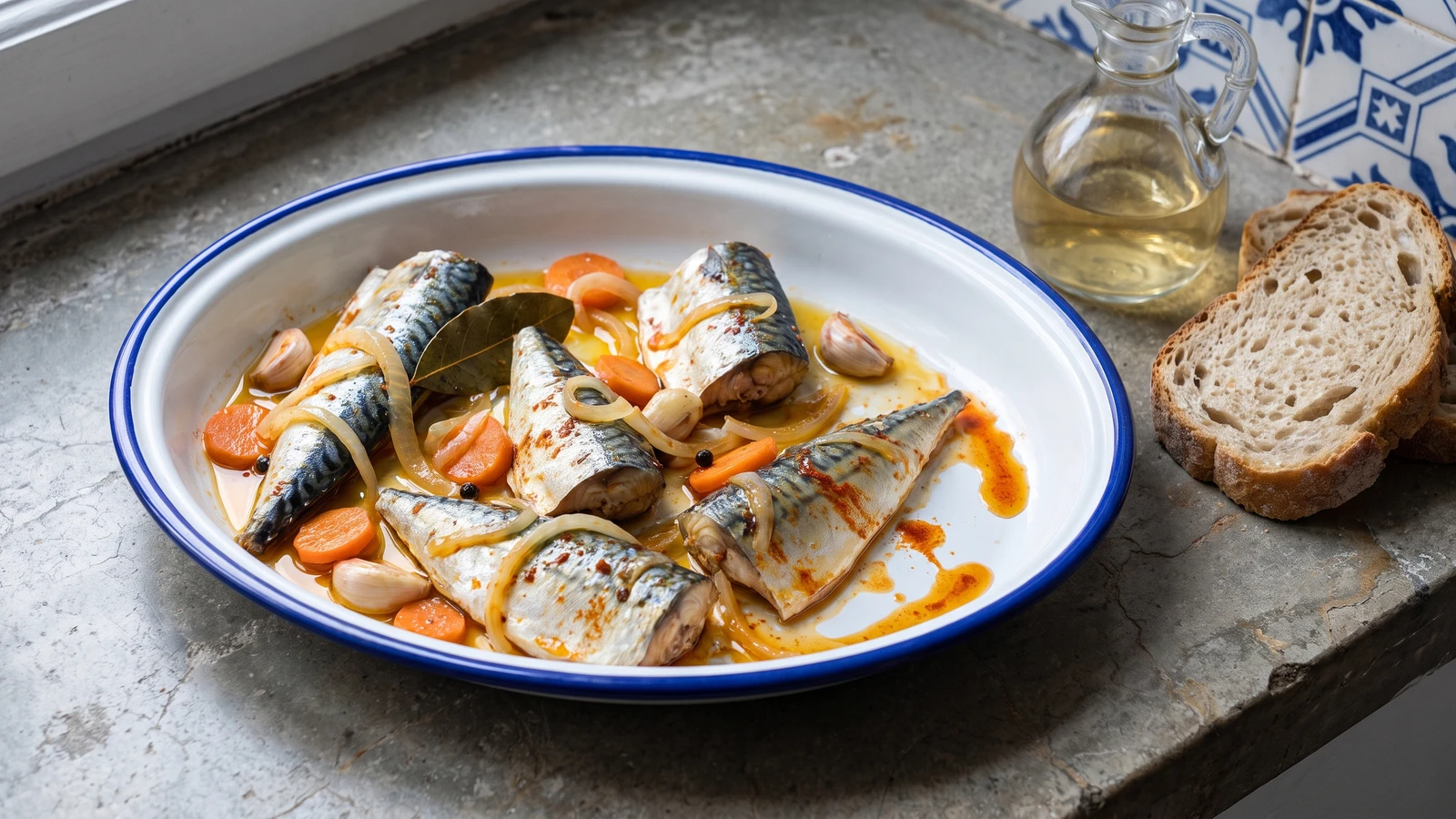
Caballa en escabeche from the Cantabrian coast is lightly fried mackerel rested under carrot, garlic, bay and pimentón in a sharp oil-and-vinegar pickle, made today for tomorrow's table.
Caballa en escabeche del Cantábrico is the northern coast's way with a rich, plentiful fish: mackerel, lightly floured and fried, then covered with a cooked pickle of olive oil, wine vinegar, carrot, onion, garlic, bay, and pimentón. The mackerel's fat carries that clean acidity. This is what separates it from simply fried fish and from a raw cure. The fish is cooked first, and the escabeche is cooked too.
The method that decides it is restraint. Fry the mackerel only until it is just cooked, pour the escabeche over it while warm rather than furiously boiling, then give it a full day in the cold. The vinegar keeps firming the flesh as the aromatics move inward. If the fish leaves the pan dry, tomorrow won't rescue it.
Atlantic mackerel is the first choice, but Pacific chub mackerel works with a slightly softer flake. Sardines are the Spanish kitchen's smaller answer; use them whole and cleaned, and fry them for only 45 to 60 seconds on each side. Good frozen-at-sea mackerel, thawed overnight in the refrigerator and dried well, is better than tired fish sold as fresh. No hace falta haber pisado España.
Make this a day before you need it. By the next afternoon the sharp edges have settled, the oil is stained red with pimentón, and the carrot and garlic taste of the sea without covering it. The Margin beside this recipe says only mejor mañana, better tomorrow. Follow the weights and it comes out.
Along the Cantabrian coast, where mackerel may be called caballa, verdel, or xarda according to the port, escabeche allowed a quick catch of oily fish to be fried and kept under seasoned vinegar and oil for later meals. The name descends through Hispano-Arabic from sikbaj, an old vinegar-cooked dish, while northern households made the method their own with bay, garlic, pepper, and firm fish from the day's landing. It once extended the useful life of a catch before cold storage, though a home batch now belongs in the refrigerator rather than on the pantry shelf.
Quantity
800g
pin bones removed and cut crosswise into 8 pieces
Quantity
10g
6g for the fish and 4g for the escabeche
Quantity
50g
Quantity
220ml
70ml for frying and 150ml for the escabeche
Quantity
180g
thinly sliced
Quantity
120g
peeled and cut into 3mm rounds
Quantity
6 cloves
peeled and lightly crushed
Quantity
2
Quantity
2g
Quantity
4g
Quantity
150ml
Quantity
120ml
preferably 6% acidity
| Ingredient | Quantity |
|---|---|
| skin-on mackerel filletspin bones removed and cut crosswise into 8 pieces | 800g |
| fine sea salt6g for the fish and 4g for the escabeche | 10g |
| plain flour | 50g |
| extra virgin olive oil70ml for frying and 150ml for the escabeche | 220ml |
| onionthinly sliced | 180g |
| carrotpeeled and cut into 3mm rounds | 120g |
| garlicpeeled and lightly crushed | 6 cloves |
| bay leaves | 2 |
| black peppercorns | 2g |
| sweet pimentón de la Vera | 4g |
| dry white wine | 150ml |
| unseasoned white wine vinegarpreferably 6% acidity | 120ml |
Run your fingers along the flesh and pull out every pin bone. Cut the fillets into 8 pieces, season evenly with 6g of the salt, and leave them for 10 minutes. Pat them thoroughly dry, coat them lightly in the flour, and shake off every loose bit. Pésalo, no lo adivines. Too much flour makes a pasty escabeche.
Heat 70ml of the olive oil in a wide frying pan over medium-high heat. When a pinch of flour sizzles at once, lay in the mackerel skin-side down without crowding the pan. Fry in two batches for about 2 minutes on the skin side and 1 minute on the flesh side, until the skin is lightly golden and the thickest part is opaque and reaches 63°C. Lift the pieces into a snug glass or glazed ceramic dish in one layer. Cook them through, but no longer. Vinegar firms fish as it rests, and dry mackerel only becomes drier.
Wipe out the pan and add the reserved 150ml clean olive oil. Add the onion, carrot, garlic, bay leaves, and peppercorns. Cook over low heat for 12 to 15 minutes, turning occasionally, until the onion is translucent and the carrot bends without breaking. Keep everything pale. This is a gentle aromatic base, not a browned sofrito.
Take the pan off the heat and wait 20 seconds. Stir in the pimentón for about 10 seconds, just until the oil turns brick-red and smells smoky. Add the wine and vinegar carefully, keeping your face back from the sharp first rush, then stir in the remaining 4g salt. Return the pan to low heat and simmer gently for 3 minutes. Do not reduce it hard; the measured oil and acidity are the balance of the dish.
Let the escabeche stand for 2 minutes, then pour it warm over the mackerel, spreading the onion, carrot, garlic, and spices between the pieces. The liquid should almost cover the fish. If it does not, move everything to a smaller dish rather than diluting the pickle. Leave uncovered for about 30 minutes, but no longer than 1 hour, then cover and refrigerate.
Rest the mackerel in the refrigerator for a full 24 hours. If the upper pieces are not covered, turn them once after 8 to 12 hours. Serve cold or let it sit out for 15 minutes so the olive oil loosens, spooning the vegetables and red-gold escabeche over every piece. Make it today and leave it alone until tomorrow. Siempre sale, si lo sigues.
1 serving (about 350g)
Culinary guides, cultural storytelling, and the editorial depth that makes cooking meaningful.
Discover Culinary ExplorerChef Isabel
Andalucía's green olives are cracked just enough to drink in garlic, cumin, oregano and sherry vinegar, then left two days until the brine turns fragrant and every bite carries the aliño.
Chef Isabel
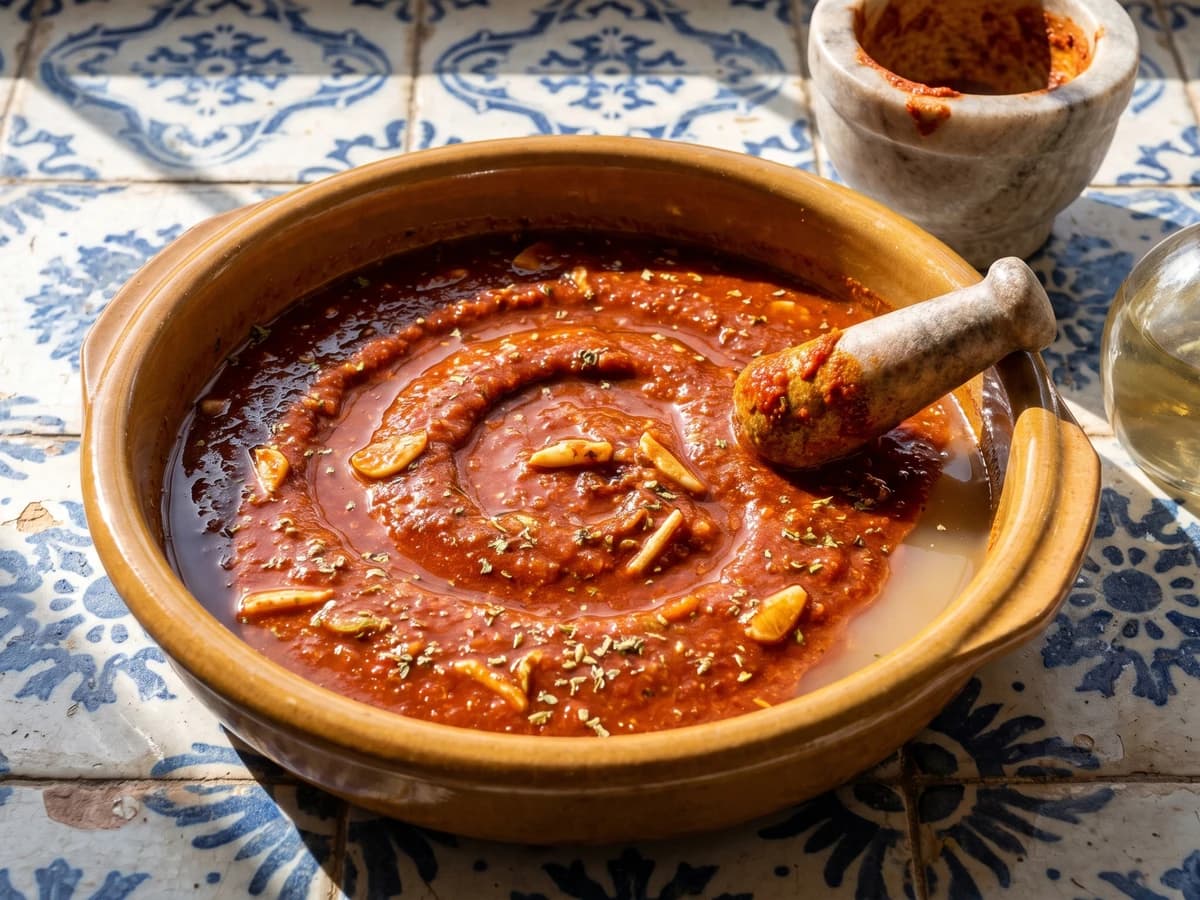
Andalucía's sharp, brick-red marinade brings vinegar, garlic, oregano, cumin and pimentón to fish and pork; pound the seasonings first, then give the acid time to carry them through.
Chef Isabel
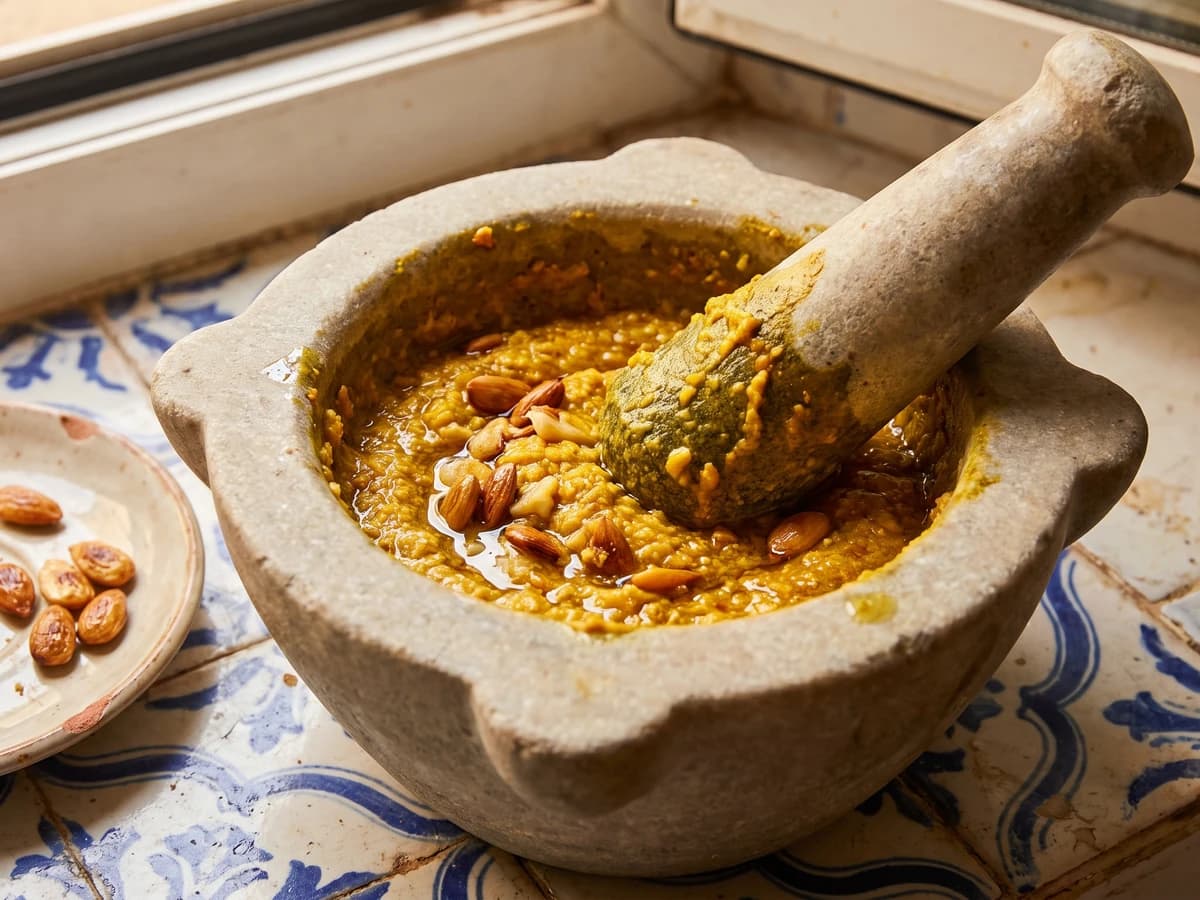
Almería's ajopollo turns fried garlic, almonds, bread and saffron into a golden mortar paste that gives modest fish and potato guisos their body, richness and unmistakable southern depth.
Chef Isabel
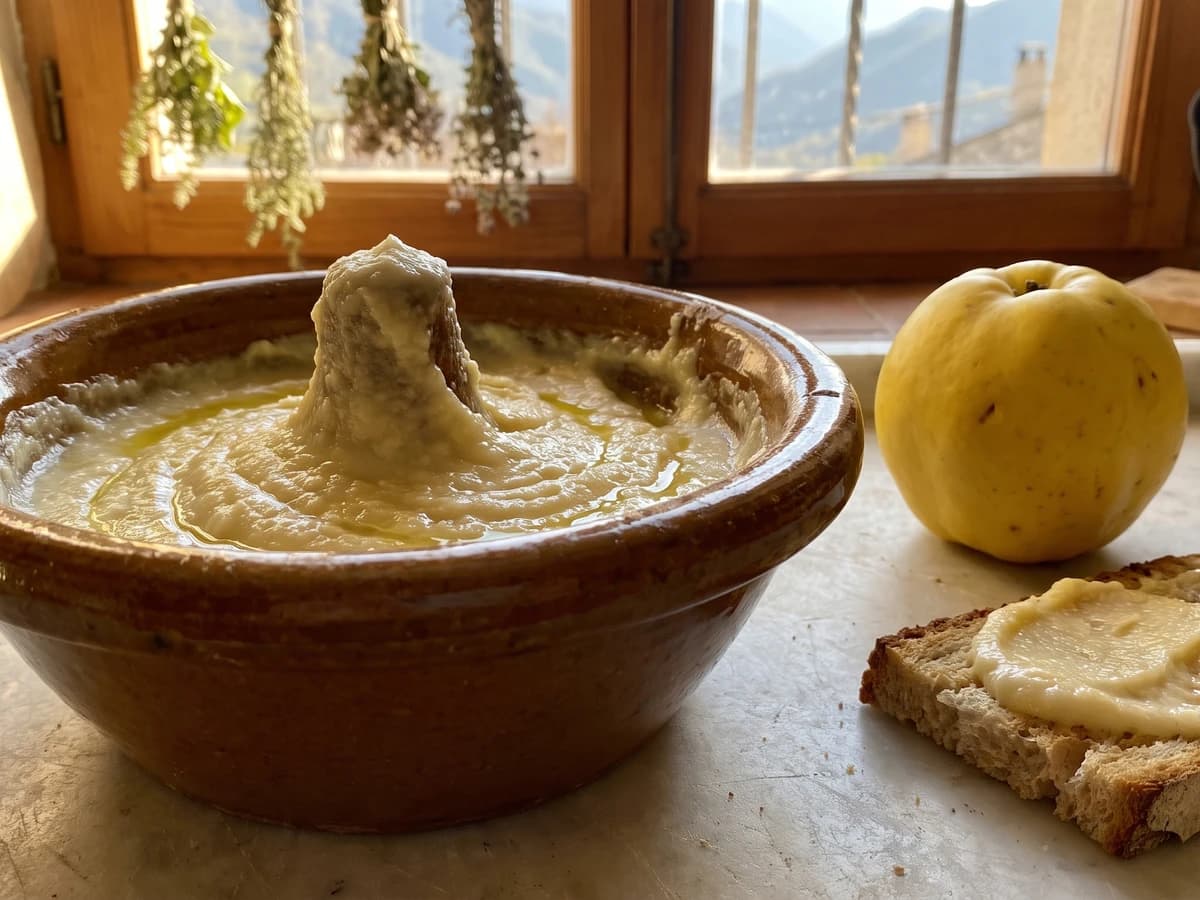
Allioli de codony belongs to the Catalan Pyrenees: boiled quince, raw garlic, salt, and olive oil worked into a thick, fragrant sauce for grilled meat, sausages, bread, and the autumn table.