Chef Isabel
Aceitunas Aliñadas Andaluzas
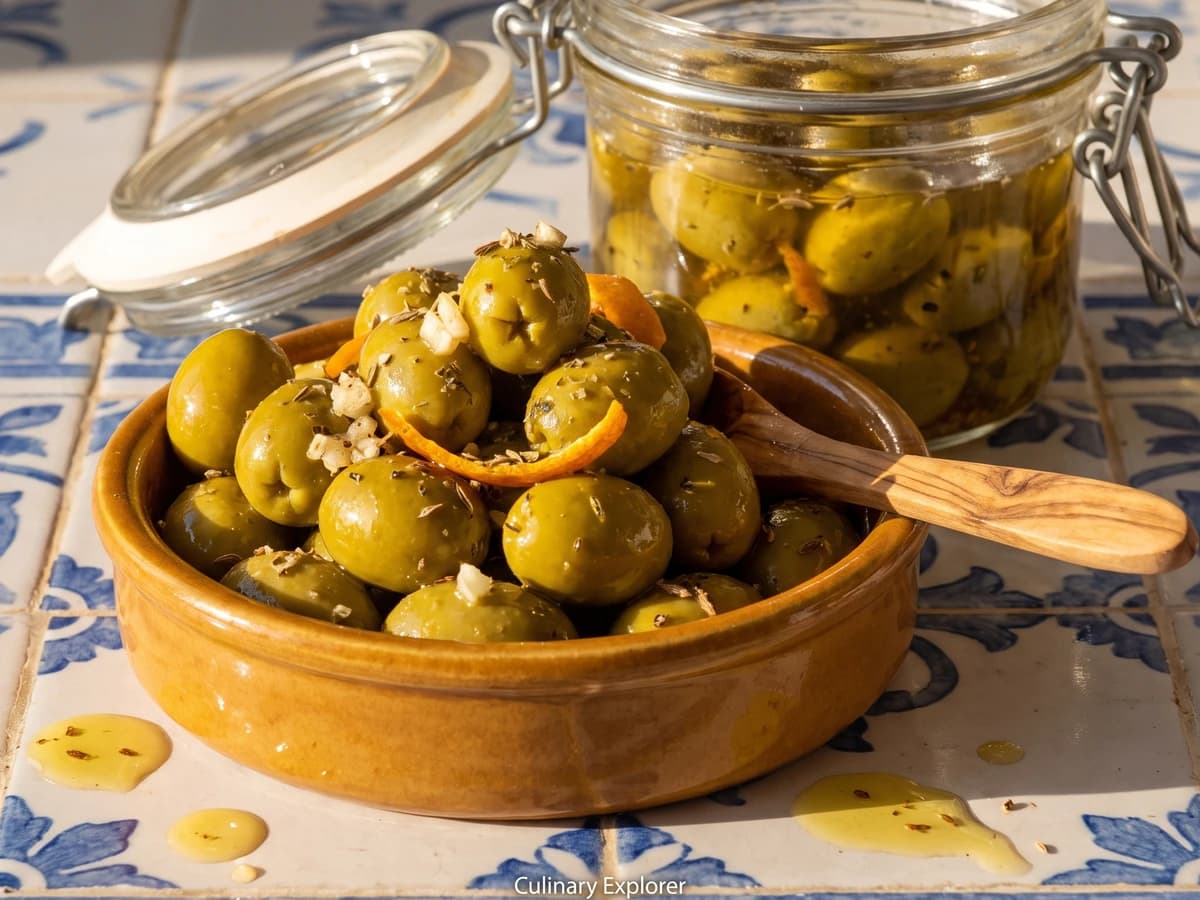
Andalucía's green olives are cracked just enough to drink in garlic, cumin, oregano and sherry vinegar, then left two days until the brine turns fragrant and every bite carries the aliño.
A cooking platform built around craft, culture, and the stories behind what we eat.
Created by
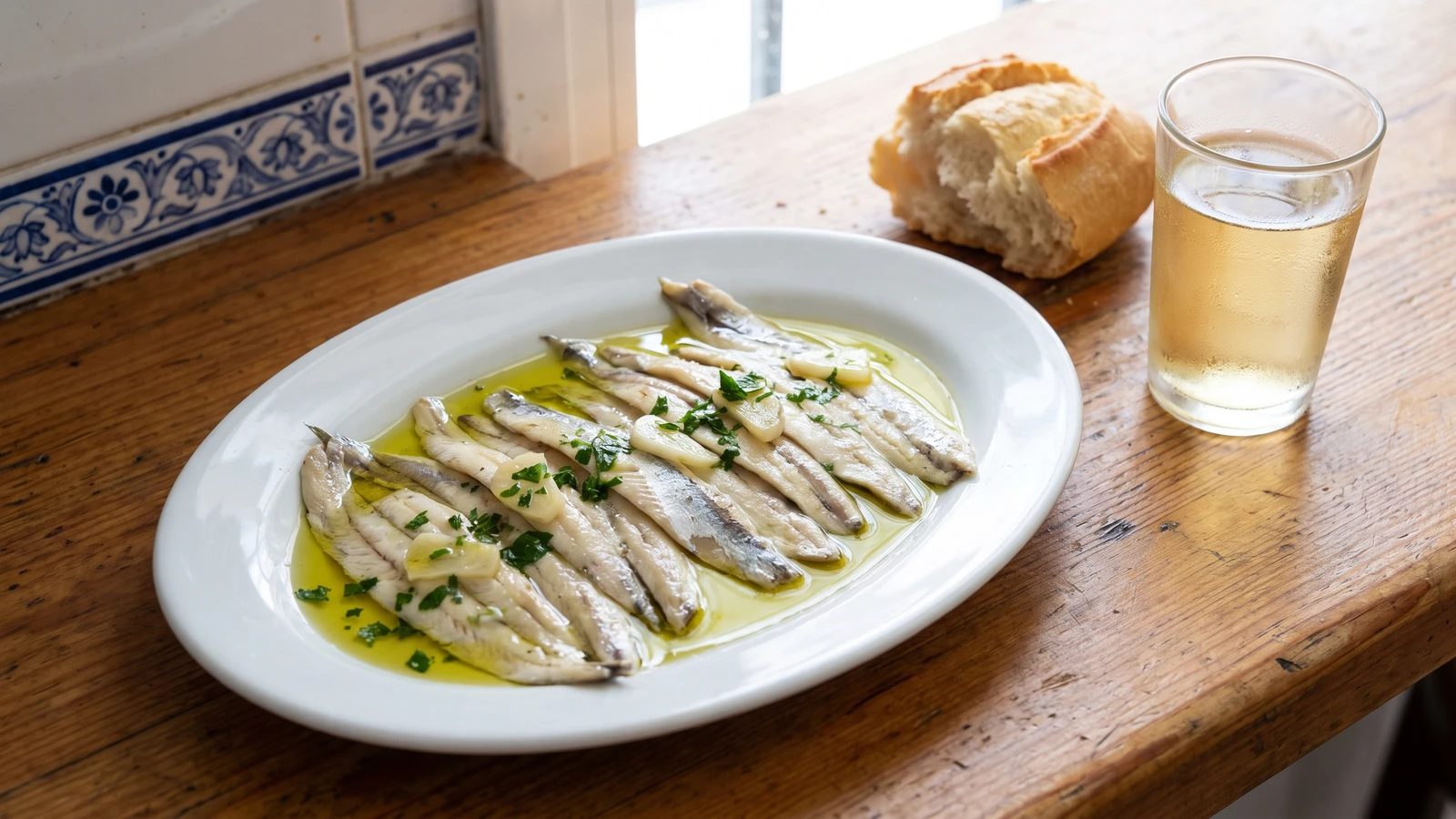
Málaga’s pale, firm boquerones take their clean bite from a cold vinegar cure, then soften under garlic, parsley and green-gold olive oil. Freeze the anchovies first, because vinegar does not make raw fish safe.
Boquerones en vinagre are Málaga’s pale, clean-tasting way with the little anchovy: raw fillets cured in white wine vinegar until firm and white, then laid under olive oil with garlic and parsley. They aren’t the brown, salted fillets called anchoas, and they aren’t the crisp boquerones fritos of the Málaga fish fry. The vinegar, whitened flesh and green-flecked oil make this its own dish.
Along the Málaga coast, boquerones belong to the everyday table, set out cold with bread for an aperitivo or carried to a meal outdoors. Freshness comes first. Buy fish with bright silver skin, clear eyes and a clean smell of the sea, then clean it promptly. Freeze it before curing, always. Vinegar changes the fish’s colour and texture, but it does not control the risk from anisakis parasites.
The cure decides whether the dish works. Keep the fillets fully submerged and check the thickest one after four hours. You want it white through the centre and firm enough to lift without breaking, never chalky from a day forgotten in vinegar. Dry the cured fish well before adding the oil, or the dressing turns watery and slips away from the flesh.
No hace falta haber pisado España. If fresh European anchovies are scarce, use plain commercially frozen raw anchovies from a trustworthy fishmonger and confirm they were frozen for uncooked service. They may be slightly softer after thawing, but they give you the right fish and the right flavour. Salted or oil-packed anchovies cannot stand in for them. The Margin beside this recipe says only, "cold fish, dry fish." Follow those two things and the rest is easy.
Boquerones en vinagre belong especially to Málaga and the Andalusian coast, where the small anchovy landed in the bay became so closely tied to the city that malagueños themselves are nicknamed boquerones. The prized boquerón victoriano carries a disputed local name, linked by tradition either to Rincón de la Victoria or to the season around the Virgen de la Victoria festivities. The vinegar cure gave a highly perishable catch a little more keeping time, while olive oil, garlic and parsley prepared it for the home table.
Quantity
500g
heads, innards and backbones removed; fillets left joined at the tail
Quantity
350ml
Quantity
50ml
Quantity
12g
Quantity
180ml
Quantity
3 cloves (about 12g)
very thinly sliced
Quantity
15g
finely chopped
| Ingredient | Quantity |
|---|---|
| very fresh whole European anchovies (boquerones)heads, innards and backbones removed; fillets left joined at the tail | 500g |
| white wine vinegar, 5% to 6% acidity | 350ml |
| very cold water | 50ml |
| fine sea salt | 12g |
| extra virgin olive oil | 180ml |
| garlicvery thinly sliced | 3 cloves (about 12g) |
| flat-leaf parsley leavesfinely chopped | 15g |
Keep the fish cold and clean them as soon as you get home. Pinch each head just behind the gills and pull it down toward the belly so the innards follow. Open the belly with your thumb, lift out the backbone and spread the two fillets like a book, leaving them joined at the tail if they hold. Rinse them briefly in several changes of very cold water until no blood remains, then drain and pat completely dry.
Lay the cleaned fillets flat in a shallow freezer-safe container, cover tightly and freeze at minus 20°C or colder for seven full days. Vinegar turns the flesh white, but it does not reliably kill anisakis parasites. The freezer does that work, so this step is not optional.
Move the covered container to the refrigerator and thaw for about 12 hours, keeping the fish at 4°C or colder. Drain away any liquid and pat the fillets dry again. Slow refrigerator thawing keeps them firmer than a quick thaw on the counter.
Dissolve the 12g salt in the 50ml very cold water, then stir in the white wine vinegar. Arrange the anchovies skin-side down in a shallow glass or glazed ceramic dish and pour over the cure. Every fillet must remain submerged. Cover and refrigerate.
Begin checking after four hours and allow up to six for thicker fish. Cut through the thickest fillet: the flesh should be white and firm from surface to centre, with no translucent or glassy line along the middle. The cure time decides the texture. Too short leaves a raw centre; much too long makes the fish dry and chalky.
Drain the anchovies and discard the curing liquid. Give the fillets one very quick rinse in cold water to remove the harshest vinegar, then pat them thoroughly dry. Lay them in a clean shallow dish and scatter each layer with sliced garlic and chopped parsley. Pour over the olive oil, making sure the fish is coated.
Cover and refrigerate for two hours so the garlic and parsley settle into the oil. Take the dish from the refrigerator ten minutes before serving, just long enough for the oil to loosen. Arrange the boquerones open and silver-side down, spoon their dressing over them and serve with bread. Keep them cool on an outdoor table. Siempre sale, si lo sigues.
1 serving (about 75g)
Culinary guides, cultural storytelling, and the editorial depth that makes cooking meaningful.
Discover Culinary ExplorerChef Isabel
Andalucía's green olives are cracked just enough to drink in garlic, cumin, oregano and sherry vinegar, then left two days until the brine turns fragrant and every bite carries the aliño.
Chef Isabel
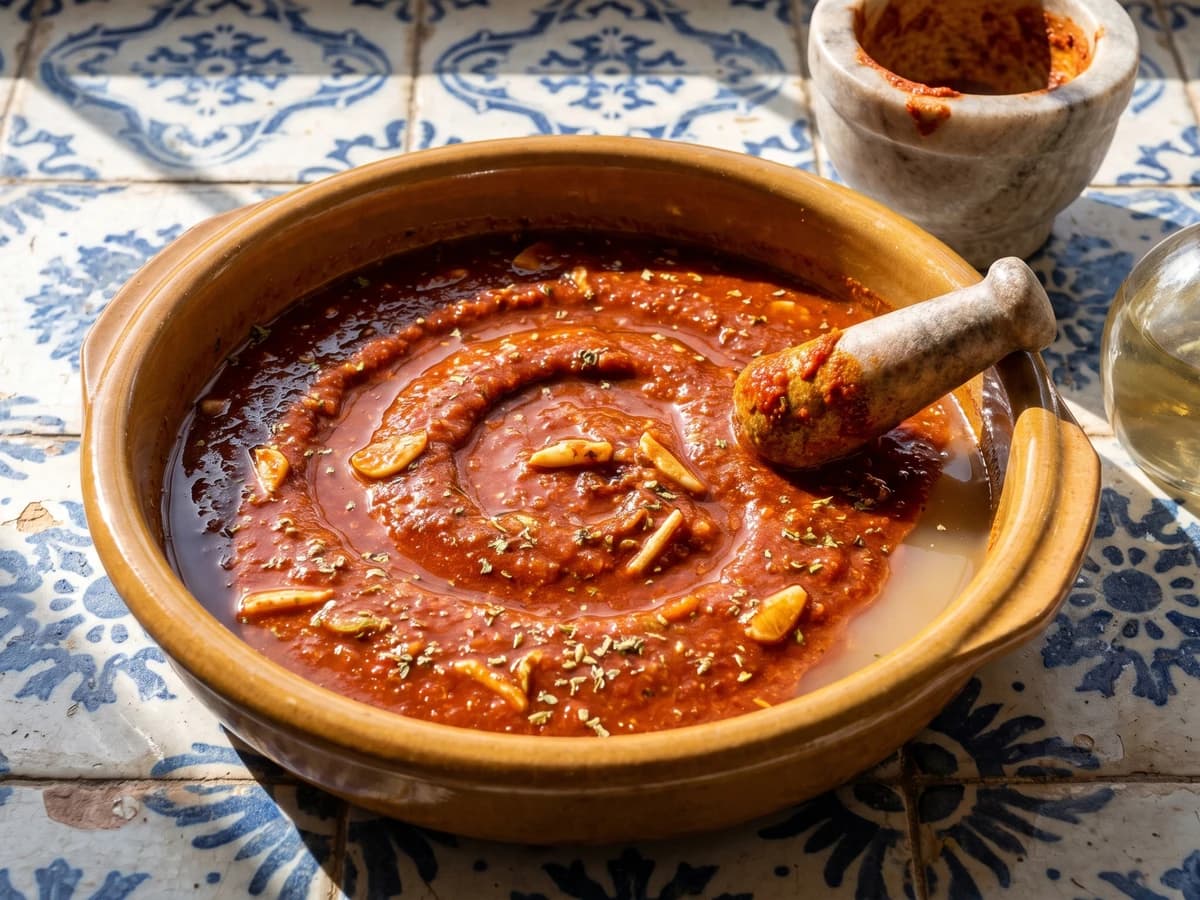
Andalucía's sharp, brick-red marinade brings vinegar, garlic, oregano, cumin and pimentón to fish and pork; pound the seasonings first, then give the acid time to carry them through.
Chef Isabel
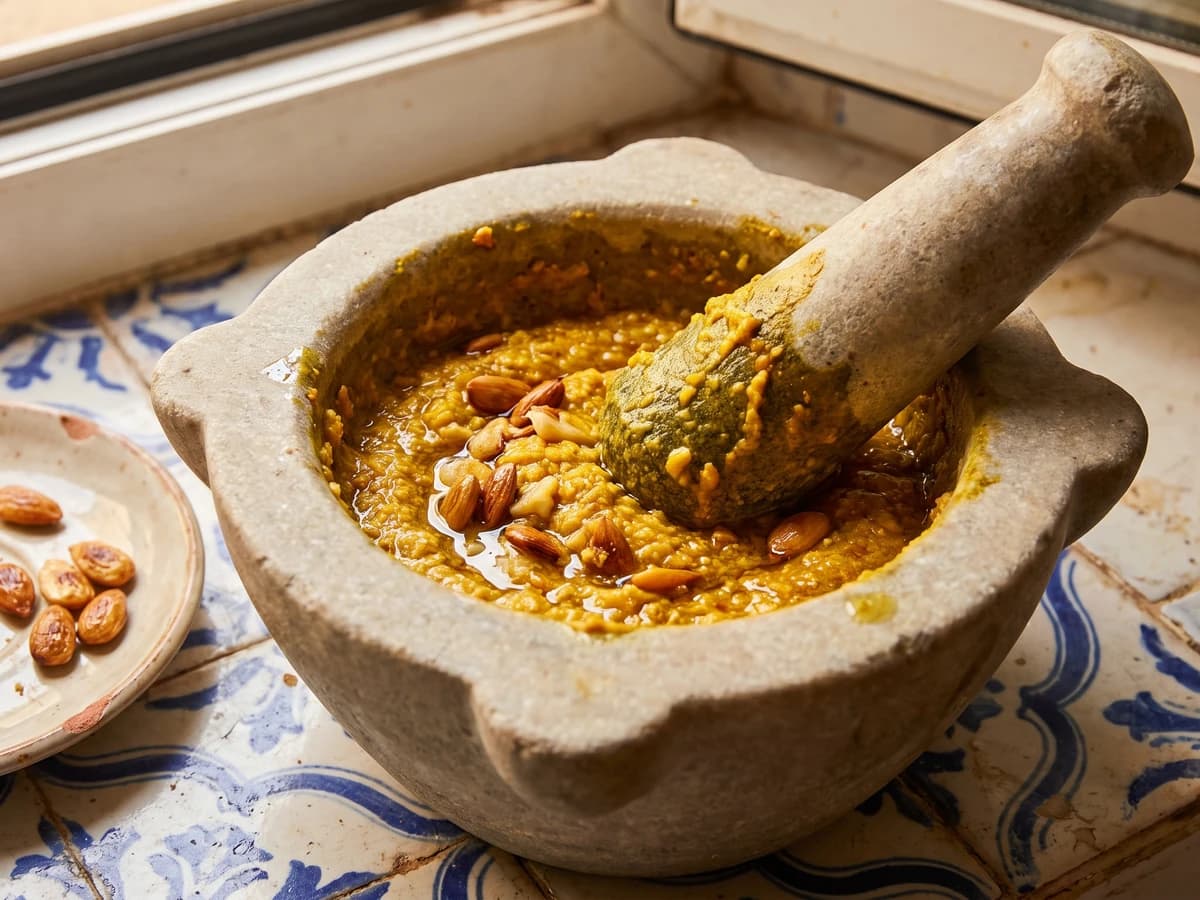
Almería's ajopollo turns fried garlic, almonds, bread and saffron into a golden mortar paste that gives modest fish and potato guisos their body, richness and unmistakable southern depth.
Chef Isabel
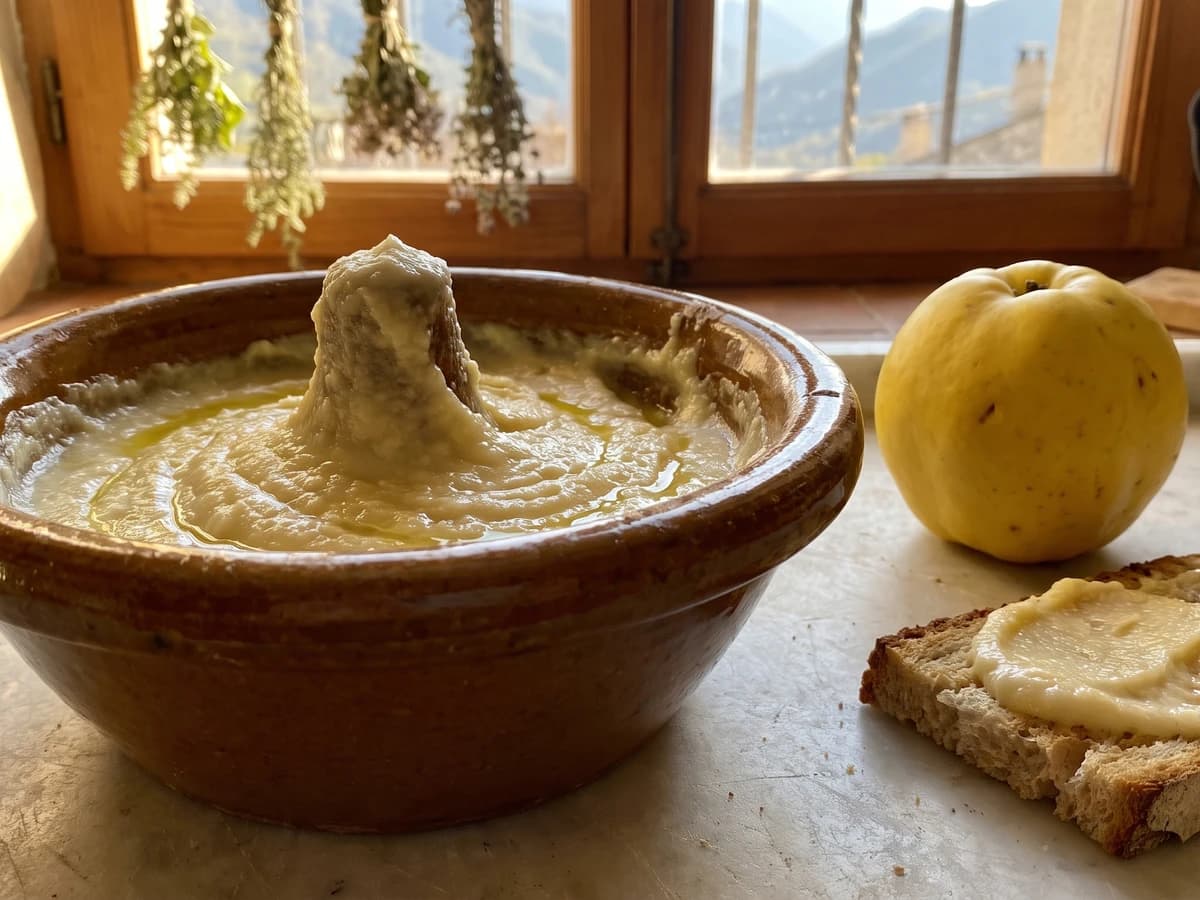
Allioli de codony belongs to the Catalan Pyrenees: boiled quince, raw garlic, salt, and olive oil worked into a thick, fragrant sauce for grilled meat, sausages, bread, and the autumn table.