Chef Isabel
Aceitunas Aliñadas Andaluzas
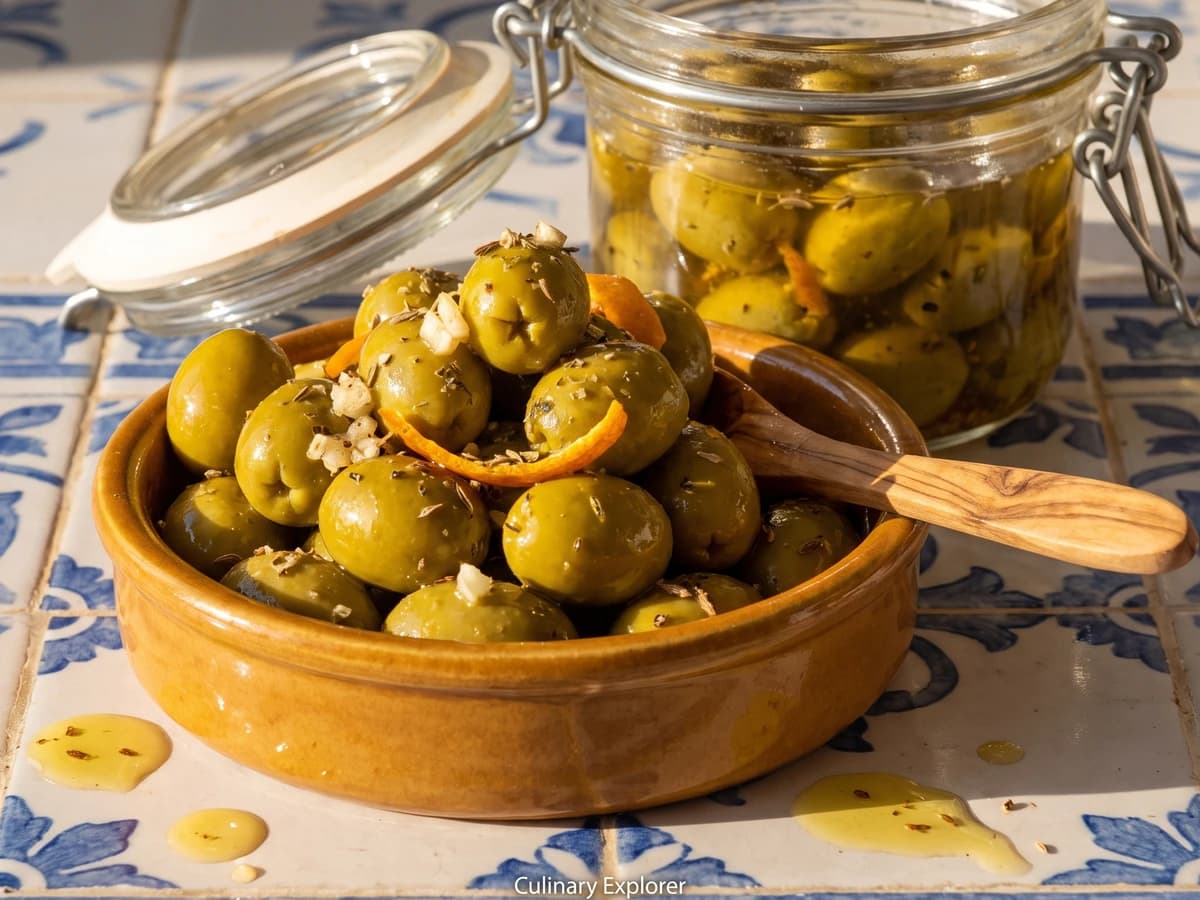
Andalucía's green olives are cracked just enough to drink in garlic, cumin, oregano and sherry vinegar, then left two days until the brine turns fragrant and every bite carries the aliño.
A cooking platform built around craft, culture, and the stories behind what we eat.
Created by
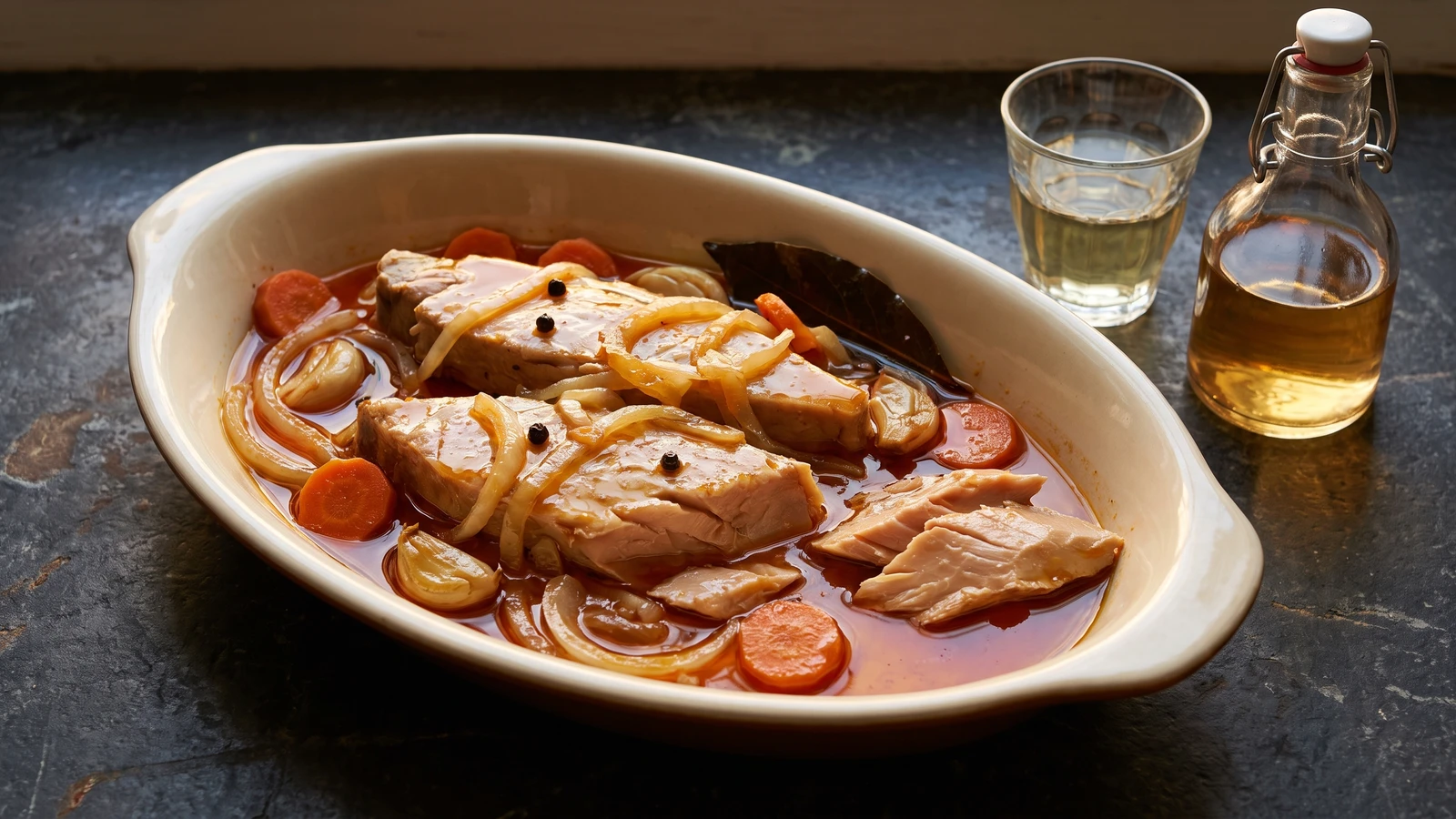
Riojan bonito en escabeche is gently poached albacore steeped for two days in olive oil, wine vinegar, garlic, bay and pimentón, a make-ahead dish whose flavour improves while you leave it alone.
Bonito en escabeche is Riojan, an inland treatment of the northern bonito del norte that reached La Rioja from the Cantabrian coast. The fish is poached first, then rested beneath a cooked escabeche of olive oil, wine vinegar, garlic, bay, onion, and pimentón. That red-gold marinade and its wine-vinegar bite give the dish its Riojan footing.
The poach decides it. Keep the water at a bare tremble and remove the bonito as soon as it is cooked through, because the acid firms it again during the rest. Boil it hard and two days in vinegar will finish the mischief. Pour the escabeche over while warm, refrigerate it, and leave it alone for a day or two. The oil carries the pimentón and garlic into the broad flakes while the vinegar keeps the whole thing bright.
Outside Spain, ask for fresh albacore tuna. It is the same fish sold under its market name, and no compromise at all. If you cannot find it, use a thick yellowfin loin; it will be darker, firmer, and less delicate, but it takes the escabeche well. Don't begin with canned tuna, because it has already had its cooking and will fall apart. The Margin beside this recipe says only: gentle water, patient vinegar. Follow those two things and it comes out.
Bonito en escabeche belongs to La Rioja's inland table, where fish from the Cantabrian coast travelled south into the Ebro valley and vinegar helped it last after arrival. Escabeche takes its name from the Arabic al-sikbaj, a vinegar-seasoned preparation carried into Iberian cooking and adapted to local fish and oils. In the Riojan version, wine vinegar and pimentón give pale bonito a red-gold marinade suited to the region's wine-growing larder.
Quantity
700g
skinless and boneless, bloodline trimmed, cut into 4cm-thick pieces
Quantity
1.5 litres
Quantity
24g
Quantity
175ml
Quantity
180g
thinly sliced
Quantity
100g
peeled and cut into thin coins
Quantity
6 cloves
unpeeled and lightly crushed
Quantity
2
Quantity
3g (about 1 teaspoon)
Quantity
3g (about 1 teaspoon)
Quantity
150ml
Quantity
125ml
Quantity
5g
| Ingredient | Quantity |
|---|---|
| bonito del norte (fresh albacore) loinskinless and boneless, bloodline trimmed, cut into 4cm-thick pieces | 700g |
| water | 1.5 litres |
| fine sea salt, for poaching | 24g |
| extra virgin olive oil | 175ml |
| onionthinly sliced | 180g |
| carrotpeeled and cut into thin coins | 100g |
| garlicunpeeled and lightly crushed | 6 cloves |
| bay leaves | 2 |
| black peppercorns | 3g (about 1 teaspoon) |
| sweet pimentón | 3g (about 1 teaspoon) |
| white wine vinegar | 150ml |
| dry white Rioja wine | 125ml |
| fine sea salt, for the escabeche | 5g |
Check the bonito carefully for skin, bones, and the dark bloodline, which can make the finished escabeche taste harsh. Cut the loin into pieces about 4cm thick and leave them at room temperature for 15 minutes while you heat the poaching water.
Combine the water and 24g salt in a wide saucepan. Bring it just below a simmer, about 80 to 85°C, then lower in the bonito. Keep the water at a quiet tremble and poach for 6 to 9 minutes, removing each piece when its centre reaches 63°C. Do not boil it. The vinegar will firm the fish further as it rests, so a hard poach now gives you dry bonito two days later.
Lift out the bonito with a slotted spatula and set it on a plate to drain. Let it cool for 15 minutes, then arrange the pieces snugly in a clean 1.5-litre glass or glazed ceramic container. Keep the pieces large; they will separate naturally into broad flakes when served.
Warm the olive oil in a nonreactive sauté pan over low heat. Add the onion, carrot, crushed garlic, bay leaves, and peppercorns. Cook gently for 12 to 15 minutes, stirring now and then, until the onion is translucent and the carrot bends easily. Let nothing brown. An escabeche wants sweet, yielding vegetables, not the toasted flavour of a sofrito.
Take the pan off the heat and stir in the pimentón for 20 seconds. Add the vinegar and wine carefully, return the pan to low heat, and stir in the remaining 5g salt. Simmer gently for 8 minutes, until the sharp raw smell of vinegar softens but the marinade still tastes bright. Adding the pimentón away from direct heat keeps it red and sweet instead of bitter.
Let the escabeche cool for 10 minutes, then spoon the vegetables around the bonito and pour over all the liquid. The fish should be covered as closely as possible, so use a snug container rather than a broad dish. Leave it no longer than 30 minutes to lose its remaining heat, cover, and refrigerate for at least 24 hours, preferably 48. Turn any exposed pieces once after the first day. Siempre sale, si lo sigues.
Take out only the amount you mean to serve and leave it for 20 minutes so the olive oil loosens. Set the bonito on a shallow plate with some onion, carrot, garlic, and a spoonful of its red-gold escabeche. Serve cool, not refrigerator-cold, with bread to catch the seasoned oil.
1 serving (about 210g)
Culinary guides, cultural storytelling, and the editorial depth that makes cooking meaningful.
Discover Culinary ExplorerChef Isabel
Andalucía's green olives are cracked just enough to drink in garlic, cumin, oregano and sherry vinegar, then left two days until the brine turns fragrant and every bite carries the aliño.
Chef Isabel
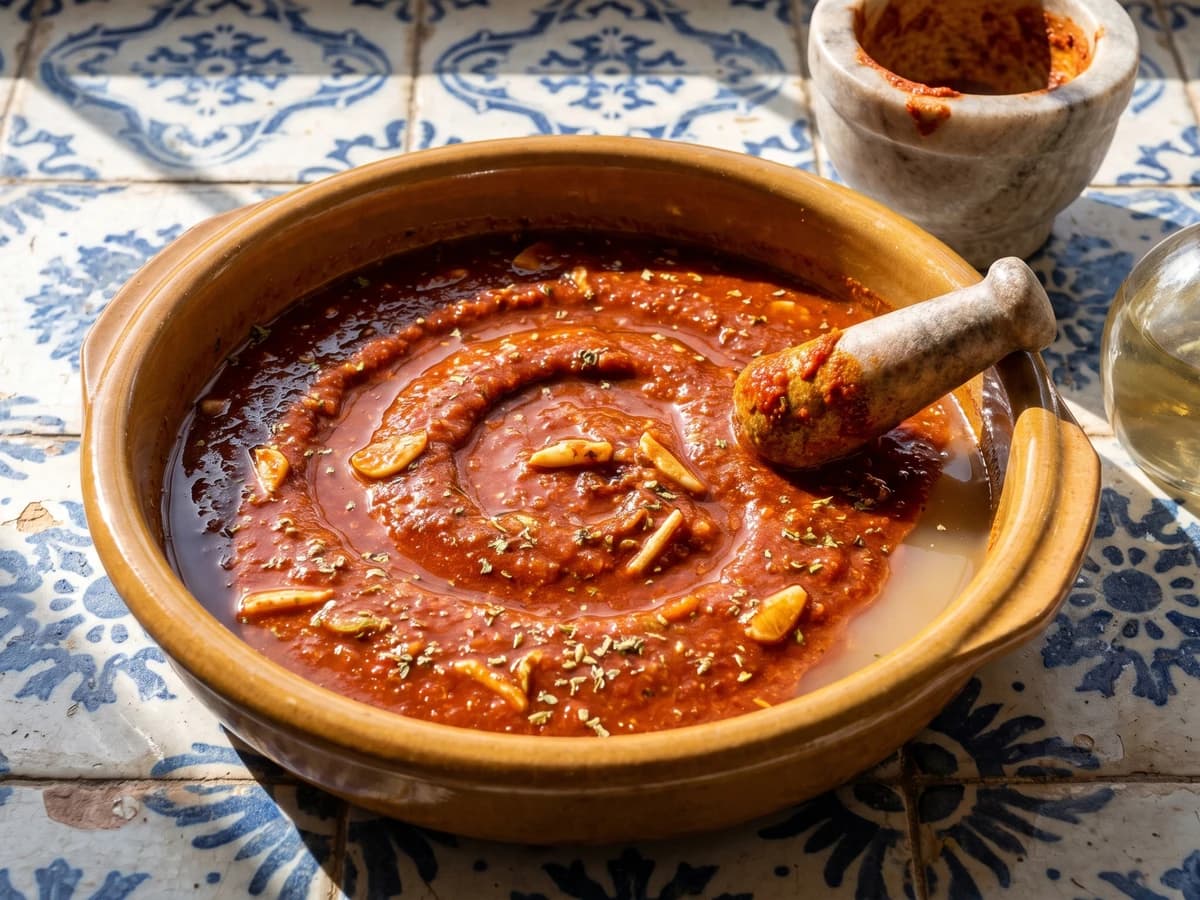
Andalucía's sharp, brick-red marinade brings vinegar, garlic, oregano, cumin and pimentón to fish and pork; pound the seasonings first, then give the acid time to carry them through.
Chef Isabel
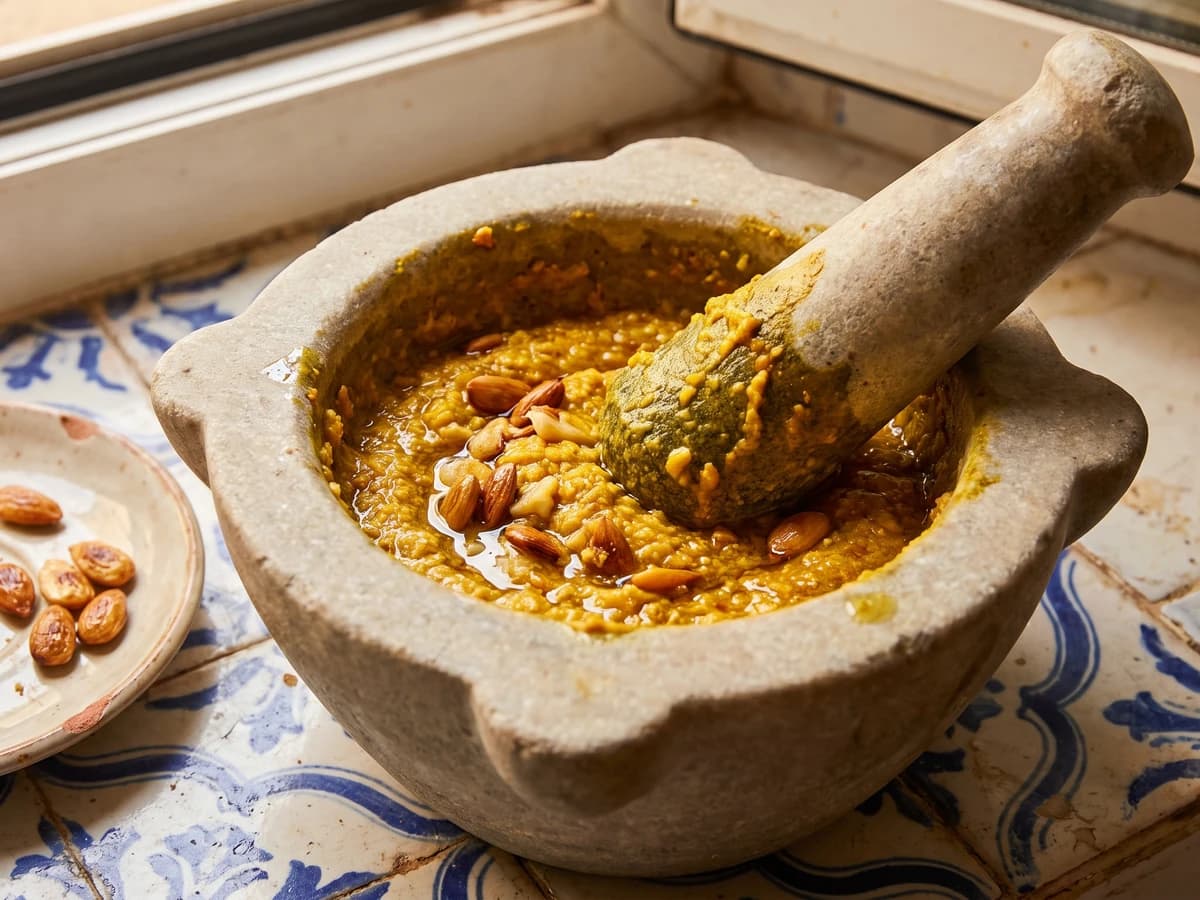
Almería's ajopollo turns fried garlic, almonds, bread and saffron into a golden mortar paste that gives modest fish and potato guisos their body, richness and unmistakable southern depth.
Chef Isabel
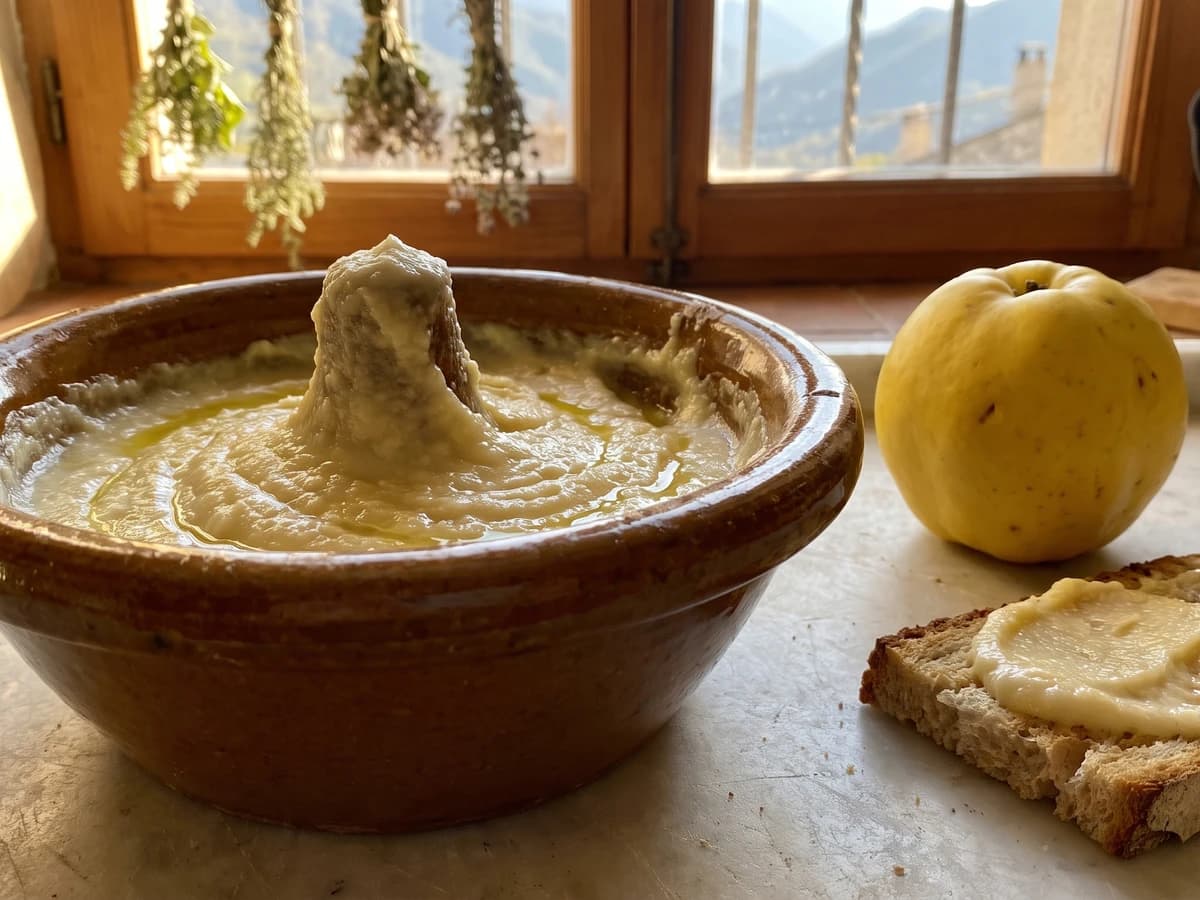
Allioli de codony belongs to the Catalan Pyrenees: boiled quince, raw garlic, salt, and olive oil worked into a thick, fragrant sauce for grilled meat, sausages, bread, and the autumn table.