Chef Isabel
Abanico Ibérico a la Plancha
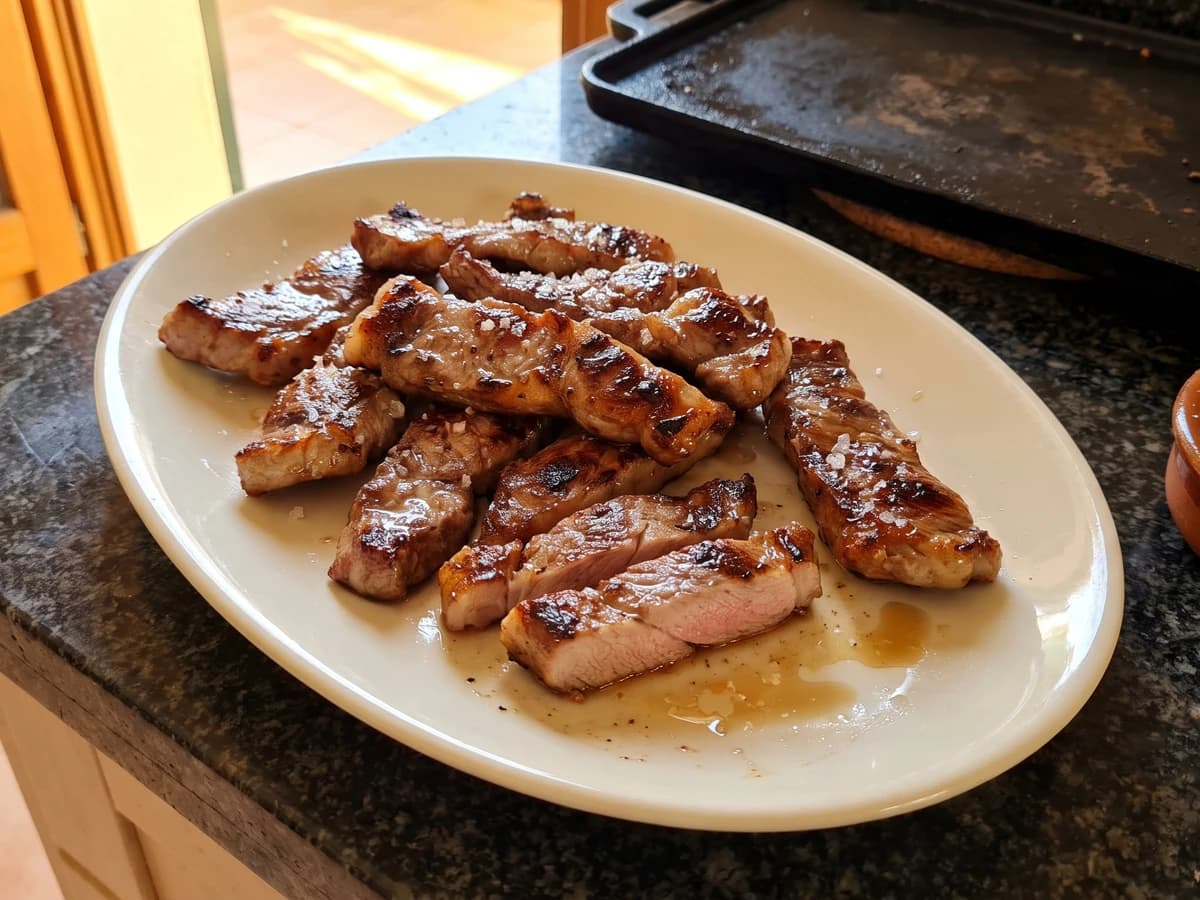
Extremadura's dehesa gives us this fan-shaped, marbled rib cut: salt it at the last moment, lay it on a fierce plancha, and count in seconds so the centre stays juicy.
A cooking platform built around craft, culture, and the stories behind what we eat.
Created by
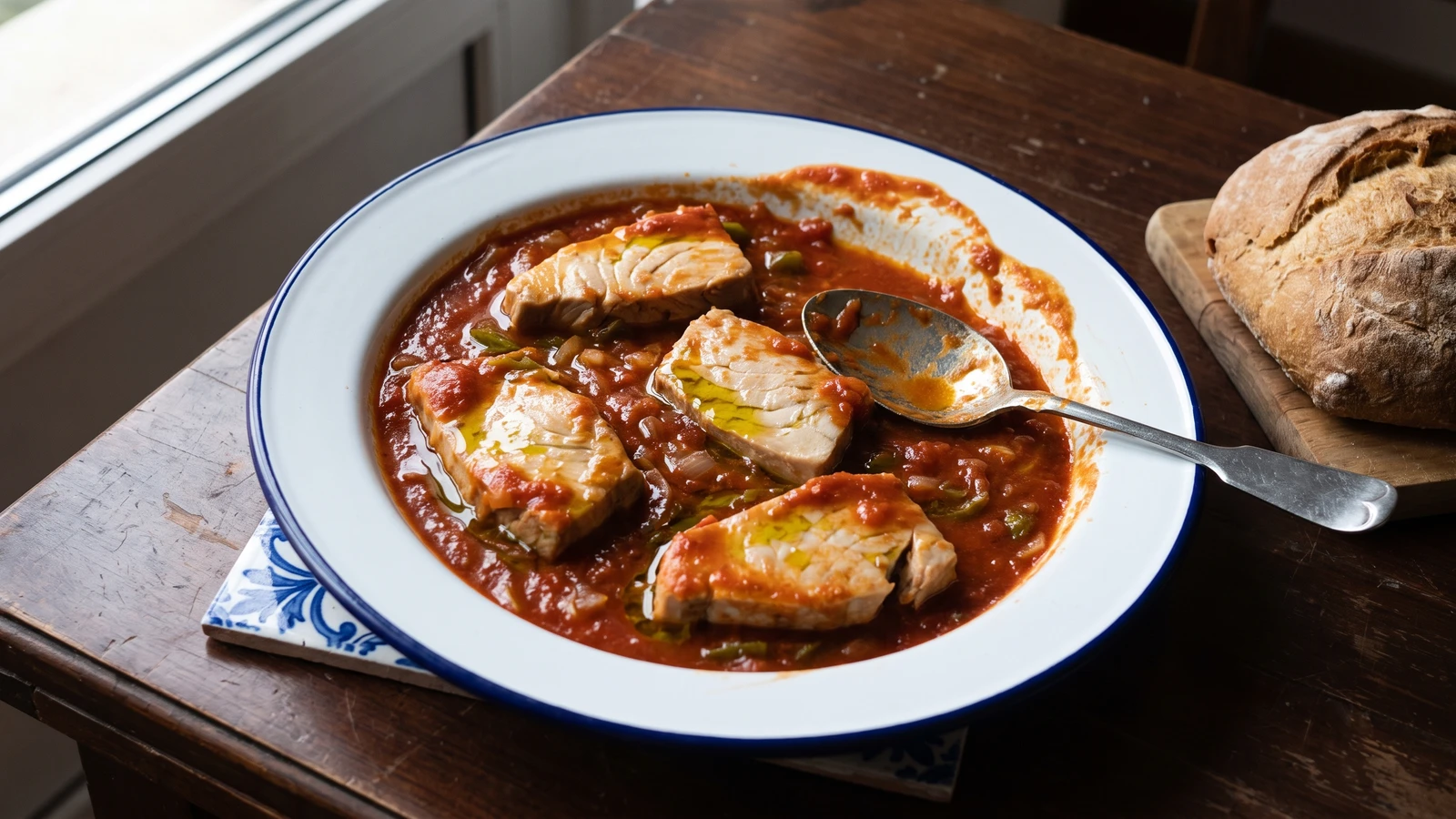
Basque and Cantabrian bonito con tomate brings the summer catch to a deep, slow tomato sauce. Finish the sauce first, then let thick pieces of albacore cook gently in its heat.
Basque and Cantabrian bonito con tomate is summer coastal cooking: thick pieces of bonito del norte, the albacore of the Cantabrian Sea, held in a concentrated tomato sauce built on onion and green pepper. It isn't marmitako with the potatoes forgotten. Marmitako is a brothy fisherman's stew; this is bonito in a red, glossy salsa de tomate, thick enough to cling to every piece.
The sauce must be completely cooked before the fish goes near it. I take the onion and pepper low and slow until they're dark gold and sweet, the sofrito, or slow vegetable base, that carries the dish. Then the tomatoes cook until their water is gone and a spoon drawn through the pan leaves a path. Only then does the bonito go in. Sear it briefly, settle it into the bubbling sauce, turn off the heat, and cover the pan. The stored heat finishes the centre gently. Give it another five minutes on the flame and tender bonito turns to cotton.
Fresh bonito del norte is the prize, but good frozen albacore, thawed overnight, is the closest substitute. Yellowfin tuna also works; it is darker and firmer, so the short finish matters even more. No hace falta haber pisado España, you don't need to have set foot in Spain. My Margin beside this recipe says only, "sauce first, fish last." Siempre sale, si lo sigues: it turns out if you follow it.
Along the Basque and Cantabrian coast, the costera del bonito, the summer albacore fishing season, brought fresh fish into ports such as Bermeo, Getaria, and Santoña just as field tomatoes reached their best. The same catch became marmitako aboard fishing boats, while coastal homes cooked thick portions in the tomato sauce of the summer kitchen or preserved them in oil and escabeche. Bonito con tomate remains distinct from marmitako because its sauce is reduced and clinging, with no potato or broth to turn it into spoon food.
Quantity
900g
skin, bones, and dark bloodline removed; cut across the grain into pieces about 2.5cm thick
Quantity
1.2kg
roughly chopped
Quantity
800g
crushed with their juice
Quantity
250g
finely diced
Quantity
200g
seeded and finely diced
Quantity
10g
finely chopped
Quantity
80ml
60ml for the sauce and 20ml for the fish
Quantity
10g
6g for the sauce and 4g for the fish
| Ingredient | Quantity |
|---|---|
| bonito del norte or albacore tuna loinskin, bones, and dark bloodline removed; cut across the grain into pieces about 2.5cm thick | 900g |
| ripe plum tomatoesroughly chopped | 1.2kg |
| canned whole peeled tomatoes (optional)crushed with their juice | 800g |
| yellow onionfinely diced | 250g |
| Italian green frying peppersseeded and finely diced | 200g |
| garlicfinely chopped | 10g |
| extra virgin olive oil60ml for the sauce and 20ml for the fish | 80ml |
| fine sea salt6g for the sauce and 4g for the fish | 10g |
Put 60ml of the olive oil, the onion, green pepper, and 2g of the salt into a wide heavy pan. Cook over medium-low heat for 25 to 30 minutes, stirring every few minutes. The vegetables should soften, lose nearly all their water, and turn dark gold at the edges without browning hard. Add the garlic and cook for 2 minutes more. This slow sweetness is the floor of the sauce; high heat leaves the onion pale and sharp.
Add the fresh tomatoes and another 4g salt. Bring them to a gentle simmer, then cook uncovered over medium-low heat for 35 to 45 minutes, stirring more often as the sauce thickens. With canned tomatoes, allow 25 to 30 minutes. The raw smell must disappear, the colour must deepen, and the watery pool around the vegetables must be gone.
Pass the mixture through a food mill fitted with its medium disk, pressing out the pulp and leaving the skins and seeds behind. If you don't have a food mill, blend it and push it through a fine sieve. Return the sauce to the pan and simmer for 5 to 10 minutes, until a spoon drawn across the bottom leaves a path that closes slowly. Taste and correct the salt only if it needs it.
Keep the bonito refrigerated until the sauce is ready. Cut it across the grain into 8 pieces about 2.5cm thick, trimming away every strip of dark bloodline, which tastes stronger and can make the sauce muddy. Pat the pieces thoroughly dry and season them evenly with the remaining 4g salt. Pésalo, no lo adivines, weigh it, don't guess.
Heat the remaining 20ml olive oil in a broad frying pan over medium-high heat. When the oil moves freely and glints, add the bonito in one uncrowded layer, working in two batches if necessary. Sear for 30 seconds on each broad side, no longer. The surfaces should turn pale and take a little colour while the centres remain raw. Transfer the pieces immediately to a plate.
Bring the tomato sauce to a steady gentle bubble. Slide in the bonito and any juices from the plate, turn each piece once to coat it, then cover the pan and take it off the heat immediately. Leave it undisturbed for 5 to 7 minutes. Check the thickest piece: the centre should be just opaque, moist, and ready to separate into broad flakes. If it is still cool and raw, return the covered pan to the lowest heat in 30-second intervals. For a fully cooked serving, check that the centre reaches 63°C. Spoon over plenty of sauce and serve without boiling the fish again.
1 serving (about 520g)
Culinary guides, cultural storytelling, and the editorial depth that makes cooking meaningful.
Discover Culinary ExplorerChef Isabel
Extremadura's dehesa gives us this fan-shaped, marbled rib cut: salt it at the last moment, lay it on a fierce plancha, and count in seconds so the centre stays juicy.

Chef Isabel
Aletría Murciana is Murcia's humble noodle guiso: fine fideos, pork ribs, potato, saffron, and a dark sweet sofrito. Get that base right and the pot knows where it's going.

Chef Isabel
Andrajos are Andalucía's dough-rag stew from Jaén and Granada: a slow rabbit guiso thickened with torn sheets of flour dough, rolled thin so they cook tender instead of gummy.
Chef Isabel
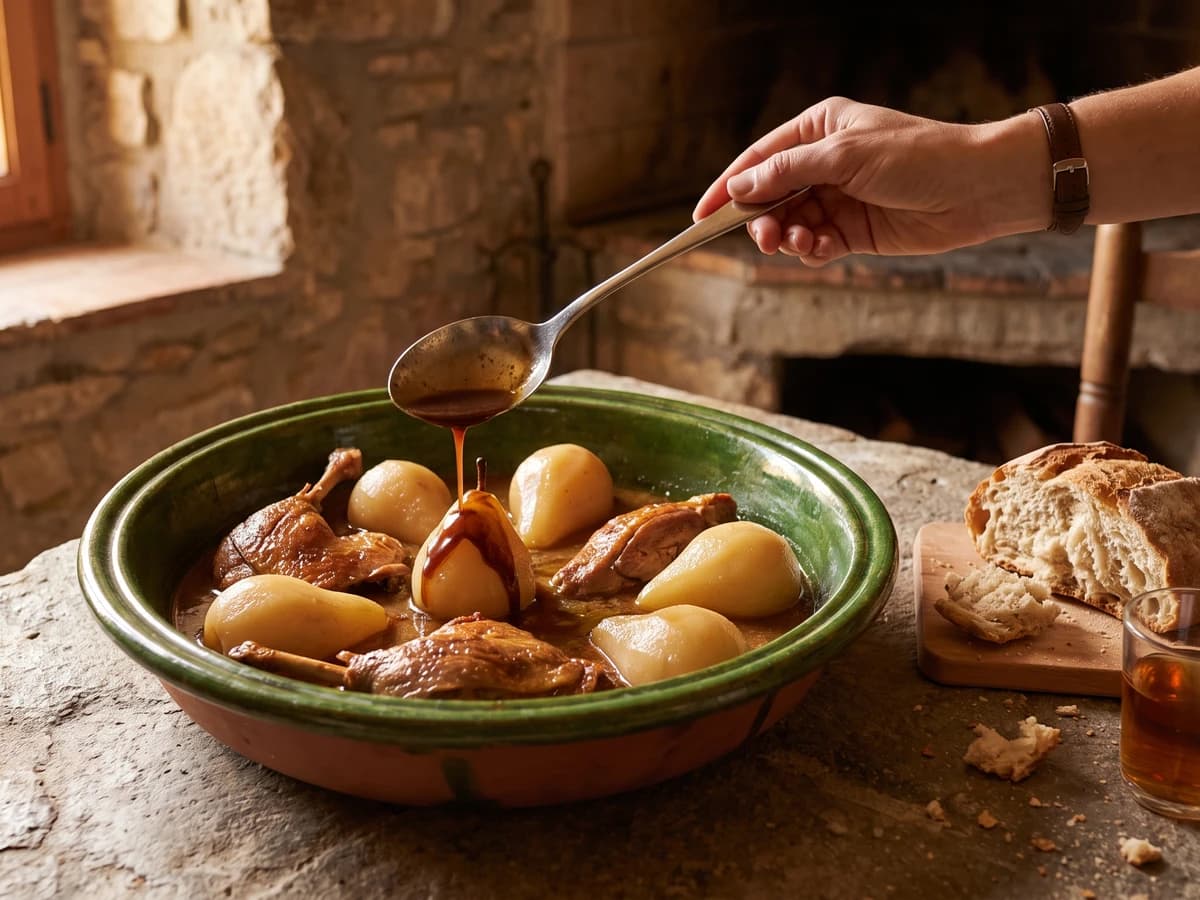
Ànec amb peres is Catalan celebration cooking: duck braised in a dark sofregit, firm autumn pears added near the end, and an almond-garlic picada that turns the juices into a close, glossy sauce.