Chef Isabel
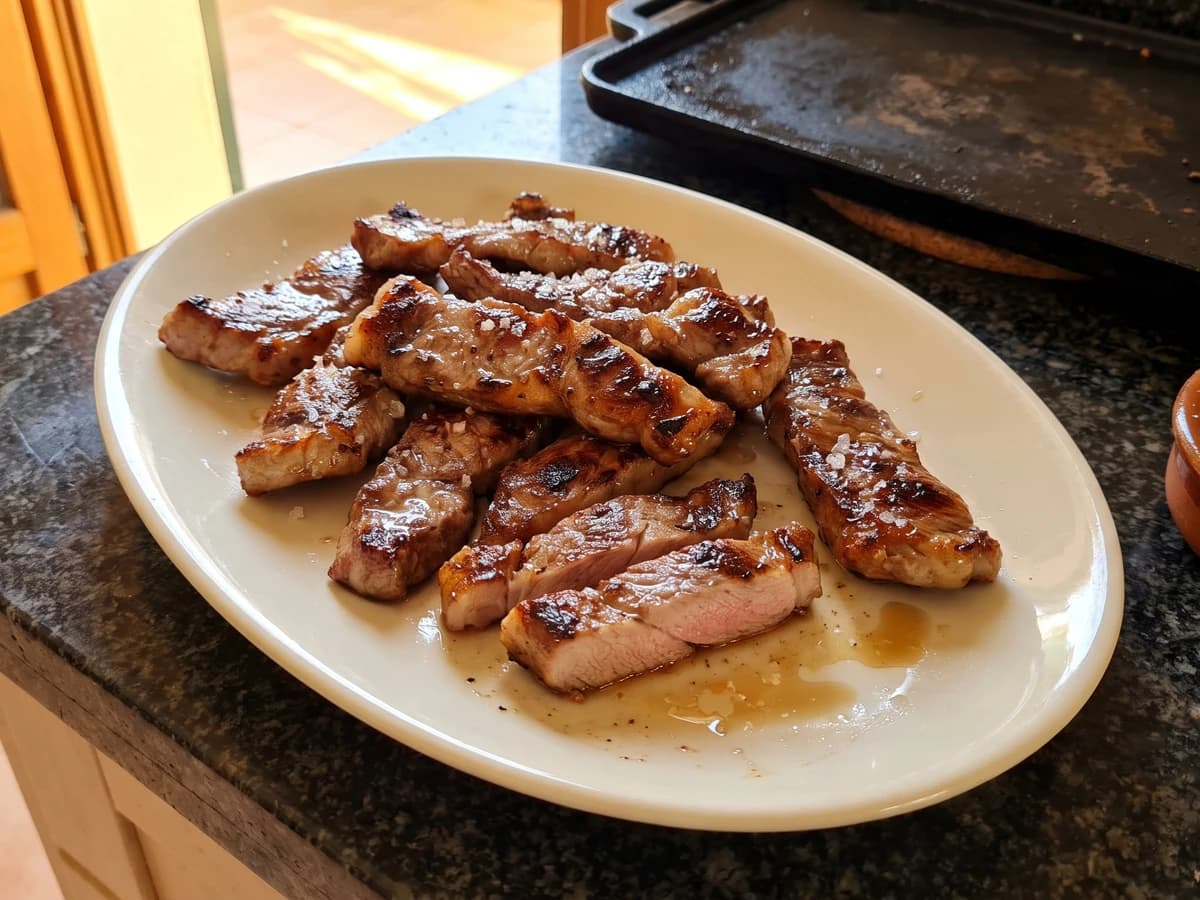
Abanico Ibérico a la Plancha
Extremadura's dehesa gives us this fan-shaped, marbled rib cut: salt it at the last moment, lay it on a fierce plancha, and count in seconds so the centre stays juicy.
A cooking platform built around craft, culture, and the stories behind what we eat.
Created by
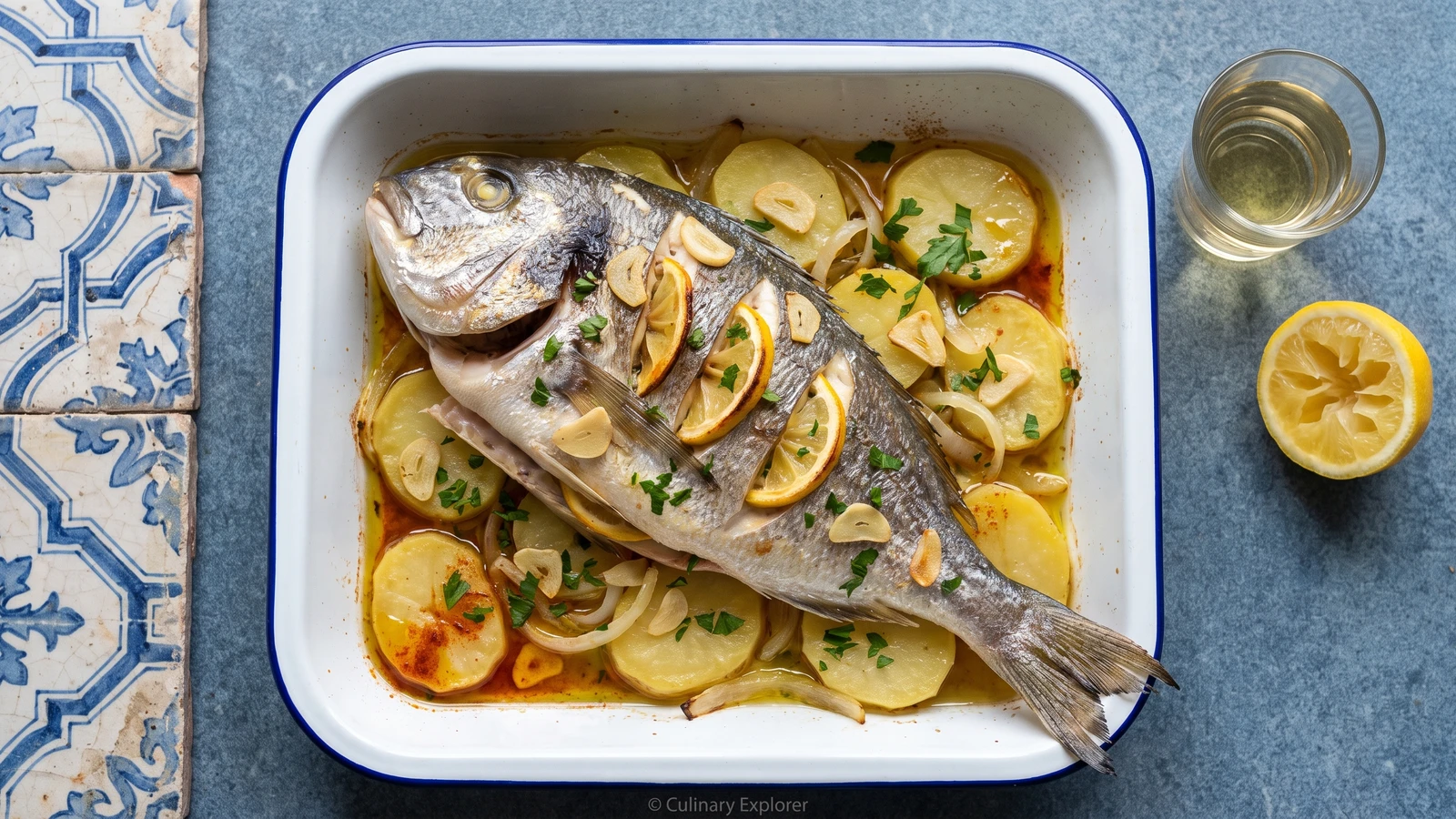
Cantabria puts whole besugo at the Christmas Eve table over soft potatoes and onion, with lemon, garlic, and pimentón. Roast only until the flesh parts cleanly from the bone.
Besugo al horno is Cantabria's winter celebration fish: a whole blackspot sea bream roasted over patatas panaderas, the soft potato-and-onion bed, with white wine, lemon, and a garlic-pimentón refrito spooned over at the end. That bed and the warm red oil give the Cantabrian preparation its shape. The fish reaches the Christmas Eve table in its baking dish, its silver-rose skin browned at the edges and the potatoes full of its juices.
The point that decides it is time. Bake the potatoes nearly tender before the fish goes over them, then watch the thick shoulder rather than trusting the clock. When the flesh parts cleanly from the backbone and still shines with its own moisture, take the dish out. Don't leave an expensive fish in the oven while you wait for it to look more cooked. By then it already is.
True besugo is blackspot sea bream, Pagellus bogaraveo. If it isn't sold where you live, a whole dorada, or gilthead bream, is the honest substitute a fishmonger in Spain would offer. Dorada is milder and often smaller, so begin checking it after 15 minutes and stop at the same doneness. No hace falta haber pisado España. Ask the fishmonger to clean it, weigh it, and keep the head and bone in place. The Margin beside this one says only, "potatoes first, fish last."
Besugo has long been a prized cold-season catch along the Cantabrian coast, where fishing households reserved valuable whole fish for Nochebuena rather than divide it into everyday portions. Its Christmas reputation also took hold inland, especially in Madrid, as coastal fish reached Castilian markets. The Cantabrian preparation keeps the logic of the fishing coast: bake the catch whole over potatoes, then finish it with garlic, lemon, and pimentón without hiding the fish itself.
Quantity
1 (about 1.4kg)
scaled and gutted, with gills and fins removed
Quantity
800g
peeled and sliced 4mm thick
Quantity
250g
halved and thinly sliced
Quantity
100ml
divided
Quantity
120ml
Quantity
100ml
Quantity
1
half thinly sliced and half juiced to yield 25ml
Quantity
5 cloves (about 20g)
thinly sliced
Quantity
15g
finely chopped and divided
Quantity
2g (1 teaspoon)
Quantity
14g
divided
| Ingredient | Quantity |
|---|---|
| whole blackspot sea bream (besugo)scaled and gutted, with gills and fins removed | 1 (about 1.4kg) |
| waxy potatoespeeled and sliced 4mm thick | 800g |
| yellow onionhalved and thinly sliced | 250g |
| extra virgin olive oildivided | 100ml |
| dry white wine | 120ml |
| water | 100ml |
| large lemonhalf thinly sliced and half juiced to yield 25ml | 1 |
| garlicthinly sliced | 5 cloves (about 20g) |
| flat-leaf parsley leavesfinely chopped and divided | 15g |
| sweet pimentón, preferably pimentón de la Vera | 2g (1 teaspoon) |
| fine sea saltdivided | 14g |
Heat a conventional oven to 200°C, or 180°C with a fan. Rinse the cleaned cavity only if needed, then dry the fish thoroughly inside and out. Make three shallow diagonal cuts across the upper side, stopping when the knife reaches the bone. Season the fish with 8g salt, including the cavity, tuck the lemon half-moons into the cuts, and put 5g parsley inside.
Spread the potatoes and onion in a 35 by 25cm baking dish. Add 60ml olive oil, the remaining 6g salt, and 100ml water, then turn everything until evenly coated. Arrange the potatoes in overlapping layers and bake for 25 to 30 minutes, turning them once, until a knife enters with only slight resistance. They need this head start. Put fish and raw potatoes into the oven together and one of them will be wrong.
Take the dish from the oven and turn the potatoes through the juices. Lay the besugo over them, scored side upward. Pour the wine around the fish rather than over its skin, then drizzle the fish with 10ml olive oil. Return the dish to the oven.
Begin checking after 18 minutes. Slip a narrow knife into the thick shoulder just behind the head until it touches the backbone. The fish is ready when the flesh is opaque, still moist, and parts cleanly from the bone. An instant-read thermometer in the same place should register 63°C. A 1.4kg besugo usually takes 20 to 25 minutes. Take it out as soon as it reaches that point; five extra minutes for a browner photograph buys you dry fish.
During the final five minutes, warm the remaining 30ml olive oil and the sliced garlic in a small frying pan over low heat. Cook for 2 to 3 minutes, until the garlic is pale gold rather than brown. Draw the pan off the heat, wait 20 seconds, and stir in the pimentón for 10 seconds. Add the 25ml lemon juice carefully, then stir in the remaining 10g parsley. Keeping the pimentón away from direct heat preserves its sweetness; scorch it and the whole dressing turns bitter.
Spoon the warm garlic refrito over the fish as it leaves the oven, letting the red-gold oil run into the potatoes. Rest for five minutes. Cut along the backbone, lift away the upper fillet, remove the head and spine, then serve the lower fillet with the soft potatoes, onion, and pan juices. Siempre sale, si lo sigues. It turns out if you follow it.
1 serving (about 425g)
Culinary guides, cultural storytelling, and the editorial depth that makes cooking meaningful.
Discover Culinary ExplorerChef Isabel
Extremadura's dehesa gives us this fan-shaped, marbled rib cut: salt it at the last moment, lay it on a fierce plancha, and count in seconds so the centre stays juicy.

Chef Isabel
Aletría Murciana is Murcia's humble noodle guiso: fine fideos, pork ribs, potato, saffron, and a dark sweet sofrito. Get that base right and the pot knows where it's going.

Chef Isabel
Andrajos are Andalucía's dough-rag stew from Jaén and Granada: a slow rabbit guiso thickened with torn sheets of flour dough, rolled thin so they cook tender instead of gummy.
Chef Isabel
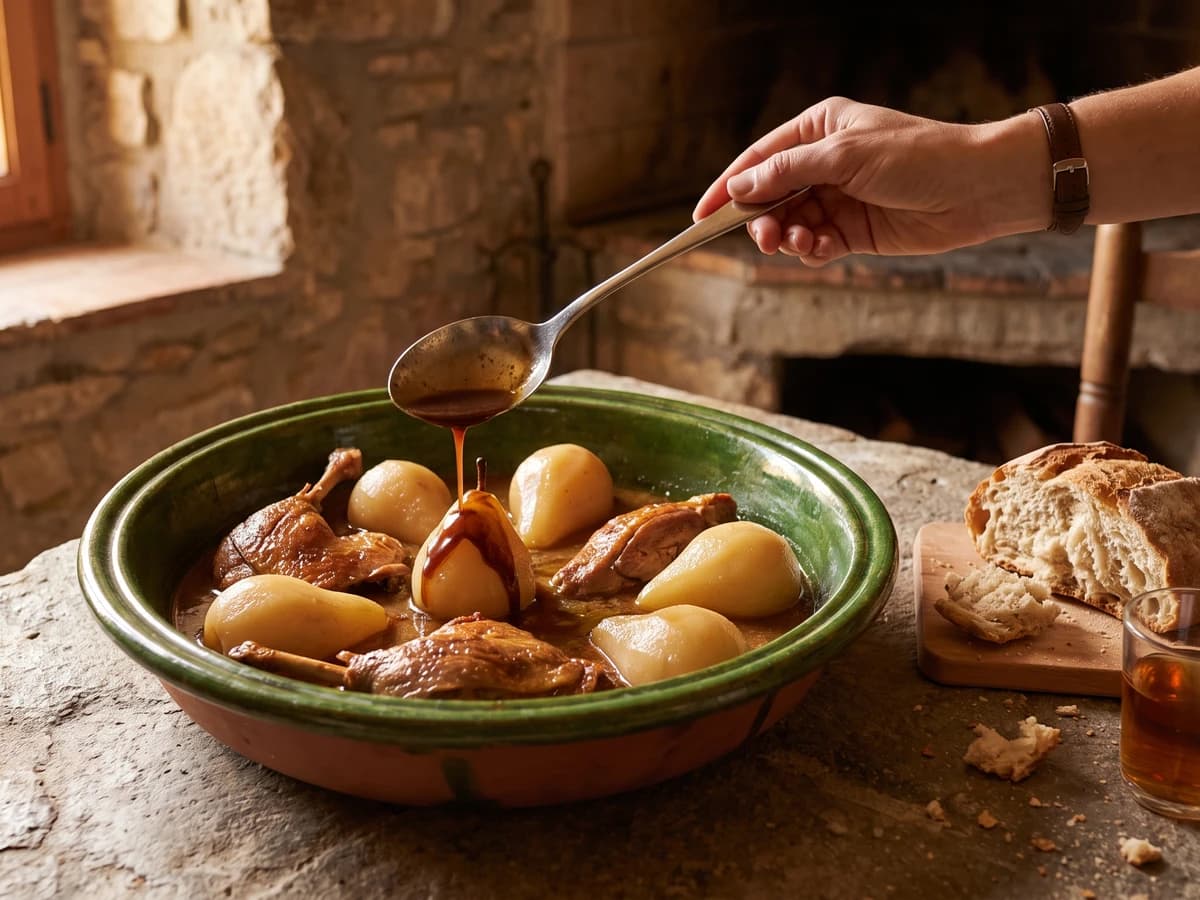
Ànec amb peres is Catalan celebration cooking: duck braised in a dark sofregit, firm autumn pears added near the end, and an almond-garlic picada that turns the juices into a close, glossy sauce.