Chef Isabel
Aceitunas Aliñadas Andaluzas
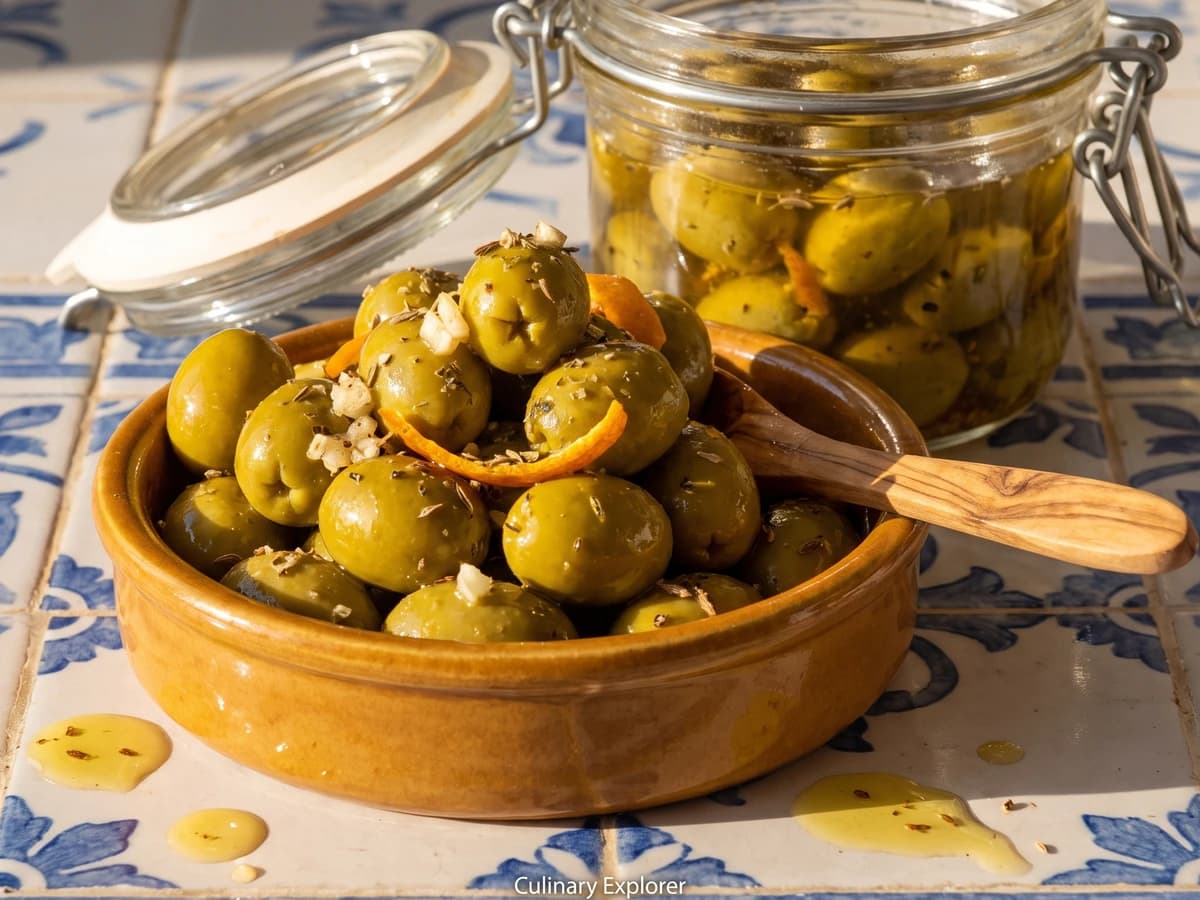
Andalucía's green olives are cracked just enough to drink in garlic, cumin, oregano and sherry vinegar, then left two days until the brine turns fragrant and every bite carries the aliño.
A cooking platform built around craft, culture, and the stories behind what we eat.
Created by
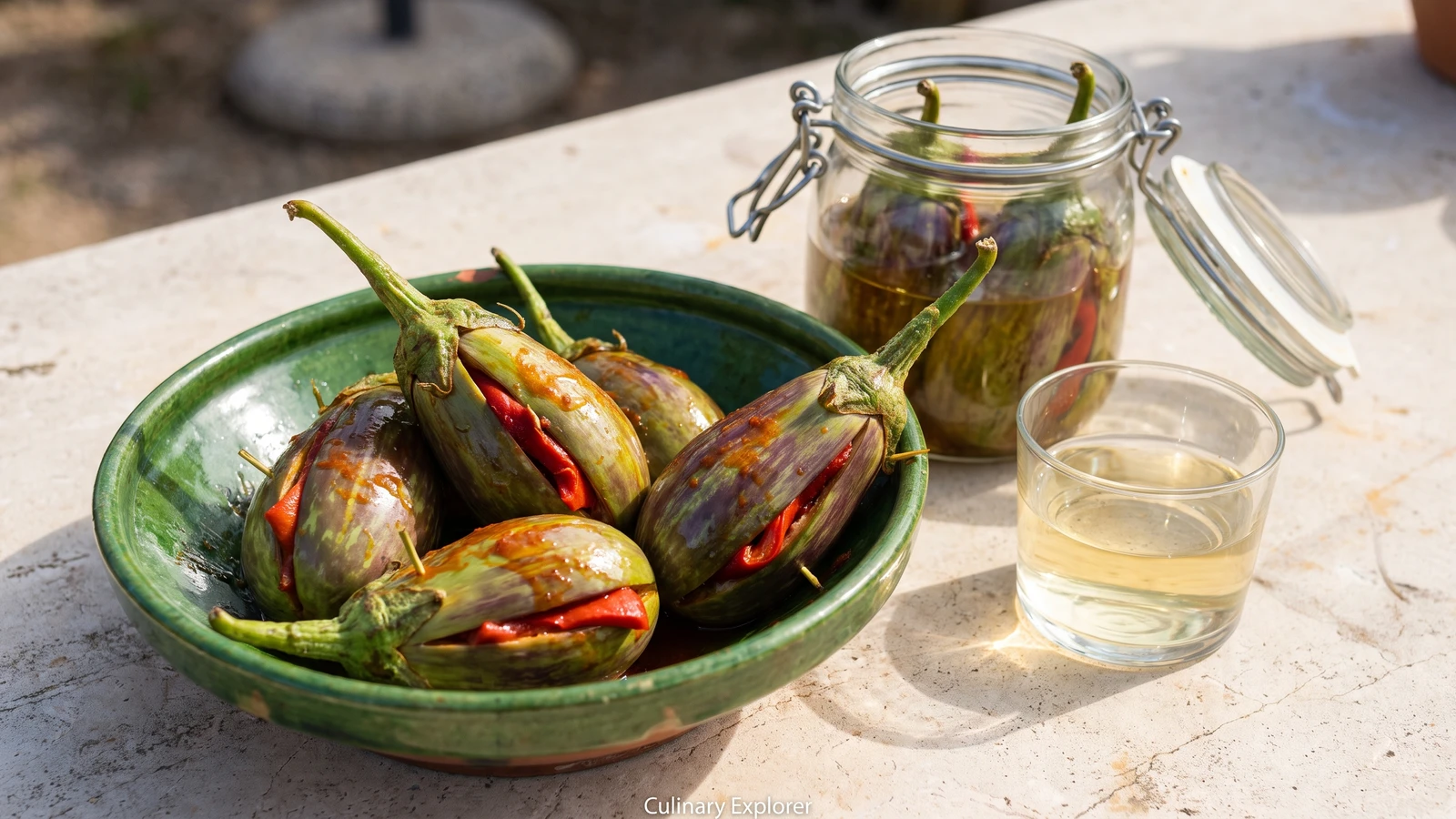
Campo de Calatrava's tiny aubergines stay firm beneath their leafy caps, filled with roasted pepper and sharpened by wine vinegar, garlic, cumin, fennel and sweet pimentón.
Berenjenas de Almagro are the pickle of Castilla-La Mancha's Campo de Calatrava. The baby aubergine keeps its stem and leafy crown, then goes into the jar slit, filled with red pepper and seasoned with garlic, cumin, fennel, sweet pimentón and wine vinegar. That crowned shape and earthy aliño, the seasoned vinegar dressing, make it unlike a neighbouring encurtido. It belongs on the family table at aperitivo, sharp enough to wake the appetite and substantial enough to eat by the stem.
The blanching decides it. Cook the aubergines only until a small knife enters with a little resistance, then lift them out at once. Too little cooking leaves the flesh cottony; too much turns it soft and thirsty, and it drinks the dressing instead of keeping its bite. Let both aubergines and cooking liquid cool before you pack the jars. That stops the cooking exactly where it should stop.
Away from La Mancha, use the smallest firm purple or purple-striped baby aubergines you can find, preferably 5 to 8cm long. Their calyxes may be smaller and the flesh a little softer, but the method still holds. Don't replace them with full-sized aubergine wedges; that's another pickle. My Margin says simply: keep them small, keep them submerged, and wait the four days. Siempre sale, si lo sigues, it turns out if you follow it.
Berenjena de Almagro belongs to Campo de Calatrava, in Ciudad Real, where the local Dealmagro type is picked young and preserved because its harvest is brief. Aubergines reached Iberia through al-Andalus, and La Mancha kept one of the peninsula's most distinctive preserving methods: blanching the whole crowned fruit before seasoning it with vinegar, cumin, garlic, fennel and pimentón. Local usage distinguishes aliñadas, whole and dressed, from embuchadas, slit and filled with pepper; this recipe follows the filled home form.
Quantity
1kg
5 to 8cm long, rinsed, with stems and leafy calyxes attached
Quantity
2 litres
Quantity
400ml
100ml for blanching and 300ml for the dressing
Quantity
37g
25g for blanching and 12g for the dressing
Quantity
150g
drained and cut into 20 to 24 narrow strips
Quantity
30g, about 6 large cloves
peeled
Quantity
8g
Quantity
6g
Quantity
90ml
Quantity
30g
stems cut into enough pointed 5cm splints for the aubergines; fronds reserved
| Ingredient | Quantity |
|---|---|
| very small Almagro aubergines5 to 8cm long, rinsed, with stems and leafy calyxes attached | 1kg |
| water | 2 litres |
| white wine vinegar, 6% acidity100ml for blanching and 300ml for the dressing | 400ml |
| fine sea salt25g for blanching and 12g for the dressing | 37g |
| roasted red pepperdrained and cut into 20 to 24 narrow strips | 150g |
| garlicpeeled | 30g, about 6 large cloves |
| cumin seeds | 8g |
| sweet pimentón | 6g |
| extra virgin olive oil | 90ml |
| fresh wild fennel stems and frondsstems cut into enough pointed 5cm splints for the aubergines; fronds reserved | 30g |
Rinse the aubergines carefully. Snip off only the dry or thorny points of the leafy calyxes, leaving the crowns and stems attached. Starting about 1cm below each crown, make a 3cm lengthwise slit through the belly. Cut a little past the centre but not through the back or base, because the aubergine must open for its filling without falling into two pieces.
Bring the 2 litres of water to a boil in a nonreactive pot with 100ml of the vinegar, 25g of the salt and half the fennel fronds. Add the aubergines and hold them beneath the liquid with a small heatproof plate. Return to a gentle boil and cook for 7 to 10 minutes, turning them once. Test at 7 minutes: a small knife should pass into the thick shoulder with light resistance, while the skin and leafy crown remain firm. Lift them out immediately. Reserve 700ml of the strained cooking liquid and let both liquid and aubergines cool completely.
Pound the garlic, cumin seeds and remaining 12g salt in a mortar until coarse and fragrant. Mix in the sweet pimentón, then work in the olive oil and 60ml of the remaining vinegar to make a loose brick-red aliño, the seasoned dressing. Set half aside for filling the aubergines. Keep the rest for the pickling liquid.
Open each cooled aubergine gently along its slit. Tuck in one strip of roasted red pepper and about 1 teaspoon of the reserved aliño. Push a pointed fennel splint crosswise through the leafy sides to hold the opening shut. The fennel isn't decoration. It fastens the pepper in place and carries its clean anise scent into the flesh.
Pack the filled aubergines snugly into two clean 1.5-litre glass jars, adding the remaining fennel fronds between them. Whisk the unused aliño with the remaining 240ml vinegar and exactly 700ml of the cooled cooking liquid. Pour it over the aubergines, distributing the garlic and spices between the jars. Press the aubergines below the liquid with clean nonreactive weights. If they aren't covered, move them to a smaller vessel rather than weakening the dressing with plain water.
Close the jars and refrigerate for at least 4 full days, gently rotating them once each day while keeping the aubergines submerged. They are ready when the vinegar has reached the centre, the garlic has softened and the flesh is tart but still pleasantly firm. Seven days gives a rounder flavour. Serve cool rather than icy, with a little of the pimentón-stained dressing spooned over them.
1 serving (about 55g)
Culinary guides, cultural storytelling, and the editorial depth that makes cooking meaningful.
Discover Culinary ExplorerChef Isabel
Andalucía's green olives are cracked just enough to drink in garlic, cumin, oregano and sherry vinegar, then left two days until the brine turns fragrant and every bite carries the aliño.
Chef Isabel
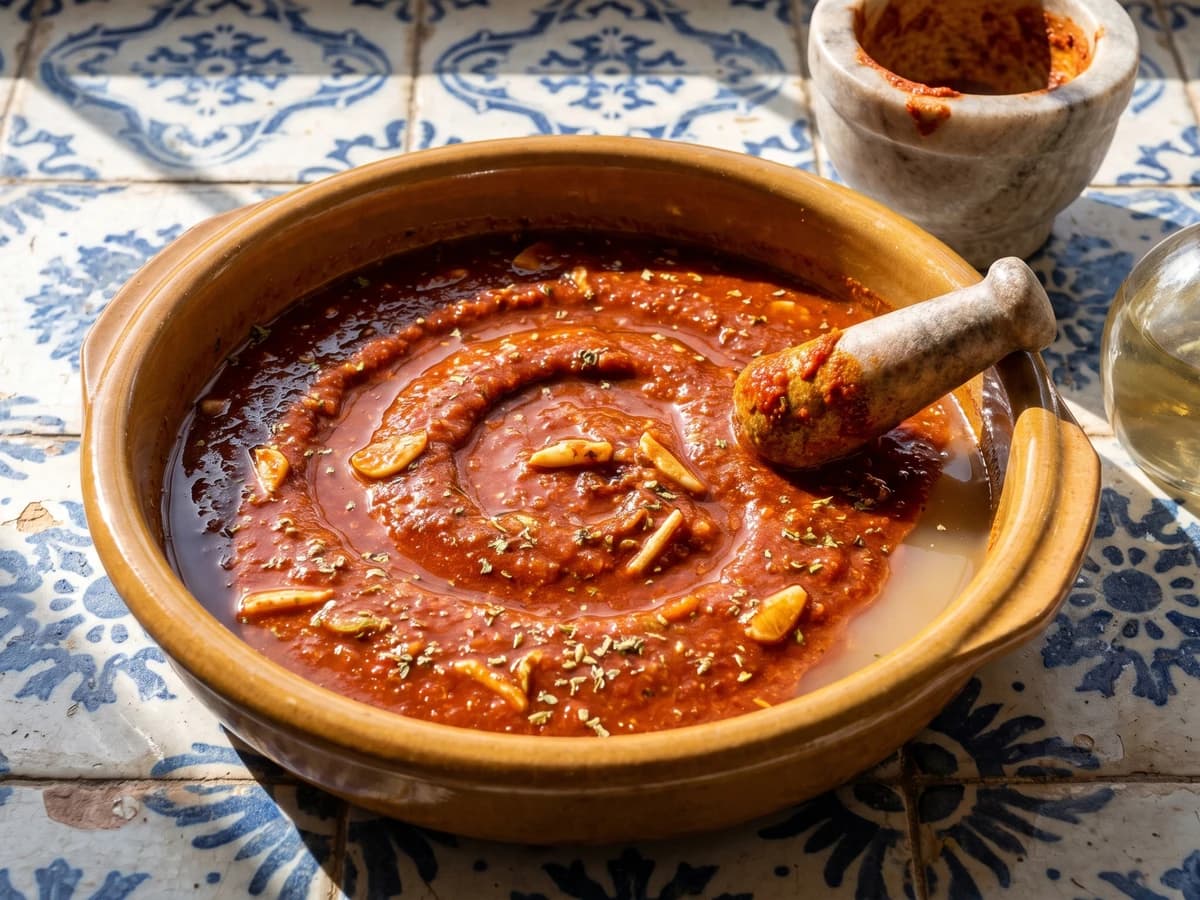
Andalucía's sharp, brick-red marinade brings vinegar, garlic, oregano, cumin and pimentón to fish and pork; pound the seasonings first, then give the acid time to carry them through.
Chef Isabel
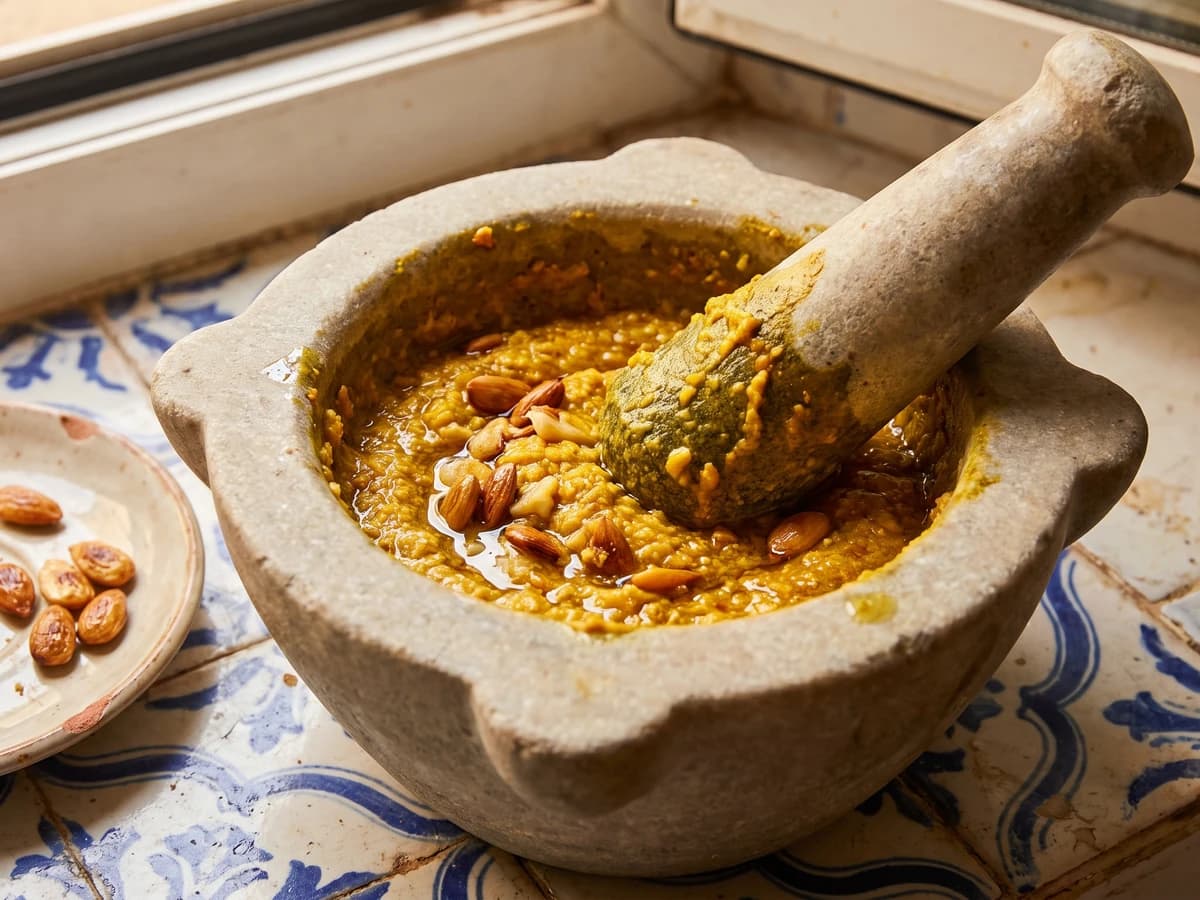
Almería's ajopollo turns fried garlic, almonds, bread and saffron into a golden mortar paste that gives modest fish and potato guisos their body, richness and unmistakable southern depth.
Chef Isabel
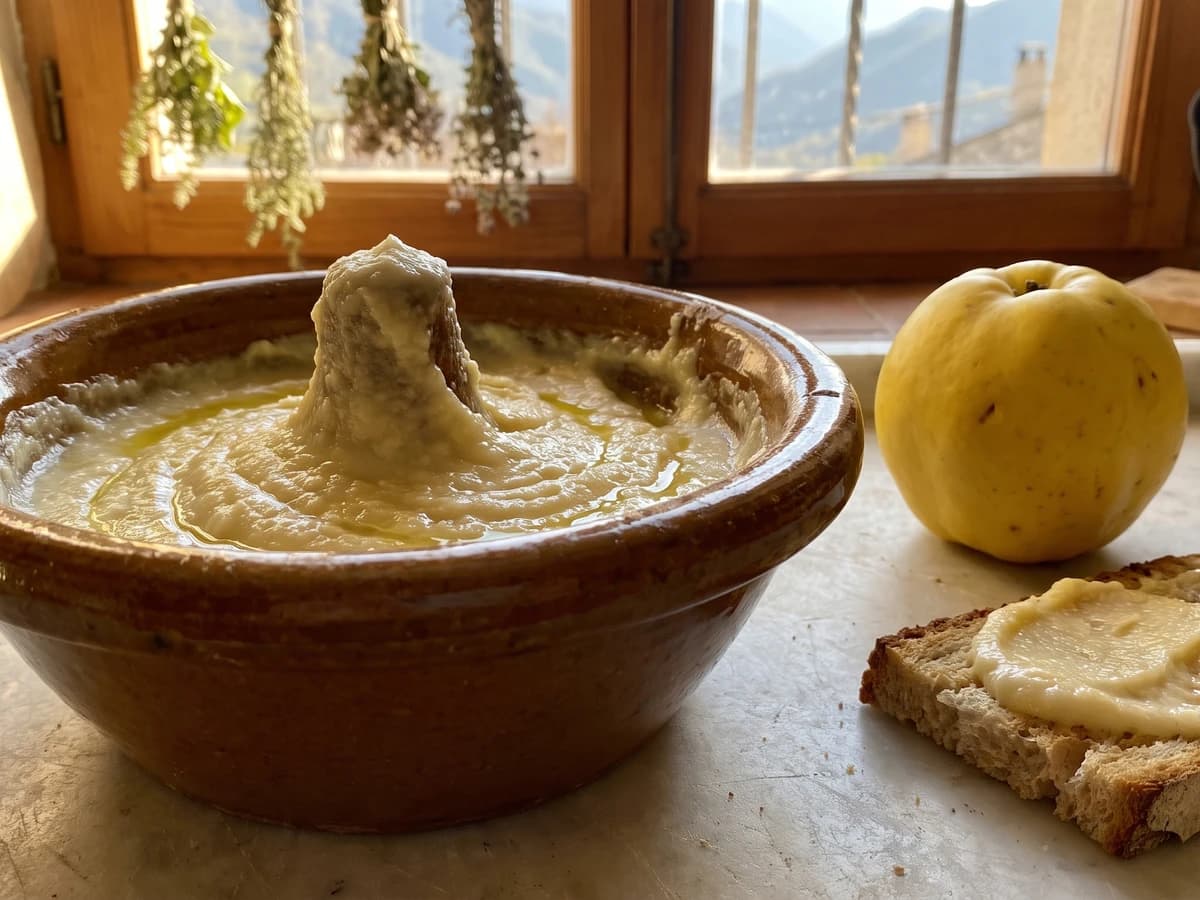
Allioli de codony belongs to the Catalan Pyrenees: boiled quince, raw garlic, salt, and olive oil worked into a thick, fragrant sauce for grilled meat, sausages, bread, and the autumn table.