Chef Isabel
Abanico Ibérico a la Plancha
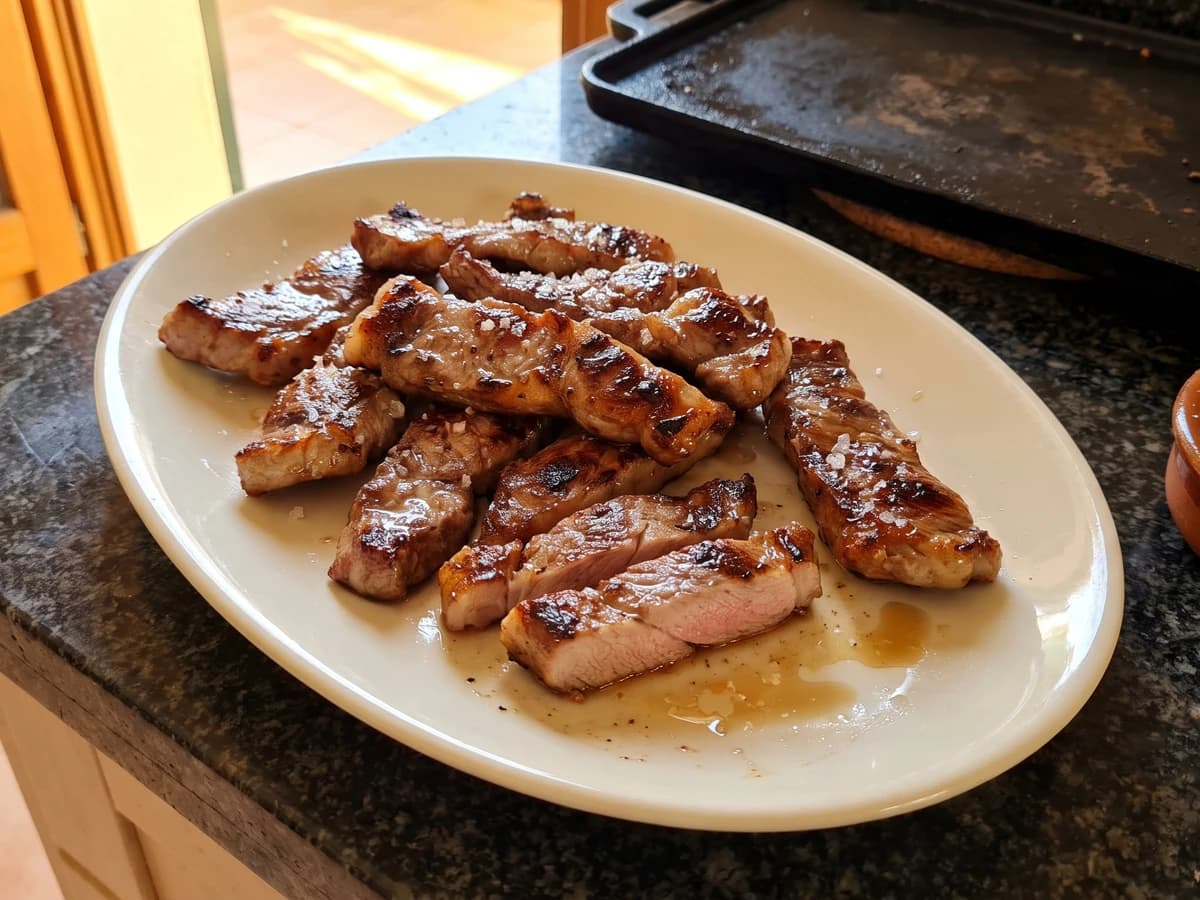
Extremadura's dehesa gives us this fan-shaped, marbled rib cut: salt it at the last moment, lay it on a fierce plancha, and count in seconds so the centre stays juicy.
A cooking platform built around craft, culture, and the stories behind what we eat.
Created by
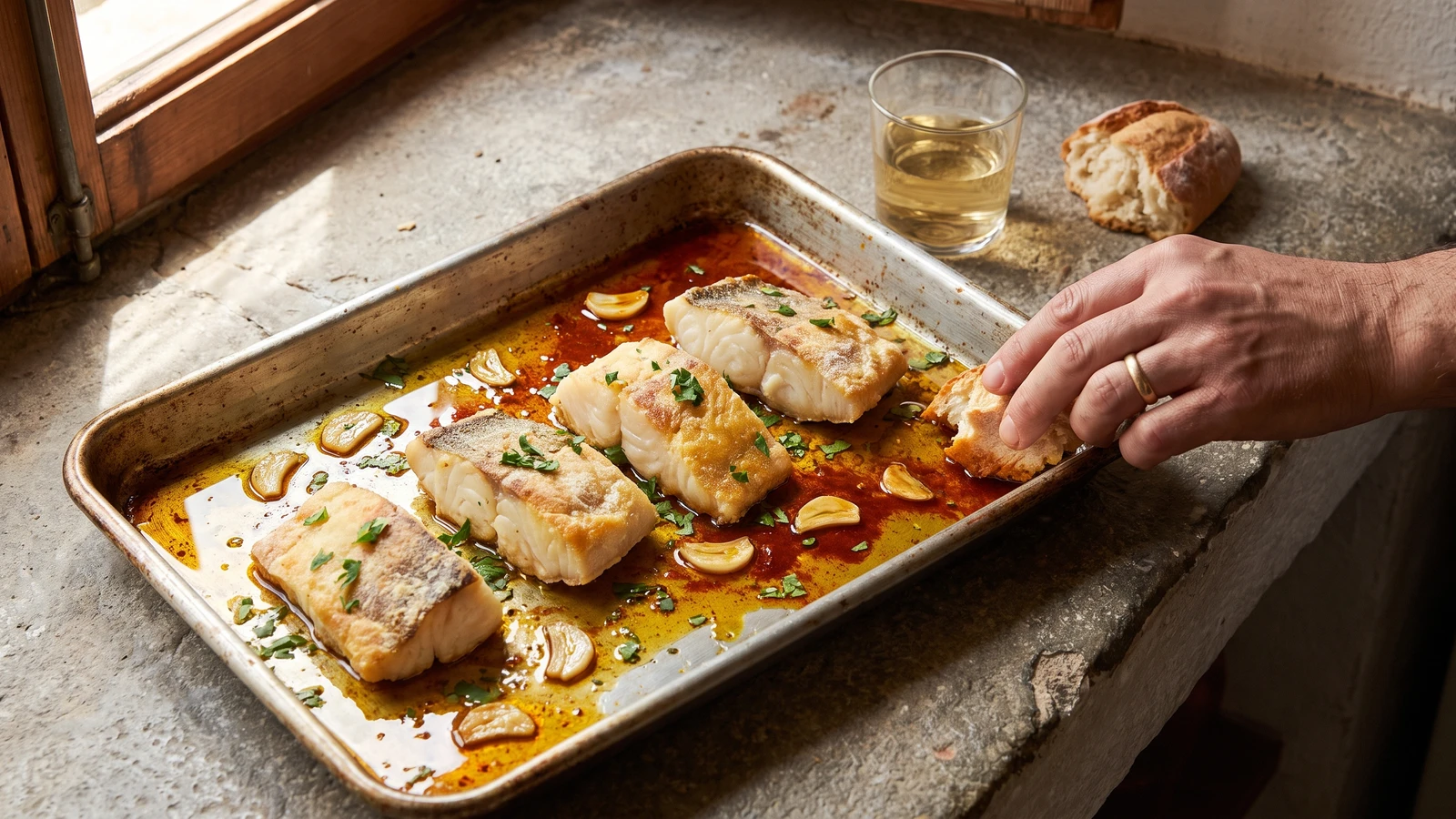
Bacallà a la llauna is Barcelona’s salt-cod dish: floured, fried and finished in its metal tray with garlic, parsley, pimentón and wine, just long enough for the sauce to cling.
Bacallà a la llauna is Catalan, and more precisely Barcelonan: thick salt-cod loins are floured, shallow-fried, then laid in the llauna, the shallow metal tray that gives the dish its name, under garlic, parsley, sweet pimentón and white wine. It is not bacallà amb samfaina, where tomato and peppers do the talking. Here the cod and its red-gold pan juices stand bare, so poor desalting has nowhere to hide.
The method that decides it is the short, two-stage cooking. Fry the floured cod only until it has a thin golden coat, then give it seven minutes in the oven with the sauce. That brief finish brings the flour, wine and cod gelatin together so the sauce clings, while the fish separates into broad, moist flakes. Leave it baking until it looks thoroughly done and it will be thoroughly dry. Fish has a sense of humor that way.
If you’re far from Catalonia, frozen pre-desalted salt cod is the right practical substitute. Thaw it slowly in the refrigerator and dry it very well; its flakes may be a little softer and its cured flavor less deep, but it still makes the proper dish. Fresh cod is not a straight exchange because it lacks the firm texture and savory depth that curing gives.
No llauna where you are? Use a shallow steel baking tin about 30 by 20 centimeters. Ceramic heats more slowly, so the sauce will need another minute or two before it bubbles around the edges. The note in my Margin for this one is short: pimentón off the fire, oven briefly. Siempre sale, si lo sigues.
Bacallà a la llauna belongs to Barcelona, and its name comes from the shallow tinplate tray in which the cod was finished and carried to the table. Salt curing allowed cod from northern waters to reach Catalan households far from the fishing grounds, while the Church calendar made it especially important during Lent and other meatless days. A familiar Catalan extension is bacallà a la llauna amb mongetes, served with white beans, but the defining preparation remains the floured cod, metal tray and garlic-pimentón dressing.
Quantity
800g
cut into 4 equal pieces and desalted for 48 hours
Quantity
about 2 litres at each change
enough to cover the cod by 5cm
Quantity
60g
Quantity
180ml
for shallow-frying
Quantity
25g, about 5 large cloves
thinly sliced
Quantity
8g
Quantity
100ml
Quantity
15g
finely chopped
| Ingredient | Quantity |
|---|---|
| thick dry-salted cod loin, skin oncut into 4 equal pieces and desalted for 48 hours | 800g |
| cold waterenough to cover the cod by 5cm | about 2 litres at each change |
| plain flour | 60g |
| extra virgin olive oilfor shallow-frying | 180ml |
| garlicthinly sliced | 25g, about 5 large cloves |
| sweet pimentón | 8g |
| dry white wine | 100ml |
| flat-leaf parsley leavesfinely chopped | 15g |
Rinse the loose salt from the cod and place it skin-side up in a non-reactive container. Cover it with cold water by 5cm and refrigerate for 48 hours, changing the water every 12 hours. Keep it below 4°C throughout. After 48 hours, cook a small trimming and taste it; the cod should remain pleasantly savory without tasting harsh. If it is still too salty, soak it for another 12 hours in fresh water.
Drain the cod, press it carefully between clean towels and leave it uncovered in the refrigerator for 20 minutes so the surface dries. Heat the oven to 200°C conventional, or 180°C fan. Set a shallow 30 by 20cm metal baking tray beside the stove.
Spread the flour on a plate. Coat every cod piece lightly, including the skin, then shake off every loose patch. You want a fine veil of flour, not a heavy shell. That thin coating will later bind the wine and seasoned oil against the fish.
Heat the olive oil in a 28cm frying pan over medium-high heat until it reaches about 170°C and a pinch of flour fizzes at once. Fry the cod in two batches so the pan stays hot, skin-side down for 2 minutes and flesh-side down for 90 seconds. It should be pale gold outside and still undercooked within. Transfer it to the metal tray, skin-side down.
Pass the frying oil through a fine sieve into a heatproof jug, discard the flour crumbs and measure 90ml back into the pan. Set it over medium-low heat, add the sliced garlic and cook for 60 to 90 seconds, just until pale gold. Take the pan completely off the heat, wait 15 seconds and stir in the pimentón for 10 seconds. Pimentón scorches quickly and turns bitter, so direct heat ends here.
Still away from the flame, pour in the wine gradually, standing back from the first splutter. Return the pan to medium heat and boil for 2 minutes, stirring, until the sharp smell of raw wine softens. Stir in two-thirds of the parsley, then spoon the garlic and all the red-gold sauce over and around the cod.
Bake for 7 minutes, until the sauce bubbles around the edges and lightly clings to the cod. The thickest piece should separate into broad pearly flakes and reach 63°C at its center. Give a very thick loin 1 or 2 minutes more, but no longer than needed. Rest for 3 minutes, scatter over the remaining parsley and carry the llauna straight to the table. Taste before considering salt; properly desalted bacallà rarely needs any.
1 serving (about 400g)
Culinary guides, cultural storytelling, and the editorial depth that makes cooking meaningful.
Discover Culinary ExplorerChef Isabel
Extremadura's dehesa gives us this fan-shaped, marbled rib cut: salt it at the last moment, lay it on a fierce plancha, and count in seconds so the centre stays juicy.

Chef Isabel
Aletría Murciana is Murcia's humble noodle guiso: fine fideos, pork ribs, potato, saffron, and a dark sweet sofrito. Get that base right and the pot knows where it's going.

Chef Isabel
Andrajos are Andalucía's dough-rag stew from Jaén and Granada: a slow rabbit guiso thickened with torn sheets of flour dough, rolled thin so they cook tender instead of gummy.
Chef Isabel
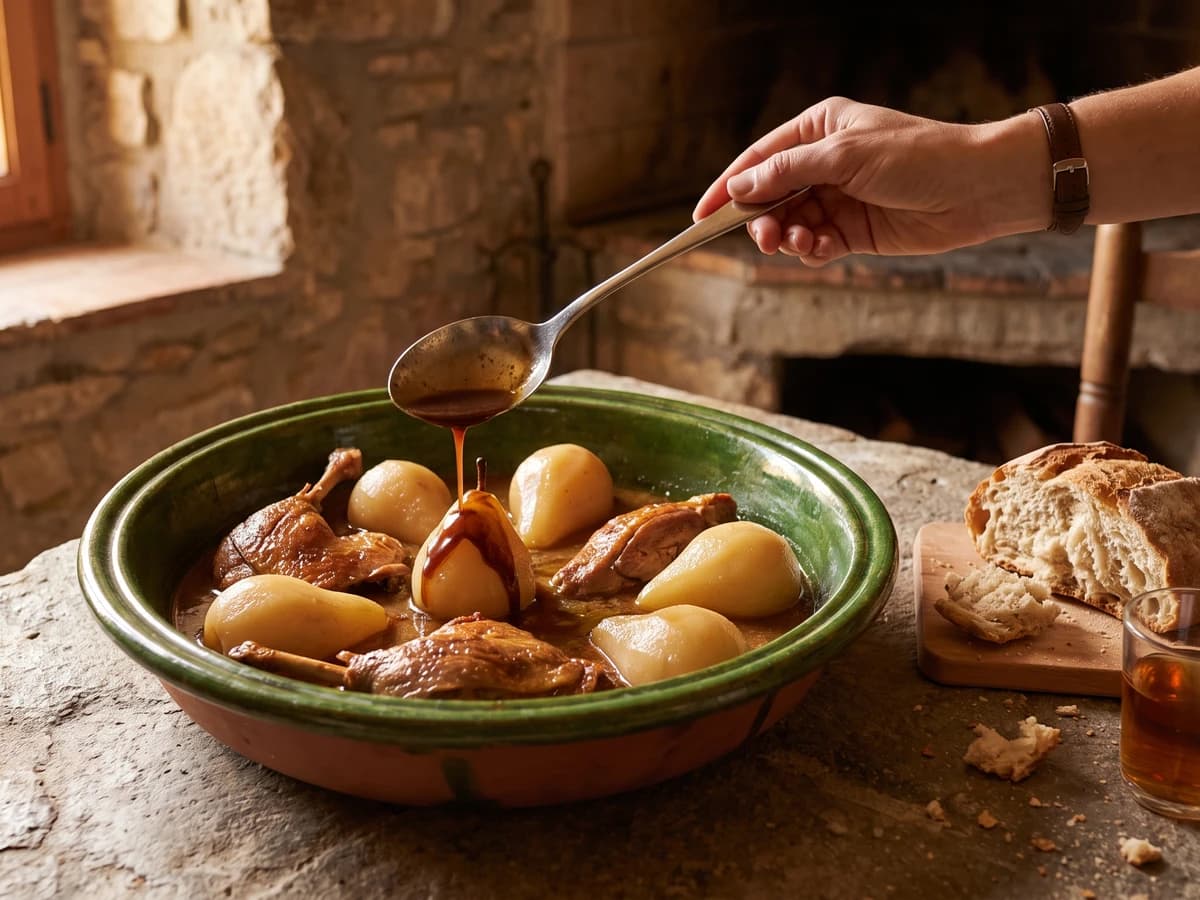
Ànec amb peres is Catalan celebration cooking: duck braised in a dark sofregit, firm autumn pears added near the end, and an almond-garlic picada that turns the juices into a close, glossy sauce.