Chef Isabel
Abanico Ibérico a la Plancha
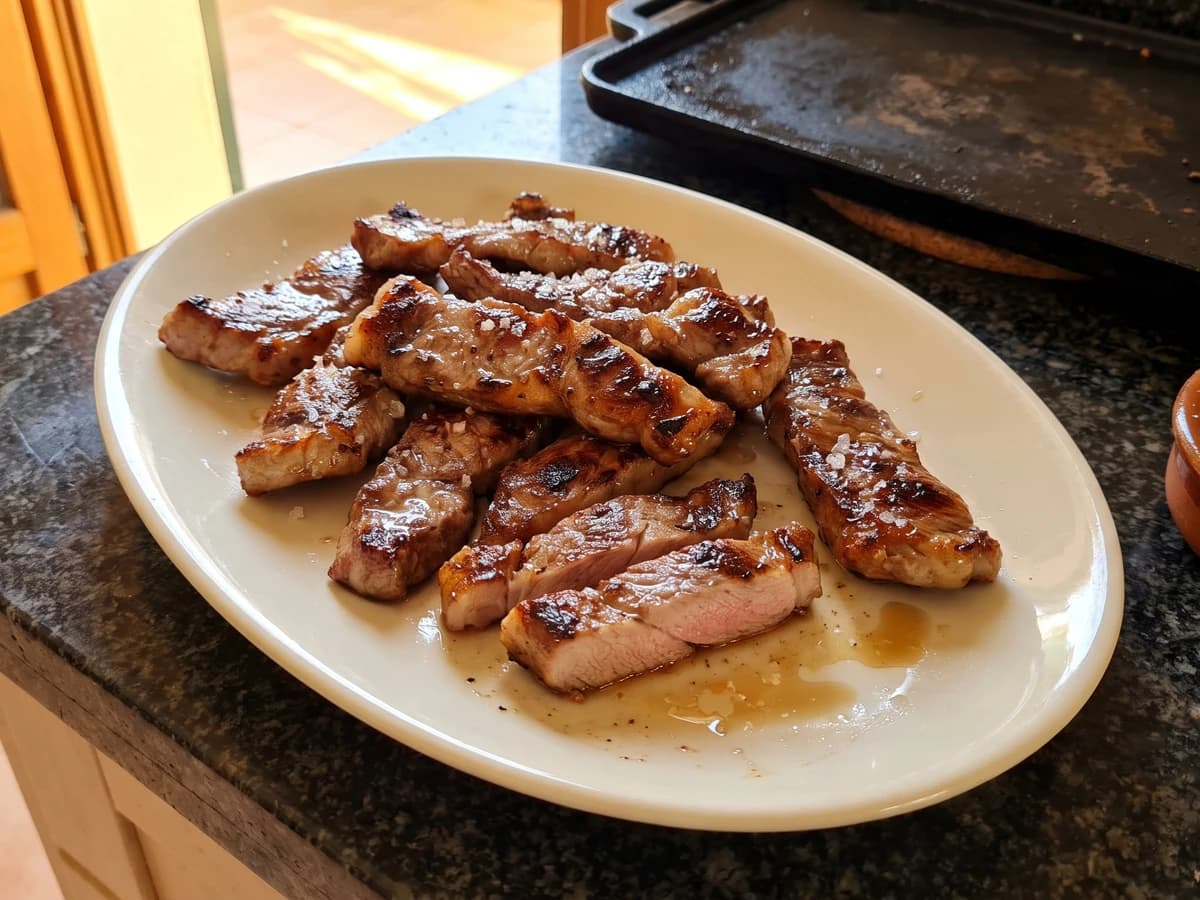
Extremadura's dehesa gives us this fan-shaped, marbled rib cut: salt it at the last moment, lay it on a fierce plancha, and count in seconds so the centre stays juicy.
A cooking platform built around craft, culture, and the stories behind what we eat.
Created by
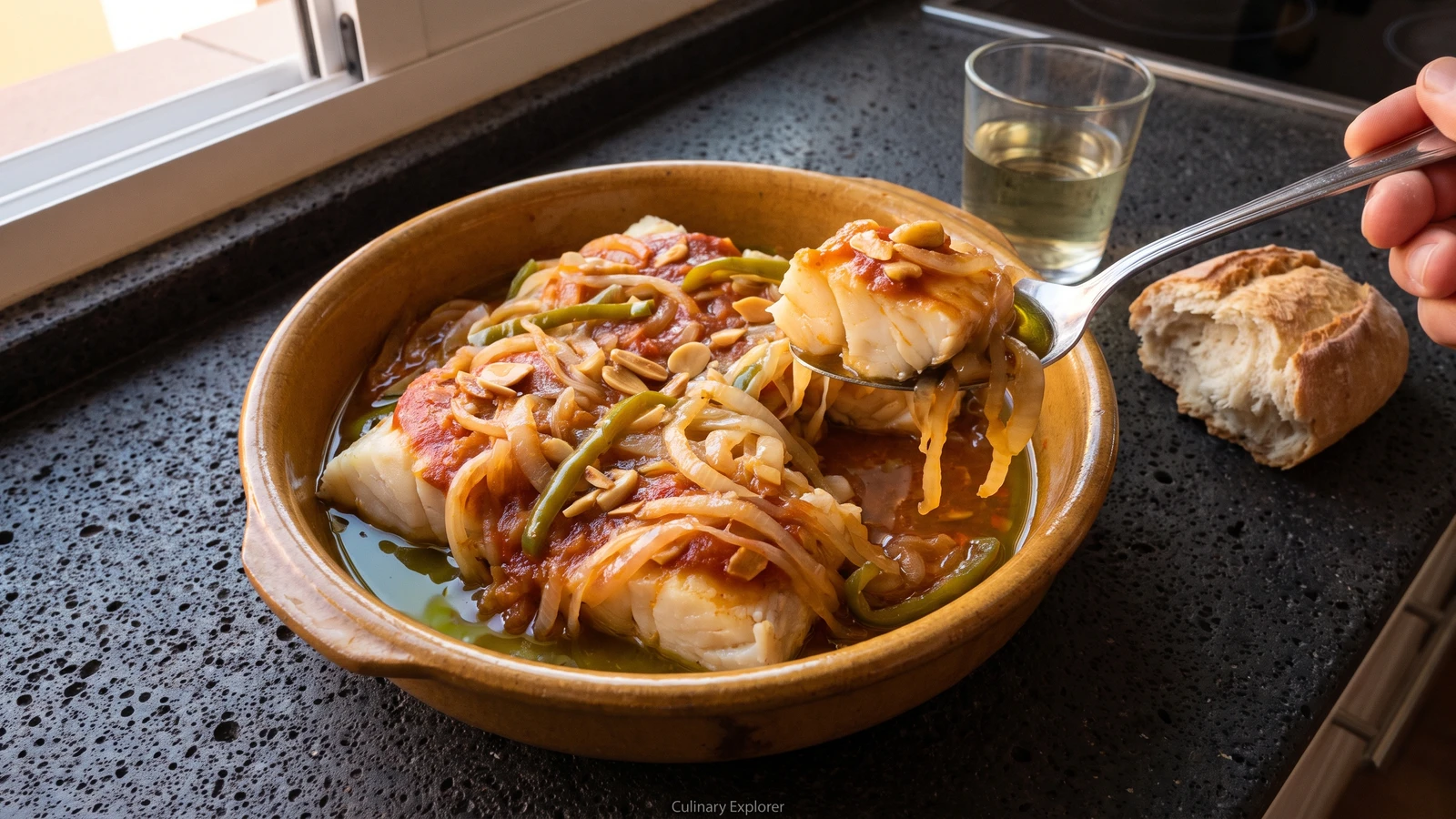
Canarian bacalao encebollado lays salt cod beneath a generous bed of onions, green pepper, white wine and almond, cooked gently until the onions melt and the fish opens in pearly flakes.
Bacalao encebollado is Canarian, an island dish of salt cod tucked beneath far more onion than seems reasonable, with green pepper, tomato, white wine and toasted almond. It isn't sancocho canario, where salt fish is boiled and served with potatoes, sweet potato and mojo. Here the fish cooks in the onion sauce, and those onions are the heart of the dish.
The method that decides it is simple: let the onions collapse without browning. I cover them first so their own moisture softens them, then cook them uncovered over low heat until pale gold and almost spoonable. Rush them over high heat and their edges catch before their centres become sweet. You haven't saved time. You've left the dish half done.
Look for thick, skin-on bacalao salado, salt cod, at a Portuguese, Caribbean or West African grocer. Frozen cod that has already been desalted is perfectly sound; use 850g and skip the soaking, but dry it very well before flouring. If the long, thin-skinned green peppers used in Spain aren't available, use one green bell pepper, slice it finely and allow five extra minutes. It will be less grassy and a little more watery, but the onions will carry it.
Nest the cod skin-side down, spoon the onions over it and keep the sauce at a quiet tremble. Don't stir the fish once it goes in; shake the cazuela gently instead. My Margin beside this recipe says only, "cebolla blanda, nunca tostada," soft onion, never toasted. Siempre sale, si lo sigues, it turns out if you follow it.
Cod does not swim around the Canary Islands; bacalao entered the island larder dry-salted from colder Atlantic waters, and its keeping power suited an archipelago tied to ports, long voyages and Catholic fast days. Encebollado turned that durable fish into generous household food by stretching it beneath onions, peppers and wine, with a majado of almonds supplying body without cream. Sancocho canario takes preserved fish in another direction, boiling it with potatoes and sweet potato, while bacalao encebollado belongs to the cazuela and its slowly softened onions.
Quantity
700g
skin on, cut into 4 pieces about 2.5cm thick and desalted for 36 hours
Quantity
4 litres per change
Quantity
40g
Quantity
30g
Quantity
90ml
Quantity
700g
halved and sliced 4mm thick
Quantity
180g
cored and thinly sliced
Quantity
16g, about 4 cloves
finely chopped
Quantity
300g
grated, skins discarded
Quantity
250g
drained and crushed
Quantity
3g
Quantity
2g
Quantity
1g
Quantity
2
Quantity
150ml
Quantity
120ml
Quantity
up to 2g
| Ingredient | Quantity |
|---|---|
| dry salt codskin on, cut into 4 pieces about 2.5cm thick and desalted for 36 hours | 700g |
| cold water for desalting | 4 litres per change |
| raw blanched almonds | 40g |
| plain flour | 30g |
| extra virgin olive oil | 90ml |
| yellow onionshalved and sliced 4mm thick | 700g |
| long green frying peppercored and thinly sliced | 180g |
| garlicfinely chopped | 16g, about 4 cloves |
| ripe tomatoesgrated, skins discarded | 300g |
| canned whole tomatoes (optional)drained and crushed | 250g |
| sweet pimentón | 3g |
| dried thyme | 2g |
| freshly ground black pepper | 1g |
| bay leaves | 2 |
| dry white wine | 150ml |
| water for the sauce | 120ml |
| fine sea salt (optional) | up to 2g |
Rinse the salt from the cod under cold running water. Put the pieces skin-side up in a deep container, cover with 4 litres of cold water and refrigerate for 36 hours, changing the water every 8 hours. At 32 hours, cook a small flake in simmering water until opaque and taste it. It should remain pleasantly seasoned but not sharply salty; give it the final four hours if needed. Drain for 15 minutes, then pat every surface completely dry.
Set a wide, heavy cazuela over medium-low heat. Add 15ml of the olive oil and the almonds, then cook for 3 to 4 minutes, turning them often, until evenly golden and nutty-smelling. Lift them into a mortar, add 60ml of the measured water and pound to a coarse paste. This majado, the pounded almond mixture, will give the sauce body later.
Spread the flour on a plate. Coat the dried cod lightly and shake off every loose patch; the flour should be a veil, not a crust. Add the remaining 75ml oil to the cazuela and heat over medium heat. Lay in the cod skin-side down and cook for 2 minutes, then turn and cook for 1 minute more. Lift it out carefully. It won't be cooked through yet.
Lower the heat and add the onions and green pepper to the same oil. Cover and cook for 15 minutes, stirring every 5 minutes, until they release their water and begin to collapse. Uncover and continue over low heat for 15 to 20 minutes, stirring regularly, until the onions are very soft and pale gold. They must melt, not brown, because their clean sweetness is what balances the salt cod.
Add the garlic and cook for 1 minute. Stir in the grated fresh tomato, or the drained canned tomato, with the thyme, black pepper and bay leaves. Cook uncovered for 10 to 12 minutes, until the tomato loses its raw smell and the oil begins to show around the edges. Take the cazuela off the heat, stir in the pimentón for 20 seconds, then return it to low heat so the spice doesn't scorch.
Pour in the white wine and scrape the bottom gently. Let it bubble for 3 minutes, until the sharp smell of alcohol has gone. Stir in the almond majado and the remaining 60ml water. Simmer for 4 minutes; the sauce should be loose enough to spoon but thick enough to hold the onions together.
Taste the sauce before adding any salt. Nest the cod skin-side down in the cazuela and spoon the onions over every piece. Cover and cook at the quietest simmer for 7 to 10 minutes, shaking the cazuela once or twice instead of stirring. The cod is ready when it separates into moist pearly flakes and reaches 63°C in the thickest part.
Take the cazuela off the heat and leave it covered for 5 minutes. Remove the bay leaves, taste the onions and add no more than 2g salt if they truly need it. Carry the cazuela to the table and serve each piece with a deep spoonful of onions and almond-thickened sauce. Boiled potatoes, papas arrugadas or plain bread will catch what remains.
1 serving (about 500g)
Culinary guides, cultural storytelling, and the editorial depth that makes cooking meaningful.
Discover Culinary ExplorerChef Isabel
Extremadura's dehesa gives us this fan-shaped, marbled rib cut: salt it at the last moment, lay it on a fierce plancha, and count in seconds so the centre stays juicy.

Chef Isabel
Aletría Murciana is Murcia's humble noodle guiso: fine fideos, pork ribs, potato, saffron, and a dark sweet sofrito. Get that base right and the pot knows where it's going.

Chef Isabel
Andrajos are Andalucía's dough-rag stew from Jaén and Granada: a slow rabbit guiso thickened with torn sheets of flour dough, rolled thin so they cook tender instead of gummy.
Chef Isabel
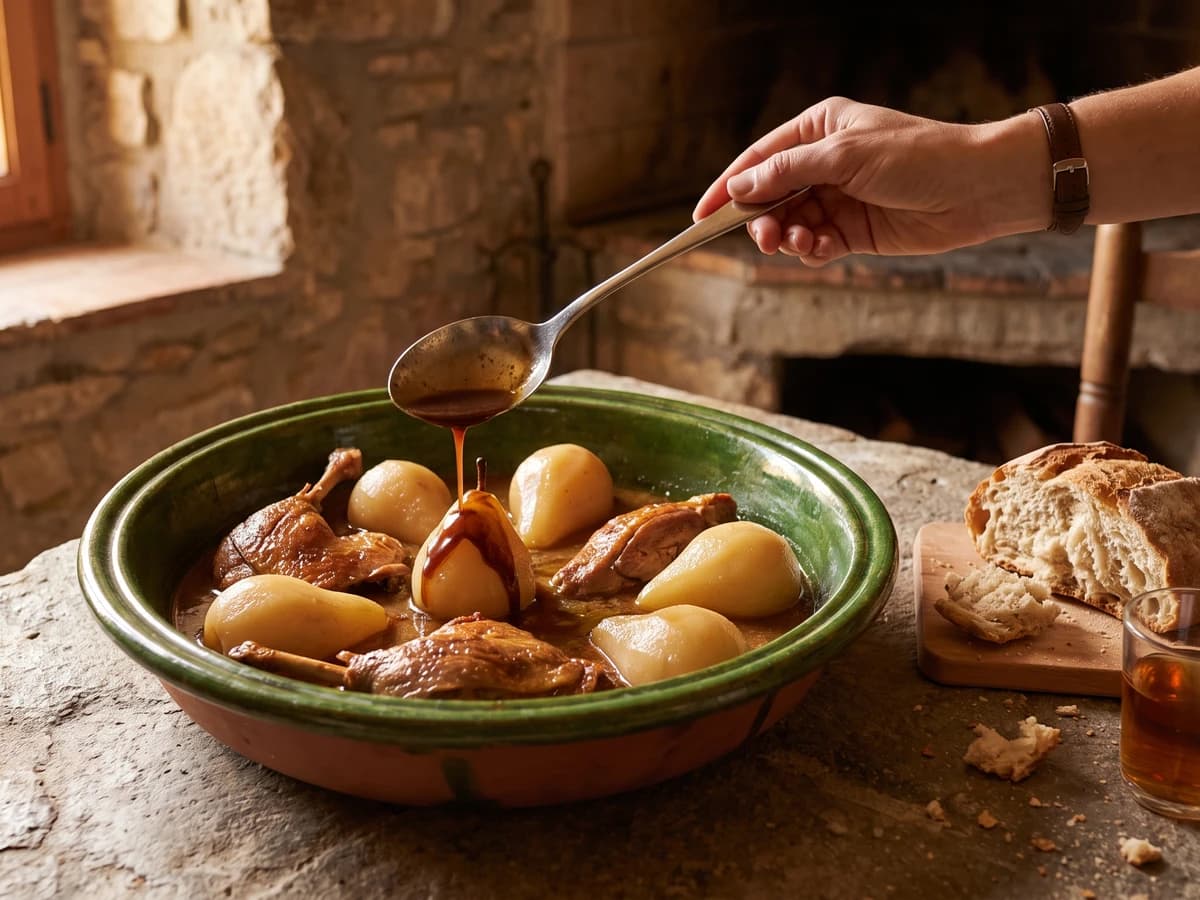
Ànec amb peres is Catalan celebration cooking: duck braised in a dark sofregit, firm autumn pears added near the end, and an almond-garlic picada that turns the juices into a close, glossy sauce.