Chef Isabel
Abanico Ibérico a la Plancha
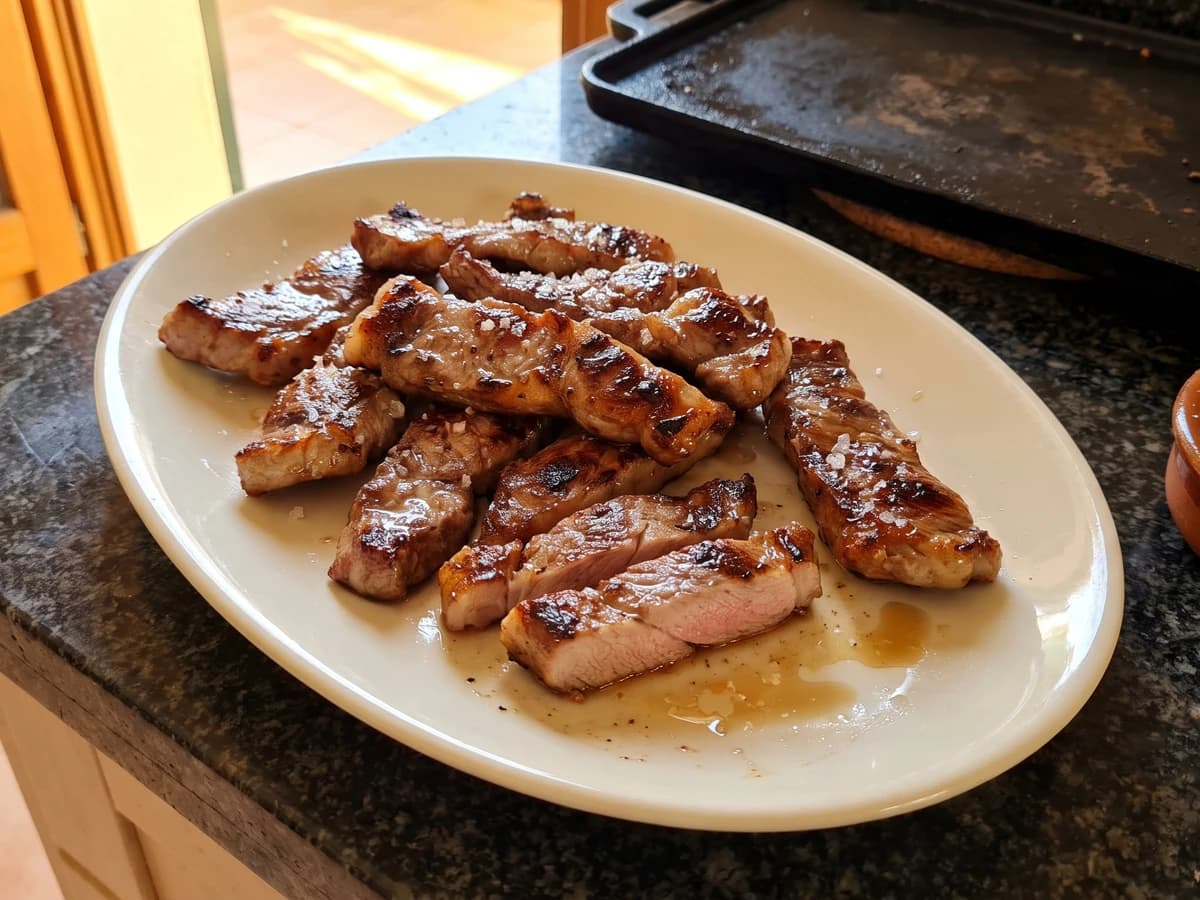
Extremadura's dehesa gives us this fan-shaped, marbled rib cut: salt it at the last moment, lay it on a fierce plancha, and count in seconds so the centre stays juicy.
A cooking platform built around craft, culture, and the stories behind what we eat.
Created by
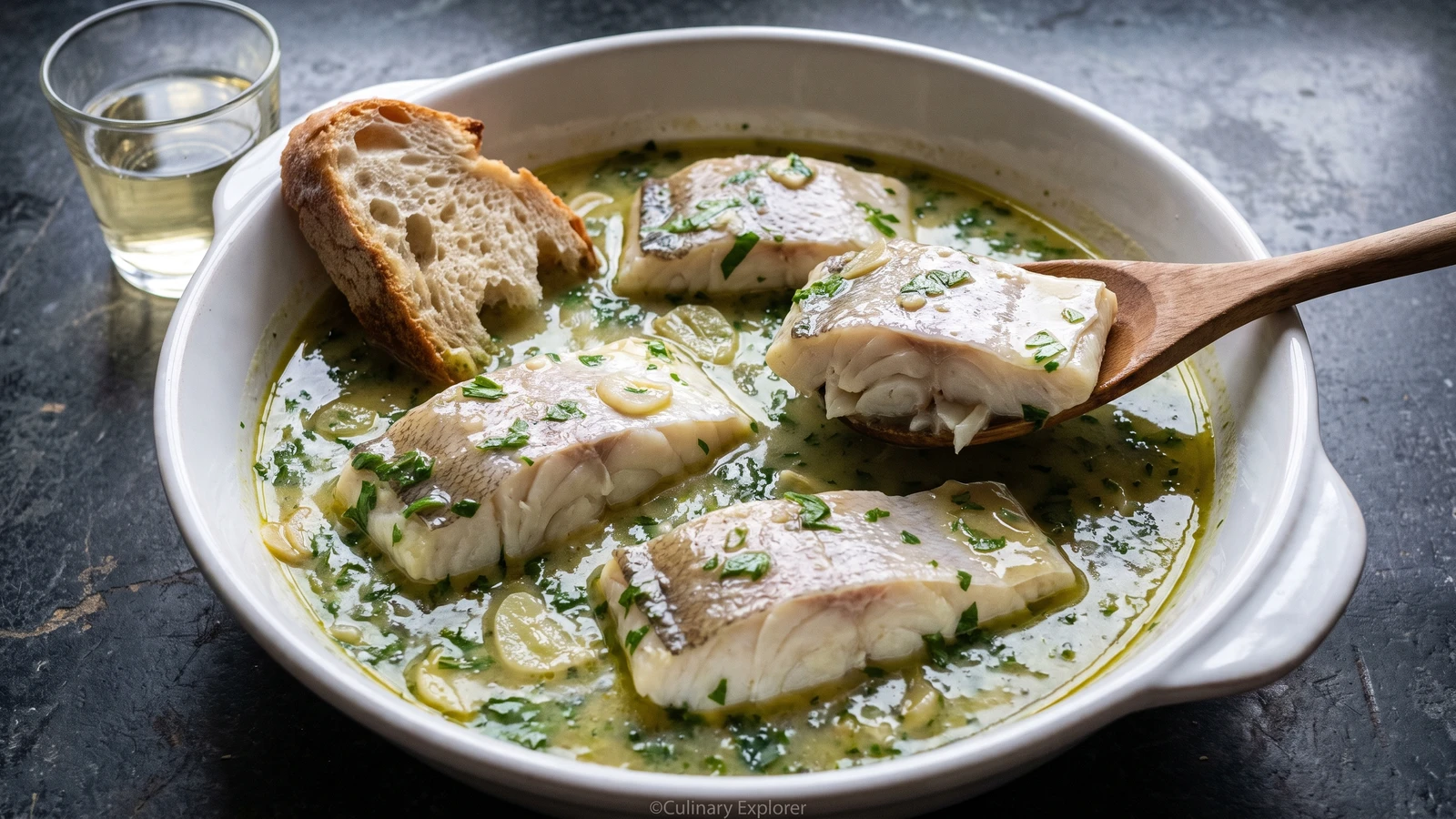
Bacalao en salsa verde is Basque coastal cooking at its clearest: salt cod, garlic, parsley, white wine and a slow vaivén that draws the fish's gelatin into a glossy green sauce.
Bacalao en salsa verde is Basque, a coastal dish of salt cod held in a pale sauce fragrant with garlic, white wine, and plenty of parsley. The parsley is what makes this salsa verde, green sauce. It is not bacalao al pil-pil, whose sauce relies on olive oil, garlic, chilli, and the cod's gelatin without wine, stock, or parsley. Close relatives, yes. The same dish, no.
The method that decides this one is the vaivén, a slow rocking of the pan once the cod goes in. Don't attack the fish with a spoon. Move the whole pan gently forward and back so the skin releases its gelatin and the oil, wine, and stock bind around the loins. A little flour gives the beginner a reliable start, but the rocking makes the sauce glossy rather than merely thick. Keep the heat low. Boiling gives you tight cod and a greasy edge.
Buy thick salt cod with its skin and desalt it patiently in the refrigerator. Ready-desalted frozen loins are perfectly useful if that is what you can find. If salt cod is impossible, use thick fresh hake and season it lightly; you will have merluza en salsa verde, another proper Basque dish, with a gentler flavour and less gelatin in the sauce. No hace falta haber pisado España. In the Margin beside this recipe I wrote two things: taste before salting, and shake more than you stir.
Preserved cod became part of the Basque household larder through the region's long Atlantic fishing and trading tradition, its salt cure allowing the fish to travel far from the coast and serve through meatless fast days. Salsa verde belongs to that same coastal kitchen and takes its name from the parsley that colours the sauce, not from a fixed bottled condiment. The cod preparation shares its method with the better-known merluza en salsa verde, but curing gives bacalao firmer flakes, deeper salinity, and skin rich in sauce-binding gelatin.
Quantity
800g
desalted for 36 to 48 hours and cut into 4 equal pieces
Quantity
70ml
Quantity
4 cloves (about 16g)
thinly sliced
Quantity
12g
Quantity
100ml
Quantity
250ml
kept hot
Quantity
25g
finely chopped
Quantity
0 to 2g
only if needed after tasting
| Ingredient | Quantity |
|---|---|
| thick skin-on salt cod loinsdesalted for 36 to 48 hours and cut into 4 equal pieces | 800g |
| extra virgin olive oil | 70ml |
| garlicthinly sliced | 4 cloves (about 16g) |
| plain flour | 12g |
| dry unoaked white wine | 100ml |
| unsalted fish stockkept hot | 250ml |
| flat-leaf parsley leaves and tender stemsfinely chopped | 25g |
| fine sea salt (optional)only if needed after tasting | 0 to 2g |
Drain the desalted cod, pat it thoroughly dry, and feel along each loin for pin bones. Cut it into four pieces of roughly 200g each. Poach a small trimming in plain water for 30 seconds and taste it. It should be pleasantly seasoned, not fiercely salty. If it is still too salty, return the loins to fresh cold water in the refrigerator for another 4 to 6 hours.
Heat the olive oil in a wide 26 to 28cm cazuela or heavy frying pan over medium-low heat. Add the sliced garlic and cook for 2 to 3 minutes, stirring often, until soft and only faintly gold. Do not brown it. Dark garlic makes the pale parsley sauce bitter, and there is nowhere for that bitterness to hide.
Sprinkle the flour over the garlic and stir for 1 minute so it loses its raw taste without taking colour. Pour in the wine gradually, stirring until smooth, and let it bubble gently for 2 minutes. Add the hot fish stock in three additions, stirring after each one. Simmer gently for 2 minutes, then stir in half the parsley. The sauce should coat a spoon lightly, not sit on it like paste.
Lower the heat and place the cod in the sauce skin-side down, leaving space between the pieces. The liquid should barely tremble. Cook for 4 minutes while moving the pan slowly forward and back by its handles every 20 to 30 seconds. This vaivén, the gentle rocking used in Basque kitchens, draws gelatin from the skin and works it into the oil without breaking the fish.
Turn each loin carefully with a wide fish slice and cook for another 3 to 5 minutes, continuing the slow vaivén. Spoon a little sauce over the top if the pieces stand above the liquid. The cod is ready when it is opaque, separates into broad moist flakes under light pressure, and reaches 63°C at the thickest point. Do not let the sauce boil hard or the fish will tighten and the sauce can turn greasy.
Lift the cod briefly to a warm plate. Stir in the remaining parsley and shake the pan for 30 to 60 seconds until the sauce is glossy. If it is too thick, add hot stock 15ml at a time. If it is thin, let it tremble for 1 minute while you keep shaking. Taste before adding any salt, then return the cod and rest it in the sauce for 2 minutes. Serve at once with bread for the sauce. Siempre sale, si lo sigues.
1 serving (about 275g)
Culinary guides, cultural storytelling, and the editorial depth that makes cooking meaningful.
Discover Culinary ExplorerChef Isabel
Extremadura's dehesa gives us this fan-shaped, marbled rib cut: salt it at the last moment, lay it on a fierce plancha, and count in seconds so the centre stays juicy.

Chef Isabel
Aletría Murciana is Murcia's humble noodle guiso: fine fideos, pork ribs, potato, saffron, and a dark sweet sofrito. Get that base right and the pot knows where it's going.

Chef Isabel
Andrajos are Andalucía's dough-rag stew from Jaén and Granada: a slow rabbit guiso thickened with torn sheets of flour dough, rolled thin so they cook tender instead of gummy.
Chef Isabel
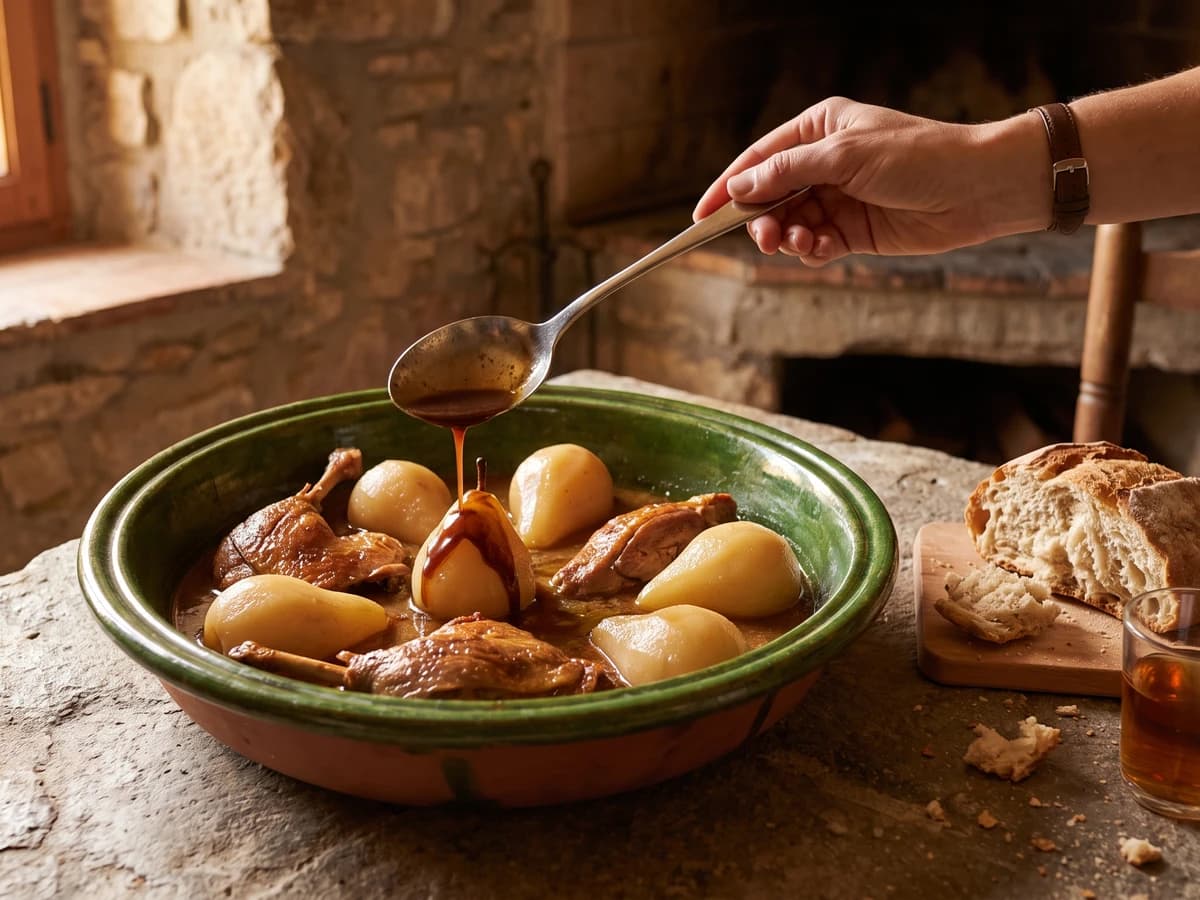
Ànec amb peres is Catalan celebration cooking: duck braised in a dark sofregit, firm autumn pears added near the end, and an almond-garlic picada that turns the juices into a close, glossy sauce.