Chef Isabel
Abanico Ibérico a la Plancha
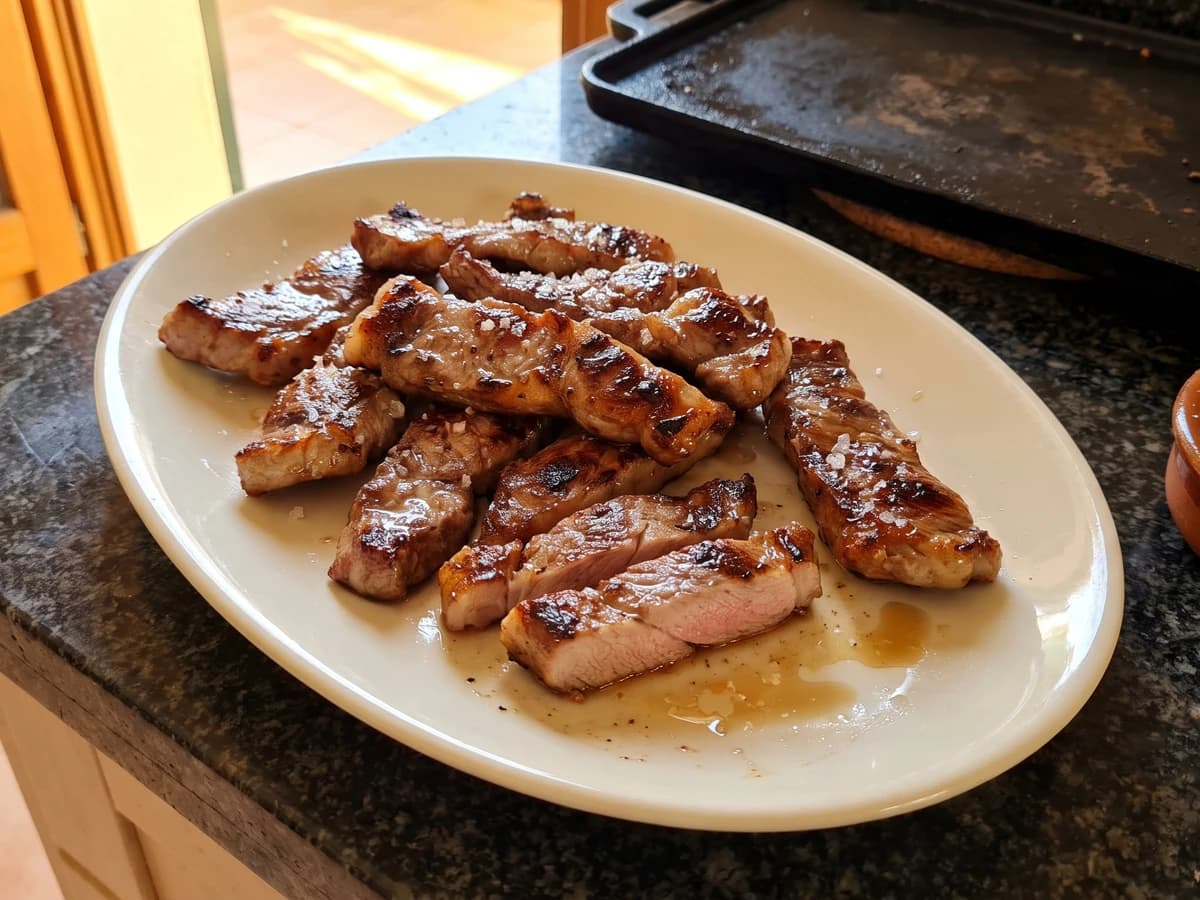
Extremadura's dehesa gives us this fan-shaped, marbled rib cut: salt it at the last moment, lay it on a fierce plancha, and count in seconds so the centre stays juicy.
A cooking platform built around craft, culture, and the stories behind what we eat.
Created by
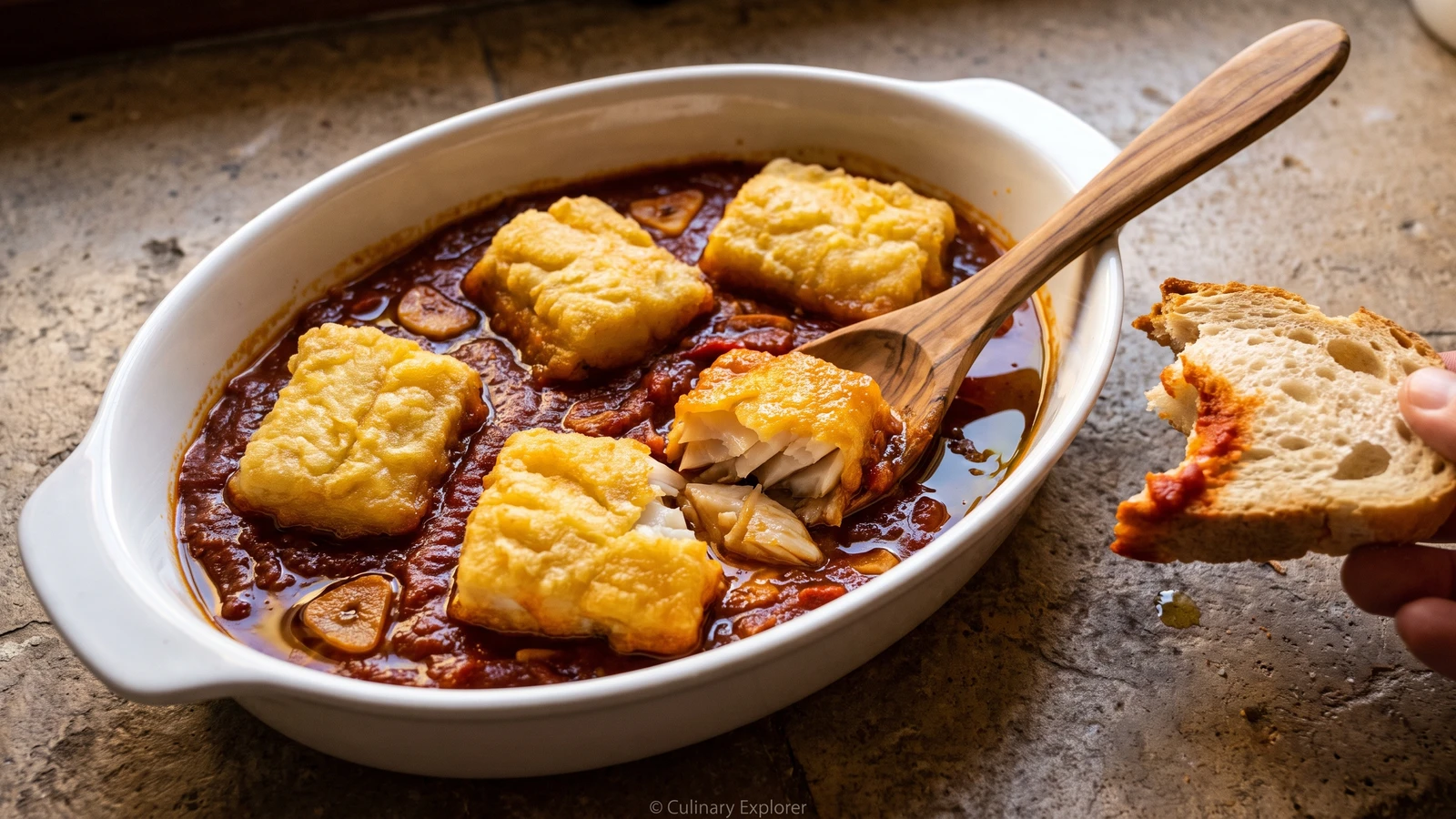
Andalucía's everyday salt cod is floured, fried, and tucked into a slow tomato sofrito. Cook the sauce dark and sweet, then give the fish only enough time to turn tender.
Bacalao con tomate is Andalusian everyday cooking: thick pieces of desalted cod, lightly floured and fried, then settled into a tomato sauce built with onion, green pepper, and garlic. It belongs especially to the meatless cooking of Cuaresma, Lent. Here tomato leads, unlike Basque bacalao a la vizcaína, where choricero peppers lead, or Catalan bacallà amb samfaina, which brings aubergine and courgette.
The method that decides the dish is the sofrito, the slow-cooked vegetable base. Cook the onion and pepper until soft and dark gold at the edges, then give the tomato enough time to lose its raw brightness and turn thick, dark, and sweet. When a spoon drawn through the pan leaves a path for two seconds and little beads of oil show at the rim, it's ready. If the tomato still tastes sharp, it needs time, not sugar.
Salt cod travels well by its nature, so you can make this far from Andalucía. Buy thick, skin-on pieces and allow them a full 36 hours in cold water. If salt cod truly cannot be found, firm fresh hake is the substitute a Spanish household would use, but the result is milder and softer, and its proper name becomes merluza con tomate.
Once the sauce is right, the cod needs only a few minutes. Let it simmer too long and it tightens into cotton. My Margin has the correction plainly: the fish waits for the tomato, never the other way round. Follow that and it comes out. Siempre sale, si lo sigues.
Across Andalucía, bacalao con tomate is tied to Cuaresma and Semana Santa, when abstinence from meat put preserved fish at the center of the table, even in inland towns far from a fishing port. Salt curing made cod dependable away from the coast, while the household sauce of onion, garlic, green pepper, and tomato turned it into filling, economical food. The thin flour coating serves a practical purpose: it helps the soaked cod hold together and gives the tomato sauce a little body.
Quantity
700g
cut into 4 equal portions
Quantity
10 litres
divided into four 2.5-litre changes
Quantity
60g
Quantity
120ml
45ml for the sofrito and 75ml for frying
Quantity
180g
cut into 5mm dice
Quantity
150g
seeded and cut into 5mm dice
Quantity
15g
thinly sliced
Quantity
800g
crushed by hand
Quantity
1
Quantity
0-3g
use only after tasting the finished sauce
Quantity
300g
for serving
| Ingredient | Quantity |
|---|---|
| thick skin-on salt cod loincut into 4 equal portions | 700g |
| cold water for desaltingdivided into four 2.5-litre changes | 10 litres |
| plain flour | 60g |
| mild olive oil45ml for the sofrito and 75ml for frying | 120ml |
| onioncut into 5mm dice | 180g |
| green bell pepperseeded and cut into 5mm dice | 150g |
| garlicthinly sliced | 15g |
| canned whole peeled tomatoes with their juicecrushed by hand | 800g |
| bay leaf | 1 |
| fine sea salt (optional)use only after tasting the finished sauce | 0-3g |
| crusty country bread (optional)for serving | 300g |
Put the cod skin-side up in a nonreactive bowl and cover it with 2.5 litres of cold water. Refrigerate for 36 hours, replacing the water with another 2.5 litres every 9 hours. Keep it cold throughout. Drain, remove any pin bones, and pat every surface completely dry.
Heat 45ml olive oil in a wide casserole over medium-low heat. Add the onion and green pepper. Cook for 14 to 16 minutes, stirring every few minutes, until completely soft and dark gold around the edges. Add the sliced garlic and cook for 2 minutes, just until fragrant and pale gold.
Add the crushed tomatoes and bay leaf. Bring them to a lively simmer, then lower the heat and cook uncovered for 30 to 35 minutes, stirring more often as the sauce thickens. It is ready when the color has deepened to brick red, a spoon leaves a clear path across the pan for two seconds, and small beads of olive oil appear around the edge. This slow cook removes the tomato's raw sharpness and gives the dish its sweetness.
While the tomato finishes, spread the flour in a shallow dish. Press the dry cod lightly into it, coating all sides, then shake off every loose patch. You want a thin veil of flour, not a heavy crust.
Heat the remaining 75ml olive oil in a 28cm frying pan over medium heat until it shimmers. Fry the cod in two batches so the pan stays hot, skin-side down first for 2 minutes, then for 1 minute on the other side. The flour should be pale gold and set, but the fish should not yet be cooked through. Lift it onto a plate.
Remove the bay leaf and taste the tomato before adding any salt. Nestle the cod into the sauce skin-side down and spoon a little tomato over each piece. Cover loosely and simmer over low heat for 4 to 6 minutes, without turning, until the thickest part is opaque and separates into moist flakes. It should reach 63°C at the center if checked with a thermometer.
Take the casserole off the heat and let the cod rest in the sauce for 5 minutes. Taste the sauce once more and add no more than 3g salt if it truly needs it. Carry the dish to the table in its casserole and serve with bread for mopping up the dark, glossy tomato.
1 serving (about 500g)
Culinary guides, cultural storytelling, and the editorial depth that makes cooking meaningful.
Discover Culinary ExplorerChef Isabel
Extremadura's dehesa gives us this fan-shaped, marbled rib cut: salt it at the last moment, lay it on a fierce plancha, and count in seconds so the centre stays juicy.

Chef Isabel
Aletría Murciana is Murcia's humble noodle guiso: fine fideos, pork ribs, potato, saffron, and a dark sweet sofrito. Get that base right and the pot knows where it's going.

Chef Isabel
Andrajos are Andalucía's dough-rag stew from Jaén and Granada: a slow rabbit guiso thickened with torn sheets of flour dough, rolled thin so they cook tender instead of gummy.
Chef Isabel
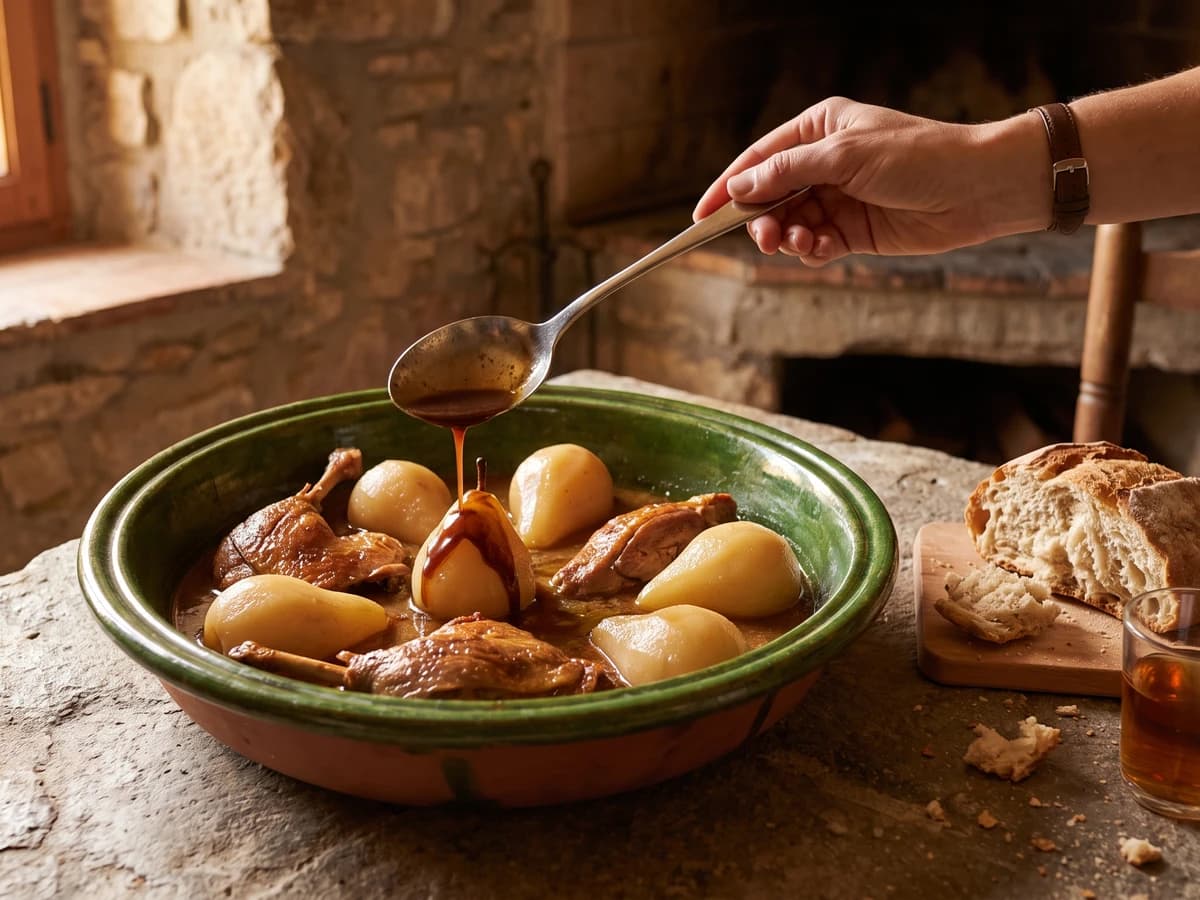
Ànec amb peres is Catalan celebration cooking: duck braised in a dark sofregit, firm autumn pears added near the end, and an almond-garlic picada that turns the juices into a close, glossy sauce.