Chef Isabel
Abanico Ibérico a la Plancha
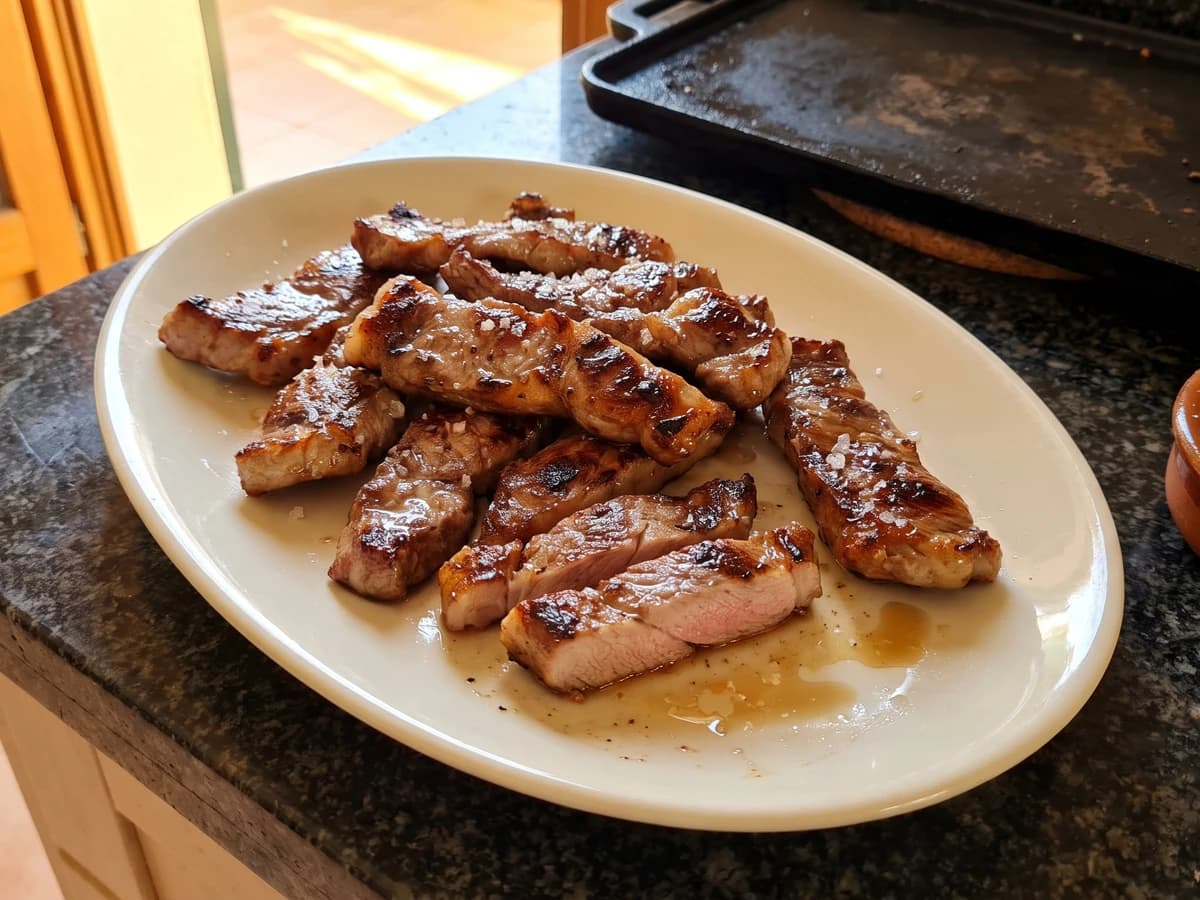
Extremadura's dehesa gives us this fan-shaped, marbled rib cut: salt it at the last moment, lay it on a fierce plancha, and count in seconds so the centre stays juicy.
A cooking platform built around craft, culture, and the stories behind what we eat.
Created by
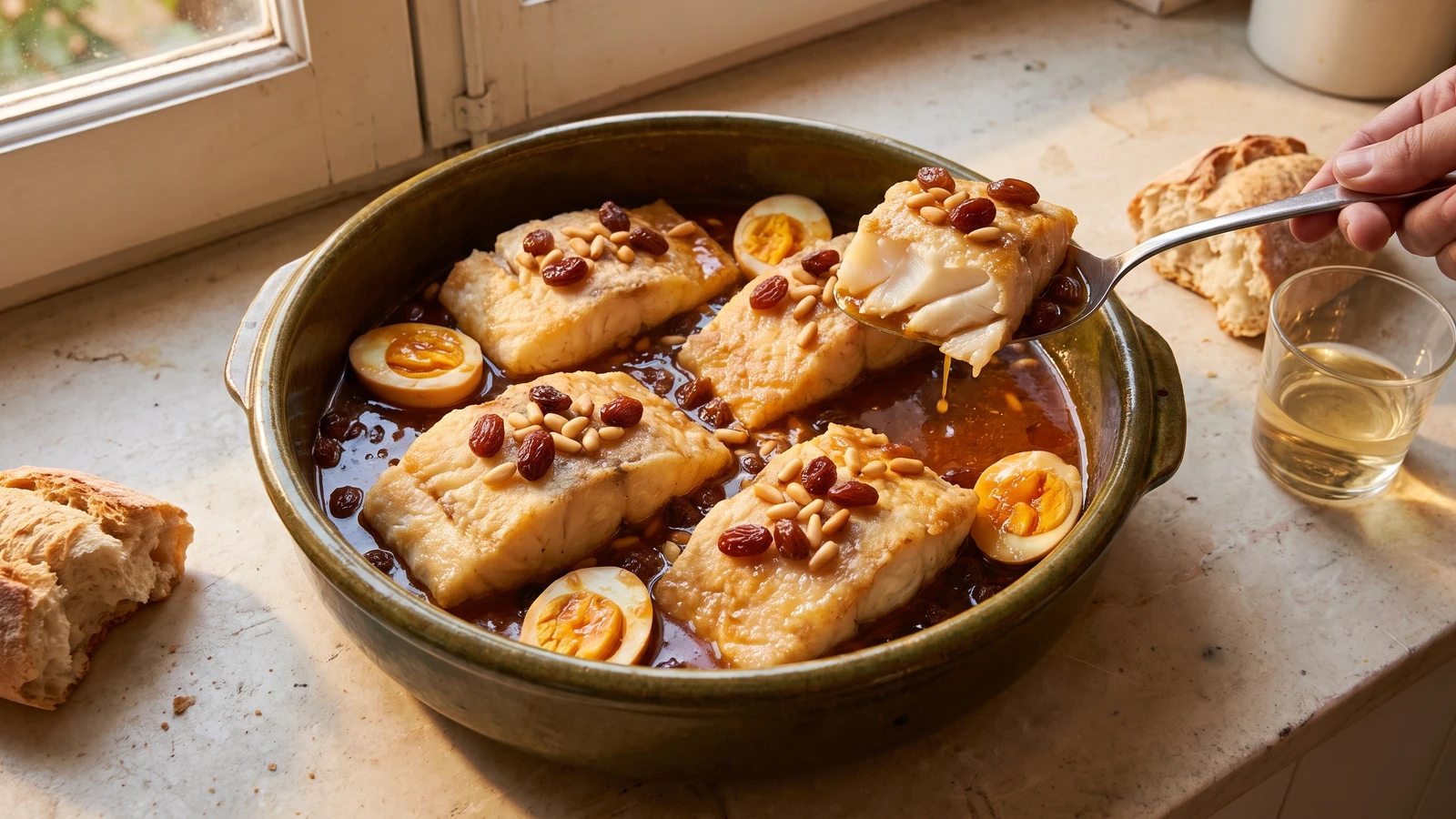
Catalan salt cod for the Lenten table, crisped lightly in flour, then settled into a dark, sweet onion sauce where raisins plump, pine nuts toast, and the fish stays in broad, pearly flakes.
Bacallà amb panses i pinyons is Catalan, a Lenten main of salt cod browned lightly in flour and settled into sofregit with raisins, pine nuts, and hard-boiled egg. What makes it Catalan is that old sweet-savory balance: preserved fish against dried fruit and nuts, held together by onion and tomato cooked until neither tastes raw. This is food for the Easter table, substantial enough for a full household without a scrap of meat.
The sofregit, the slow onion and tomato base, decides the dish. Take the onion to dark gold before the tomato goes in. That drives off its water and gives a deep sweetness, so the swollen raisins round the salt cod instead of making the sauce sugary. Fry the fish only long enough to set its flour coat, then finish it at the gentlest simmer. Broad flakes are the aim. Rubble is for another day.
No hace falta haber pisado España. Desalted salt cod is often easier to find frozen than dry, and it works very well. If salt cod is nowhere to be found, cure thick fresh cod overnight with the exact amount of salt given in the tips; it will be milder and more fragile because a short cure cannot supply the depth of proper bacallà. At Easter, use preserved summer tomato or good canned whole tomatoes instead of a pale fresh one. In the Margin beside this recipe I wrote one instruction twice: shake the casserole, don't stir the fish.
Bacallà amb panses i pinyons belongs to Catalonia's Lenten table, when abstinence removed meat and durable salt cod made a substantial fish dish possible even far inland. The cod itself came from northern Atlantic waters, but salting allowed it to enter the Catalan larder and become deeply tied to vigils and Holy Week. Raisins and pine nuts preserve the old Catalan taste for bringing fruit, nuts, and savory food together, while hard-boiled egg gives the meatless casserole enough substance for the main meal.
Quantity
800g
skin on, cut into 4 portions and thoroughly dried
Quantity
75g
Quantity
40g
Quantity
2
Quantity
50g
for dusting
Quantity
150ml
divided between shallow-frying and the sofregit
Quantity
350g
halved and thinly sliced
Quantity
1 clove
finely chopped
Quantity
250g
from ripe grated tomato or drained canned whole tomatoes
Quantity
1
Quantity
200ml
Quantity
up to 2g
use only after tasting the sauce
| Ingredient | Quantity |
|---|---|
| desalted salt cod loinskin on, cut into 4 portions and thoroughly dried | 800g |
| seedless raisins | 75g |
| pine nuts | 40g |
| large eggs | 2 |
| plain flourfor dusting | 50g |
| extra virgin olive oildivided between shallow-frying and the sofregit | 150ml |
| yellow onionshalved and thinly sliced | 350g |
| garlicfinely chopped | 1 clove |
| tomato pulpfrom ripe grated tomato or drained canned whole tomatoes | 250g |
| bay leaf | 1 |
| warm water | 200ml |
| fine sea salt (optional)use only after tasting the sauce | up to 2g |
Run your fingers over the cod and remove any pin bones, then dry every surface well with kitchen paper. Cook a small shaving in a dry pan and taste it. It should be distinctly seasoned but pleasant. If it is still sharply salty, soak the portions in fresh cold water for another 2 hours in the refrigerator, then dry them again. Wet cod spits in the oil and its flour coat slides off.
Cover the raisins with the 200ml warm water and leave them for 20 minutes. Drain them, reserving every drop of the soaking water. Meanwhile, put the eggs in a small saucepan, cover with cold water, bring to a boil, and cook for 10 minutes. Cool, peel, and quarter them. Toast the pine nuts in a dry pan over medium-low heat for 2 to 3 minutes, moving them constantly, until pale gold. Set them aside before they darken.
Spread the flour on a plate. Coat the cod lightly and shake off every loose patch. Heat the olive oil in a wide, heavy pan over medium heat until it shimmers. Fry the cod in two batches, skin side down first, for about 2 1/2 minutes, then turn and fry the flesh side for 1 minute. You are setting a thin golden coat, not cooking the fish through. Lift it out carefully and keep it in broad pieces.
Leave 45ml of the frying oil in the pan and remove any dark flour crumbs. Lower the heat, add the onions with 1g salt, and cook for 25 to 30 minutes, stirring now and then, until soft, dark gold, and almost jammy. Add the garlic and cook for 1 minute. Stir in the tomato and bay leaf, then cook for another 12 to 15 minutes, until the tomato is thick and the oil begins to show around the edges. This sofregit, the slow onion and tomato base, decides the dish. Rush it and the raisins taste merely sweet; cook it properly and they belong in the sauce.
Add the soaked raisins and their reserved water to the sofregit. Scrape the bottom gently and simmer for 5 minutes, until the raisins begin to swell and the sauce loosens but is no longer watery. Taste before adding any more salt. The bacalao will bring salt of its own, so use the remaining 1g only if the sauce truly needs it.
Set the cod into the sauce skin side down and spoon a little sauce over each piece. Add half the toasted pine nuts, cover loosely, and keep the pan at the gentlest simmer for 5 to 7 minutes. Place the egg quarters around the fish for the final 3 minutes. Do not stir or turn the cod. Shake the pan by its handles so the flour and oil bind the sauce without breaking the fish. It is ready when the centre is opaque and separates into moist, broad flakes.
Remove the bay leaf and take the pan off the heat. Rest the dish for 10 minutes so the sauce settles around the cod, then scatter over the remaining pine nuts. Carry it to the table in its casserole with bread for the sauce. Siempre sale, si lo sigues.
1 serving (about 415g)
Culinary guides, cultural storytelling, and the editorial depth that makes cooking meaningful.
Discover Culinary ExplorerChef Isabel
Extremadura's dehesa gives us this fan-shaped, marbled rib cut: salt it at the last moment, lay it on a fierce plancha, and count in seconds so the centre stays juicy.

Chef Isabel
Aletría Murciana is Murcia's humble noodle guiso: fine fideos, pork ribs, potato, saffron, and a dark sweet sofrito. Get that base right and the pot knows where it's going.

Chef Isabel
Andrajos are Andalucía's dough-rag stew from Jaén and Granada: a slow rabbit guiso thickened with torn sheets of flour dough, rolled thin so they cook tender instead of gummy.
Chef Isabel
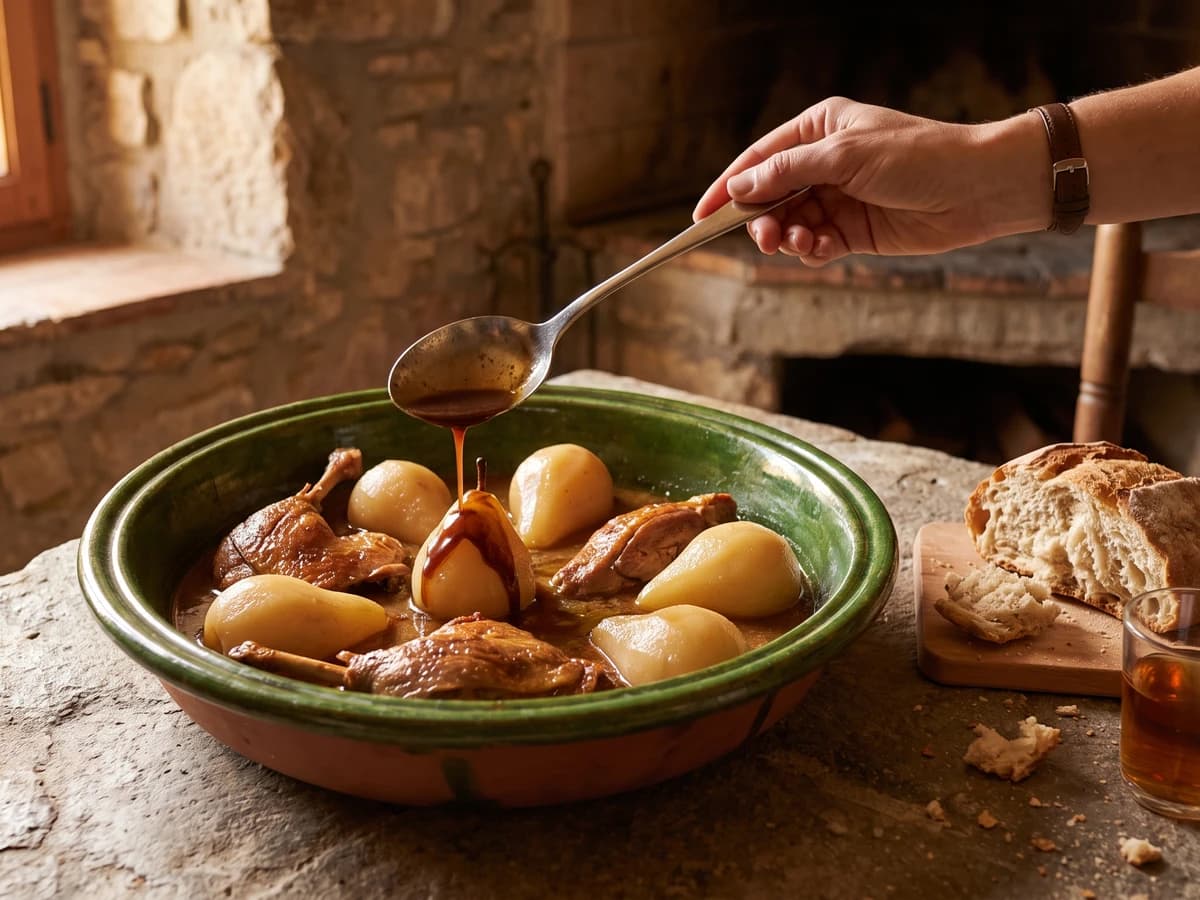
Ànec amb peres is Catalan celebration cooking: duck braised in a dark sofregit, firm autumn pears added near the end, and an almond-garlic picada that turns the juices into a close, glossy sauce.