Chef Isabel
Abanico Ibérico a la Plancha
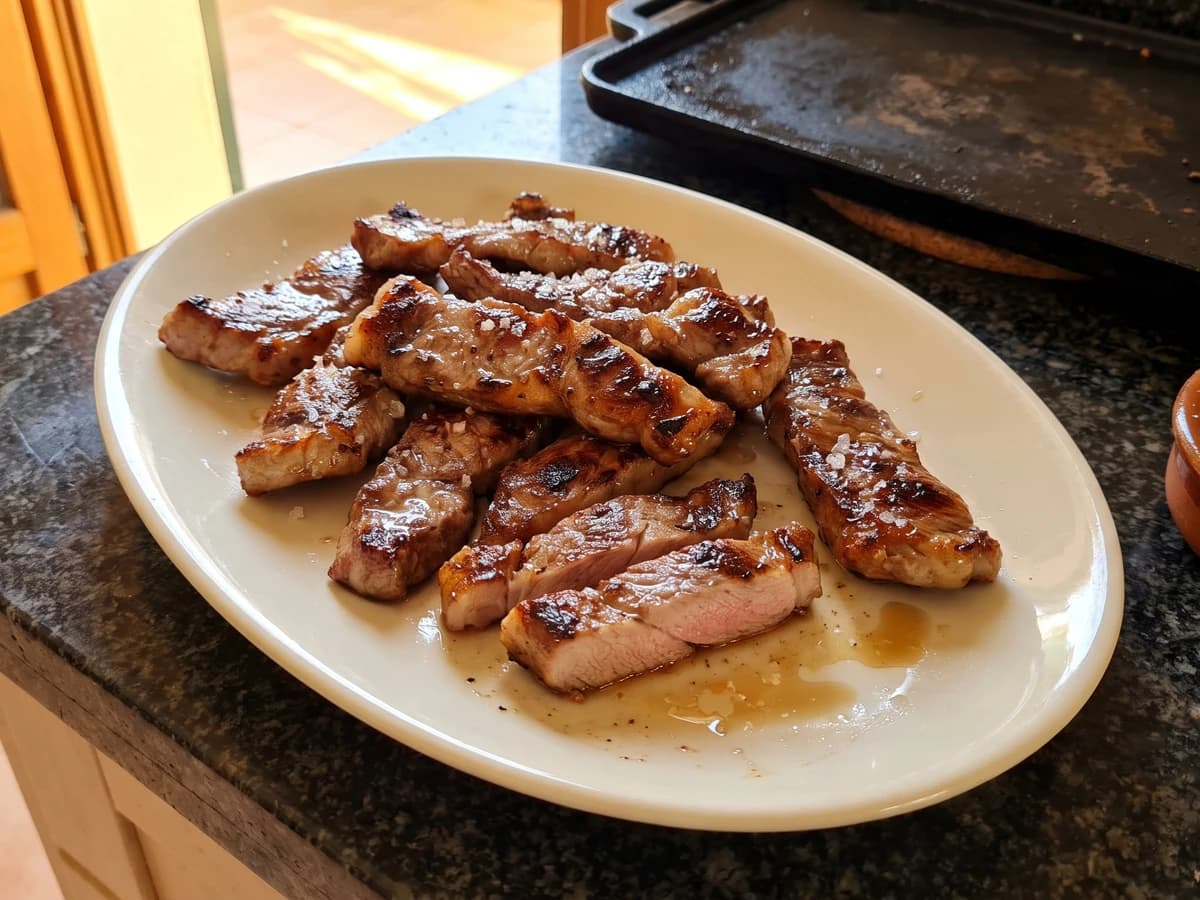
Extremadura's dehesa gives us this fan-shaped, marbled rib cut: salt it at the last moment, lay it on a fierce plancha, and count in seconds so the centre stays juicy.
A cooking platform built around craft, culture, and the stories behind what we eat.
Created by
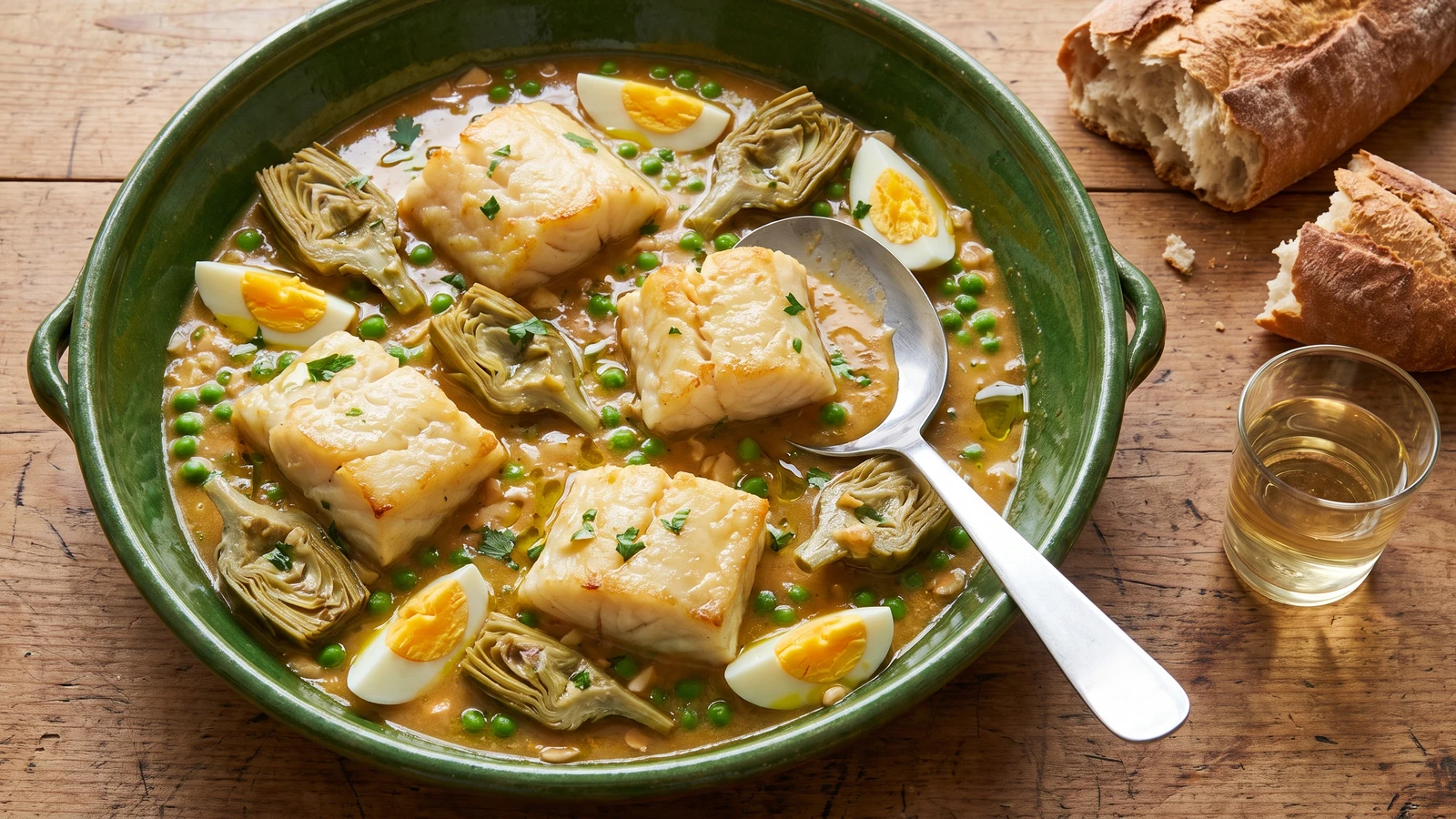
Catalonia's Good Friday cod brings salt-cured fish, tender spring artichokes and peas together over a patient sofregit, with an almond, garlic and parsley picada binding the sauce at the end.
Bacallà amb carxofes i pèsols is Catalan spring cooking: salt cod tucked among tender artichokes and peas in a shallow sauce built from sofregit, the slow onion and tomato base, then finished with picada, pounded almond, garlic and parsley. It belongs especially to the Divendres Sant, Good Friday, table, when preserved cod meets the first good vegetables of the season. Those two foundations give the dish its Catalan surname. Without them, you have cod with vegetables, perfectly edible but not this.
The picada is the step that decides it. I pound the almonds, garlic and parsley into a rough paste, loosen it with a ladle of sauce, then add it for the final few minutes. The almond gives body without making the sauce heavy, while the short cooking keeps the parsley fresh. Once the cod returns to the pan, hold the liquid at the barest tremble. A hard boil squeezes the fish dry, and salt cod has already endured enough.
Far from Catalonia, refrigerated or frozen ready-desalted salt cod is exactly what you want. Fresh cod lacks the cured depth and makes a different stew. If good fresh artichokes aren't in your market, use 300g frozen artichoke quarters and add them five minutes later; they soften faster and lose a little of the fresh vegetable's bittersweet edge. Frozen peas can go straight into the pan. No hace falta haber pisado España.
Bring the cazuela to the table and give it five quiet minutes before serving. The sauce settles around the fish and turns silky enough for bread. The Margin beside this recipe says only, "No hiervas el bacalao," don't boil the cod. Siempre sale, si lo sigues.
Salt cod entered Catalan home cooking as a durable northern fish that could travel inland and satisfy the meatless days of Lent. On Divendres Sant, Good Friday, it met the artichokes and peas arriving together in the spring market, with boiled eggs making the dish substantial enough for the family table. The picada is one of Catalonia's defining kitchen methods, using pounded nuts, garlic and herbs to bind a braise at the end rather than burdening it with a heavy sauce.
Quantity
700g
skin on, cut into 4 equal portions
Quantity
4 medium (about 600g before trimming)
trimmed, chokes removed and quartered
Quantity
1
halved
Quantity
250g
Quantity
2
Quantity
40g
Quantity
120ml
divided
Quantity
200g
finely diced
Quantity
3 cloves
divided
Quantity
250g
drained and finely crushed
Quantity
100ml
Quantity
400ml
Quantity
1
Quantity
30g
Quantity
12g
finely chopped, 10g for the picada and 2g to finish
Quantity
up to 2g
| Ingredient | Quantity |
|---|---|
| desalted salt cod loinskin on, cut into 4 equal portions | 700g |
| fresh artichokestrimmed, chokes removed and quartered | 4 medium (about 600g before trimming) |
| lemonhalved | 1 |
| shelled fresh peas, or frozen peas | 250g |
| large eggs | 2 |
| plain flour | 40g |
| extra virgin olive oildivided | 120ml |
| onionfinely diced | 200g |
| garlicdivided | 3 cloves |
| canned whole peeled tomatoesdrained and finely crushed | 250g |
| dry white wine | 100ml |
| unsalted fish stock or water | 400ml |
| bay leaf | 1 |
| blanched almonds | 30g |
| flat-leaf parsleyfinely chopped, 10g for the picada and 2g to finish | 12g |
| fine sea salt (optional) | up to 2g |
If you desalted the cod yourself, cut a 1cm sliver from the thickest portion and simmer it in plain water for 60 seconds. Let it cool and taste it. The fish should be well seasoned but not harsh; if it is still too salty, return the portions to fresh cold water in the refrigerator for another 4 hours. Pat the cod completely dry before flouring it.
Bring a small saucepan of water to a boil, lower in the eggs and cook for 10 minutes. Cool them in cold water, peel and quarter them. Fill a bowl with cold water and squeeze in the lemon. Pull the tough outer leaves from each artichoke, cut away the top third, peel the stem and trim the base. Quarter the hearts, remove any hairy choke and place them in the lemon water as you work.
Spread the flour on a plate and coat the cod lightly, shaking off every loose bit. Heat 80ml of the olive oil in a wide 28 to 30cm cazuela or sauté pan over medium heat. Lay in the cod skin-side down and cook for 3 minutes without disturbing it. Turn carefully and cook the flesh side for 1 minute. Lift the pieces to a plate. They should be lightly golden outside and still raw at the centre.
Pour the frying oil into a heatproof bowl for straining later, leaving the flour sediment behind, and wipe the pan. Add the remaining 40ml olive oil and the onion. Cook over low heat for 18 to 20 minutes, stirring often, until dark gold, soft and jammy. Mince 1 garlic clove, add it and cook for 30 seconds. Add the crushed tomato and cook for another 12 to 15 minutes, until the mixture is thick, rusty red and a spoon drawn through it leaves a clear trail. This slow sofregit gives the sauce its sweetness. Rush it and the whole dish tastes thin.
Pour in the wine and let it bubble for 2 minutes, scraping up the browned residue. Add the stock or water and the bay leaf. Drain the artichokes, add them to the pan and bring the liquid just to a boil. Lower the heat, cover and simmer gently for 10 to 12 minutes, turning the quarters once. A small knife should enter with resistance; they will finish cooking beside the cod.
While the artichokes cook, toast the almonds in a dry small pan over medium-low heat for 3 to 4 minutes, moving them often, until pale gold. Put them in a mortar with the remaining 2 garlic cloves and pound to coarse crumbs. Add 10g parsley and pound again into a rough green paste. Ladle in 60ml of the braising liquid and stir until loose enough to pour.
Return the cod to the pan skin-side up, nestling it between the artichokes. Add fresh peas now; if using frozen peas, wait until the cod has cooked for 3 minutes. Pour the picada into the spaces around the fish and shake the pan gently by its handles to spread it. Cook uncovered at the barest simmer for 7 to 9 minutes, depending on thickness. Do not stir the cod with a spoon. It is ready when the thickest part reaches 63°C and separates into moist flakes under light pressure. Set the egg quarters into the sauce for the final 2 minutes.
Remove the bay leaf and take the pan off the heat. Rest for 5 minutes, then taste the sauce before adding any salt; the cod usually supplies enough. Add no more than 2g if it truly needs it. Scatter over the reserved 2g parsley and serve from the cazuela, giving each person cod, artichoke, peas, egg and plenty of sauce for bread.
1 serving (about 525g)
Culinary guides, cultural storytelling, and the editorial depth that makes cooking meaningful.
Discover Culinary ExplorerChef Isabel
Extremadura's dehesa gives us this fan-shaped, marbled rib cut: salt it at the last moment, lay it on a fierce plancha, and count in seconds so the centre stays juicy.

Chef Isabel
Aletría Murciana is Murcia's humble noodle guiso: fine fideos, pork ribs, potato, saffron, and a dark sweet sofrito. Get that base right and the pot knows where it's going.

Chef Isabel
Andrajos are Andalucía's dough-rag stew from Jaén and Granada: a slow rabbit guiso thickened with torn sheets of flour dough, rolled thin so they cook tender instead of gummy.
Chef Isabel
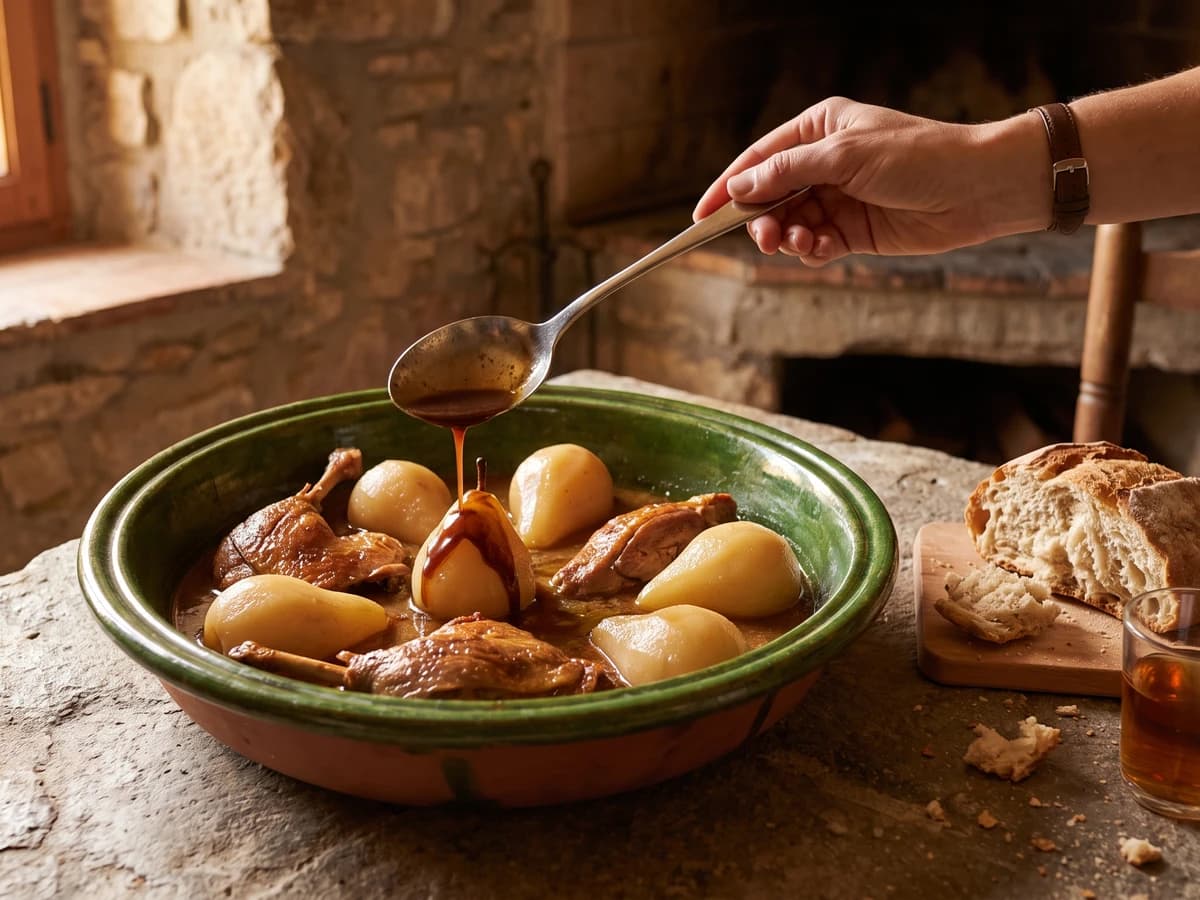
Ànec amb peres is Catalan celebration cooking: duck braised in a dark sofregit, firm autumn pears added near the end, and an almond-garlic picada that turns the juices into a close, glossy sauce.