Chef Isabel
Abanico Ibérico a la Plancha
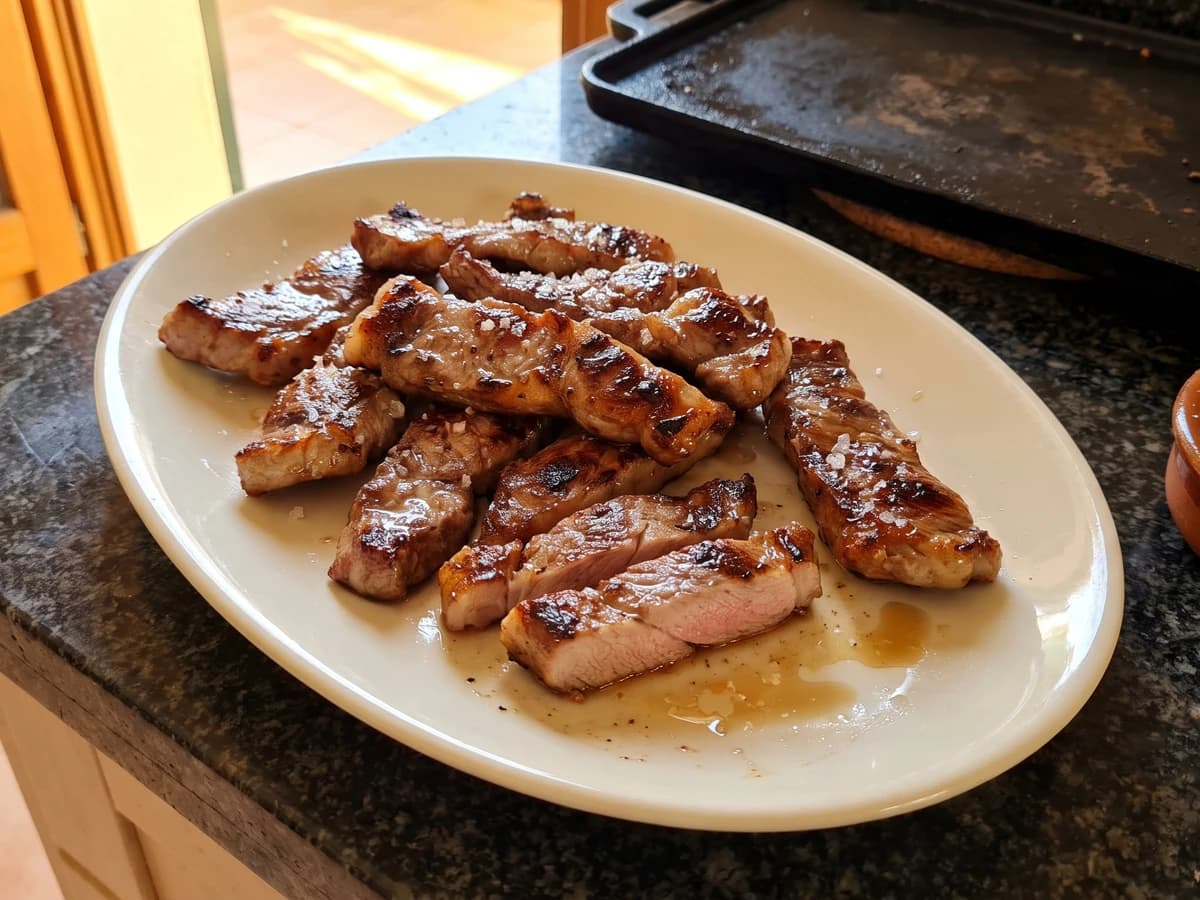
Extremadura's dehesa gives us this fan-shaped, marbled rib cut: salt it at the last moment, lay it on a fierce plancha, and count in seconds so the centre stays juicy.
A cooking platform built around craft, culture, and the stories behind what we eat.
Created by
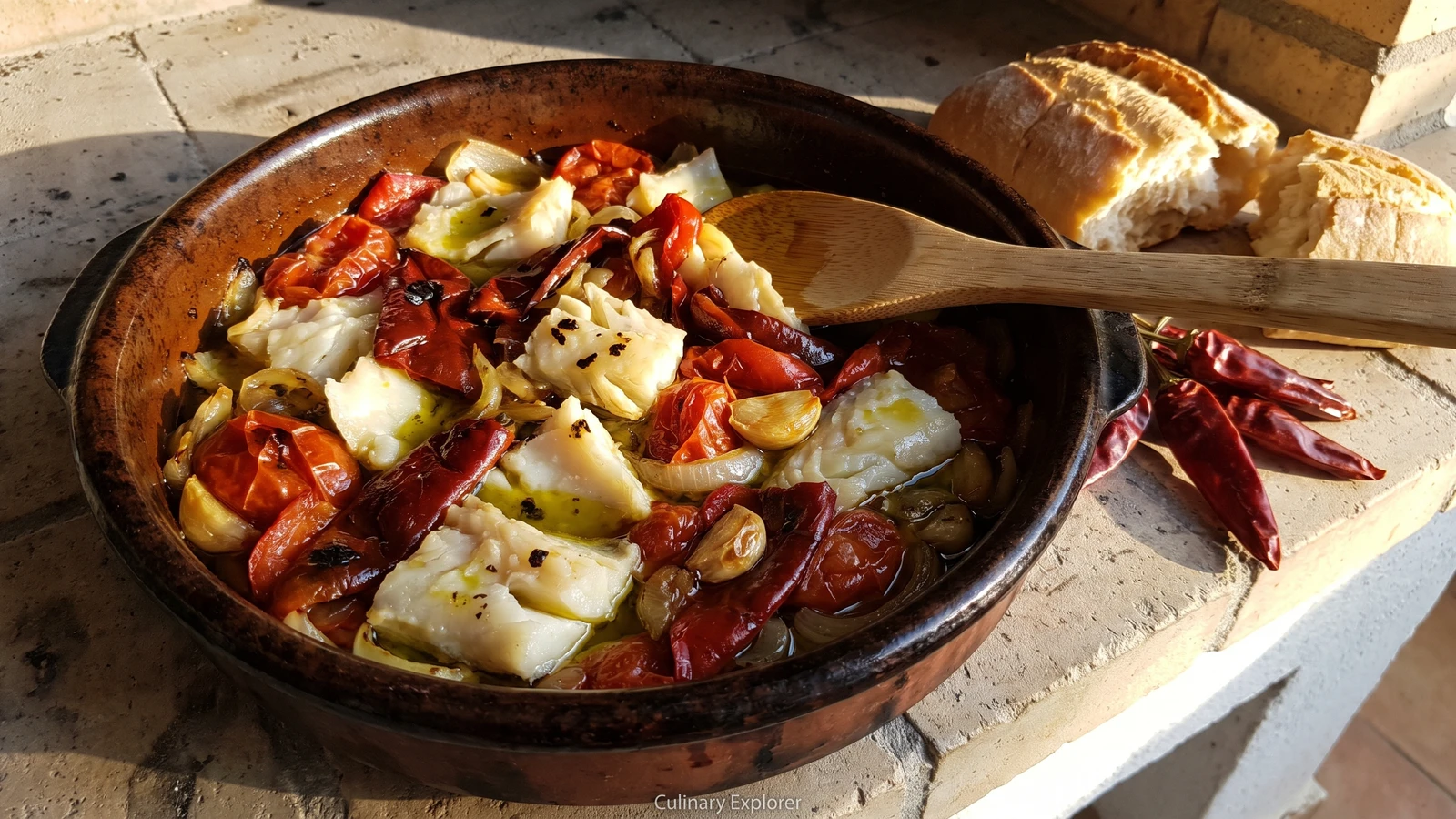
Ciudad Real's tiznao folds flaky salt cod through ember-blackened dried peppers, tomatoes, onion and garlic. Keep every piece distinct and glossy with olive oil, because this is a roast, not a sauce.
Bacalao al tiznao is Manchego, from Ciudad Real in Castilla-La Mancha. Desalted salt cod is broken into generous flakes with dried red peppers, tomato, onion and garlic roasted until their skins blacken against the embers. There is no sofrito and no smooth sauce. The vegetables stay rough, the cod stays visible, and olive oil carries the taste of the fire through the dish.
The method that decides it is the roasting. You want blackened skins, tender flesh and the smell of the hearth, but the dried peppers can pass from fragrant to ash in seconds. Turn them constantly, pull them as soon as they blister, then soften them in warm water. Roast the cod only until it separates into moist flakes. I keep everything broad and uneven because tiznao should look handled, not puréed.
No hace falta haber pisado España. If you have no hearth or charcoal grill, roast the vegetables in a hot oven and finish them hard under the broiler. You will get the necessary char, though less wood smoke. Don't try to repair that with bottled smoke or a spoonful of pimentón. That makes another taste entirely.
If whole pimientos rojos secos are difficult to find, use six dried ñoras. They are smaller and sweeter, so the pepper pieces will be finer, but the dish remains recognizably Manchego. The note in my Margin is short: the vegetables may wear black at their edges, but the cazuela must never fill with gravy. Keep it loose and glossy. Siempre sale, si lo sigues.
Bacalao al tiznao belongs to the province of Ciudad Real in Castilla-La Mancha, and its name comes from tiznar, to blacken with soot, for the scorched skins left by the hearth. Salt cod and dried peppers kept well in this inland country far from the fishing ports, while onion, garlic and tomato could be set directly among the household embers. Village versions range from nearly dry to lightly moistened, but the blackened roast and the preserved cod remain the family resemblance.
Quantity
500g
skin on and patted very dry
Quantity
40g, about 4 large
use pimientos rojos secos
Quantity
600g
Quantity
300g, about 2 medium
unpeeled and halved through the root
Quantity
1, about 60g
left unpeeled
Quantity
75ml
divided
Quantity
500ml
for softening the roasted peppers
Quantity
2g
use only if needed after tasting
Quantity
300g
to serve
| Ingredient | Quantity |
|---|---|
| desalted salt cod loinskin on and patted very dry | 500g |
| whole dried sweet red peppersuse pimientos rojos secos | 40g, about 4 large |
| ripe plum tomatoes | 600g |
| yellow onionsunpeeled and halved through the root | 300g, about 2 medium |
| whole head garlicleft unpeeled | 1, about 60g |
| extra virgin olive oildivided | 75ml |
| warm waterfor softening the roasted peppers | 500ml |
| fine sea salt (optional)use only if needed after tasting | 2g |
| pan candeal or crusty white bread (optional)to serve | 300g |
Pat the desalted cod thoroughly dry and leave it uncovered for 20 minutes while you prepare the fire. Wet cod sticks to the grate and cooks on its surface instead of taking on the clean taste of the embers. Keep the skin attached for roasting because it protects the flesh; it comes away easily afterward.
Light a charcoal or untreated hardwood fire and let it burn down for 20 to 25 minutes. The coals should glow red beneath a coat of grey ash, with no tall flames. Set the grate about 10cm above them and leave one cooler side where the onions and garlic can soften without burning through.
Set the onion halves and whole garlic head over the cooler embers. Turn every 5 minutes until the onion is tender beneath its blackened outer layers and a garlic clove yields when pressed, about 25 to 35 minutes. Put the tomatoes over the hotter centre for the final 10 to 15 minutes, turning until their skins split, blister and blacken in broad patches. Remove each vegetable when ready and keep every drop of tomato juice.
Wipe the dried peppers clean and place them over the embers one at a time. Turn constantly with tongs for 20 to 30 seconds in all, just until the skins blister, darken and smell sweet. Pull them before they become brittle grey ash. Cover with the warm water, weigh them down with a plate and soak for 10 minutes. Drain without rinsing, reserve 30ml of the soaking water, then remove the stems and seeds and tear the softened peppers into rough 2cm strips.
Brush the cod with 5ml of the olive oil. Lay it skin-side down over steady medium embers and cook for 5 minutes. Turn carefully and cook the flesh side for another 3 to 5 minutes, until the thickest part is opaque and separates under light pressure. It should reach 63°C at the centre if checked with a thermometer. Rest for 5 minutes, remove the skin and any bones, then separate the flesh into generous 3cm flakes.
Discard the black outer onion skins, but do not rinse the onion. Chop it roughly. Peel and core the tomatoes, keeping their juices, and squeeze the soft garlic cloves from their skins. Put the onion, tomato, garlic and pepper strips in a wide cazuela. Fold in the cod without crushing its flakes, then pour over 65ml olive oil. The ingredients should remain distinct, with small dark flecks from the roasting.
Set the cazuela over low heat or at the edge of the fire for 5 minutes, turning the mixture twice with a broad spoon. If it seems genuinely dry, add the reserved 30ml pepper water, no more. Take it off the heat and rest for 20 minutes so the cod drinks in the roasted juices. Taste before adding any salt, then use no more than 2g if needed. Finish with the remaining 5ml olive oil and serve warm or at room temperature with bread. It should glisten, never swim.
1 serving (about 400g)
Culinary guides, cultural storytelling, and the editorial depth that makes cooking meaningful.
Discover Culinary ExplorerChef Isabel
Extremadura's dehesa gives us this fan-shaped, marbled rib cut: salt it at the last moment, lay it on a fierce plancha, and count in seconds so the centre stays juicy.

Chef Isabel
Aletría Murciana is Murcia's humble noodle guiso: fine fideos, pork ribs, potato, saffron, and a dark sweet sofrito. Get that base right and the pot knows where it's going.

Chef Isabel
Andrajos are Andalucía's dough-rag stew from Jaén and Granada: a slow rabbit guiso thickened with torn sheets of flour dough, rolled thin so they cook tender instead of gummy.
Chef Isabel
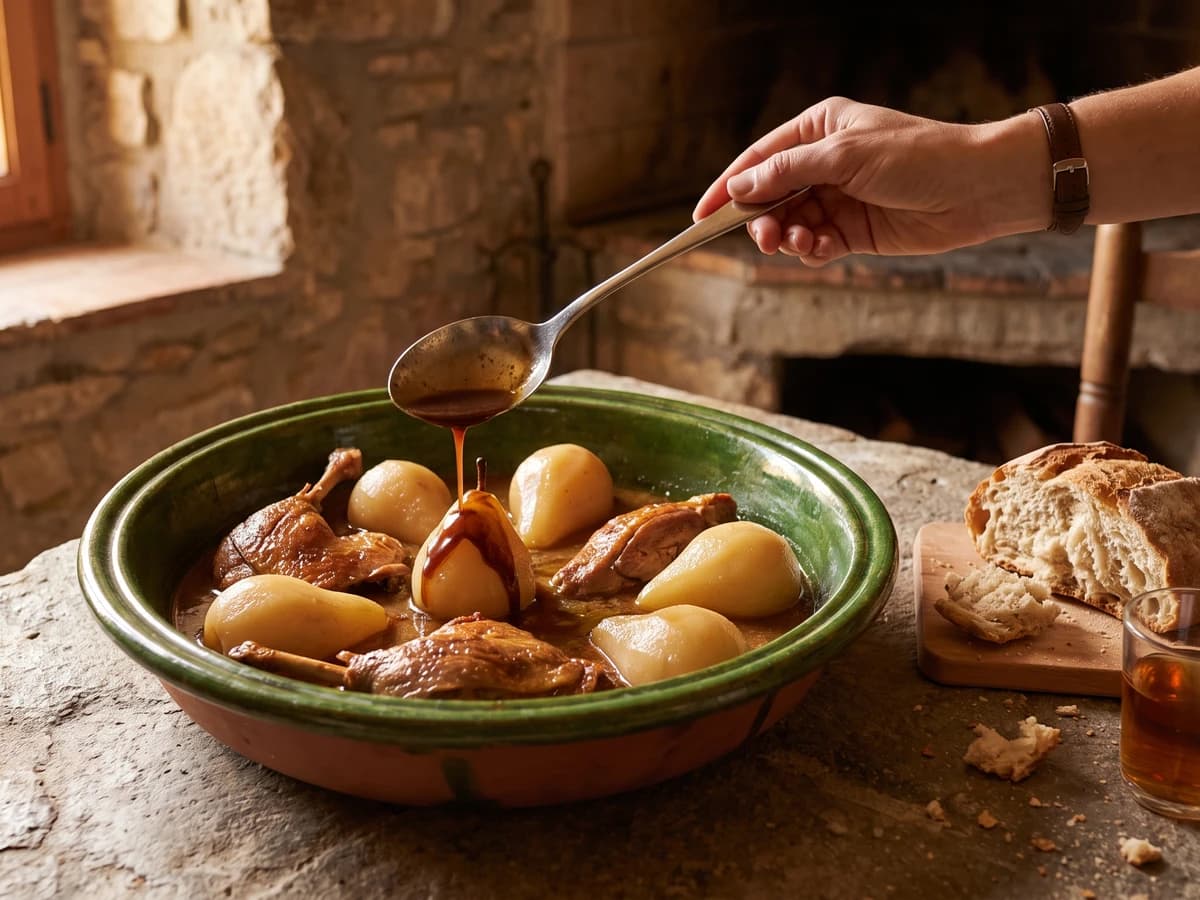
Ànec amb peres is Catalan celebration cooking: duck braised in a dark sofregit, firm autumn pears added near the end, and an almond-garlic picada that turns the juices into a close, glossy sauce.