Chef Isabel
Abanico Ibérico a la Plancha
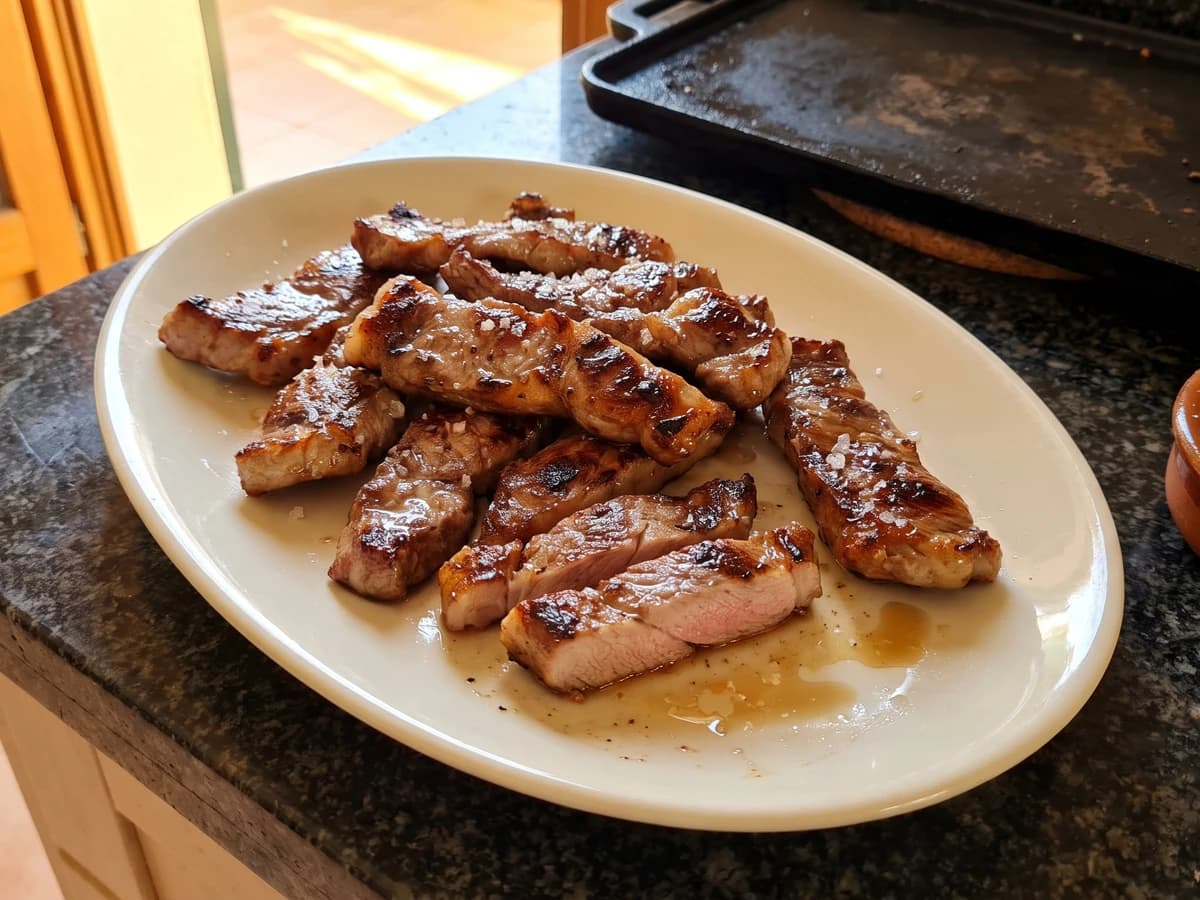
Extremadura's dehesa gives us this fan-shaped, marbled rib cut: salt it at the last moment, lay it on a fierce plancha, and count in seconds so the centre stays juicy.
A cooking platform built around craft, culture, and the stories behind what we eat.
Created by
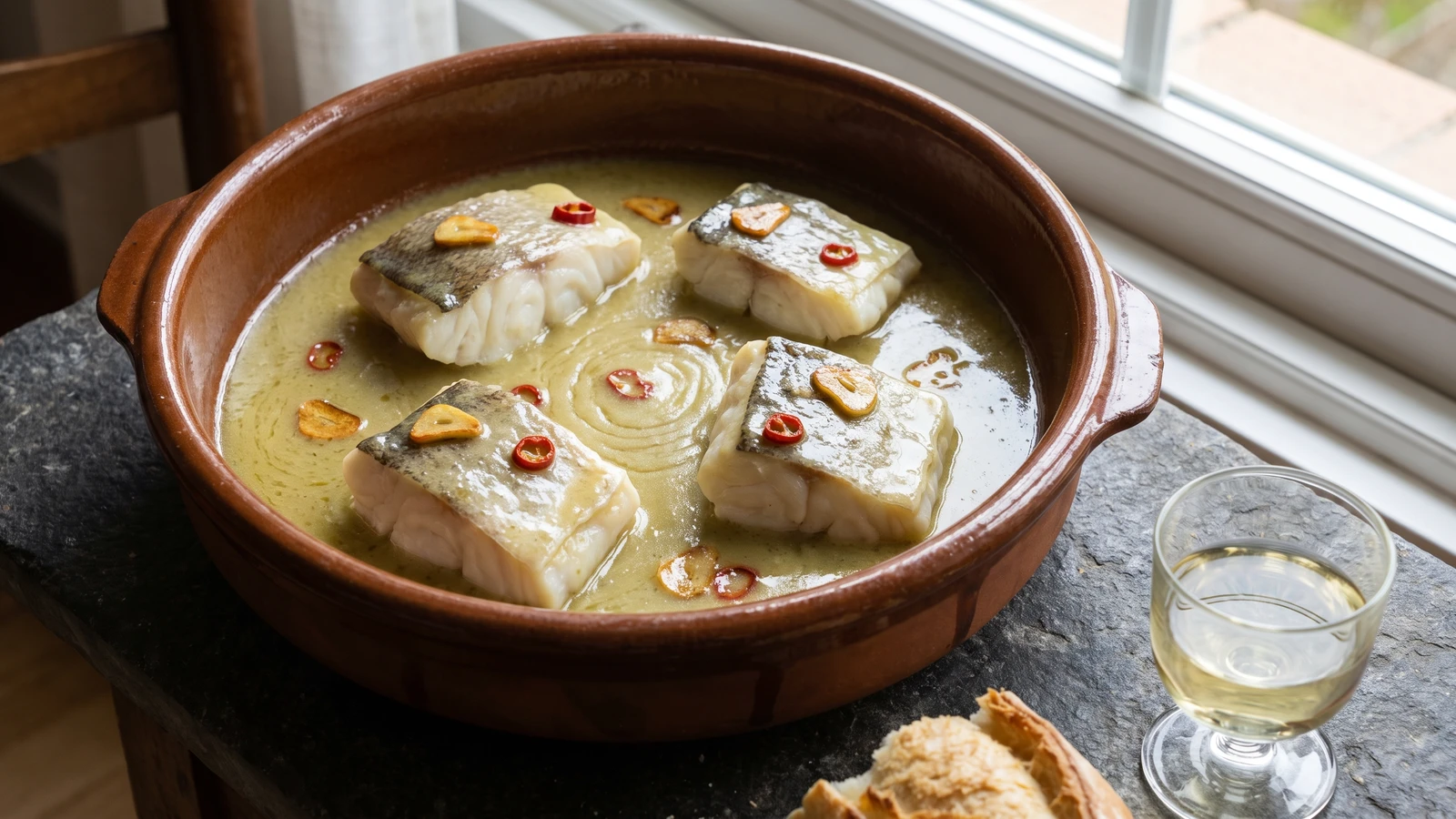
The Basque Country's four-ingredient marvel: salt cod, olive oil, garlic, and guindilla, moved gently off the heat until the fish's own gelatin turns the oil into a pale, trembling sauce.
Bacalao al pil-pil belongs to the Basque Country, especially Bizkaia. It is salt cod, olive oil, garlic, and guindilla, nothing hiding behind them. No onion, tomato, or choricero pepper goes into this sauce. Those belong to bacalao a la vizcaína, its red-sauced neighbour. Pil-pil is pale, glossy, and made from the cod itself.
The method that decides it is temperature. The skin and flesh release gelatin while the cod cooks gently in oil. Let that oil cool, then move the cazuela off the heat in small, steady circles while you add the oil back little by little. The gelatin binds it into a sauce. Try to do this while the oil is fiercely hot and it stays greasy, however bravely you shake the pan. I keep the oil between 55 and 60°C while it binds. Pésalo, no lo adivines, and watch the thermometer rather than trusting a lively bubble.
Far from the Basque Country, look for the same fish under the names bacalhau, baccalà, or morue salée. Those are salt cod, not lesser substitutes. Good pre-desalted salt cod is also perfectly sound and saves two days. If fresh cod is all you have, I give you a short cure in the tips, but the flavour will be milder and the sauce a little looser. Keep the skin, keep the heat gentle, and keep the pan moving. Siempre sale, si lo sigues.
Bacalao al pil-pil belongs to Bizkaia and the cooking of Bilbao, where preserved cod became part of the household larder through Basque fishing and Atlantic trade. Salt allowed the North Atlantic catch to travel, while its skin supplied the gelatin needed to bind a rich sauce without egg or flour. The name is traditionally taken from the soft pil-pil sound made as the cod juices and oil move together in the cazuela, the wide earthenware pan.
Quantity
800g before soaking
cut into 4 equal pieces and desalted for 48 hours
Quantity
1kg
skin-on, cut into 4 equal pieces
Quantity
400ml
Quantity
6 cloves (about 30g)
thinly sliced
Quantity
2 (about 1g)
cut into rings
Quantity
about 18 litres
divided among 6 soaking fills
| Ingredient | Quantity |
|---|---|
| thick, skin-on salt cod loincut into 4 equal pieces and desalted for 48 hours | 800g before soaking |
| refrigerated pre-desalted salt cod (optional)skin-on, cut into 4 equal pieces | 1kg |
| mild, fruity extra virgin olive oil | 400ml |
| garlicthinly sliced | 6 cloves (about 30g) |
| dried guindillas de Cayenacut into rings | 2 (about 1g) |
| cold water for desaltingdivided among 6 soaking fills | about 18 litres |
Put the salt cod skin-side up in a nonreactive container and cover it by at least 5cm with about 3 litres of cold water. Refrigerate for 48 hours, changing the water every 8 hours for 6 fills in all. Keep it cold throughout. After 40 hours, cut a tiny shaving from the thickest piece, poach it for 30 seconds, and taste it. It should be properly seasoned but not sharply salty. Give it the final 8 hours if it still bites.
Drain the cod, pull out any pin bones with tweezers, and pat every surface thoroughly dry. Set the pieces uncovered in the refrigerator for 20 minutes, then leave them at room temperature for 10 minutes while you prepare the oil. Water clinging to the fish makes the oil spit and weakens the emulsion.
Put the olive oil and sliced garlic in a wide 26 to 28cm cazuela or heavy frying pan while both are cold. Warm them over medium-low heat for 6 to 8 minutes, until the garlic is evenly pale gold. Lift it out before it turns brown. Add the guindilla rings for 20 seconds, then remove those as well and reserve both for serving.
Let the oil fall to about 80°C. Lay in the cod flesh-side down and cook for 4 minutes. Turn it carefully so the skin faces down, then cook for another 6 to 8 minutes. Hold the oil between 75 and 85°C, with only a faint movement around the fish and no hard frying. The cod is ready when white beads of gelatin gather near the skin, the flesh separates into moist flakes under light pressure, and the center reaches 63°C.
Lift the cod onto a warm plate without scraping away the gelatin, and collect any milky liquid it releases. Take the pan off the heat and let the oil cool to 55 to 60°C. Pour most of the clear oil into a heatproof jug, leaving about 60ml in the pan with all the sticky white gelatin. Add 1 tablespoon of the milky cod liquid. Move the pan in tight, steady circles until the liquid turns cloudy and begins to thicken.
Keep circling the pan off the heat and add the reserved oil about 30ml at a time. Wait until each addition disappears into the sauce before adding the next. After 6 to 10 minutes it should be pale yellow, glossy, and thick enough to coat the back of a spoon. If oil gathers around the edge, stop adding and keep moving until it binds. If the pan drops below 50°C, set it over the lowest heat for 5 seconds, then take it off again.
Return the cod to the sauce skin-side up. Set the pan over the lowest heat for 1 to 2 minutes, rocking it gently and spooning pil-pil over the fish. Do not let the sauce boil or it may separate and the cod will toughen. Finish with the reserved golden garlic and guindilla. Serve immediately from the cazuela, with bread for the sauce. Taste before even considering salt; bacalao normally brings enough of its own.
1 serving (about 325g)
Culinary guides, cultural storytelling, and the editorial depth that makes cooking meaningful.
Discover Culinary ExplorerChef Isabel
Extremadura's dehesa gives us this fan-shaped, marbled rib cut: salt it at the last moment, lay it on a fierce plancha, and count in seconds so the centre stays juicy.

Chef Isabel
Aletría Murciana is Murcia's humble noodle guiso: fine fideos, pork ribs, potato, saffron, and a dark sweet sofrito. Get that base right and the pot knows where it's going.

Chef Isabel
Andrajos are Andalucía's dough-rag stew from Jaén and Granada: a slow rabbit guiso thickened with torn sheets of flour dough, rolled thin so they cook tender instead of gummy.
Chef Isabel
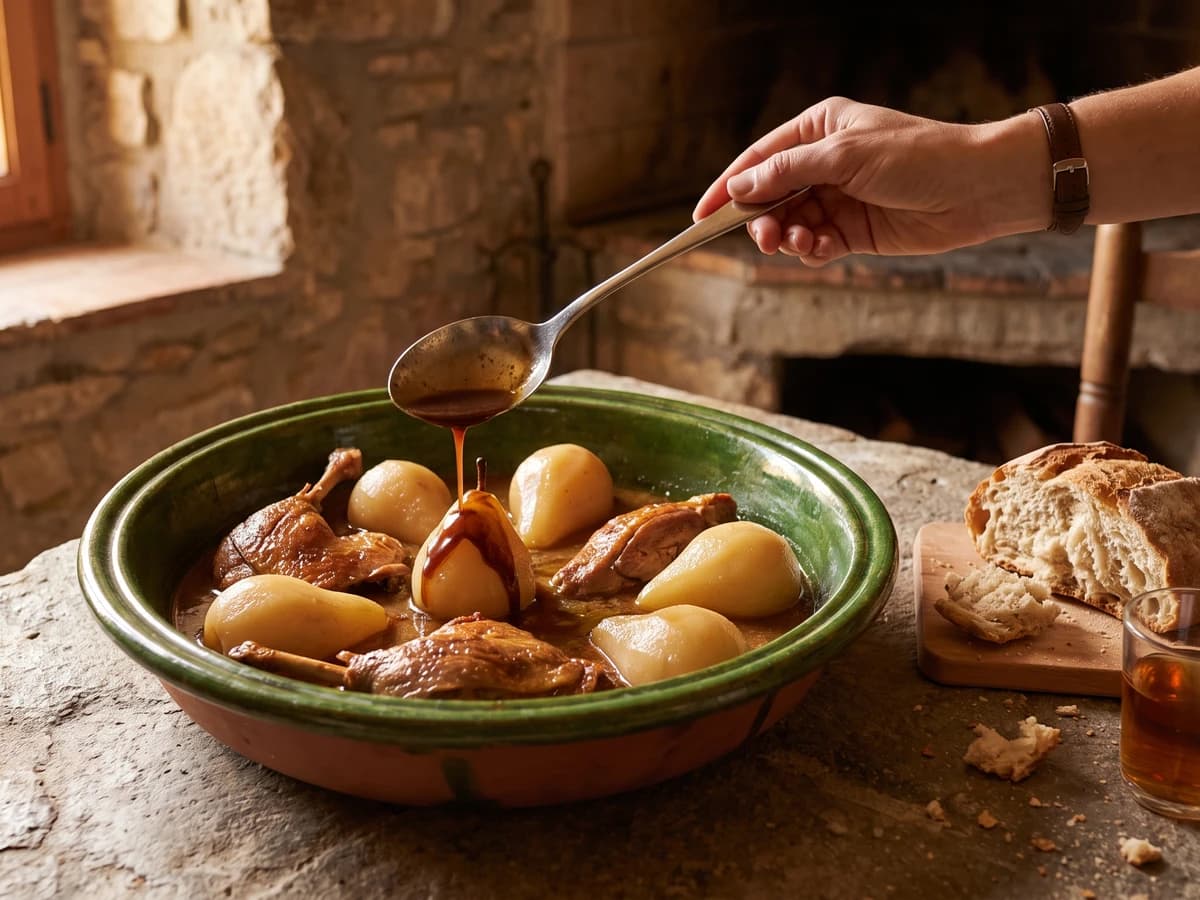
Ànec amb peres is Catalan celebration cooking: duck braised in a dark sofregit, firm autumn pears added near the end, and an almond-garlic picada that turns the juices into a close, glossy sauce.