Chef Isabel
Abanico Ibérico a la Plancha
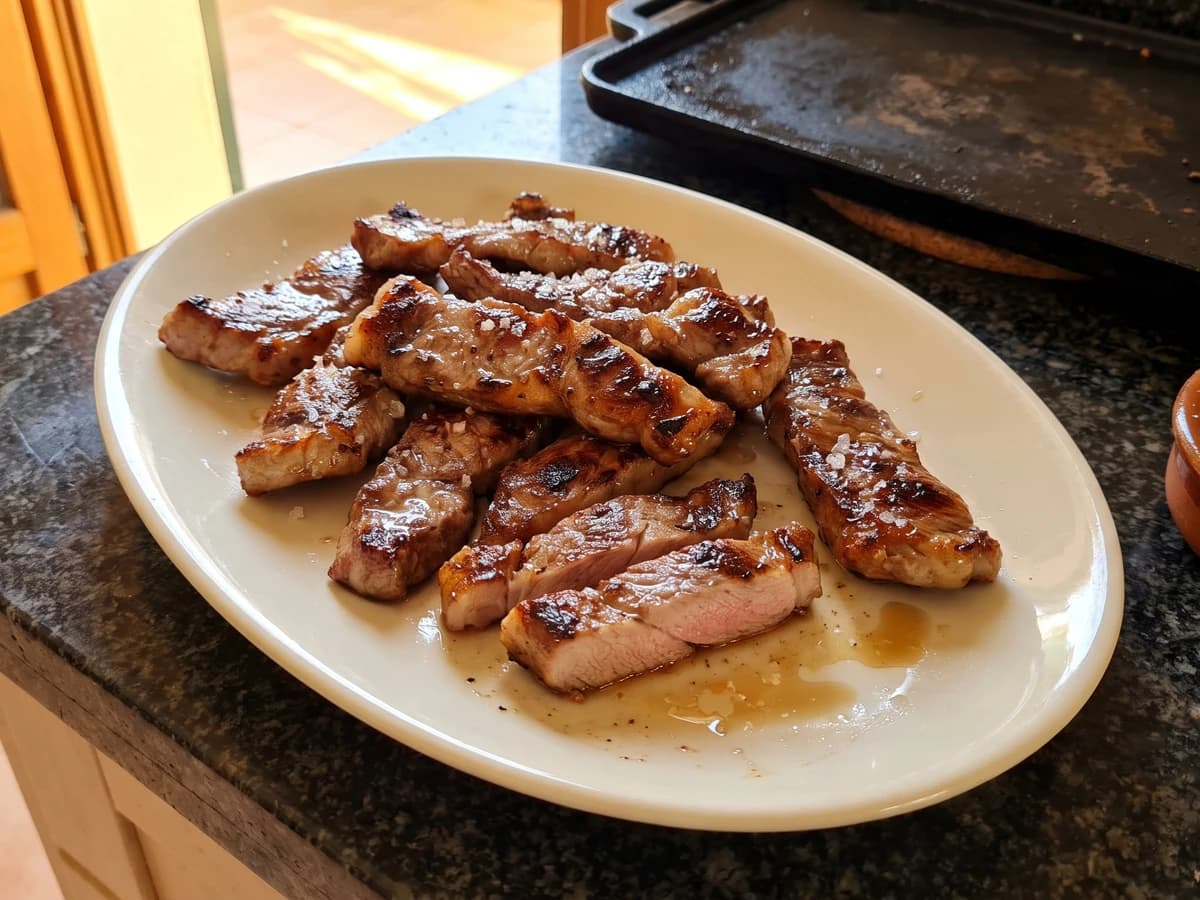
Extremadura's dehesa gives us this fan-shaped, marbled rib cut: salt it at the last moment, lay it on a fierce plancha, and count in seconds so the centre stays juicy.
A cooking platform built around craft, culture, and the stories behind what we eat.
Created by
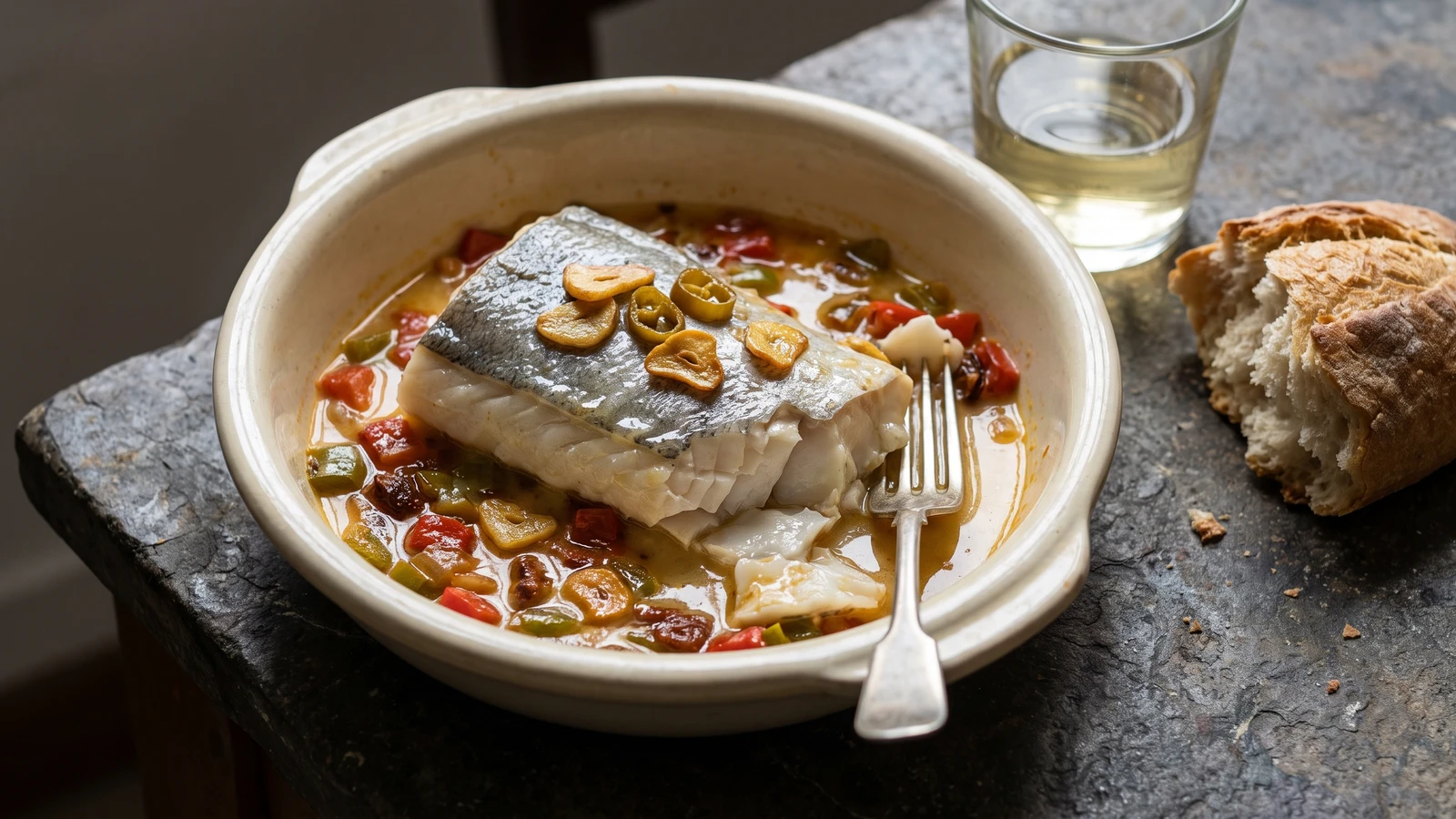
Bilbao's cod marries a silky pil-pil with a dark, sweet fritada of peppers, onion and tomato. Make the emulsion first, then fold in the vegetables without letting the sauce boil.
Bacalao al Club Ranero belongs to Bilbao, in Bizkaia: thick salt cod in pil-pil, the warm emulsion of cod gelatin and olive oil, finished with a fritada of onion, green and red pepper, tomato, and choricero pepper. That vegetable mixture makes it Club Ranero rather than plain bacalao al pil-pil. The pale sauce must remain underneath it all, silky and distinct, not swallowed by tomato.
The pil-pil decides whether the dish works. Cook the cod gently enough for its gelatin to pass into the oil, lift out the fish, then work that oil back into the milky juices little by little. Keep it warm, never hot. Too much heat breaks the emulsion, and no amount of furious stirring improves matters. I make the fritada first and let it cool while the cod cooks, so it can't undo the sauce when they meet.
If you're far from Bizkaia, Portuguese bacalhau or North Atlantic salt cod sold in a box is the same preserved fish under another market name. Buy thick loin pieces with their skin, because the skin supplies the gelatin. Jarred choricero pulp is entirely proper; if you can't find it, use dried ñoras. They are sweeter and a little less earthy, but they keep the dish in the right kitchen.
Fold the warm vegetables through only after the pil-pil has formed, then return the cod and warm everything without boiling. The Margin beside this recipe says only, "templado," warm. Siempre sale, si lo sigues, it turns out if you follow it.
Bacalao al Club Ranero belongs to Bilbao, where maritime trade made Atlantic salt cod a cornerstone of the Biscayan larder and a natural dish for meatless Lenten tables. Tradition credits its creation for the Club Ranero, a society of players of the coin-tossing game rana who met at the Txakoli de Tablas, to cook Alejandro Caverivière. He joined a pepper, onion, tomato, and choricero fritada to bacalao al pil-pil; unlike bacalao a la vizcaína, Club Ranero keeps the cod-gelatin emulsion as its foundation.
Quantity
800g
weighed after desalting and cut into 4 thick loin portions
Quantity
350ml
60ml for the fritada and 290ml for the cod
Quantity
4 cloves (about 20g)
thinly sliced
Quantity
1
cut into rings
Quantity
3
stemmed and seeded
Quantity
30g
Quantity
200g
cut into 5mm dice
Quantity
120g
seeded and cut into 5mm dice
Quantity
120g
seeded and cut into 5mm dice
Quantity
300g
halved and grated, skins discarded
Quantity
1g
use only for the fritada
| Ingredient | Quantity |
|---|---|
| skin-on salt codweighed after desalting and cut into 4 thick loin portions | 800g |
| mild extra virgin olive oil60ml for the fritada and 290ml for the cod | 350ml |
| garlicthinly sliced | 4 cloves (about 20g) |
| small dried guindillacut into rings | 1 |
| dried choricero peppersstemmed and seeded | 3 |
| jarred choricero pepper pulp (optional) | 30g |
| onioncut into 5mm dice | 200g |
| green frying pepperseeded and cut into 5mm dice | 120g |
| red bell pepperseeded and cut into 5mm dice | 120g |
| ripe plum tomatoeshalved and grated, skins discarded | 300g |
| fine sea saltuse only for the fritada | 1g |
Cover the stemmed and seeded choricero peppers with just-boiled water and leave them for 30 minutes. Drain, open them flat, and scrape the soft flesh from the skins with the back of a knife. You need about 30g of pulp. If you're using jarred choricero pulp, weigh it and skip the soaking.
Heat 60ml of the olive oil in a wide frying pan over low heat. Add the onion, both peppers, and 1g salt. Cook for 25 to 30 minutes, stirring every few minutes, until the onion is deep gold and the peppers are completely soft and sweet. Add the grated tomato and cook for another 12 to 15 minutes, until no watery juice runs across the pan when you draw a spoon through it. Stir in the choricero pulp for 2 minutes, then take the fritada off the heat and let it cool until merely warm.
Dry the desalinated cod very well with kitchen paper. Pour the remaining 290ml olive oil into a wide, heavy cazuela or frying pan and add the sliced garlic and guindilla. Warm over low heat for 4 to 6 minutes, until the garlic turns pale gold. Lift out the garlic and guindilla and reserve them. Let the oil cool to about 75°C.
Lay the cod in the warm oil with the skin facing up. Keep the oil between 70°C and 80°C, with only small bubbles gathering around the fish. Cook for 4 minutes, turn each piece carefully, and cook skin-side down for another 4 to 6 minutes, depending on thickness. The flesh should separate into broad, moist flakes and reach 60°C to 63°C at the centre. Transfer the cod to a warm plate without discarding any liquid it releases.
Pour the oil from the cazuela into a heatproof jug and leave it undisturbed for 2 minutes. The pale, gelatin-rich cod juices will settle below the clear oil. Return those juices, together with everything collected on the cod plate, to the cazuela. Keep the oil in the jug warm, not hot.
Set the cazuela over the lowest heat just long enough to warm the cod juices to about 50°C, then remove it from the heat. Move a small fine-mesh strainer in tight circles through the liquid while adding the reserved oil one tablespoon at a time. Once the mixture turns pale and creamy, add the oil in a thin, steady thread. Stop now and then to make sure it has fully disappeared into the sauce. Keep the pil-pil below 60°C until it is glossy and thick enough to coat a spoon.
Add the warm fritada to the finished pil-pil in three additions, folding gently after each one. The sauce should become mottled gold and brick red, with distinct pieces of pepper and onion still visible. Taste before adding anything. Salt cod usually brings all the seasoning the dish needs.
Return the cod to the cazuela skin-side down and spoon the Club Ranero sauce over each piece. Warm over the lowest heat for 3 to 4 minutes, moving the pan gently but never allowing the sauce to boil. Finish with the reserved golden garlic and guindilla rings. Serve at once, with bread for the sauce. Tal como se hace allí.
1 serving (about 400g)
Culinary guides, cultural storytelling, and the editorial depth that makes cooking meaningful.
Discover Culinary ExplorerChef Isabel
Extremadura's dehesa gives us this fan-shaped, marbled rib cut: salt it at the last moment, lay it on a fierce plancha, and count in seconds so the centre stays juicy.

Chef Isabel
Aletría Murciana is Murcia's humble noodle guiso: fine fideos, pork ribs, potato, saffron, and a dark sweet sofrito. Get that base right and the pot knows where it's going.

Chef Isabel
Andrajos are Andalucía's dough-rag stew from Jaén and Granada: a slow rabbit guiso thickened with torn sheets of flour dough, rolled thin so they cook tender instead of gummy.
Chef Isabel
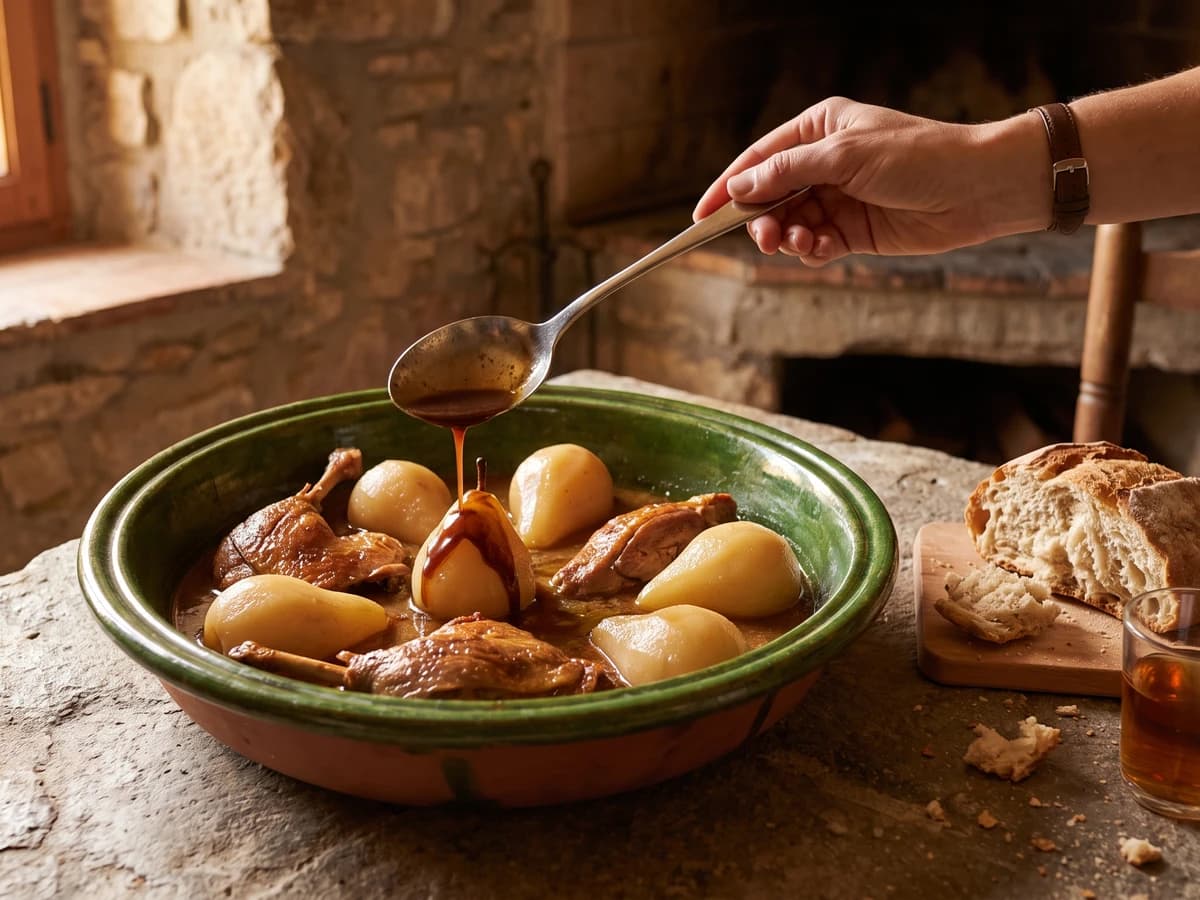
Ànec amb peres is Catalan celebration cooking: duck braised in a dark sofregit, firm autumn pears added near the end, and an almond-garlic picada that turns the juices into a close, glossy sauce.