Chef Isabel
Abanico Ibérico a la Plancha
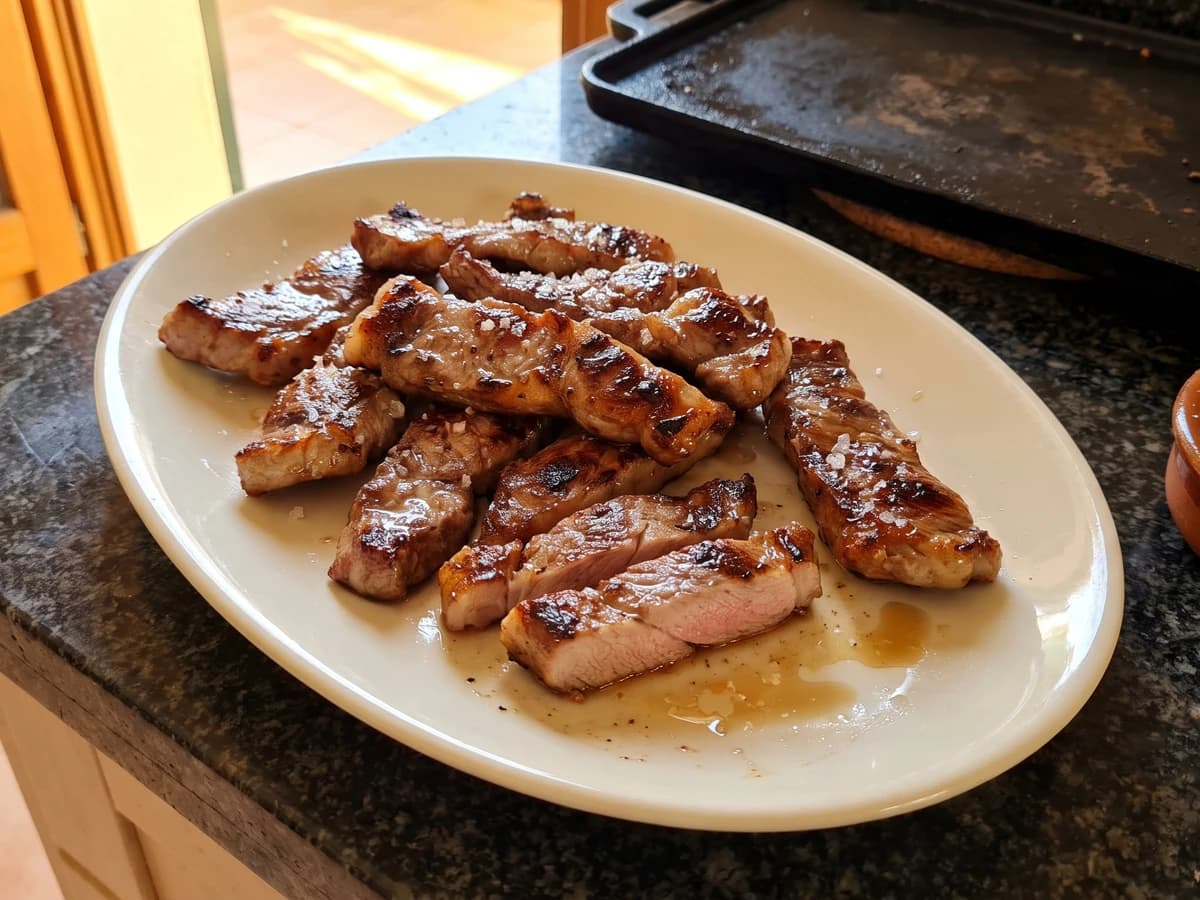
Extremadura's dehesa gives us this fan-shaped, marbled rib cut: salt it at the last moment, lay it on a fierce plancha, and count in seconds so the centre stays juicy.
A cooking platform built around craft, culture, and the stories behind what we eat.
Created by
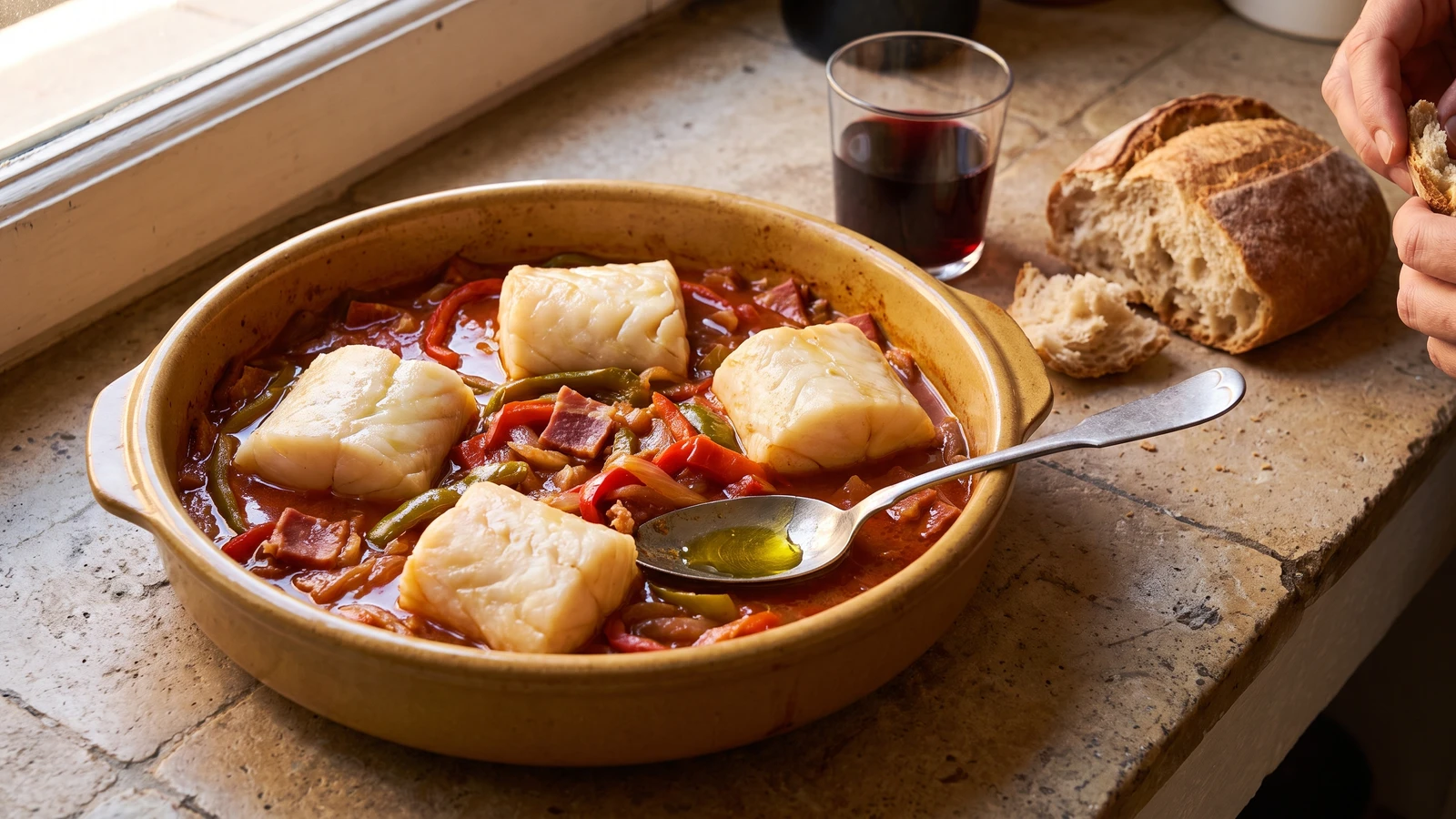
Aragón's bacalao al chilindrón pairs firm salt cod with a slow, brick-red sauce of peppers, tomato, onion and serrano ham. Cook the sauce until glossy before the fish goes in.
Bacalao al chilindrón is Aragonese: firm salt cod laid in a brick-red sauce of sweet pepper, tomato, onion and small pieces of serrano ham. The ham isn't decoration. It gives the sauce its cured depth and marks this as chilindrón, not merely cod with tomato. Nor is it bacalao a la vizcaína, whose foundation is dried choricero pepper and onion. Aragón has its own pot here.
The method that decides it is the sofrito, the slow-cooked onion base. Cook the onion and pepper gently until the onion is dark gold and the pepper has collapsed into sweetness, then reduce the tomato until a spoon drawn through the pan leaves a trench and oil beads around the edge. Only then does the cod go in. Put it in earlier and the fish dries while the sauce is still watery. Sauce first, fish last. That's the line in my Margin.
Frozen, ready-desalted bacalao is a sound choice if dry salt cod is difficult to find, and it changes very little. Fresh cod works at a pinch, but it stays softer and lacks the savory firmness that curing gives. No hace falta haber pisado España. Desalt carefully, reduce the sauce properly and keep the final simmer gentle. Siempre sale, si lo sigues.
Chilindrón belongs closely to Aragón and the irrigated huertas of the Ebro valley, where onions, peppers and tomatoes formed a red sauce used for chicken, lamb and salt cod, often deepened with ham from the household larder. Navarra and La Rioja cook related sauces, but chilindrón remains one of the names most firmly attached to the Aragonese pot. Salt cod became an essential inland fish because curing carried it far from the coast and supplied vigilia meals, though this ham-enriched version belongs at the Easter table rather than on a strict day of meat abstinence.
Quantity
700g
skin on, divided into 4 pieces about 3cm thick and desalted for 36 hours
Quantity
40g
for a very light coating
Quantity
100ml
Quantity
300g peeled weight
thinly sliced
Quantity
400g trimmed weight
cut into 8mm strips
Quantity
12g
thinly sliced
Quantity
100g
cut into 5mm dice
Quantity
100ml
Quantity
700g
halved and grated to yield about 600g pulp; or use 600g canned whole peeled tomatoes, lightly drained and crushed
Quantity
1
Quantity
up to 2g
use only if needed after the cod has cooked
| Ingredient | Quantity |
|---|---|
| dry-salted cod loinskin on, divided into 4 pieces about 3cm thick and desalted for 36 hours | 700g |
| plain flourfor a very light coating | 40g |
| extra virgin olive oil | 100ml |
| yellow onionsthinly sliced | 300g peeled weight |
| red bell pepperscut into 8mm strips | 400g trimmed weight |
| garlicthinly sliced | 12g |
| serrano hamcut into 5mm dice | 100g |
| dry white wine | 100ml |
| ripe plum tomatoeshalved and grated to yield about 600g pulp; or use 600g canned whole peeled tomatoes, lightly drained and crushed | 700g |
| bay leaf | 1 |
| fine salt (optional)use only if needed after the cod has cooked | up to 2g |
Rinse the salt from the cod and place the pieces skin-side up in a nonreactive container. Cover with at least 3 litres of cold water and refrigerate for 36 hours, changing the water after 8, 16, 24 and 32 hours. Keep it cold throughout. To check the seasoning, cut off a small shaving, simmer it in plain water for 30 seconds and taste it. If it remains sharply salty, soak the cod for another 4 to 8 hours.
Drain the cod and pat every surface thoroughly dry. Run your fingers over the flesh and remove any easy-to-find pin bones with tweezers. Put the flour on a plate, coat the cod very lightly and shake off every loose patch. Don't add salt.
Heat the olive oil in a wide, heavy pan over medium heat. When a pinch of flour sizzles immediately, add the cod skin-side down without crowding it. Cook for 2 minutes, turn carefully and cook the flesh side for 1 minute. It should take on only a pale golden coating and remain raw inside. Lift it onto a plate. Leave about 60ml oil in the pan, spooning out any flour fragments that have turned dark.
Lower the heat and add the onions and red peppers. Cook gently for 20 to 25 minutes, stirring every few minutes, until the onions are dark gold and jammy and the pepper strips are completely soft. They should sweeten in the oil, not scorch at the edges. Add the garlic and cook for 1 minute.
Stir in the diced serrano ham and cook for 2 minutes, just until its fat turns glossy. Pour in the wine and scrape the bottom of the pan with a wooden spoon. Let it bubble steadily for 3 to 4 minutes, until reduced by about half and the raw smell of wine has gone.
Add the grated tomato pulp and bay leaf. Cook uncovered over medium-low heat for 18 to 22 minutes, stirring often near the end. The chilindrón is ready when it has turned deep brick red, a spoon drawn across the pan leaves a clear trench for a moment and small beads of oil show around the edge. Pésalo, no lo adivines applies to ingredients; here, trust what the pan is showing you.
Nestle the cod into the thick sauce skin-side down and spoon a little chilindrón over each piece. Hold the pan at the gentlest simmer for 6 to 8 minutes, depending on thickness. Shake the pan once or twice instead of stirring around the fish. The cod is done when it is opaque and separates into broad, moist flakes under light pressure, or reaches 63°C at the thickest point.
Take the pan off the heat and let it rest for 5 minutes. Remove the bay leaf, then taste the sauce only now, after the cod has released its final salt. Add up to 2g salt if it truly needs it. Serve one cod portion per person with plenty of pepper and ham sauce, and bread for the oil-rich juices.
1 serving (about 520g)
Culinary guides, cultural storytelling, and the editorial depth that makes cooking meaningful.
Discover Culinary ExplorerChef Isabel
Extremadura's dehesa gives us this fan-shaped, marbled rib cut: salt it at the last moment, lay it on a fierce plancha, and count in seconds so the centre stays juicy.

Chef Isabel
Aletría Murciana is Murcia's humble noodle guiso: fine fideos, pork ribs, potato, saffron, and a dark sweet sofrito. Get that base right and the pot knows where it's going.

Chef Isabel
Andrajos are Andalucía's dough-rag stew from Jaén and Granada: a slow rabbit guiso thickened with torn sheets of flour dough, rolled thin so they cook tender instead of gummy.
Chef Isabel
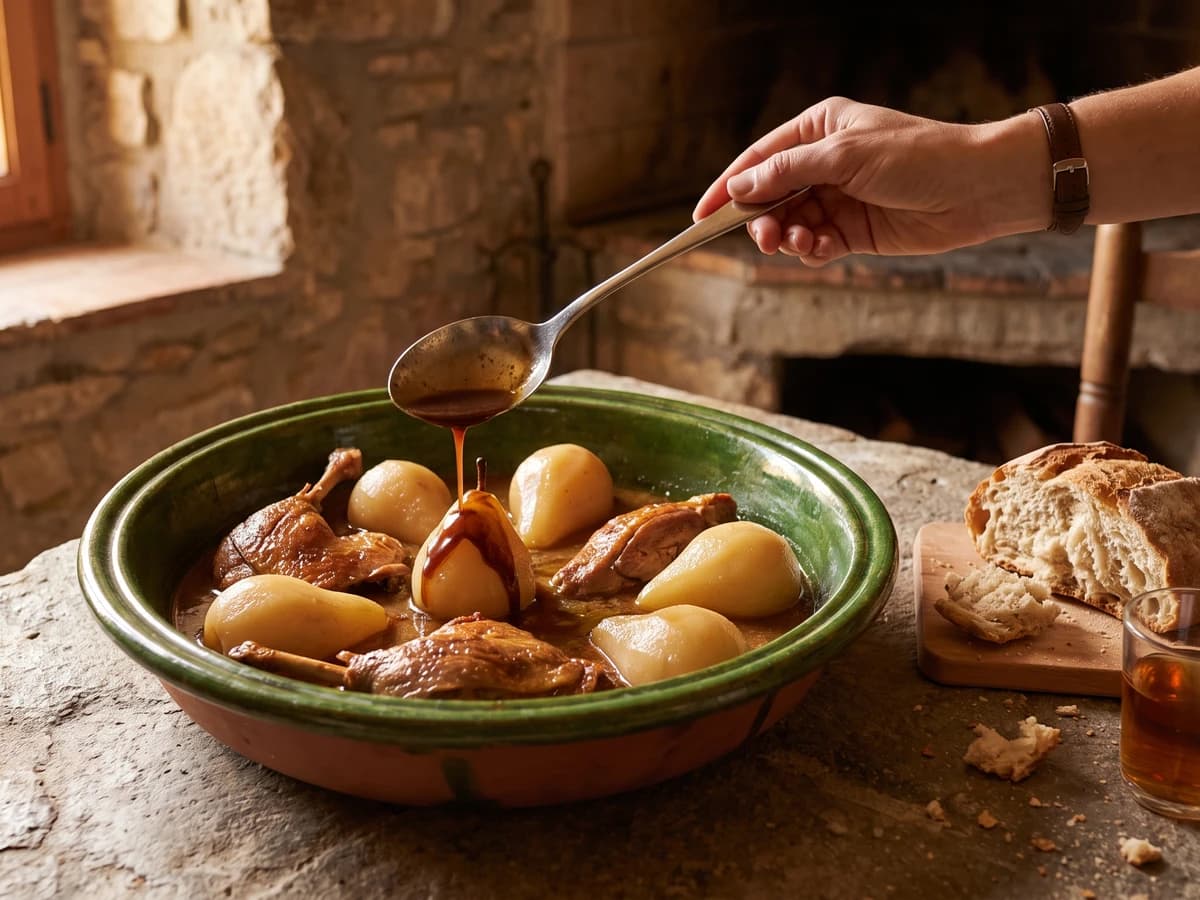
Ànec amb peres is Catalan celebration cooking: duck braised in a dark sofregit, firm autumn pears added near the end, and an almond-garlic picada that turns the juices into a close, glossy sauce.