Chef Isabel
Abanico Ibérico a la Plancha
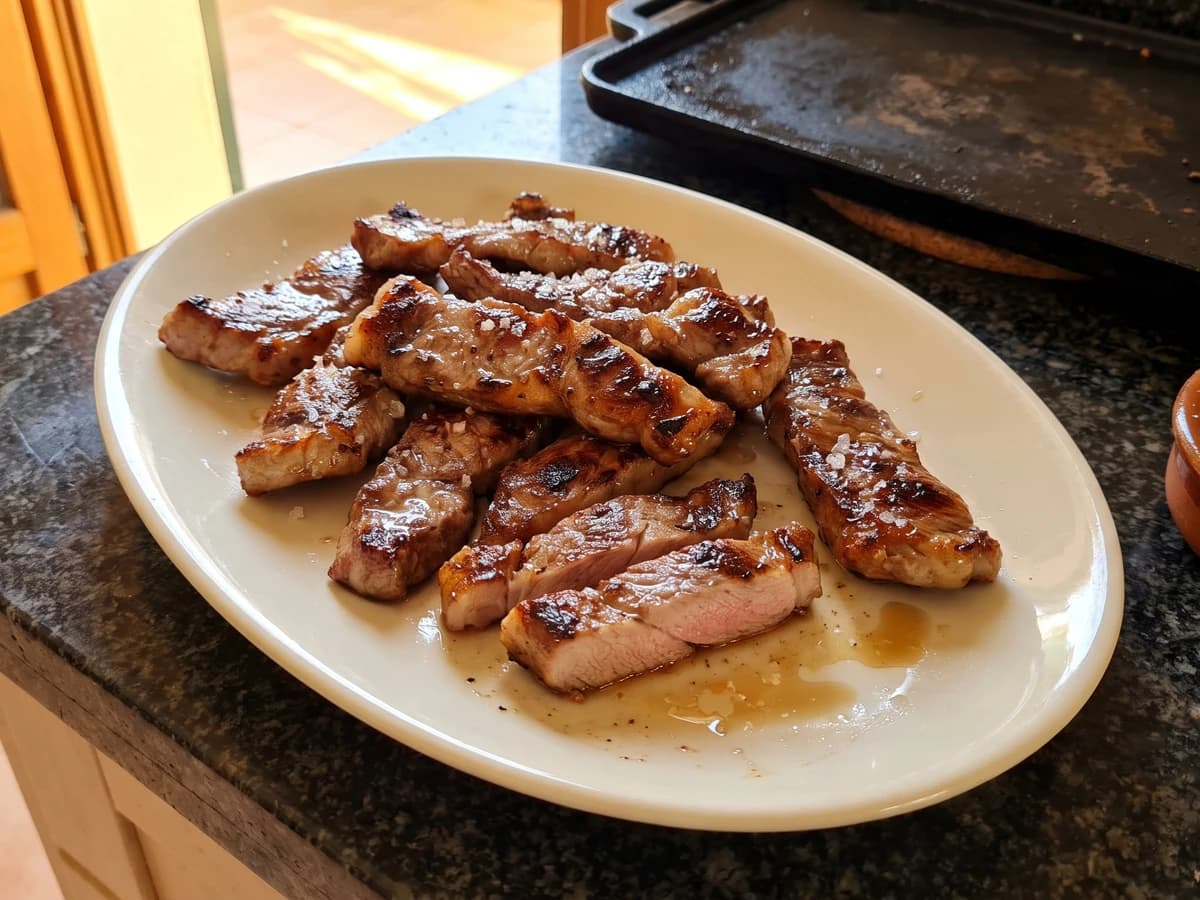
Extremadura's dehesa gives us this fan-shaped, marbled rib cut: salt it at the last moment, lay it on a fierce plancha, and count in seconds so the centre stays juicy.
A cooking platform built around craft, culture, and the stories behind what we eat.
Created by
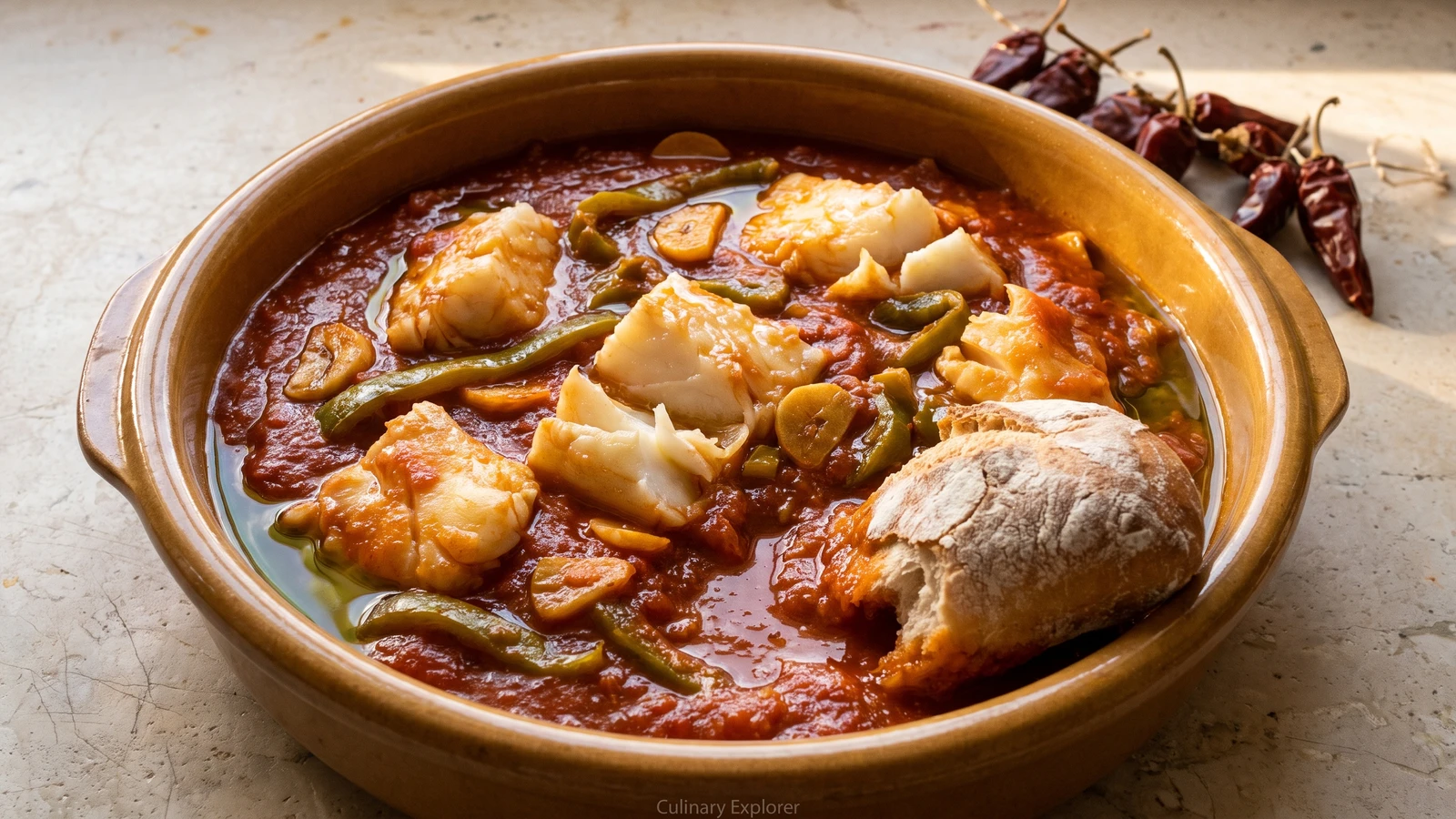
Navarra’s muleteer salt cod is hand-torn, never chopped, then folded through a slow tomato and choricero pepper sofrito cooked nearly dry, so every juicy flake carries the sauce.
Bacalao ajoarriero Navarro is Navarra’s red, garlicky salt cod, the arrieros’ preserved fish brought to the pan with tomato and dried choricero pepper. Here the cod stays in irregular flakes and the sauce cooks down around it. It isn’t the potato-bound mash that carries the same name farther south.
The point that decides the dish is dryness. I cook the onion and green pepper slowly, reduce the tomato until the oil returns around the edges, then add cod that has been patted properly dry. Wet cod turns the sauce soupy. Hard cooking tightens the fish. Tear it by hand, fold it through the reduced sofrito, and stop as soon as there’s no loose liquid in the pan. The margin beside mine says simply, cod last.
If dry salt cod is difficult to find, use refrigerated desalted salt cod and skip the soaking; it tastes a little milder, but the dish remains itself. Jarred choricero pepper pulp is also a proper pantry shortcut. If you can find only dried ñoras, use four and expect a sweeter, slightly less deep pepper flavour. No hace falta haber pisado España. Reduce the sauce before the fish goes in, and siempre sale, si lo sigues.
Ajoarriero takes its name from the arrieros, the muleteers whose road food relied on salt cod, dried peppers, garlic, and oil because all survived long journeys without spoiling. Versions settled along the old trade routes through Navarra, Aragón, La Rioja, León, and Castilla, so the name describes a family of preparations rather than one fixed recipe. Navarra’s branch keeps the cod in visible flakes and binds it with reduced tomato and choricero pepper, unlike the potato-heavy ajoarriero or atascaburras made farther south.
Quantity
600g dry, or 750g desalted
dry cod cut into pieces no thicker than 3cm
Quantity
3 peppers, about 25g, or 45g pulp
Quantity
120ml
Quantity
6 cloves, about 24g
thinly sliced
Quantity
250g
finely diced
Quantity
150g
seeded and cut into 1cm pieces
Quantity
500g fresh, or 400g canned
fresh tomatoes grated and skins discarded, or canned tomatoes crushed
Quantity
1
Quantity
0 to 2g
use only after tasting
Quantity
240g
torn for serving
| Ingredient | Quantity |
|---|---|
| dry salted cod, or refrigerated desalted salt coddry cod cut into pieces no thicker than 3cm | 600g dry, or 750g desalted |
| dried choricero peppers, or jarred choricero pepper pulp | 3 peppers, about 25g, or 45g pulp |
| extra virgin olive oil | 120ml |
| garlicthinly sliced | 6 cloves, about 24g |
| yellow onionfinely diced | 250g |
| green Italian frying pepperseeded and cut into 1cm pieces | 150g |
| ripe tomatoes, or canned whole peeled tomatoesfresh tomatoes grated and skins discarded, or canned tomatoes crushed | 500g fresh, or 400g canned |
| small dried guindilla (optional) | 1 |
| fine salt (optional)use only after tasting | 0 to 2g |
| rustic bread (optional)torn for serving | 240g |
If using dry salt cod, place it skin side up in a non-reactive container and cover it by at least 5cm with cold water. Refrigerate for 24 hours, replacing the water after 8 and 16 hours. Keep it cold throughout. Thin pieces desalt faster than thick loins, which is why the 3cm limit matters.
Remove the stems and seeds from the dried choricero peppers. Cover them with warm water, weight them with a small plate, and leave for 30 minutes. Drain, open them flat, and scrape the soft red flesh from the skins with a teaspoon. You should have about 45g. Discard the tough skins. If using jarred pulp, measure 45g and move on.
Drain the cod and press it thoroughly dry between clean kitchen towels. Remove every bone and pull away the skin, then tear the flesh by hand into irregular flakes about 2 to 3cm wide. Don’t chop it. Hand-torn flakes keep their layers and catch the sauce without turning into mince.
Set a wide 28cm frying pan or shallow cazuela over medium-low heat. Add the olive oil, sliced garlic, and the guindilla if using. Cook for 2 to 3 minutes, moving the garlic often, until its edges are pale gold and the oil smells sweet. Remove the guindilla before it darkens.
Add the onion and green pepper and lower the heat. Cook for 20 to 25 minutes, stirring every few minutes, until the onion is deep gold and soft and the pepper has collapsed into it. Keep the heat patient. This slow sofrito, the softened vegetable base, supplies the sweetness; high heat only scorches the garlic and leaves the onion sharp.
Add the grated fresh tomato or crushed canned tomato. Raise the heat to medium and cook for 15 to 20 minutes, stirring more often near the end. It is ready when the mixture is thick, the oil beads around the edges, and a spoon drawn across the pan leaves a path that stays open for two seconds. Stir in the choricero pepper flesh and cook for another 3 minutes.
Add the dry cod flakes and fold them gently through the thick sauce. Cook over medium-low heat for 6 to 8 minutes, turning the mixture with a wooden spoon rather than stirring hard. The cod is ready when it is opaque, separates into moist layers, and any liquid it released has disappeared. Tilt the pan: there should be glossy oil at the edge, not a puddle of watery sauce.
Take the pan off the heat and rest the ajoarriero for 5 minutes. Taste before adding salt because properly desalted cod often supplies enough; if it needs help, add no more than 2g. Carry the cazuela straight to the table and serve with torn bread for gathering the pepper-stained oil.
1 serving (about 410g)
Culinary guides, cultural storytelling, and the editorial depth that makes cooking meaningful.
Discover Culinary ExplorerChef Isabel
Extremadura's dehesa gives us this fan-shaped, marbled rib cut: salt it at the last moment, lay it on a fierce plancha, and count in seconds so the centre stays juicy.

Chef Isabel
Aletría Murciana is Murcia's humble noodle guiso: fine fideos, pork ribs, potato, saffron, and a dark sweet sofrito. Get that base right and the pot knows where it's going.

Chef Isabel
Andrajos are Andalucía's dough-rag stew from Jaén and Granada: a slow rabbit guiso thickened with torn sheets of flour dough, rolled thin so they cook tender instead of gummy.
Chef Isabel
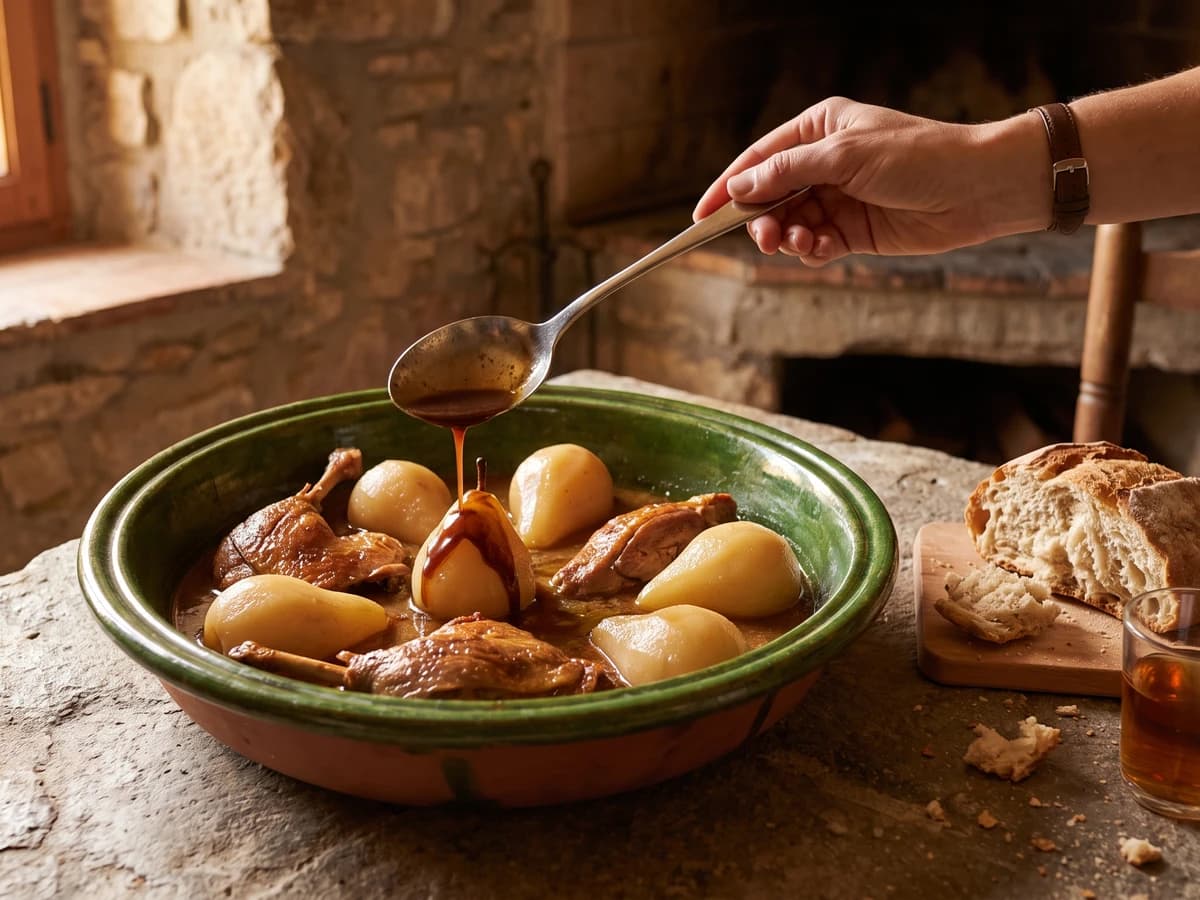
Ànec amb peres is Catalan celebration cooking: duck braised in a dark sofregit, firm autumn pears added near the end, and an almond-garlic picada that turns the juices into a close, glossy sauce.