Chef Isabel
Abanico Ibérico a la Plancha
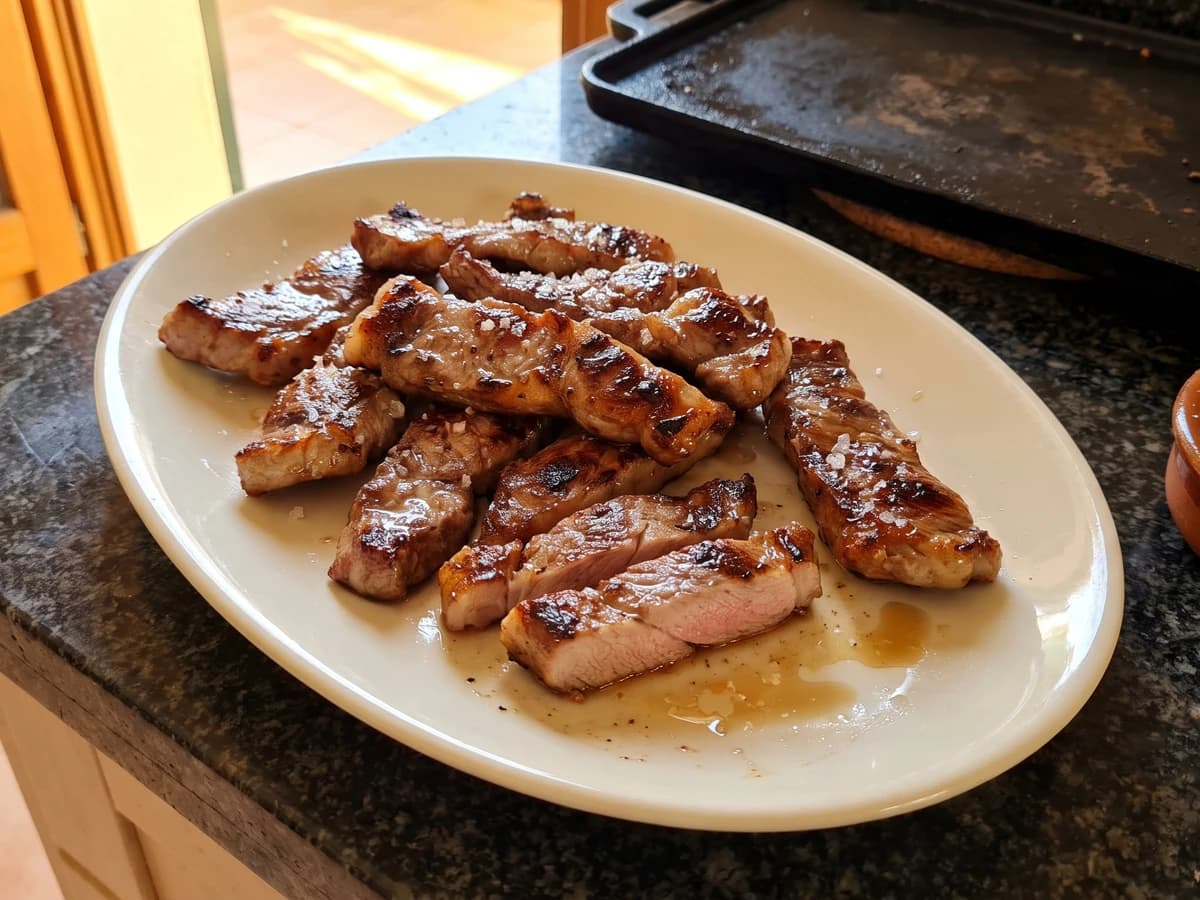
Extremadura's dehesa gives us this fan-shaped, marbled rib cut: salt it at the last moment, lay it on a fierce plancha, and count in seconds so the centre stays juicy.
A cooking platform built around craft, culture, and the stories behind what we eat.
Created by
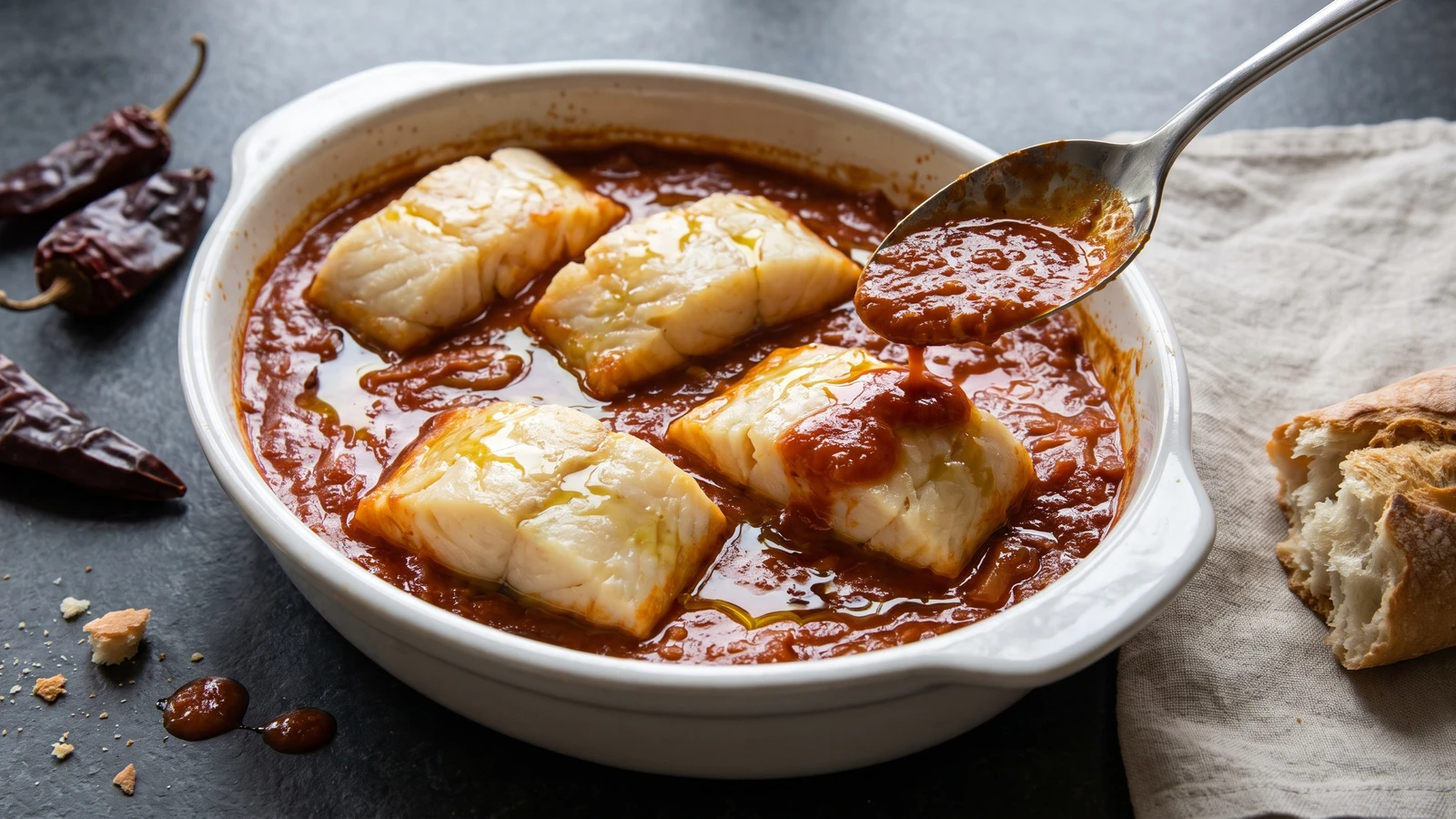
Biscay's salt cod rests in a brick-red sauce of choricero peppers and onions cooked down slowly, with no tomato to cover their sweetness and no hard boiling to dry the fish.
Bacalao a la Vizcaína belongs to Biscay, Bizkaia, in the Basque Country. Salt cod sits in a deep brick-red sauce made from dried choricero peppers and a great weight of onions cooked until they nearly melt. The old home style has no tomato. Its colour comes from the pepper and its sweetness from the onion, which is what makes this dish rather than cod served in tomato sauce.
The onion decides whether it works. I cook it low and slow until it is dark gold, jammy, and reduced by more than half, because hurried onion stays pale and sharp beneath the pepper. Once the sauce is milled smooth, the cod needs only a quiet poach. Let it boil and those broad flakes tighten into cotton. Keep the sauce at a bare tremble and leave the fish alone.
Far from Bizkaia, plain jarred carne de pimiento choricero is the easiest answer and it is the same ingredient, already scraped. If neither dried nor jarred choricero is available, use dried ñoras in the same weight; the sauce will be darker, nuttier, and a little less sweet, but it remains an honest household compromise. Don't reach for smoked paprika, which brings smoke the dish never asked for. The Margin beside mine says, "salt after the cod, never before." Siempre sale, si lo sigues, it turns out if you follow it.
Bacalao a la Vizcaína belongs to Bizkaia, where Bilbao's trade and Basque fisheries made durable salt cod a mainstay even far from the coast. Its sauce joined that preserved fish to choricero peppers, an American arrival dried after the local harvest for the winter larder. Old households differ over a little bread or a plain biscuit to bind the sauce, but its brick-red colour comes from choricero and its sweetness from onion, not tomato.
Quantity
800g
weighed before soaking, skin on, cut into 4 portions
Quantity
10 medium (about 70g dried) or 120g pulp
dried peppers stemmed, seeded, soaked, and scraped
Quantity
1kg peeled weight
thinly sliced
Quantity
4 cloves
peeled and lightly crushed
Quantity
150ml
Quantity
25g
crust removed and crumb torn
Quantity
300ml, plus up to 60ml water if needed
Quantity
2g
| Ingredient | Quantity |
|---|---|
| dry-salted cod loinweighed before soaking, skin on, cut into 4 portions | 800g |
| dried choricero peppers or plain jarred choricero pepper pulpdried peppers stemmed, seeded, soaked, and scraped | 10 medium (about 70g dried) or 120g pulp |
| mild red onionsthinly sliced | 1kg peeled weight |
| garlicpeeled and lightly crushed | 4 cloves |
| extra-virgin olive oil | 150ml |
| day-old rustic bread crumbcrust removed and crumb torn | 25g |
| unsalted fish stock or water | 300ml, plus up to 60ml water if needed |
| fine sea salt | 2g |
Rinse the loose salt from the cod and place it skin-side up in a deep non-reactive dish. Cover it with cold water by at least 5cm and refrigerate for 48 hours, changing the water every 8 hours. At 36 hours, cook a thin flake in simmering water for 30 seconds and taste it. A piece around 3cm thick may be ready; a thick loin closer to 4cm usually needs the full 48 hours. Drain and pat it thoroughly dry.
If using dried choriceros, split them open, remove the stems and seeds, and rinse away any clinging seeds. Cover them with just-boiled water, weigh them down with a small plate, and soak for 30 minutes, replacing the water once after 15 minutes. Lay each pepper skin-side down and scrape the softened red flesh away with the back of a teaspoon. You want about 120g of pulp. Discard the skins and soaking water, which can carry bitterness.
Warm the olive oil in a wide, heavy 28cm casserole over low heat. Add the onions, crushed garlic, and 2g salt. Cover and cook for 20 minutes, stirring twice, until the onions collapse and release their liquid. Uncover and continue cooking gently for 50 to 55 minutes, stirring every 8 minutes, until they are dark gold, jammy, and reduced by more than half without crisp edges. This slow cook is what gives the sauce its sweetness. Rush the onion and the sauce stays sharp.
Add the choricero pulp to the onions and cook gently for 5 minutes, stirring so it loses its raw edge without scorching. Add the torn bread, then pour in 300ml unsalted fish stock or water. Bring it to a quiet simmer and cook uncovered for 15 minutes. The bread should disappear and the sauce should turn a deep brick red.
Remove the garlic if you want a gentler finish, then pass the sauce through a food mill directly into a bowl. A blender works, but blend only until smooth and pass the sauce through a medium sieve. Return it to the same casserole. It should coat a spoon yet fall from it in a broad ribbon; add up to 60ml water if it sits like paste. Do not correct the salt yet. The cod still has something to say about that.
Bring the sauce to the barest simmer. Set the dried cod portions into it skin-side up, leaving a little space between them, and spoon sauce over the tops. Cover and cook over low heat for 8 to 12 minutes, depending on thickness. Do not let the sauce boil hard. The cod is ready when light pressure separates it into large moist flakes and the centre has turned pearly and opaque rather than dry and cottony.
Take the casserole off the heat and leave it covered for 5 minutes. Taste the sauce only now and add salt if it truly needs it. Bring the casserole to the table with the cod nestled in the sauce and plenty of bread for mopping. There is no garnish to distract from it. Tal como se hace allí, exactly as it is made there.
1 serving (about 550g)
Culinary guides, cultural storytelling, and the editorial depth that makes cooking meaningful.
Discover Culinary ExplorerChef Isabel
Extremadura's dehesa gives us this fan-shaped, marbled rib cut: salt it at the last moment, lay it on a fierce plancha, and count in seconds so the centre stays juicy.

Chef Isabel
Aletría Murciana is Murcia's humble noodle guiso: fine fideos, pork ribs, potato, saffron, and a dark sweet sofrito. Get that base right and the pot knows where it's going.

Chef Isabel
Andrajos are Andalucía's dough-rag stew from Jaén and Granada: a slow rabbit guiso thickened with torn sheets of flour dough, rolled thin so they cook tender instead of gummy.
Chef Isabel
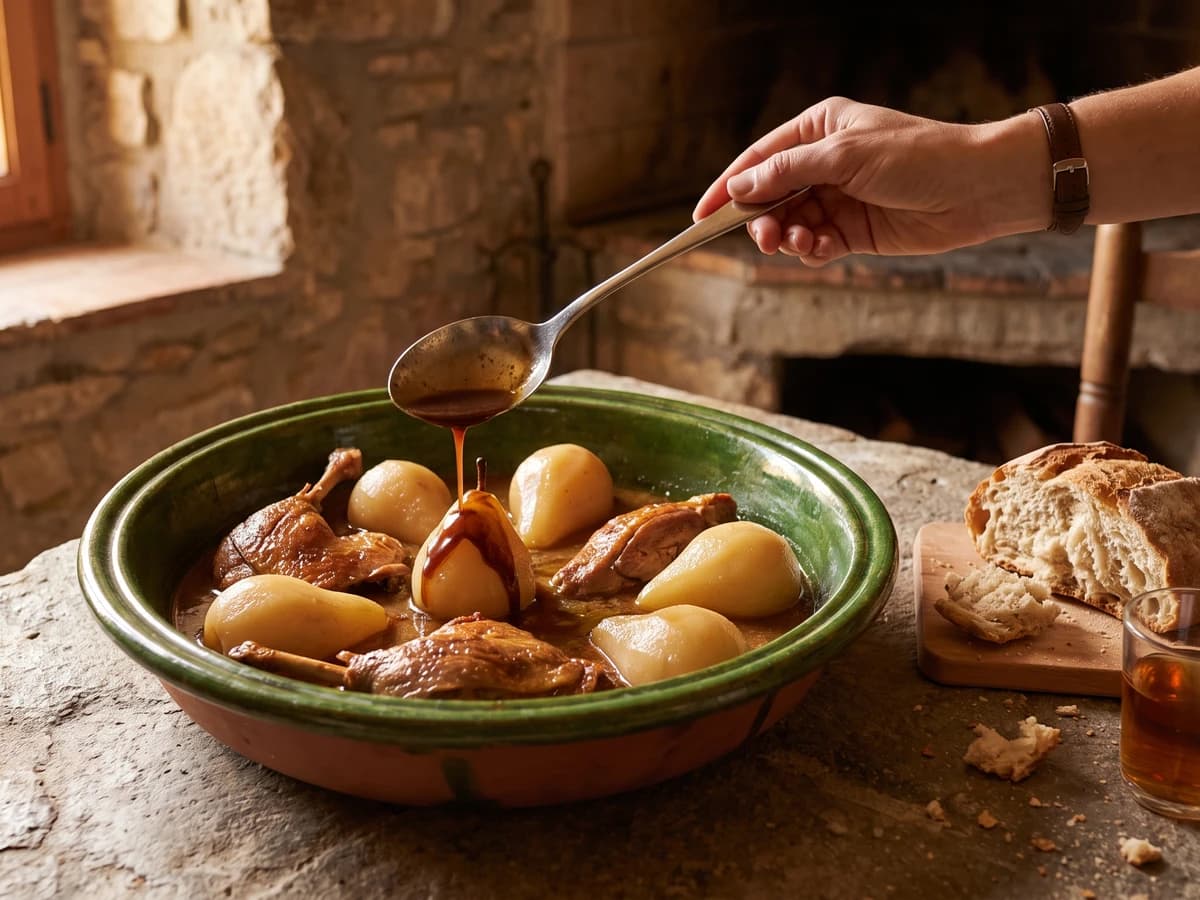
Ànec amb peres is Catalan celebration cooking: duck braised in a dark sofregit, firm autumn pears added near the end, and an almond-garlic picada that turns the juices into a close, glossy sauce.