Chef Isabel
Abanico Ibérico a la Plancha
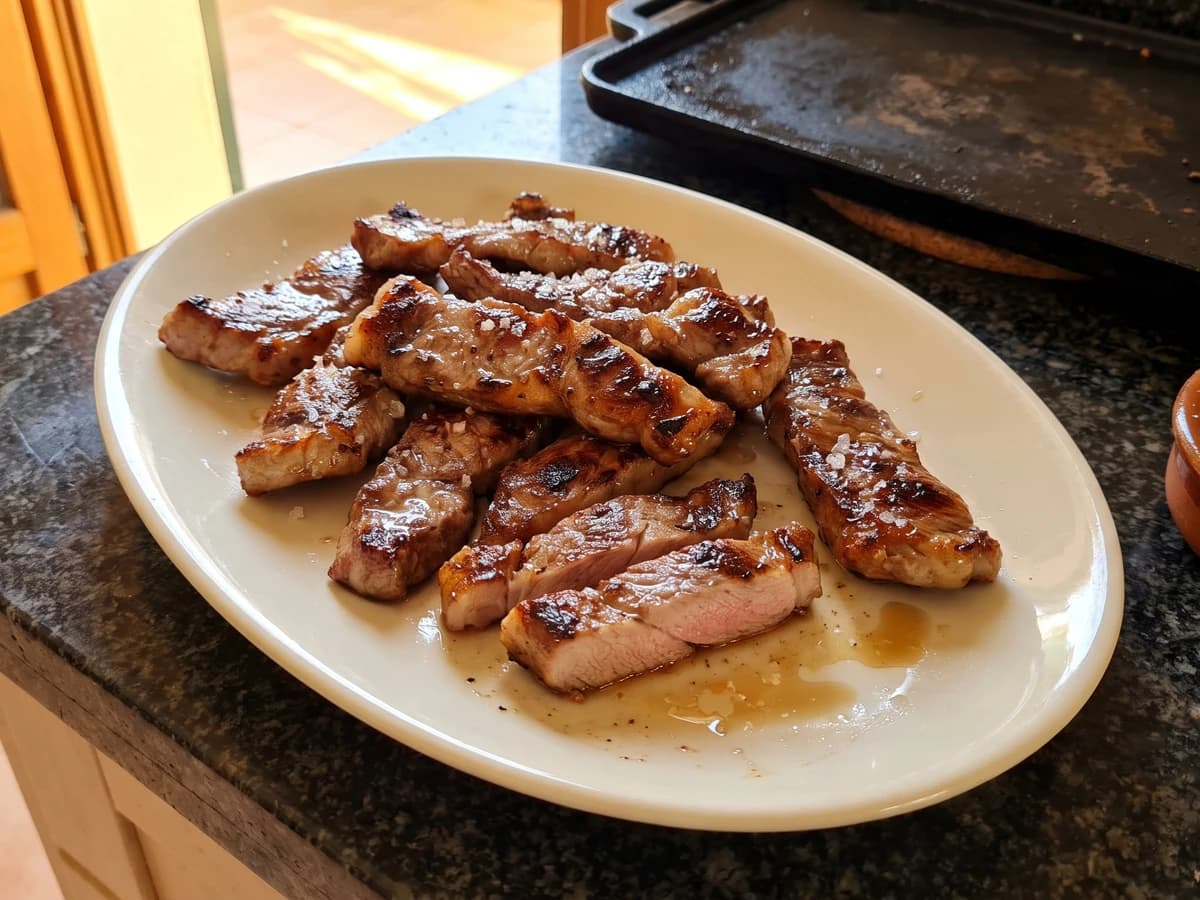
Extremadura's dehesa gives us this fan-shaped, marbled rib cut: salt it at the last moment, lay it on a fierce plancha, and count in seconds so the centre stays juicy.
A cooking platform built around craft, culture, and the stories behind what we eat.
Created by
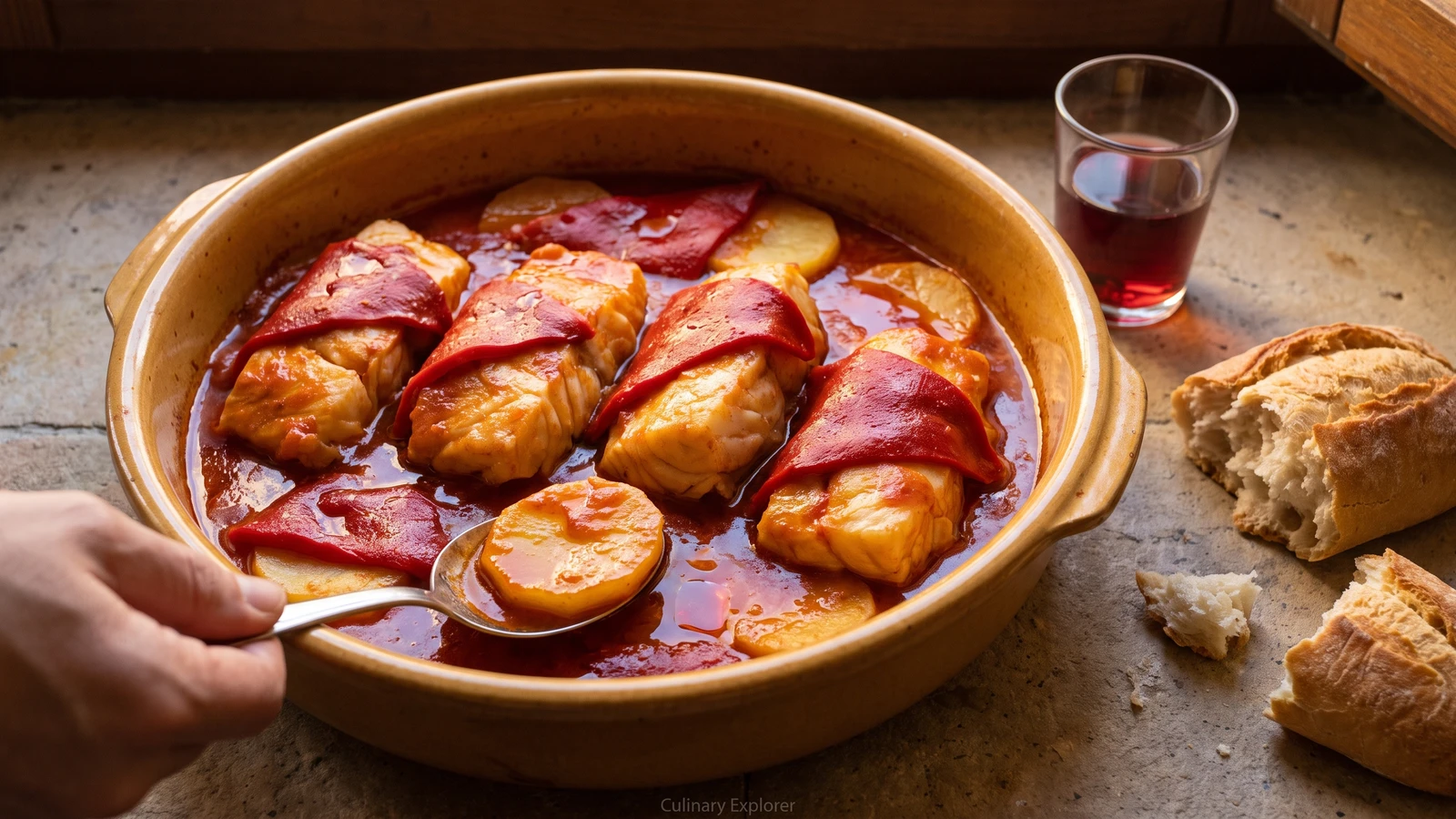
Bacalao a la Riojana is La Rioja's red-pepper cod: thick salt-cod loins rest over potatoes in slow tomato, choricero, and piquillo sauce, with the fish added only when the sauce is ready.
Bacalao a la Riojana belongs to La Rioja, the vineyard country along the upper Ebro: salt cod laid over potatoes and held in a red sauce of slow onion, tomato, choricero flesh, and roasted piquillo peppers. Tomato and sweet preserved pepper mark the Riojan pot. This isn't bacalao a la vizcaína, whose classical sauce rests chiefly on onion and choricero without tomato, and it isn't cod hidden under a hurried spoonful of tomato sauce.
The point that decides the dish is timing. I cook the sofrito, the slow onion base, and reduce the tomato until the sauce is dark, sweet, and already finished before the cod returns. Salt cod gives up its flavour quickly, but its thick white flakes tighten if you make them wait while watery tomato cooks down. Let the potatoes become nearly tender first, then give the loins only their last few minutes at the lowest simmer.
No hace falta haber pisado España. Jarred choricero pulp is the cleanest substitute for dried peppers and changes almost nothing. If piquillos are hard to find, use whole jarred roasted red peppers without vinegar, drain them well, and cut them wide. They'll be broader and a little sweeter in flavour, but they belong in the same household cupboard. Ready-desalted frozen bacalao is better here than fresh cod, which lacks the cured depth that seasons the whole casserole.
Desalt the fish in the refrigerator and taste a cooked trimming before it reaches the pot. Salt packets and loin thicknesses differ, so the clock gets you close and the taste tells the truth. In the Margin beside this dish I keep one sentence: the fish waits for the sauce, never the sauce for the fish. Follow that, and it comes out.
In landlocked La Rioja, preserved cod arrived along inland trade routes and became dependable food for the meatless vigil days of Lent, when fresh sea fish could not travel so well. The Ebro valley's tomato preserves and autumn peppers supplied its red sauce, with choriceros dried for the year and roasted peppers bottled for later. Across the upper Ebro, the dish sits beside Basque bacalao a la vizcaína, but tomato and strips of sweet red pepper mark the Riojan casserole.
Quantity
650g dry, about 800g after desalting
cut into 4 thick pieces and desalted for 36 hours
Quantity
800g
thawed if frozen
Quantity
4, about 20g
stemmed, seeded, soaked, and scraped
Quantity
30g
Quantity
250g drained
cut into wide strips
Quantity
800g
halved and grated
Quantity
800g
crushed by hand
Quantity
250g
finely chopped
Quantity
4 cloves, about 16g
finely chopped
Quantity
600g
peeled and sliced 5mm thick
Quantity
25g
for dusting the cod
Quantity
120ml
Quantity
250ml, plus more for soaking
Quantity
up to 2g
| Ingredient | Quantity |
|---|---|
| dry salt-packed cod loins, skin-oncut into 4 thick pieces and desalted for 36 hours | 650g dry, about 800g after desalting |
| ready-desalted cod loins (optional)thawed if frozen | 800g |
| dried choricero peppersstemmed, seeded, soaked, and scraped | 4, about 20g |
| jarred choricero pepper pulp (optional) | 30g |
| piquillo pepperscut into wide strips | 250g drained |
| ripe plum tomatoeshalved and grated | 800g |
| canned whole peeled tomatoes (optional)crushed by hand | 800g |
| onionfinely chopped | 250g |
| garlicfinely chopped | 4 cloves, about 16g |
| waxy potatoespeeled and sliced 5mm thick | 600g |
| plain flourfor dusting the cod | 25g |
| extra virgin olive oil | 120ml |
| water | 250ml, plus more for soaking |
| fine sea salt (optional) | up to 2g |
Rinse the loose salt from the cod. Set the pieces skin-side up in a non-reactive container, cover them with at least 2 litres of cold water, and refrigerate for 36 hours, changing the water every 8 hours. Keep the cod cold throughout. To check it, poach a small trimming from the thickest piece for 30 seconds and taste it. It should remain pleasantly seasoned, not sharply salty. Give very thick loins another 8 hours if needed. Drain and pat completely dry.
Cover the dried choricero peppers with hot water and leave them for 30 minutes. Drain, open them flat, and scrape the soft red flesh from the skins with the back of a small knife. You need about 30g of pulp. Discard the skins. If you're using jarred choricero pulp, measure it and move on.
Dust the dried cod lightly with the flour and shake off every loose patch. Heat 70ml of the olive oil in a wide casserole over medium heat. Lay in the cod skin-side down and cook for 90 seconds, then turn it carefully and cook the other side for 45 seconds. Lift it to a plate. You're setting the surface, not cooking the fish through.
Lower the heat and add the remaining 50ml olive oil. Add the onion and cook gently for 18 to 20 minutes, stirring often, until dark gold, soft, and almost jammy. Add the garlic and cook for 1 minute. Stir in the choricero pulp for 30 seconds, then add the tomato. Cook uncovered for 25 minutes, stirring and scraping the base, until the sauce is deep brick-red, thick enough to hold a trail from the spoon, and beads of oil show around the edges. This slow reduction is where the sweetness comes from. Rush it and the sauce stays watery and sharp.
Pour in 250ml water and stir until the sauce is even. Arrange the potato slices in overlapping layers across the casserole and tuck three-quarters of the piquillo strips among them. Bring the sauce to a gentle simmer, cover, and cook over low heat for 18 to 22 minutes. The potatoes should be nearly tender but still offer a little resistance at the centre.
Nestle the cod skin-side down over the potatoes. Spoon a little sauce over each loin and lay the remaining piquillo strips on top. Cover and cook at the lowest simmer for 6 to 8 minutes, without turning the fish, until the flesh separates into moist flakes and reaches 63°C at its thickest point. Shake the casserole gently by its handles if the sauce needs moving. If it catches at the edge, add 30ml water, not more oil.
Take the casserole off the heat and let it stand for 5 minutes. Taste the sauce only now, after the cod has seasoned it, and add up to 2g salt if it truly needs it. Serve one loin per person with potatoes, piquillo strips, and plenty of the red sauce. Siempre sale, si lo sigues.
1 serving (about 700g)
Culinary guides, cultural storytelling, and the editorial depth that makes cooking meaningful.
Discover Culinary ExplorerChef Isabel
Extremadura's dehesa gives us this fan-shaped, marbled rib cut: salt it at the last moment, lay it on a fierce plancha, and count in seconds so the centre stays juicy.

Chef Isabel
Aletría Murciana is Murcia's humble noodle guiso: fine fideos, pork ribs, potato, saffron, and a dark sweet sofrito. Get that base right and the pot knows where it's going.

Chef Isabel
Andrajos are Andalucía's dough-rag stew from Jaén and Granada: a slow rabbit guiso thickened with torn sheets of flour dough, rolled thin so they cook tender instead of gummy.
Chef Isabel
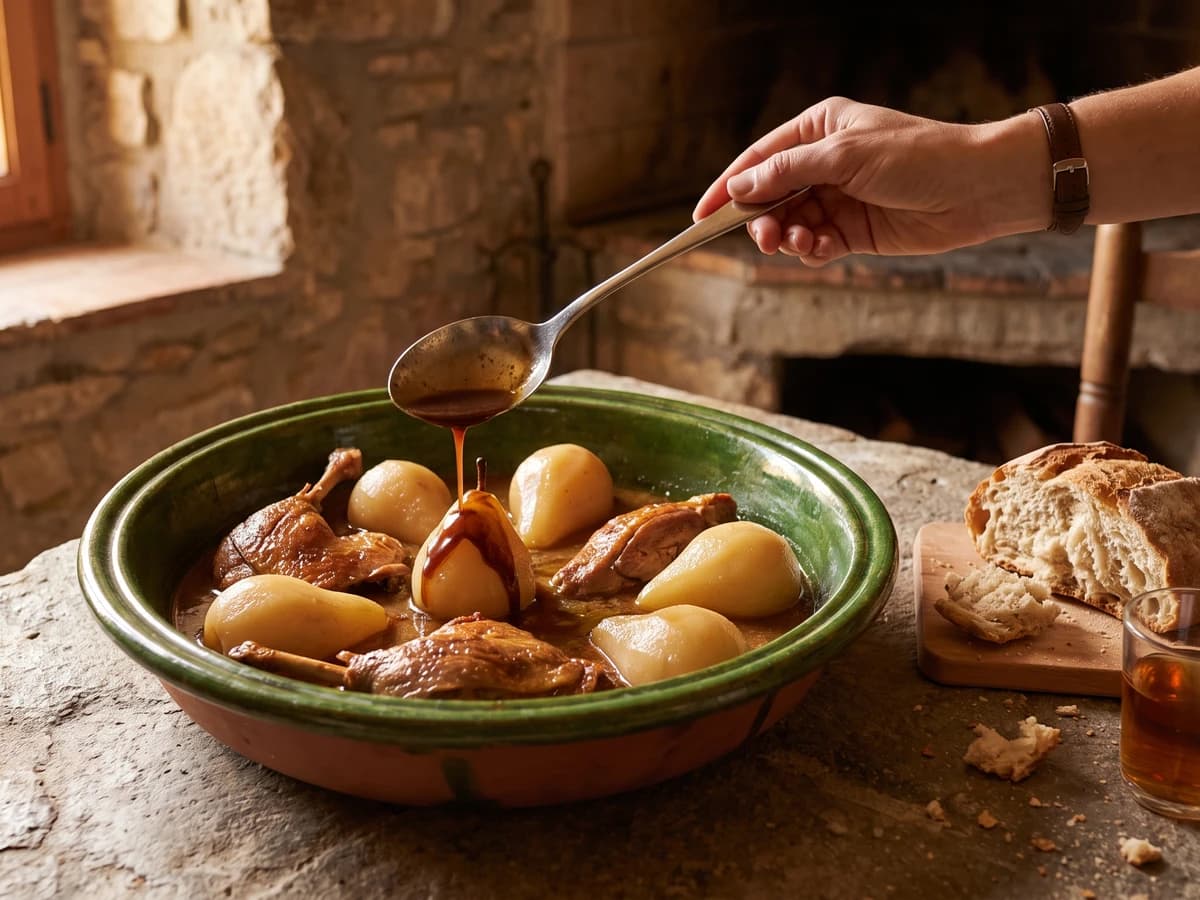
Ànec amb peres is Catalan celebration cooking: duck braised in a dark sofregit, firm autumn pears added near the end, and an almond-garlic picada that turns the juices into a close, glossy sauce.