Chef Isabel
Abanico Ibérico a la Plancha
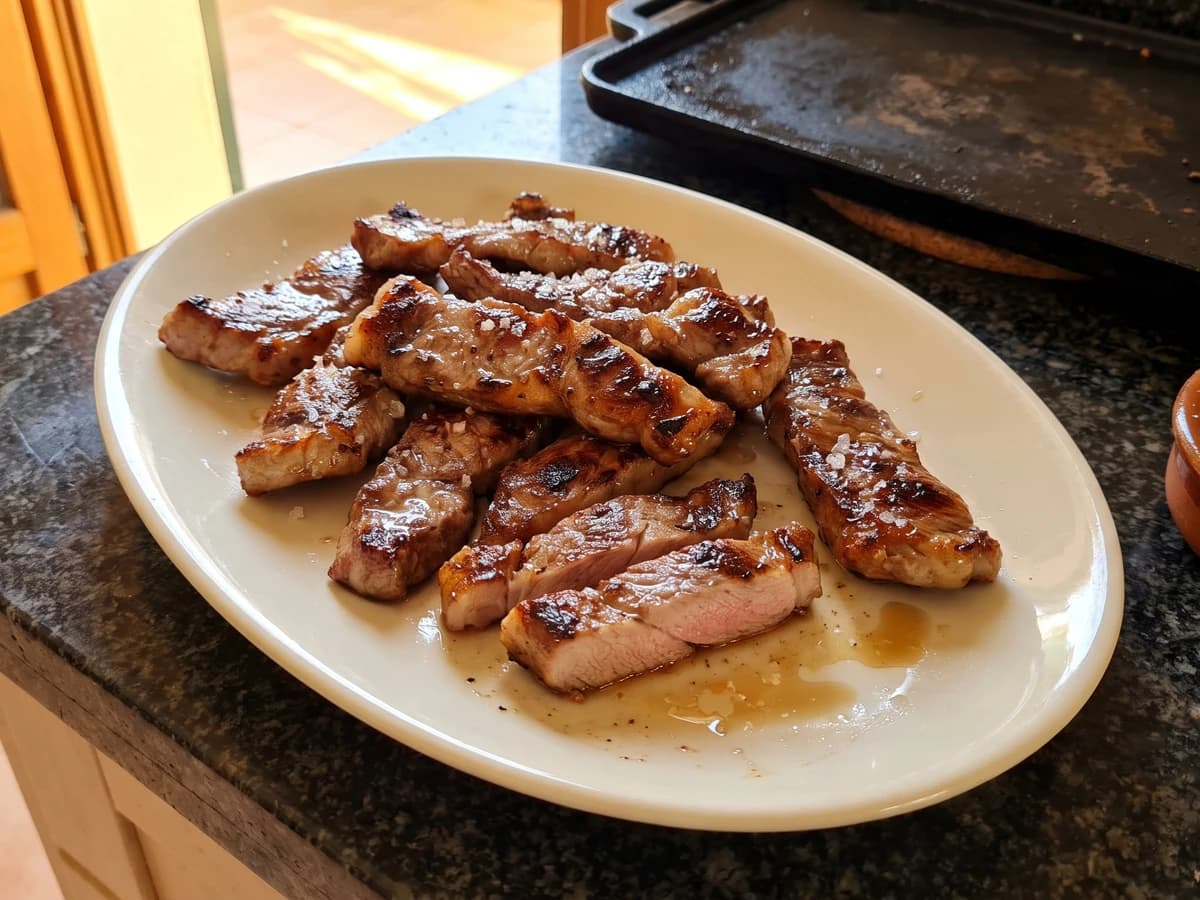
Extremadura's dehesa gives us this fan-shaped, marbled rib cut: salt it at the last moment, lay it on a fierce plancha, and count in seconds so the centre stays juicy.
A cooking platform built around craft, culture, and the stories behind what we eat.
Created by
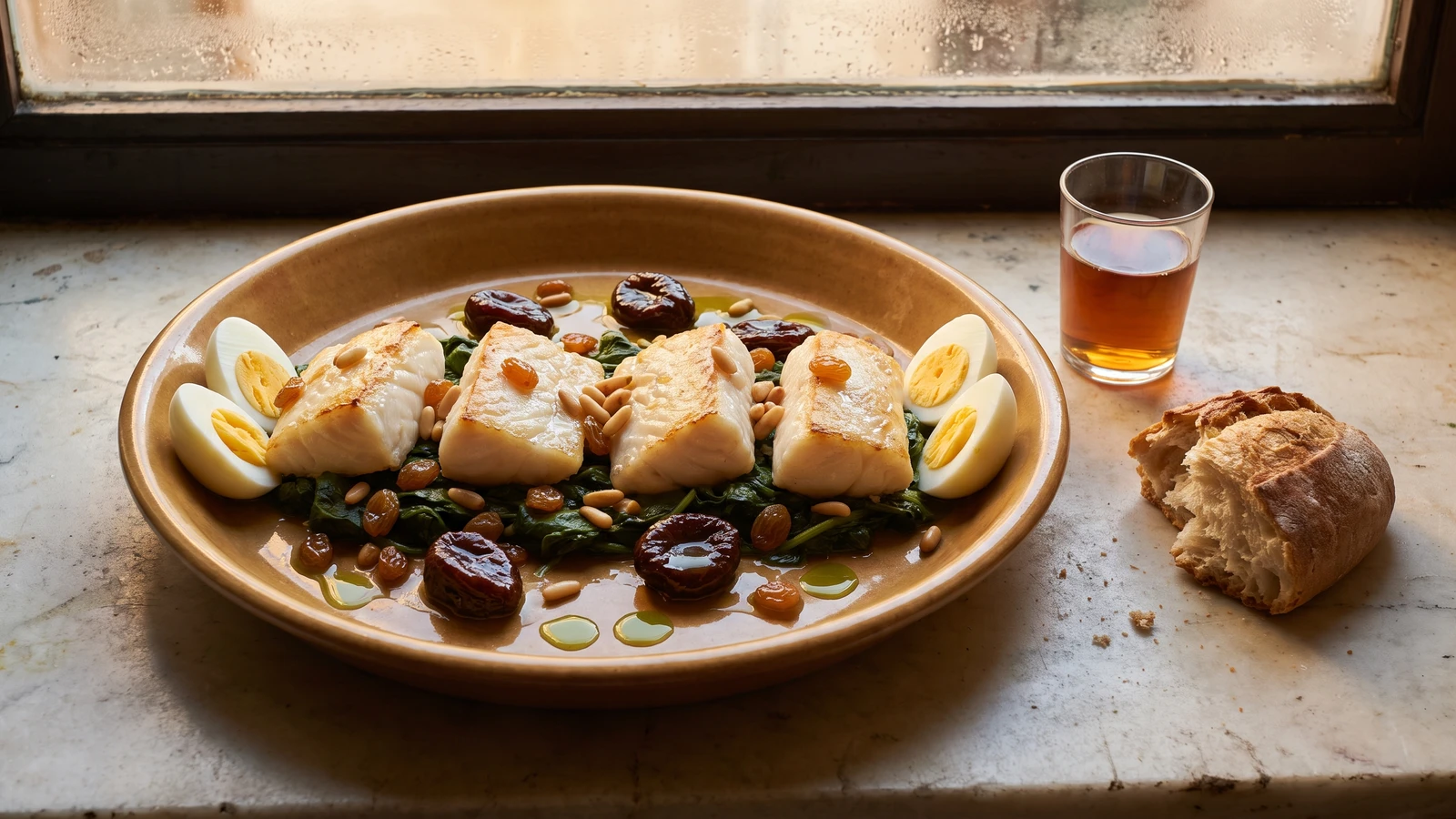
Manresa's Lenten cod sets pearly salt cod over garlicky spinach, raisins and pine nuts, with prunes softened in moscatell for the sweet and savory balance Catalonia handles so well.
Bacallà a la manresana is Catalan, specifically from Manresa in the inland Bages comarca. Thick salt cod sits over spinach with raisins and pine nuts, while prunes and moscatell make a dark, fragrant sauce around it. That meeting of cured fish, greens and restrained sweetness is what names the dish. It fed the Lenten table without making abstinence feel like punishment.
The method that decides it is simple: finish the sauce before the cod goes back into the pan. Cook the sofregit, the slow onion base, until dark gold and jammy, then reduce the fruit-soaked moscatell. Only then return the cod for its last few minutes. Salt cod has already surrendered moisture during curing, so leaving it to bubble while the sauce finds itself gives you tough fibers instead of broad, juicy flakes.
Proper salt cod is worth finding. Dry-salted loin gives the fullest cured flavor, though ready-desalted refrigerated or frozen cod works very well and saves two days. If neither exists where you live, season 700 grams of thick fresh cod with exactly 7 grams of fine salt, refrigerate it for one hour, rinse and dry it. The fish will be milder and softer, without the deep savor of the cure, but the recipe will still hold. Any naturally sweet Muscat wine can stand in for Catalan moscatell, with a change in aroma rather than method.
Keep the sweetness in its place. The prunes should round the salt cod, not bury it, and the spinach should still taste green. I have that written in the Margin beside this dish: sweet fruit, savory hand. Siempre sale, si lo sigues.
Bacallà a la manresana belongs to Manresa, capital of the inland Bages comarca, where cured cod could travel safely from the coast and became dependable fish for days of Lenten abstinence. Spinach, raisins, pine nuts and prunes place it within Catalonia's long tradition of pairing savory food with dried fruit and nuts. Moscatell supplies the sauce for the fruit, while boiled egg reflects the well-provisioned meatless table of Lent.
Quantity
600g dry-salted or 700g ready-desalted
divided into 4 thick skin-on portions; dry cod soaked for 48 hours
Quantity
800g
thoroughly washed, thick stems removed
Quantity
100g, about 8
Quantity
50g
Quantity
30g
Quantity
150ml
Quantity
180g
finely chopped
Quantity
2 cloves
thinly sliced
Quantity
30g
Quantity
80ml
Quantity
120ml
Quantity
2
Quantity
1g
for the spinach
| Ingredient | Quantity |
|---|---|
| dry-salted cod loin or ready-desalted salt coddivided into 4 thick skin-on portions; dry cod soaked for 48 hours | 600g dry-salted or 700g ready-desalted |
| mature-leaf spinachthoroughly washed, thick stems removed | 800g |
| pitted dried prunes | 100g, about 8 |
| seedless raisins | 50g |
| pine nuts | 30g |
| moscatell or naturally sweet Muscat wine | 150ml |
| onionfinely chopped | 180g |
| garlicthinly sliced | 2 cloves |
| plain flour | 30g |
| extra virgin olive oil | 80ml |
| water | 120ml |
| large eggs | 2 |
| fine sea saltfor the spinach | 1g |
Put the dry-salted cod skin side up in a nonreactive container and cover it with at least 2 liters of cold water. Refrigerate for 48 hours. Leave the first water for 24 hours, then replace it every 8 hours three times. Drain, pat completely dry and check the thickest piece before cooking. If using ready-desalted cod, dry it well and begin with the next step.
Put the prunes, raisins and moscatell in a small saucepan. Warm just until small bubbles appear at the edge, take it off the heat and leave for 20 minutes. Drain the fruit over a bowl and keep every drop of wine. Meanwhile, lower the eggs into boiling water, cook for 9 minutes, cool under running water, peel and quarter them.
Warm 20ml of the olive oil in a wide shallow casserole over low heat. Add the onion and cook for 18 to 20 minutes, stirring often, until dark gold, soft and jammy. Add half the sliced garlic and cook for 1 minute. Keep the heat patient. Pale onion gives a thin sauce, and burnt onion gives a bitter one.
While the onion cooks, toast the pine nuts in a dry 28cm frying pan over medium-low heat for 2 to 3 minutes, moving them constantly, then tip them onto a plate. Add 20ml olive oil and the remaining garlic to the pan. Once the garlic smells sweet, add the spinach in batches. Turn it until wilted, 4 to 5 minutes, then cook until no watery puddle remains. Stir in 30g of the drained raisins, 20g of the pine nuts and the 1g salt. Transfer to a dish and keep covered.
Pour the reserved moscatell into the dark-gold onion and raise the heat to medium. Simmer for 4 to 5 minutes, until reduced by about half and no longer sharply alcoholic. Add the water, prunes and remaining 20g raisins. Simmer gently for another 5 minutes. The sauce should taste rounded but not syrupy. Do not add salt yet.
Spread the flour on a plate and coat the dried cod lightly, tapping away every loose patch. Heat the remaining 40ml olive oil in the frying pan over medium heat. Lay in the cod skin side down and cook without disturbing it for 3 to 4 minutes, until the skin is lightly golden. Turn carefully and cook the flesh side for 1 minute. The center should still be underdone.
Set the cod skin side up in the finished fruit sauce. Spoon a little sauce around it, cover loosely and cook over low heat for 4 to 5 minutes. Shake the casserole once or twice instead of stirring. Stop when the cod separates into broad moist flakes under gentle pressure and the sauce lightly coats a spoon. Taste the sauce now, after the fish has seasoned it, and add no further salt unless it truly needs it.
Spread the spinach across a warmed serving platter. Set the cod on top and spoon over the prunes, raisins, onion and moscatell sauce. Finish with the remaining 10g toasted pine nuts and arrange the egg quarters around the fish. Serve at once, with bread for the sauce. Tal como se hace allí.
1 serving (about 440g)
Culinary guides, cultural storytelling, and the editorial depth that makes cooking meaningful.
Discover Culinary ExplorerChef Isabel
Extremadura's dehesa gives us this fan-shaped, marbled rib cut: salt it at the last moment, lay it on a fierce plancha, and count in seconds so the centre stays juicy.

Chef Isabel
Aletría Murciana is Murcia's humble noodle guiso: fine fideos, pork ribs, potato, saffron, and a dark sweet sofrito. Get that base right and the pot knows where it's going.

Chef Isabel
Andrajos are Andalucía's dough-rag stew from Jaén and Granada: a slow rabbit guiso thickened with torn sheets of flour dough, rolled thin so they cook tender instead of gummy.
Chef Isabel
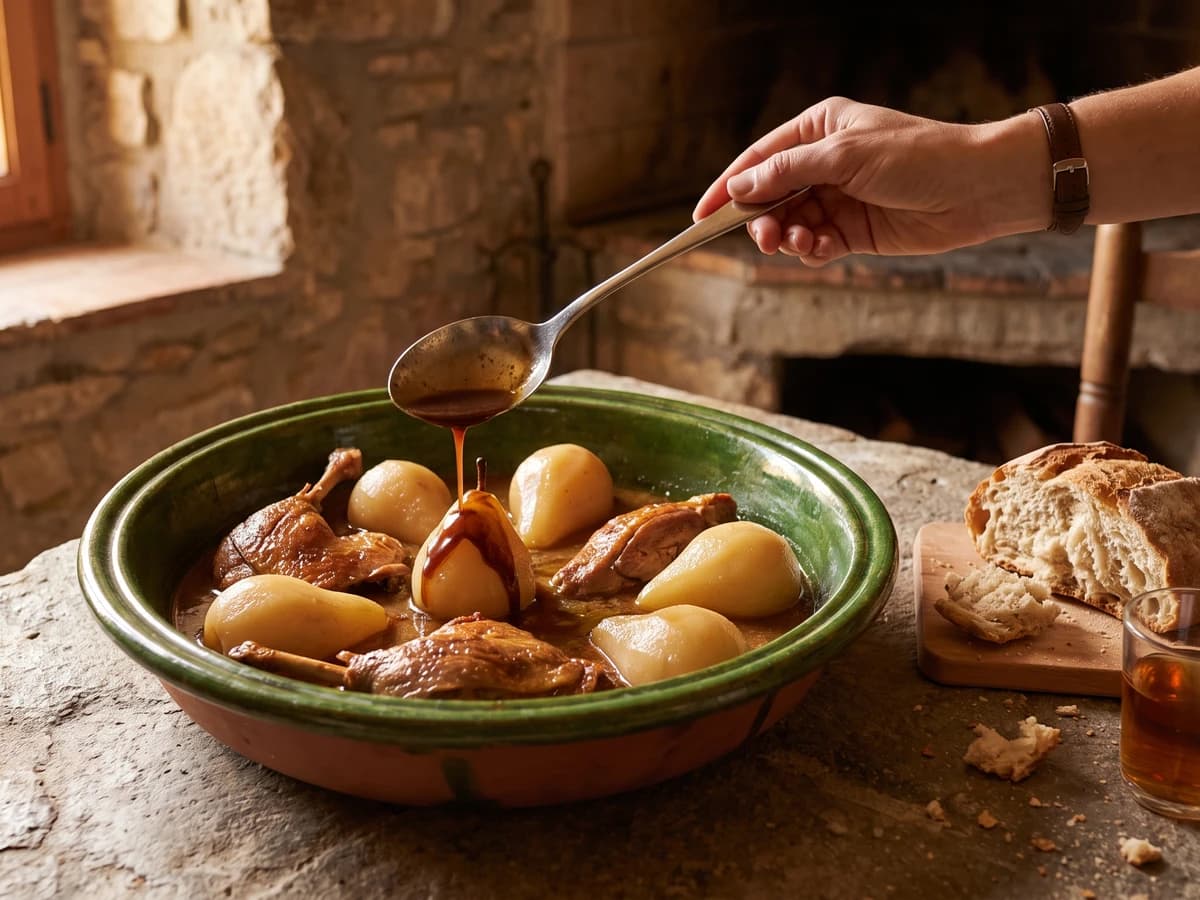
Ànec amb peres is Catalan celebration cooking: duck braised in a dark sofregit, firm autumn pears added near the end, and an almond-garlic picada that turns the juices into a close, glossy sauce.