Chef Isabel
Abanico Ibérico a la Plancha
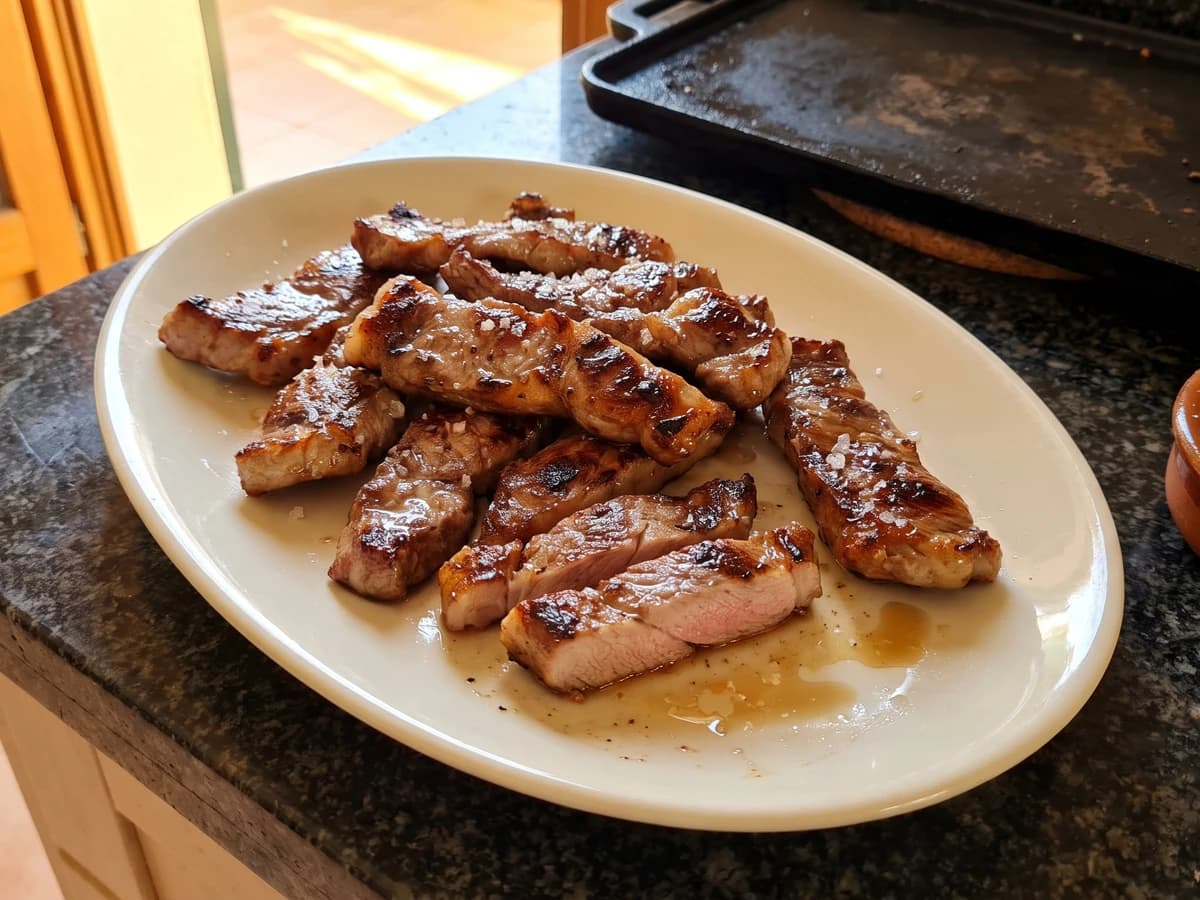
Extremadura's dehesa gives us this fan-shaped, marbled rib cut: salt it at the last moment, lay it on a fierce plancha, and count in seconds so the centre stays juicy.
A cooking platform built around craft, culture, and the stories behind what we eat.
Created by
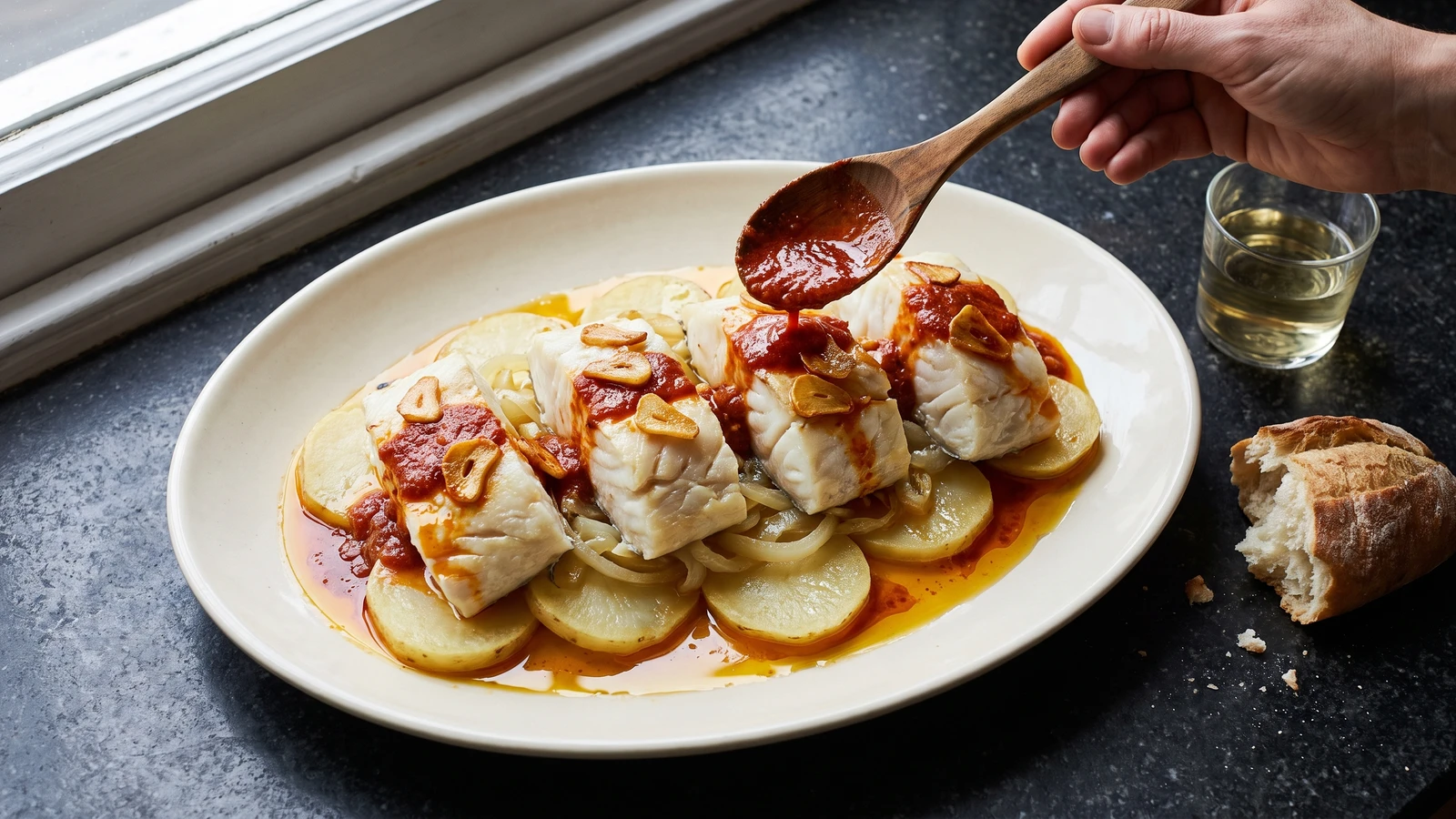
Galicia poaches salt cod with potatoes and onion, then spoons over ajada, a hot red dressing of olive oil, garlic, pimentón, and vinegar. Keep the cod gentle and the paprika off the flame.
Bacalao a la gallega is Galicia's salt-cod dish: thick pieces poached gently with potatoes and onion, then covered with ajada, garlic and pimentón warmed in olive oil with a dash of vinegar. That red oil is the dish, not a little flourish at the end. There is no tomato sauce, no flour, and no browning to hide the cod.
I'm strict about one point. Fry the garlic only to pale gold, take the pan off the heat, and let the oil settle before the pimentón goes in. Paprika scorches quickly and turns bitter, while gentle heat lets it stain the oil brick red and keep its sweet, smoky depth. Keep the cod at a quiet poach as well. Boil it and those handsome flakes become dry scraps.
No hace falta haber pisado España. Frozen or vacuum-packed pre-desalted bacalao is an everyday, sensible choice and saves the long soak. If all you can buy is fresh cod, salt it lightly beforehand as directed in the tips; it will be softer and lack some cured depth, but the ajada still carries the plate. The note in my Margin says only, "pimentón fuera del fuego," paprika off the heat. Siempre sale, si lo sigues.
Salt cod reached Galician kitchens through Atlantic trade and kept well enough to travel far inland, where it became important for vigilia, the meatless days of Lent and Holy Week. The Galician ajada, also called allada, belongs to an older family of garlic-and-oil dressings used over boiled fish and vegetables. Peppers brought from the Americas later supplied the pimentón that gave the dressing its familiar red colour and deeper sweetness.
Quantity
800g after desalting
cut into 4 pieces
Quantity
900g
peeled and cut into 2cm rounds
Quantity
250g
peeled and cut into 8 wedges
Quantity
1
Quantity
1.5 litres
Quantity
120ml
Quantity
30g
thinly sliced
Quantity
6g
Quantity
1g
Quantity
15ml
Quantity
up to 3g
use only after tasting
| Ingredient | Quantity |
|---|---|
| thick skin-on salt cod loincut into 4 pieces | 800g after desalting |
| waxy potatoespeeled and cut into 2cm rounds | 900g |
| onionpeeled and cut into 8 wedges | 250g |
| bay leaf | 1 |
| cold water | 1.5 litres |
| extra virgin olive oil | 120ml |
| garlicthinly sliced | 30g |
| sweet pimentón, preferably pimentón de la Vera | 6g |
| hot pimentón (optional) | 1g |
| white wine vinegar | 15ml |
| fine sea salt (optional)use only after tasting | up to 3g |
If you're starting with dry-salted cod, rinse off the loose surface salt and place the pieces skin-side up in a bowl large enough to hold them without crowding. Cover by 5cm with cold water and refrigerate for 48 hours, changing the water every 8 hours. Drain and pat dry. If you're using frozen pre-desalted bacalao, thaw it overnight in the refrigerator and begin with the next step.
Put the potato rounds, onion wedges, bay leaf, and 1.5 litres of cold water in a wide saucepan. Bring to a boil, lower the heat, and simmer steadily for 10 to 12 minutes. The potatoes should be nearly tender but still offer a little resistance when pierced, because they finish cooking with the cod.
Lower the cod into the pan skin-side down among the potatoes. Reduce the heat until the water barely moves and never let it return to a hard boil. Cover partly and poach for 6 to 8 minutes, depending on thickness, until the flesh is opaque, separates into moist flakes under light pressure, and reaches 63°C at the thickest point. Turn off the heat and leave it in the water for 2 minutes.
Lift the cod onto a warm plate with a broad fish slice. Discard the bay leaf, then drain the potatoes and onion well. Taste one potato. The cod usually seasons the cooking water, but if the potato tastes flat, sprinkle the vegetables with up to 3g salt. Arrange the potatoes across a warm serving platter, add the onion, and set the cod on top. Cover loosely while you make the ajada.
Put the olive oil and sliced garlic in a cold frying pan, then set it over low heat. Cook for 5 to 7 minutes, stirring now and then, until the garlic is pale gold with lightly crisp edges. Take the pan completely off the heat and wait 60 seconds. Stir in the sweet pimentón and the hot pimentón, if using, for 10 seconds, then slowly add the vinegar once the fierce sizzling has settled. The paprika goes in off the flame because it scorches in moments, and burnt pimentón makes the whole dressing bitter.
Spoon the hot ajada over the cod, potatoes, and onion, making sure every serving receives garlic and plenty of red oil. Leave it for 2 minutes so the potatoes drink in the dressing, then serve from the platter. Bread for the oil is not decoration. It is good sense.
1 serving (about 510g)
Culinary guides, cultural storytelling, and the editorial depth that makes cooking meaningful.
Discover Culinary ExplorerChef Isabel
Extremadura's dehesa gives us this fan-shaped, marbled rib cut: salt it at the last moment, lay it on a fierce plancha, and count in seconds so the centre stays juicy.

Chef Isabel
Aletría Murciana is Murcia's humble noodle guiso: fine fideos, pork ribs, potato, saffron, and a dark sweet sofrito. Get that base right and the pot knows where it's going.

Chef Isabel
Andrajos are Andalucía's dough-rag stew from Jaén and Granada: a slow rabbit guiso thickened with torn sheets of flour dough, rolled thin so they cook tender instead of gummy.
Chef Isabel
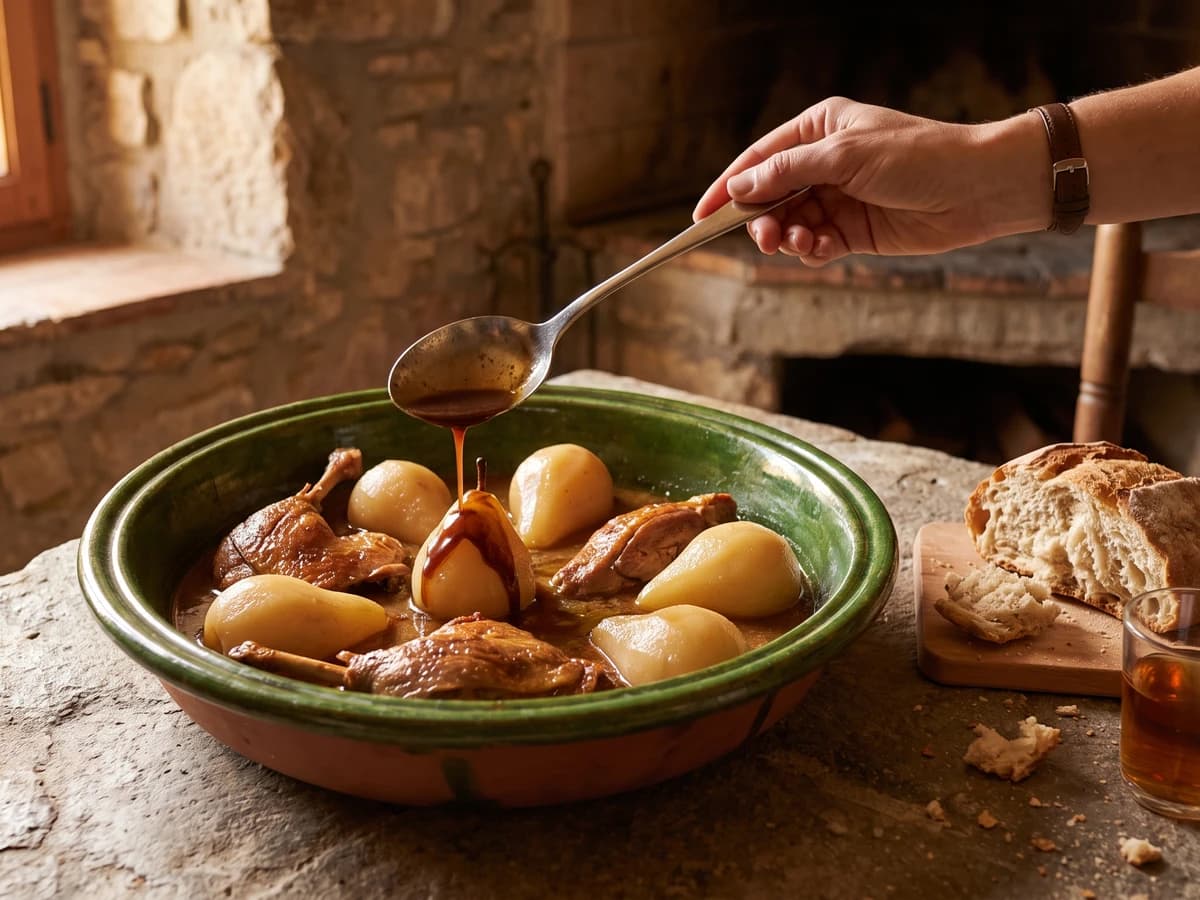
Ànec amb peres is Catalan celebration cooking: duck braised in a dark sofregit, firm autumn pears added near the end, and an almond-garlic picada that turns the juices into a close, glossy sauce.