Chef Isabel
Abanico Ibérico a la Plancha
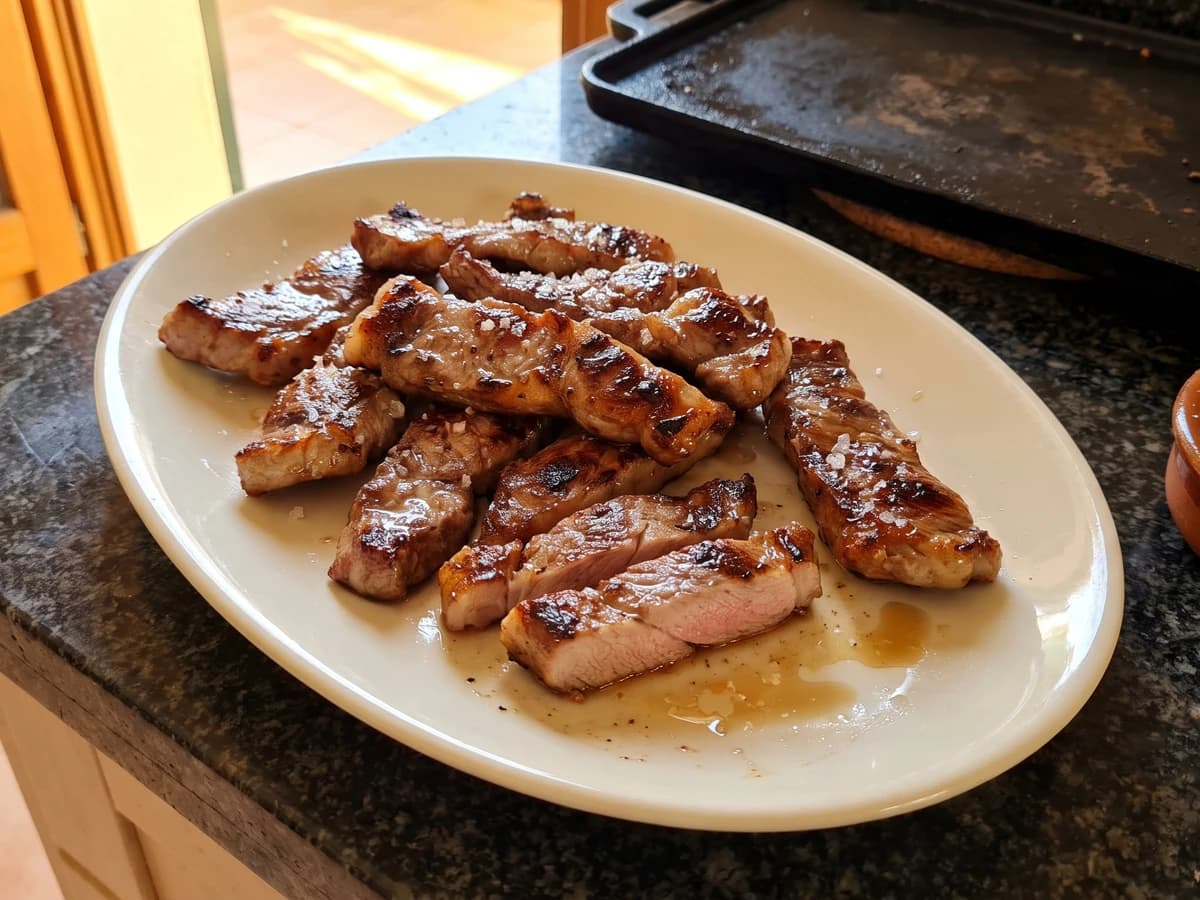
Extremadura's dehesa gives us this fan-shaped, marbled rib cut: salt it at the last moment, lay it on a fierce plancha, and count in seconds so the centre stays juicy.
A cooking platform built around craft, culture, and the stories behind what we eat.
Created by
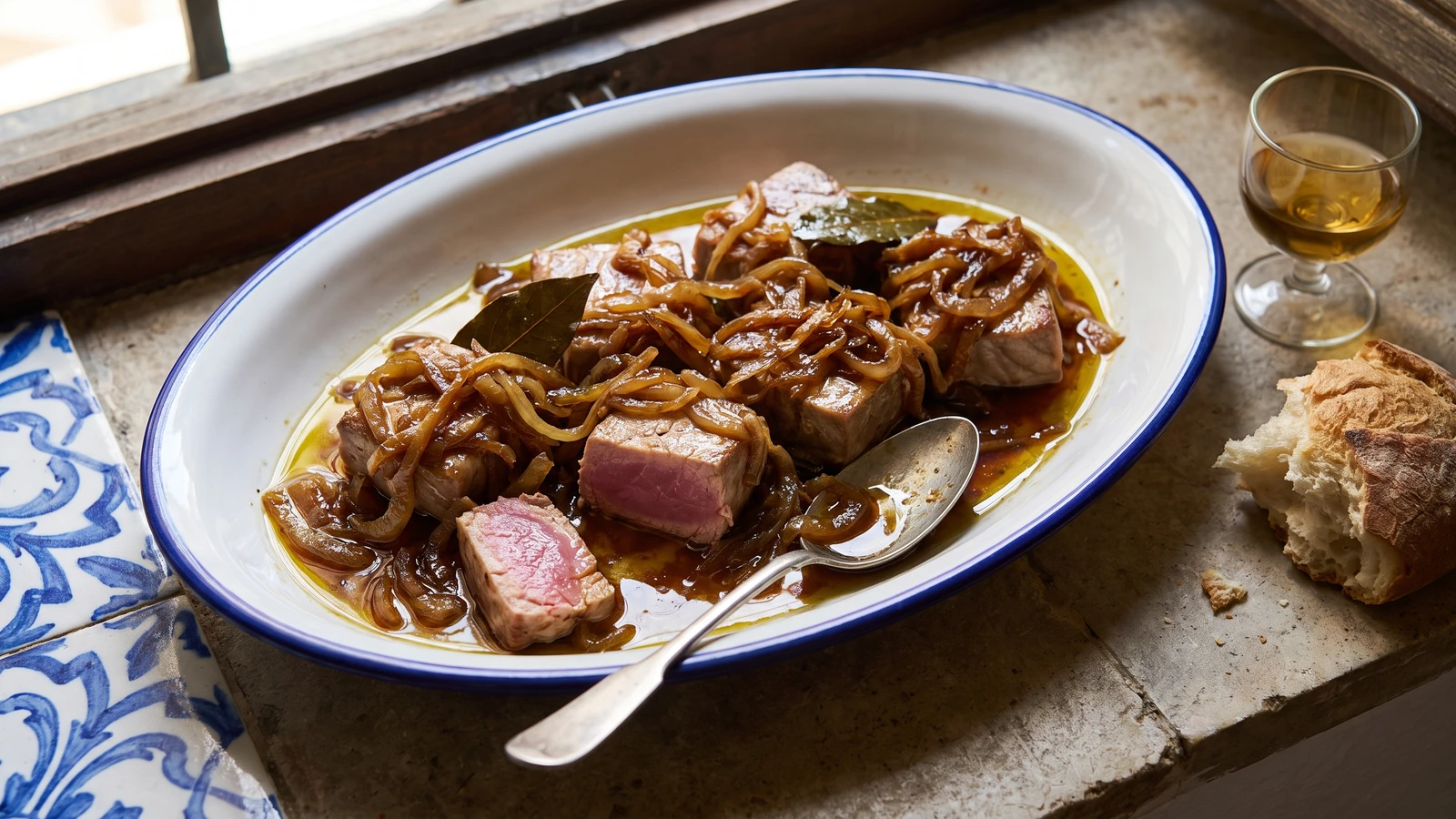
Atún encebollado is Cádiz at the stove: almadraba red tuna kept rosy beneath onions cooked slowly with bay, oregano, and dry white wine until dark gold and sweet.
Atún de almadraba encebollado belongs to Cádiz, on Andalucía's Atlantic coast: thick pieces of spring-run red tuna tucked beneath a great weight of onions, with bay, oregano, sweet pimentón, and dry white wine. There is no tomato and no thickened sauce. That would be another tuna stew. Here the onion becomes the sauce, glossy with olive oil and the juices of the fish.
The order decides the dish. Mark the tuna quickly and lift it out, then give the onions the time the fish cannot take. Cook them low until they collapse, turn dark gold, and taste properly sweet. Rush them and they stay wet and sharp; leave the tuna in while they cook and even a beautiful loin becomes dry. Return it only for the last two minutes, then take the pan off while the centre is still rosy.
Away from Cádiz, a traceable frozen Atlantic bluefin loin is the closest choice and often better handled than tired fish sold as fresh. Yellowfin loin is the honest substitute; it is leaner and a little less rich, so cut the final cooking by about thirty seconds. No hace falta haber pisado España. Weigh the onions, watch the tuna, and it comes out. Siempre sale, si lo sigues.
The almadraba is the fixed maze of nets set off Barbate, Zahara de los Atunes, Conil, and Tarifa to intercept Atlantic bluefin entering the Mediterranean through the Strait of Gibraltar. Its roots on the Cádiz coast reach the Phoenician tuna fisheries and the old salt works that preserved the catch; the spring fish, called atún de derecho, arrive especially well fed before spawning. Encebollado carries that seasonal catch into the home kitchen, where abundant onions protect and season the tuna without disguising it.
Quantity
800g
skin and sinew removed, cut into 4cm pieces
Quantity
900g peeled weight
sliced into 3mm half-moons
Quantity
3 cloves
thinly sliced
Quantity
75ml
Quantity
2
Quantity
1 teaspoon
Quantity
1 teaspoon
Quantity
100ml
Quantity
15ml
Quantity
100ml
Quantity
10g
divided
| Ingredient | Quantity |
|---|---|
| almadraba Atlantic bluefin tuna loin, or yellowfin loinskin and sinew removed, cut into 4cm pieces | 800g |
| onionssliced into 3mm half-moons | 900g peeled weight |
| garlicthinly sliced | 3 cloves |
| extra virgin olive oil | 75ml |
| bay leaves | 2 |
| dried oregano | 1 teaspoon |
| sweet pimentón | 1 teaspoon |
| dry white wine, preferably manzanilla or fino | 100ml |
| vinagre de Jerez (sherry vinegar) | 15ml |
| water | 100ml |
| fine sea saltdivided | 10g |
Cut the tuna across the grain into even 4cm pieces. Pat them thoroughly dry and season with 5g of the salt. Leave them for 10 minutes while you slice the onions. Pésalo, no lo adivines, weigh it rather than guessing; pieces of one size finish together.
Heat 50ml of the olive oil in a wide heavy pan over medium-high heat. Sear the tuna in two batches, about 30 seconds on each of two broad sides. The surface should colour lightly while the middle remains raw. Lift each batch onto a plate immediately and keep every drop of juice it releases.
Lower the heat to medium-low and add the remaining 25ml olive oil, the onions, garlic, bay leaves, and remaining 5g salt. Turn everything through the tuna-flavoured oil. Cover and cook for 15 minutes, stirring every 5 minutes, until the onions have collapsed and released their liquid.
Remove the lid and continue cooking the onions over low heat for 15 to 20 minutes. Stir more often as their liquid disappears. They are ready when very soft, dark gold, and sweet, with no pale raw crunch left. This slow cebolla pochada, the gently cooked onion base, is the part that decides the dish.
Crush the oregano between your fingers and stir it into the onions. Take the pan off the heat, add the sweet pimentón, and stir for 15 seconds. Keeping the pan away from direct heat here prevents the pimentón from scorching and turning bitter.
Return the pan to medium heat and pour in the wine and sherry vinegar. Let them bubble for 3 minutes, scraping up the browned traces from the bottom. Add the 100ml water, lower the heat, and cook uncovered for 5 to 7 minutes. The onions should be loose enough to spoon yet glossy rather than watery.
Nestle the tuna and its collected juices into the onions in one layer. Turn each piece once and cook gently for 1½ to 2 minutes, just until the outside is cooked and the centre remains rosy, about 48 to 52°C on an instant-read thermometer. Remove the pan from the heat at once and let it settle for 2 minutes before serving.
Spoon the onions generously over and around the tuna, giving everyone some of the wine-darkened juices. Serve at once with plain boiled potatoes, fried potatoes, or sturdy bread. The onions may wait at the table. The tuna will not.
1 serving (about 360g)
Culinary guides, cultural storytelling, and the editorial depth that makes cooking meaningful.
Discover Culinary ExplorerChef Isabel
Extremadura's dehesa gives us this fan-shaped, marbled rib cut: salt it at the last moment, lay it on a fierce plancha, and count in seconds so the centre stays juicy.

Chef Isabel
Aletría Murciana is Murcia's humble noodle guiso: fine fideos, pork ribs, potato, saffron, and a dark sweet sofrito. Get that base right and the pot knows where it's going.

Chef Isabel
Andrajos are Andalucía's dough-rag stew from Jaén and Granada: a slow rabbit guiso thickened with torn sheets of flour dough, rolled thin so they cook tender instead of gummy.
Chef Isabel
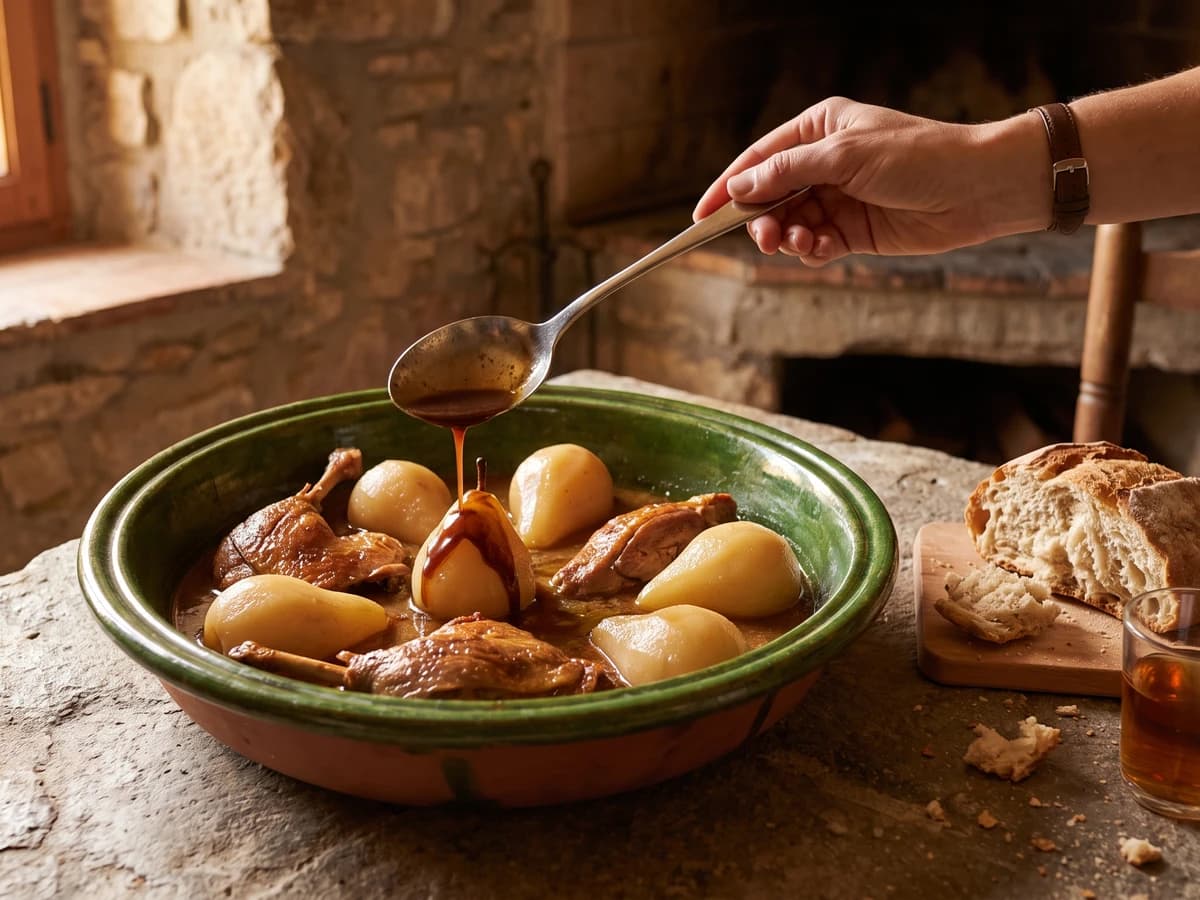
Ànec amb peres is Catalan celebration cooking: duck braised in a dark sofregit, firm autumn pears added near the end, and an almond-garlic picada that turns the juices into a close, glossy sauce.