Chef Isabel
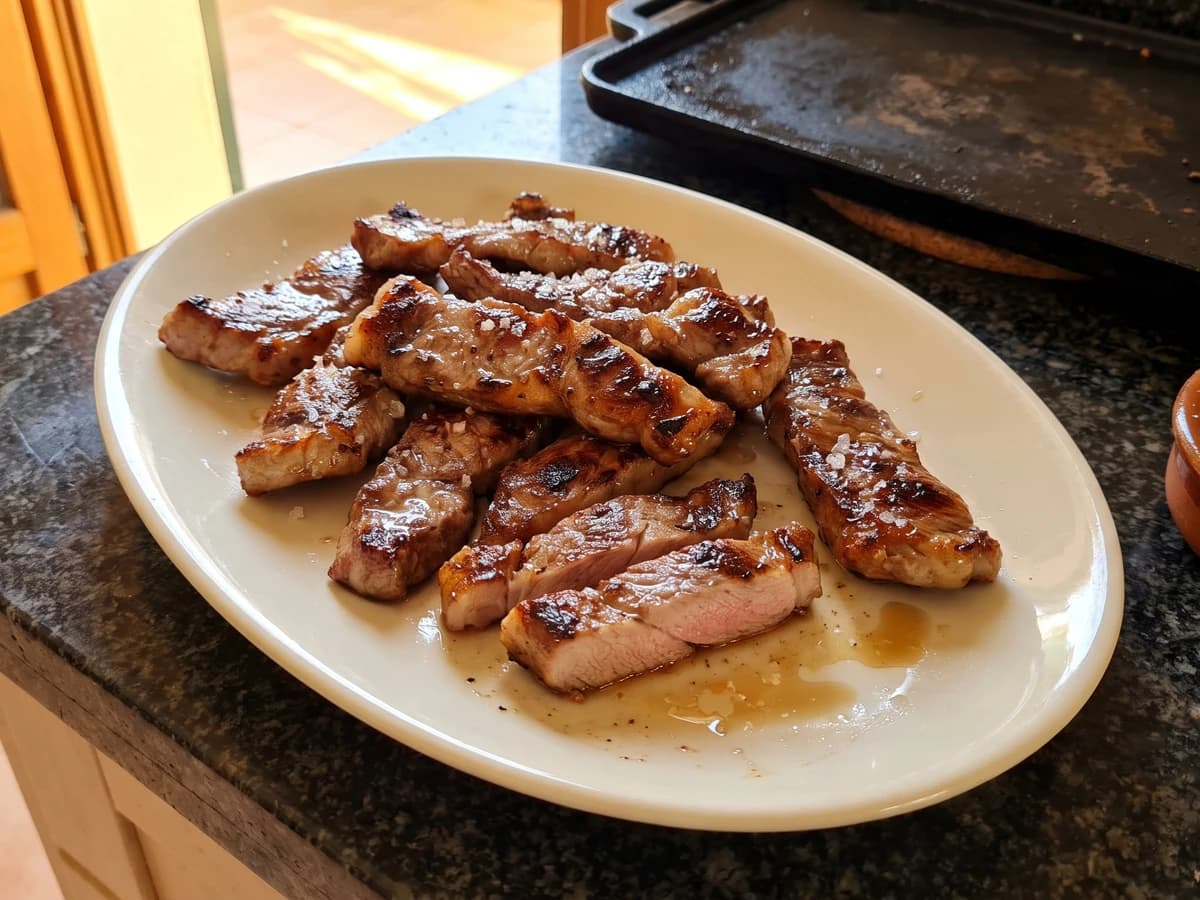
Abanico Ibérico a la Plancha
Extremadura's dehesa gives us this fan-shaped, marbled rib cut: salt it at the last moment, lay it on a fierce plancha, and count in seconds so the centre stays juicy.
A cooking platform built around craft, culture, and the stories behind what we eat.
Created by
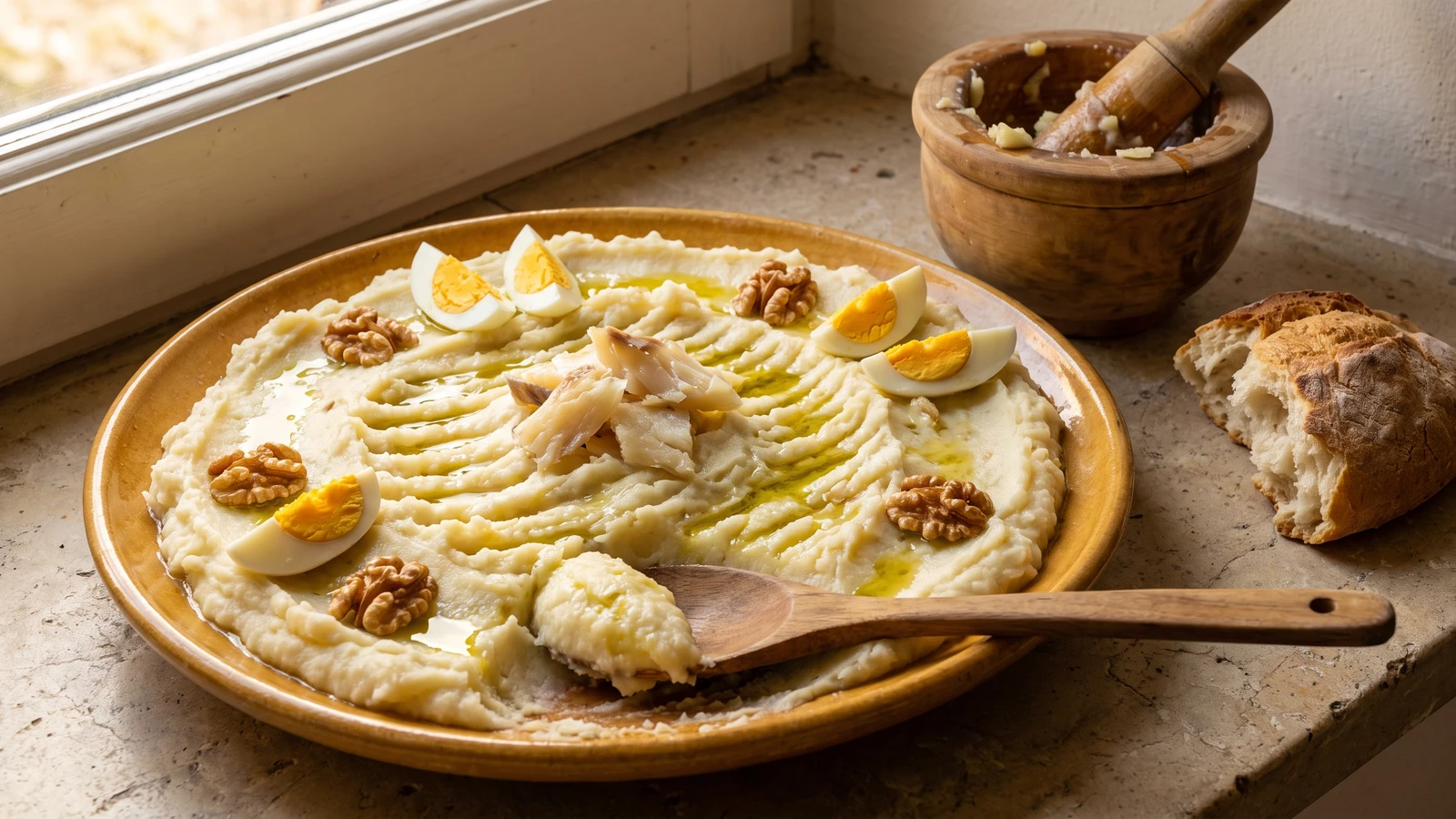
Atascaburras is La Mancha's cold-weather mash of potato, salt cod, garlic, and olive oil, pounded until it binds, then finished as Albacete does it with walnuts and hard-boiled egg.
Atascaburras is Manchego, with its deepest roots around Albacete: a winter mash of potato, desalted bacalao, garlic, and olive oil, finished with walnuts and hard-boiled egg. What makes it atascaburras is the pounding. The potato and cod become one thick, rough mash with enough body to hold the spoon. There is no tomato, pepper, or sofrito here. Add those and you've walked into another dish.
The method that decides it is simple. Pound the cod into the warm potato, then work in the oil a little at a time, alternating it with spoonfuls of cooking water. The potato starch and the cod's gelatin catch the oil and bind it. Pour everything in at once and the oil sits around the edges while the middle stays heavy. Use a mortar or a bowl and wooden spoon, never a blender, unless glue was your plan for lunch.
Salt cod is worth finding, including the refrigerated kind already desalted. If it isn't sold where you live, use salted pollock, abadejo salado, soaked in the same way. Its flavor is milder and the mash needs a little more cooking water, but the preserving character remains. No hace falta haber pisado España. My notebook's margin says only, "aceite poco a poco," oil little by little. Siempre sale, si lo sigues.
Atascaburras belongs above all to Albacete and the uplands of Castilla-La Mancha, shepherd country where dried cod traveled inland without spoiling and potatoes, garlic, oil, walnuts, and eggs formed a dependable winter larder. A well-loved local account tells of shepherds caught by snow who pounded together the provisions they carried, then named the filling result because it could satisfy even their pack animals. Nearby Cuenca keeps closely related versions, sometimes called ajoarriero manchego, but the mortar-bound mash crowned with walnut and egg remains firmly tied to La Mancha.
Quantity
400g
weighed before soaking, desalted for 24 to 36 hours
Quantity
1kg
peeled and cut into 5cm chunks
Quantity
3 cloves (about 12g)
peeled
Quantity
200ml
reserve 20ml for finishing
Quantity
4
Quantity
80g
Quantity
2 litres, plus more for desalting
Quantity
2g
| Ingredient | Quantity |
|---|---|
| salt cod (bacalao), preferably skin-onweighed before soaking, desalted for 24 to 36 hours | 400g |
| floury potatoes, such as Agria or russetpeeled and cut into 5cm chunks | 1kg |
| garlicpeeled | 3 cloves (about 12g) |
| extra virgin olive oilreserve 20ml for finishing | 200ml |
| large eggs | 4 |
| walnut halves | 80g |
| cold water | 2 litres, plus more for desalting |
| fine salt (optional) | 2g |
Brush away the loose surface salt and rinse the cod. Put it skin-side up in a non-reactive container, cover with at least 3 litres of cold water, and refrigerate for 24 to 36 hours, changing the water every 8 hours. Thick pieces need the full 36 hours. To check it, cook a small flake in simmering water and taste it; the cod should remain pleasantly seasoned, not aggressively salty.
Put the eggs in a small saucepan and cover them with cold water by 2cm. Bring to a boil, lower the heat, and simmer for 10 minutes. Cool them promptly in cold water, then peel and cut each egg into quarters.
Put the potatoes in a wide pot with 2 litres of cold, unsalted water. Bring to a gentle simmer and cook for 18 minutes. Lower the drained cod into the same pot and simmer gently for 6 minutes, until it separates into moist flakes. Lift out the cod. Continue cooking the potatoes for 4 to 8 minutes, until a knife passes through without resistance. Reserve 300ml of the cooking water, then drain the potatoes thoroughly.
Return the drained potatoes to the warm, empty pot for 2 minutes so their surface moisture can escape. Remove the cod skin and every bone, then separate the flesh into flakes. Keep about 75g of the broadest flakes for the top. Pound the garlic to a smooth paste in a large mortar, or crush it firmly against the side of a broad mixing bowl.
Add the warm potatoes to the garlic and pound them to a rough mash. Work in the remaining cod until no large pieces remain. Add 180ml olive oil in six small additions, pounding well after each one. Alternate the oil with 120ml warm cooking water, added one spoonful at a time. Continue pounding until the mash looks cohesive and glossy and a spoon leaves a furrow that slowly settles. If it remains stiff, add up to 80ml more cooking water. Pésalo, no lo adivines at the start, then let the potato tell you the final spoonful.
Taste before adding any salt. Add up to 2g only if the potatoes have left the mash flat. Spoon the atascaburras onto a broad earthenware platter, making a few shallow furrows across the surface. Arrange the egg quarters, walnut halves, and reserved cod flakes over it, then pour the remaining 20ml olive oil into the furrows. Serve warm or at room temperature with sturdy bread.
1 serving (about 350g)
Culinary guides, cultural storytelling, and the editorial depth that makes cooking meaningful.
Discover Culinary ExplorerChef Isabel
Extremadura's dehesa gives us this fan-shaped, marbled rib cut: salt it at the last moment, lay it on a fierce plancha, and count in seconds so the centre stays juicy.

Chef Isabel
Aletría Murciana is Murcia's humble noodle guiso: fine fideos, pork ribs, potato, saffron, and a dark sweet sofrito. Get that base right and the pot knows where it's going.

Chef Isabel
Andrajos are Andalucía's dough-rag stew from Jaén and Granada: a slow rabbit guiso thickened with torn sheets of flour dough, rolled thin so they cook tender instead of gummy.
Chef Isabel
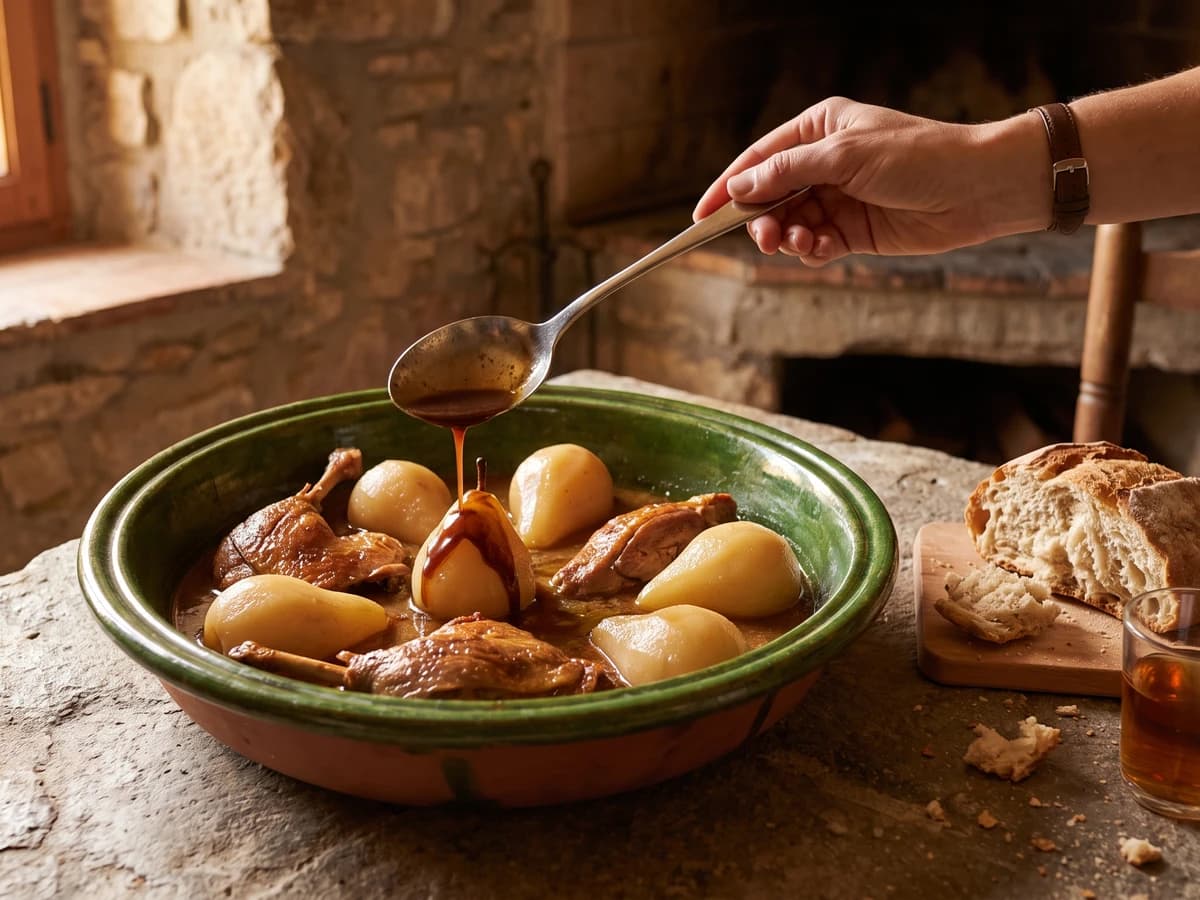
Ànec amb peres is Catalan celebration cooking: duck braised in a dark sofregit, firm autumn pears added near the end, and an almond-garlic picada that turns the juices into a close, glossy sauce.