Chef Isabel
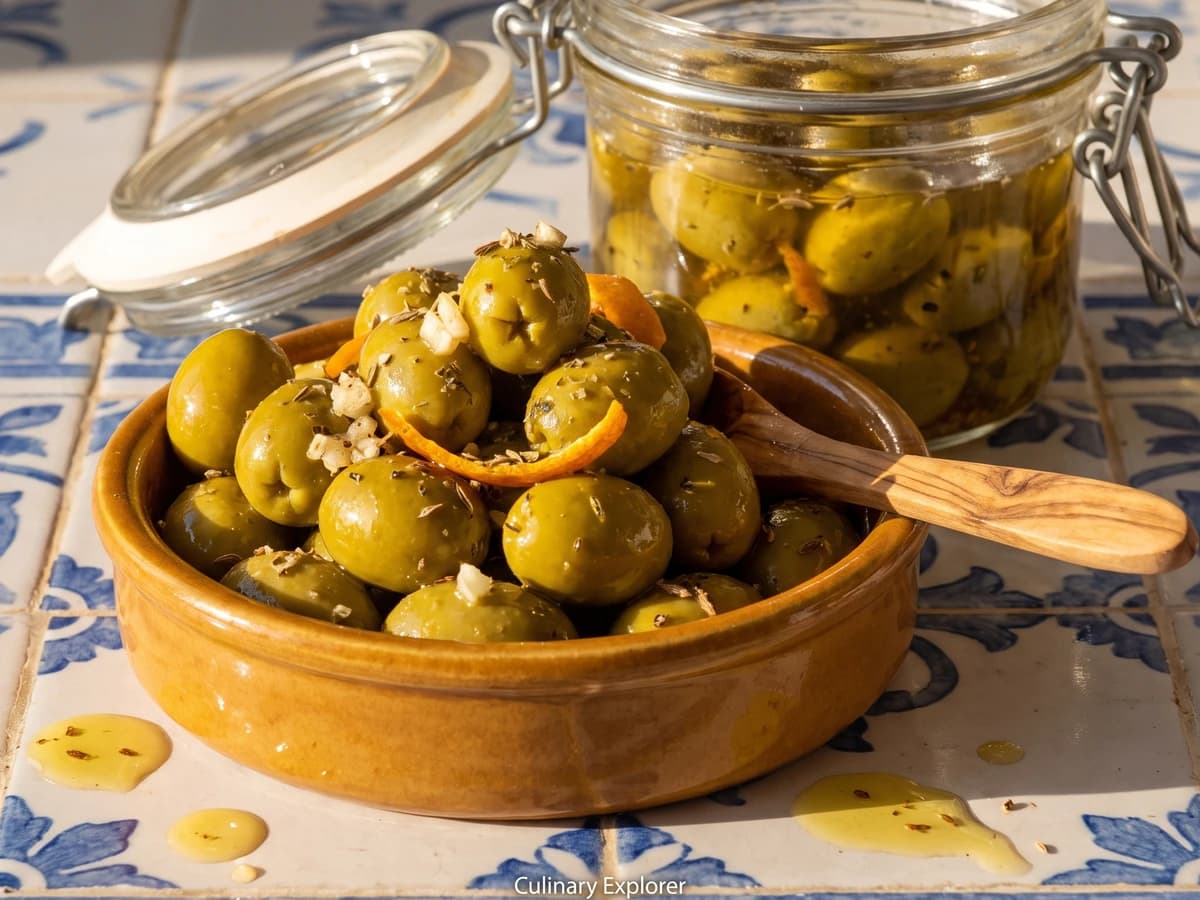
Aceitunas Aliñadas Andaluzas
Andalucía's green olives are cracked just enough to drink in garlic, cumin, oregano and sherry vinegar, then left two days until the brine turns fragrant and every bite carries the aliño.
A cooking platform built around craft, culture, and the stories behind what we eat.
Created by
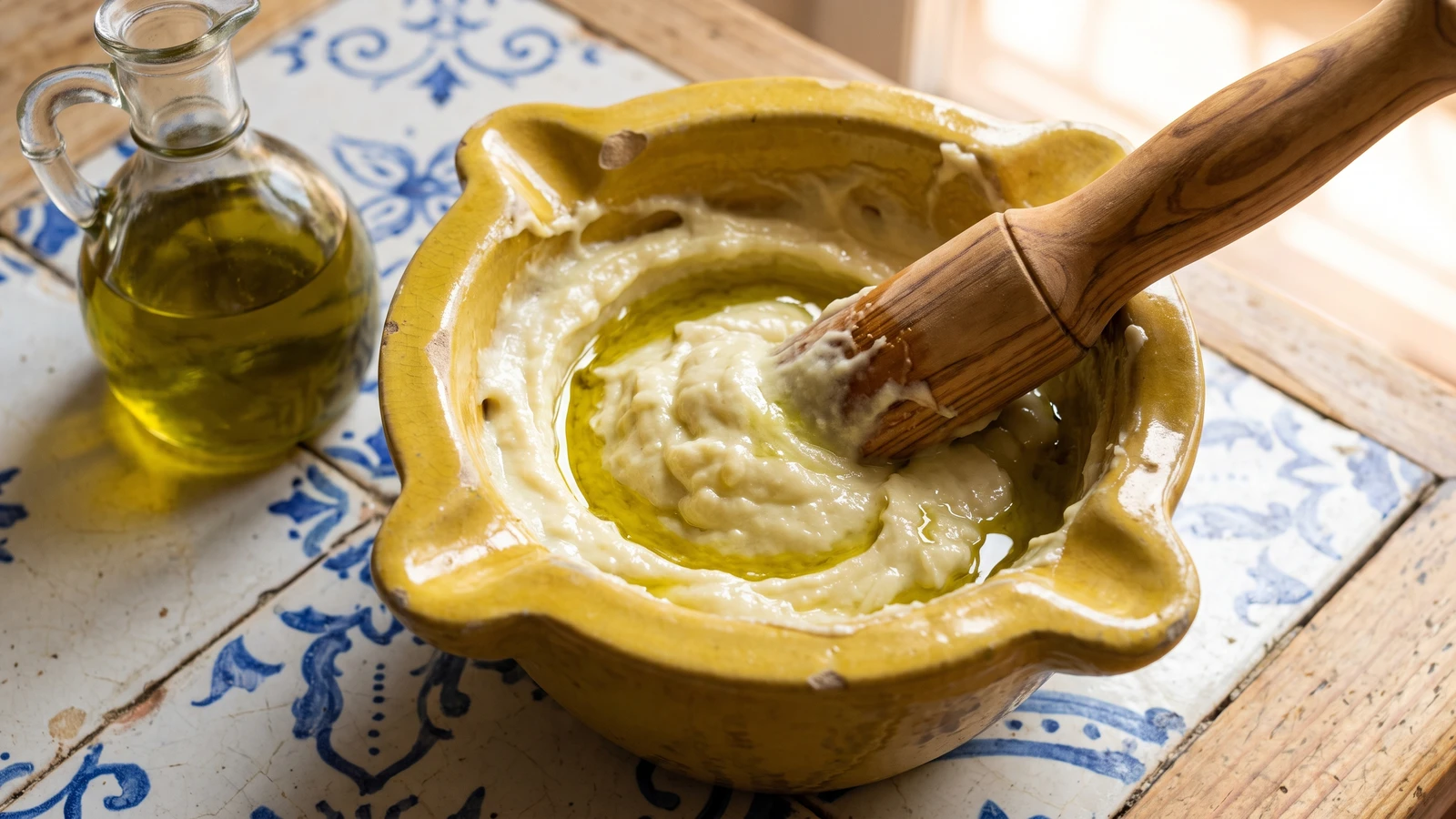
Allioli belongs to Catalonia and Valencia: garlic, salt, and olive oil worked patiently in a mortar until thick and glossy. No egg, no trick, just slow first drops that make the emulsion hold.
Allioli is Catalan and Valencian: garlic, salt, and olive oil worked in a mortar until they become one thick, glossy sauce. Its name gives you the recipe, all i oli, garlic and oil. No egg. Add egg and you've made garlic mayonnaise, useful in its place, but it is not this sauce.
The method that decides it comes before most of the oil. I pound the garlic and salt until no grain remains, then feed in the first 15ml one drop at a time. Garlic can hold the oil only after it has become a smooth, sticky paste; leave pieces or flood it early and the emulsion has no steady foundation. Once that first spoonful is firm, the rest can follow in a fine thread.
Arbequina olive oil is at home here, mild and fruity enough to let the garlic speak. If you can't find it, use a good mild extra virgin olive oil from where you are. A peppery oil still works, but the allioli will taste fiercer and may finish bitter; neutral seed oil makes a paler imitation without the olive character. No hace falta haber pisado España, you don't need to have set foot in Spain. The margin beside this recipe says only, "the oil waits for the garlic." Siempre sale, si lo sigues, it turns out if you follow it.
The name allioli comes straight from the Catalan all i oli, meaning garlic and oil, and the sauce belongs across the Catalan-speaking lands of Catalonia, Valencia, and the Balearic Islands. It traditionally accompanied boiled vegetables, fish, rice dishes, snails, and carn a la brasa, meat from the grill, using two staples kept in even a spare household larder. Provence has its own aïoli, often made with egg yolk, but the Catalan and Valencian mortar preparation depends on garlic itself to bind the oil.
Quantity
20g (about 6 medium cloves)
peeled and halved, green germs removed
Quantity
3g (about 1/2 teaspoon)
Quantity
250ml (about 230g)
at room temperature
Quantity
1 small (about 4g)
reserved only for repairing a split emulsion
| Ingredient | Quantity |
|---|---|
| fresh garlicpeeled and halved, green germs removed | 20g (about 6 medium cloves) |
| fine sea salt | 3g (about 1/2 teaspoon) |
| mild, fruity extra virgin olive oil, preferably Arbequinaat room temperature | 250ml (about 230g) |
| extra garlic clove (optional)reserved only for repairing a split emulsion | 1 small (about 4g) |
Make sure the mortar is completely dry. Put in the garlic and salt, then pound straight down until the cloves break apart. Grind firmly around the sides for 3 to 5 minutes, gathering the garlic back toward the centre as needed, until it becomes a smooth, sticky paste with no visible pieces. This matters because thoroughly crushed garlic provides the water and natural binders that will hold the oil.
Measure the oil into a small spouted jug. Move the pestle in steady circles while adding the first 15ml of oil literally drop by drop, waiting until each drop disappears before adding the next. Take 5 to 7 minutes over this first spoonful. The paste should turn paler, glossy, and thick enough to cling to the pestle. Rush this part and the oil pools; go slowly and the emulsion builds its own strength.
Add the next 60ml of oil 5ml at a time, grinding until each addition is completely absorbed. Once the allioli holds a firm ridge behind the pestle, add the remaining 175ml in a very fine, steady thread. Keep the pestle moving and never let a visible pool of oil collect. After 12 to 15 minutes, the sauce should be pale ivory with a green-gold cast, glossy, and firm enough for a spoonful to hold its shape.
Taste without adding lemon, vinegar, or egg; the clean force of garlic and olive oil is the point. Serve at once with grilled meat, fish, boiled potatoes, snails, or vegetables, or cover the surface closely and refrigerate. Bring chilled allioli out 20 minutes before serving so the olive oil softens and the sauce regains its full flavour.
1 serving (about 16g)
Culinary guides, cultural storytelling, and the editorial depth that makes cooking meaningful.
Discover Culinary ExplorerChef Isabel
Andalucía's green olives are cracked just enough to drink in garlic, cumin, oregano and sherry vinegar, then left two days until the brine turns fragrant and every bite carries the aliño.
Chef Isabel
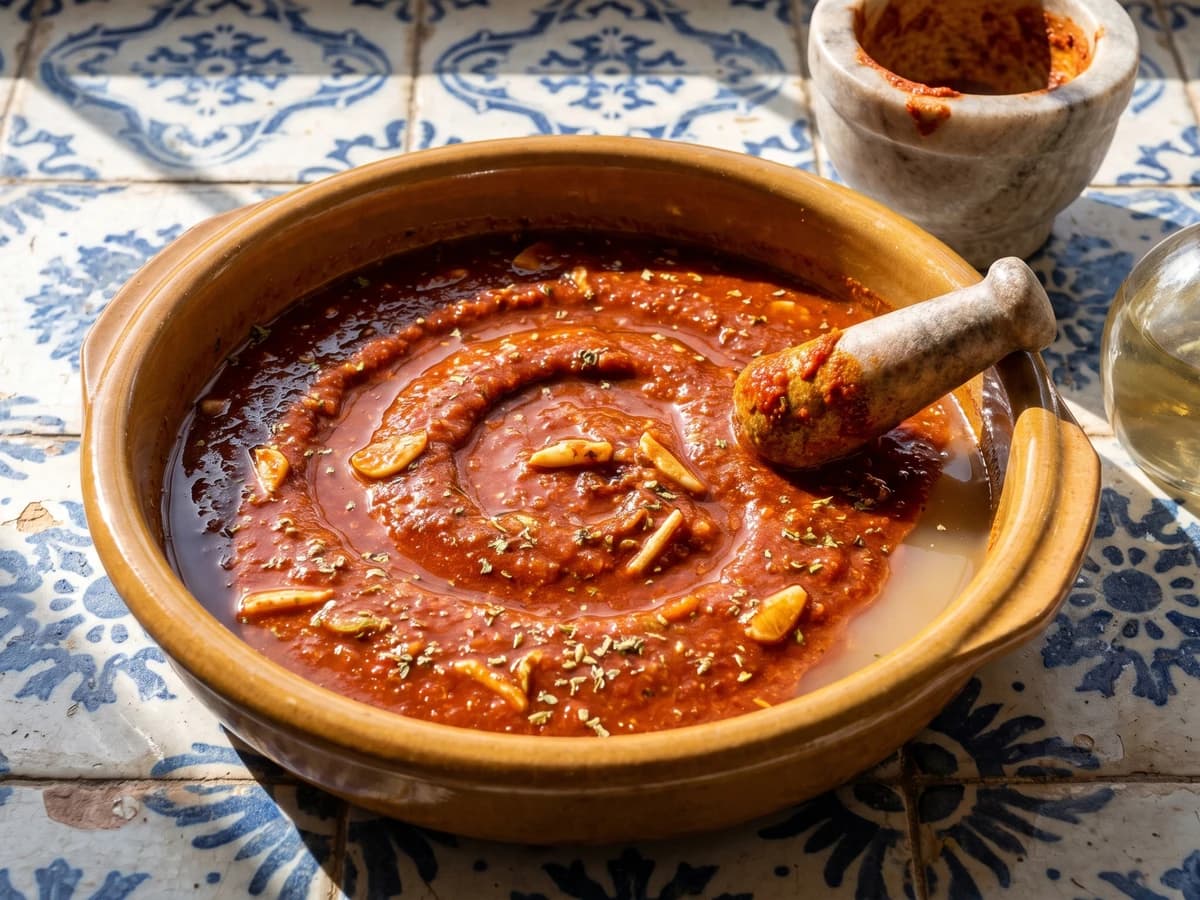
Andalucía's sharp, brick-red marinade brings vinegar, garlic, oregano, cumin and pimentón to fish and pork; pound the seasonings first, then give the acid time to carry them through.
Chef Isabel
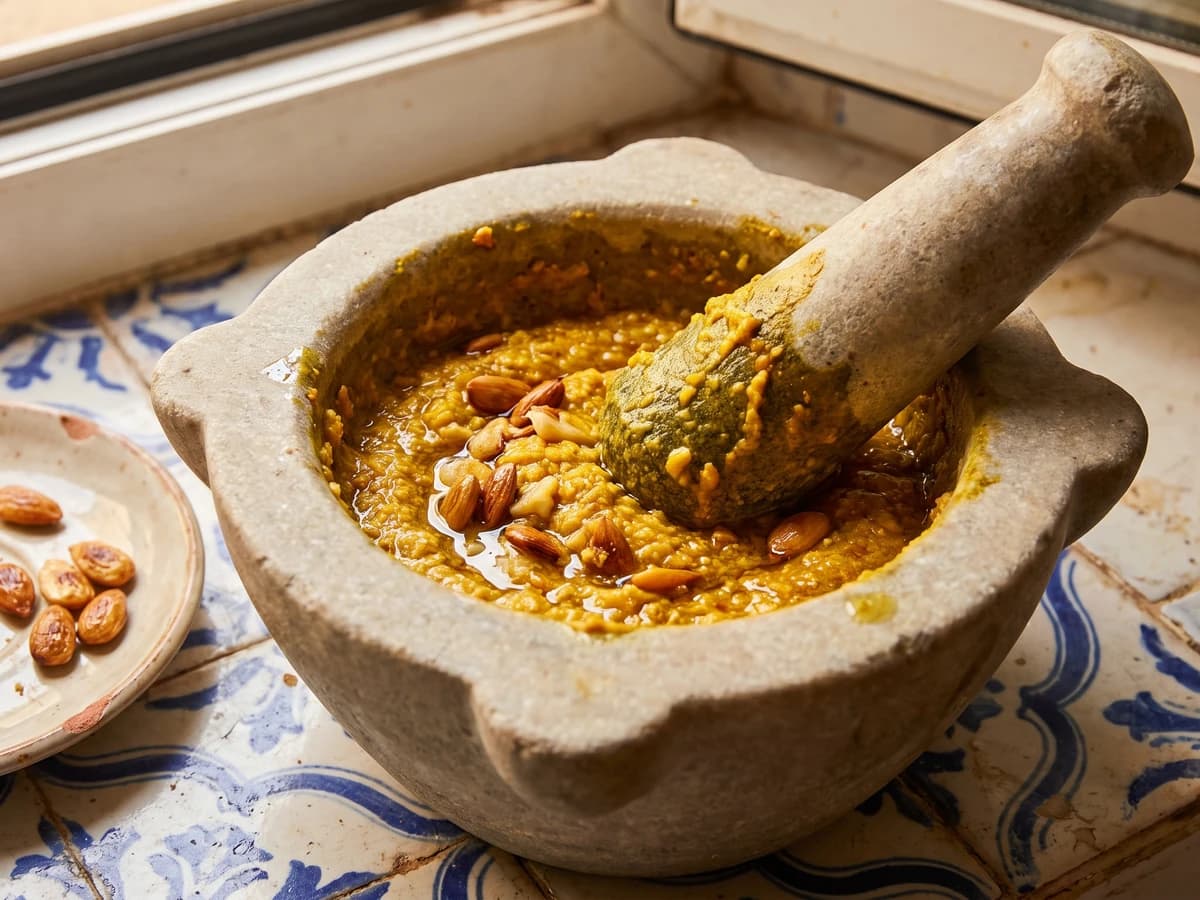
Almería's ajopollo turns fried garlic, almonds, bread and saffron into a golden mortar paste that gives modest fish and potato guisos their body, richness and unmistakable southern depth.
Chef Isabel
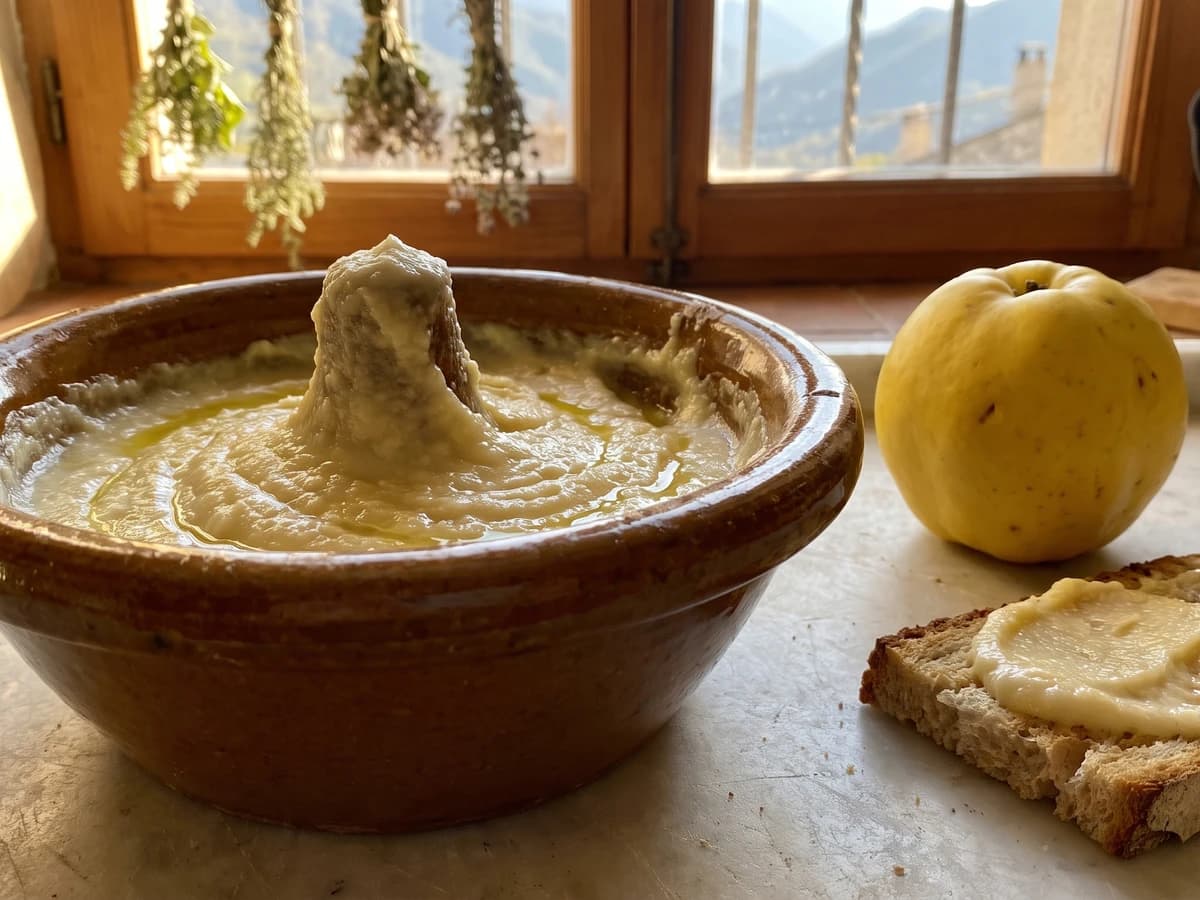
Allioli de codony belongs to the Catalan Pyrenees: boiled quince, raw garlic, salt, and olive oil worked into a thick, fragrant sauce for grilled meat, sausages, bread, and the autumn table.