Chef Juliette
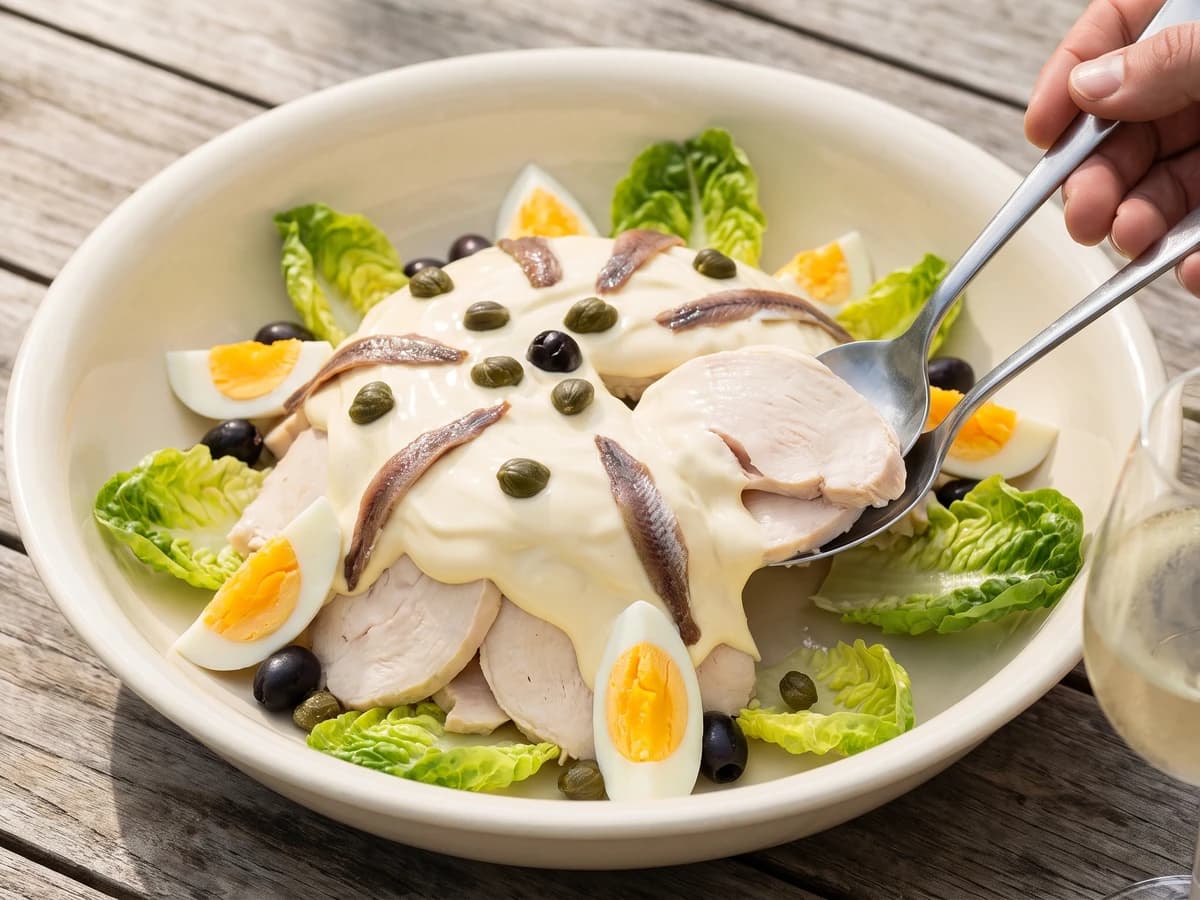
Mayonnaise de Volaille
Cold roast chicken, ciseled lettuce, and a shining coat of homemade mayonnaise, arranged with capers, olives, anchovies, eggs, and lettuce hearts, then tossed at the table as the canon intends.
A cooking platform built around craft, culture, and the stories behind what we eat.
Created by Chef Juliette
Based on No. 963, Salade de Homard, from Le Guide Culinaire (1907) by Auguste Escoffier
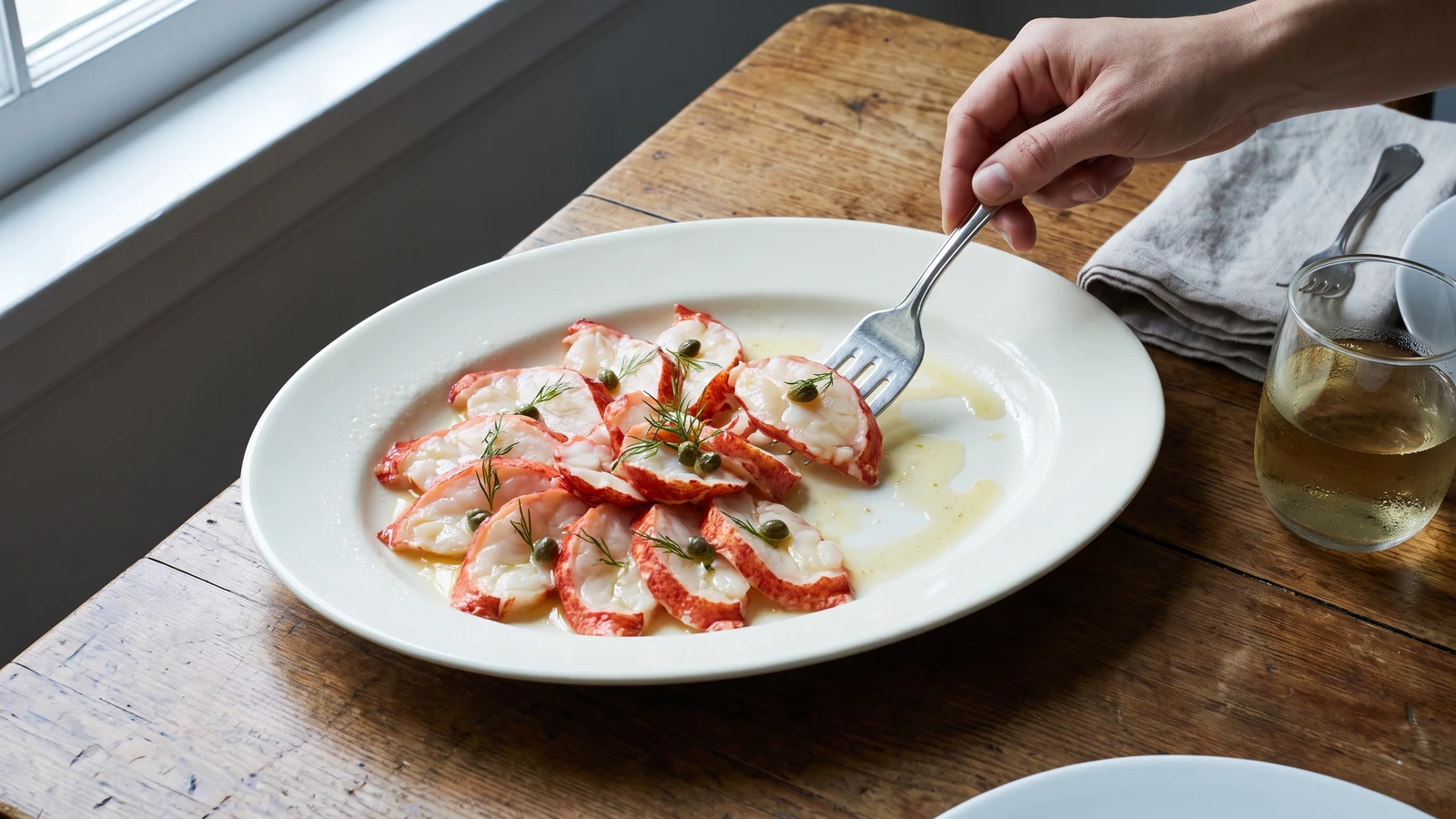
Cold lobster collops, seasoned as an ordinary salad and garnished directly, make a composed first course whose discipline is restraint: no mayonnaise, no masking, only sweet shellfish carried by clean seasoning.
Salade de Homard (lobster salad) teaches the hardest form of restraint: when the principal ingredient is splendid, seasoning must carry it rather than cover it. The source is exact about this. Tail meat is cut into collops, dressed as an ordinary salad, and given its decorating garnish directly on top. No mayonnaise. The lobster is the point.
The original entry assumed a brigade pantry where Salade de Saumon (No. 810) was already understood and a platter could be assembled in service quantities without explanation. At home, the honest equivalent is one home-scale batch of that referenced preparation, with its salmon replaced by enough lobster for four. There is no saucier, stockpot, or salamander to replace because the dish calls for none; the brigade scaffolding is scale and cross-reference, while the clean seasoning and direct garnish are the dish and must stay. One cook, one stove, one evening, and the stove may remain cold.
Before you touch a knife, make certain the cooked lobster is cold and absolutely dry. Water makes the seasoning slide away and collect at the platter's edge; dry collops take a fine gloss and still taste unmistakably of lobster. This is the step that decides the salad.
Salade de homard belongs to the Parisian classical cold table, where Atlantic lobster arriving from Brittany and Normandy was sliced into collops and arranged as a composed first course. It passed from formal service into bourgeois dining rooms because most of the work could be finished before guests sat down. The source formula corrects a common assumption: mayonnaise is absent, and the lobster is seasoned exactly as an ordinary salad.
Quantity
2 large tails, yielding about 2 cups (475 ml / 340 g) shelled meat
thoroughly chilled in their shells
Quantity
1 home-scale batch Salade de Saumon (No. 810), enough for 4 servings
prepared through its salad-seasoning and decorating-garnish stage with the salmon omitted
| Ingredient | Quantity |
|---|---|
| cooked lobster tailsthoroughly chilled in their shells | 2 large tails, yielding about 2 cups (475 ml / 340 g) shelled meat |
| referenced salmon-salad preparationprepared through its salad-seasoning and decorating-garnish stage with the salmon omitted | 1 home-scale batch Salade de Saumon (No. 810), enough for 4 servings |
Keep the cooked lobster tails in their shells until fully cold, then cut through the thin underside with kitchen shears and ease out the meat in whole pieces. Pat every surface absolutely dry. If thawed lobster releases water, lay it between clean towels in the cold for 10 minutes; ça se rattrape. Wet lobster cannot hold a clean, even seasoning.
Slice each tail crosswise into collops about 1/4 inch (6 mm) thick. Use one long, clean stroke so the slices keep their shape rather than fraying under the knife. Cover and return them to the cold while you ready the platter.
Bring Salade de Saumon (No. 810) to its finished salad-seasoning and decorating-garnish stage exactly as its own entry directs, omitting the salmon so the lobster can replace it. Keep the seasoning and garnish separate until assembly. Do not add mayonnaise; its absence is explicit, not an invitation for substitution.
Overlap the cold lobster collops across a chilled oval platter without packing them tightly. Place the decorating garnish from Salade de Saumon (No. 810) directly upon the lobster, as the source instructs, then season the whole as an ordinary salad. Use only enough seasoning to give the meat a fine gloss. If liquid pools at the edge, lift the lobster and garnish onto a clean chilled platter and spoon back only what clings; ça se rattrape.
Let the composed salad stand in the cold for 5 minutes, just long enough for the seasoning to settle across the collops. Serve within 15 minutes of dressing. A longer wait lets the acid tighten the lobster's surface and dulls its sweetness. Bring the platter directly to the table. À table!
1 serving (about 310g)
Culinary guides, cultural storytelling, and the editorial depth that makes cooking meaningful.
Discover Culinary ExplorerChef Juliette
Cold roast chicken, ciseled lettuce, and a shining coat of homemade mayonnaise, arranged with capers, olives, anchovies, eggs, and lettuce hearts, then tossed at the table as the canon intends.

Chef Juliette
Cold roast or poached chicken with fine ribbons of lettuce, dressed at the final moment with oil and vinegar: a composed salad whose freshness depends entirely on timing.

Chef Juliette
Five leaves, one living rule: laitue, romaine, chicorée, mâche, or pissenlit must be washed, dried, and dressed only as they go to the table, while every leaf still carries its light vinaigrette.

Chef Juliette
Salade de Betteraves proves that baking, not boiling, is the whole argument: concentrated garnet sweetness, tender baked onion, sharp mustard, and herbs cut into a weeknight salad worth making ahead.