Chef Juliette
Mayonnaise de Volaille
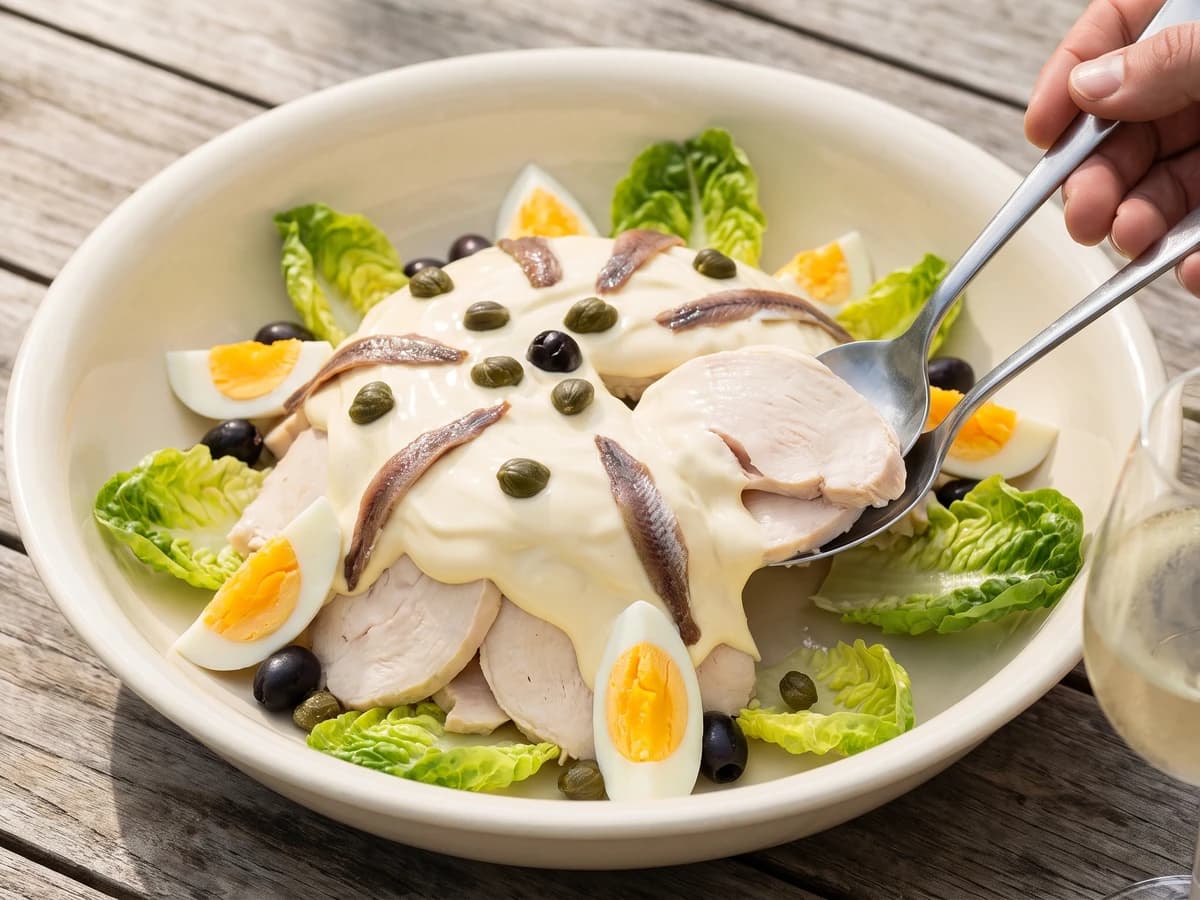
Cold roast chicken, ciseled lettuce, and a shining coat of homemade mayonnaise, arranged with capers, olives, anchovies, eggs, and lettuce hearts, then tossed at the table as the canon intends.
A cooking platform built around craft, culture, and the stories behind what we eat.
Created by Chef Juliette
Based on No. 810, Salade de Saumon, from Le Guide Culinaire (1907) by Auguste Escoffier
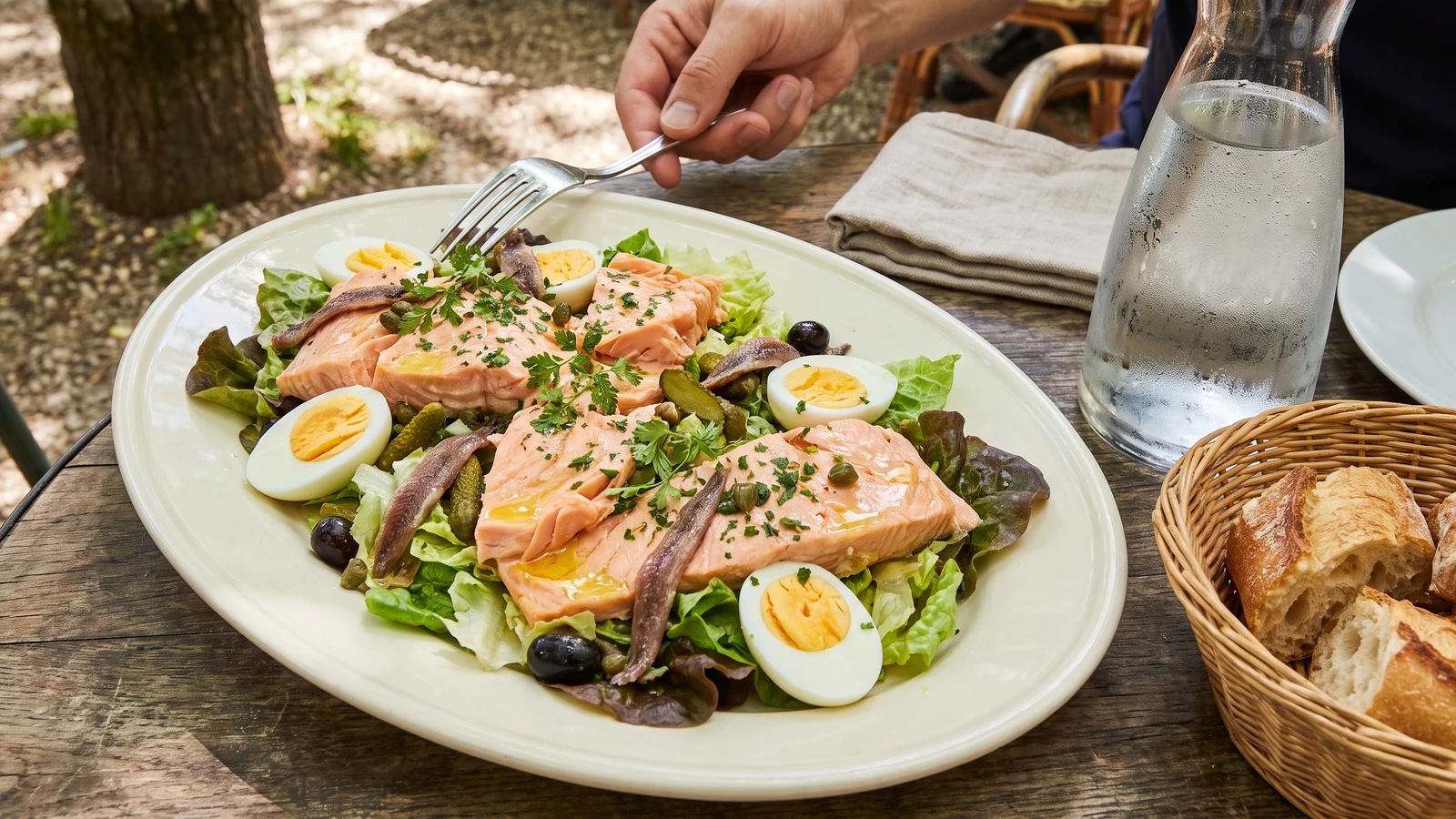
Cold poached salmon in generous flakes, crisp lettuce, and sharp vinaigrette, with egg, capers, cornichons, olives, and anchovy laid directly on the fish, exactly as this simpler classical salad intends.
Salade de Saumon (cold salmon salad) teaches the discipline of dressing a rich ingredient lightly. The one true thing to know before touching a pan is this: the salmon must meet the vinaigrette (oil-and-vinegar dressing) fully cold and dry. Warm fish drinks oil unevenly; wet fish loosens the dressing and wilts the lettuce.
The original entry assumed a cold larder with cooked salmon, washed lettuce, boiled eggs, and its little decorating garnishes already waiting. At home, one center-cut fillet poached in a wide saucepan replaces the fish kettle, and four plates replace the brigade platter. Precise symmetry is service scaffolding and can go. What stays is the dish itself: salmon in generous flakes, lettuce seasoned like an ordinary salad, no mayonnaise, and the garnish laid directly on the fish.
One cook, one stove, one evening. Keep the poach below a boil, chill the fish before flaking, and reserve enough vinaigrette to season the lettuce and salmon separately. Cooling and drying the fish is the step that matters most; once that is right, composing the platter is pleasure.
Salade de saumon belongs to the Parisian cold table, where cooked fish was commonly returned to service as a composed salad rather than reheated. In the classical repertoire it stands beside the mayonnaise version and makes a pointed distinction: the same flaked fish, lettuce, and decorating garnish are seasoned as an ordinary salad, with no masking sauce. Placing the garnish directly upon the salmon was part of the preparation, a formal platter detail that traveled easily into the bourgeois home.
Quantity
1 fillet, about 1½ lb (680 g)
Quantity
6 cups (1.4 L / 1.4 kg)
Quantity
1 tablespoon plus ¾ teaspoon (19 ml / 22 g)
divided
Quantity
2 heads, about 8 loosely packed cups (1.9 L / 240 g)
leaves washed and thoroughly dried
Quantity
4 tablespoons (60 ml / 55 g)
Quantity
1½ tablespoons (22.5 ml / 22 g)
Quantity
1 teaspoon (5 ml / 6 g)
Quantity
½ teaspoon (2.5 ml / 1 g)
Quantity
2
Quantity
8 fillets (32 g)
drained
Quantity
6 (75 g)
thinly sliced lengthwise
Quantity
2 tablespoons (30 ml / 18 g)
rinsed and drained
Quantity
12 (50 g)
Quantity
2 tablespoons (30 ml / 8 g)
finely chopped
| Ingredient | Quantity |
|---|---|
| center-cut skin-on salmon fillet | 1 fillet, about 1½ lb (680 g) |
| cold water | 6 cups (1.4 L / 1.4 kg) |
| fine sea saltdivided | 1 tablespoon plus ¾ teaspoon (19 ml / 22 g) |
| butter lettuceleaves washed and thoroughly dried | 2 heads, about 8 loosely packed cups (1.9 L / 240 g) |
| sunflower oil | 4 tablespoons (60 ml / 55 g) |
| white wine vinegar | 1½ tablespoons (22.5 ml / 22 g) |
| Dijon mustard | 1 teaspoon (5 ml / 6 g) |
| freshly ground black pepper | ½ teaspoon (2.5 ml / 1 g) |
| large eggs | 2 |
| anchovy filletsdrained | 8 fillets (32 g) |
| cornichonsthinly sliced lengthwise | 6 (75 g) |
| capersrinsed and drained | 2 tablespoons (30 ml / 18 g) |
| small black olives | 12 (50 g) |
| mixed flat-leaf parsley and chervilfinely chopped | 2 tablespoons (30 ml / 8 g) |
Lay the salmon skin-side down in a wide shallow saucepan and add the cold water with 1 tablespoon of the salt. Bring the water up slowly over medium heat until it barely trembles, then lower the heat, cover, and cook for 8 to 12 minutes. The thickest part should reach 145°F (63°C) and separate into moist flakes when pressed. Never let the water boil hard. If it does, lift the pan from the heat for a minute before continuing. Ça se rattrape: gentle heat from this point will keep the fish from tightening further.
Lift the salmon onto a rack set over a plate and let it cool for 15 minutes, then chill it uncovered for about 30 minutes. Remove the skin and any pin bones, blot every surface dry, and separate the flesh into generous flakes about 1 inch (2.5 cm) across. Cold and dry is the principle that decides this dish. If the fish still feels warm or beads moisture, wait and blot again before the vinaigrette comes near it.
While the salmon chills, lower the eggs into gently boiling water and cook for 9 minutes. Cool them promptly in cold water, peel, and cut each into quarters. Drain the anchovies, slice the cornichons, rinse the capers, and have the olives and chopped herbs ready. These are garnishes, but they also supply salt, acidity, and little changes of texture, so keep each recognizable.
Whisk the vinegar, Dijon mustard, remaining ¾ teaspoon salt, and black pepper until the salt dissolves. Add the sunflower oil in a thin stream, whisking until the vinaigrette becomes lightly emulsified and tastes bright enough to cut the salmon's richness. If it separates while standing, don't discard it. Ça se rattrape: whisk it vigorously just before dressing.
Keep a few handsome lettuce leaves whole and tear the rest into broad pieces. Toss the torn lettuce with half the vinaigrette, using just enough to make the leaves glisten without leaving liquid in the bowl. Arrange the whole leaves around a shallow platter and mound the dressed lettuce loosely in the center. Fold one quarter of the vinaigrette through the salmon with your fingers or two spoons, taking care not to crush the flakes, then settle the fish over the lettuce.
Lay the egg quarters, anchovy fillets, and cornichon slices directly upon the salmon, then scatter over the capers, olives, parsley, and chervil. Spoon over the remaining vinaigrette, concentrating it on the fish rather than flooding the lettuce. Serve at once, while the leaves remain crisp and the salmon is cool but not numbed by the refrigerator. À table!
1 serving (about 300g)
Culinary guides, cultural storytelling, and the editorial depth that makes cooking meaningful.
Discover Culinary ExplorerChef Juliette
Cold roast chicken, ciseled lettuce, and a shining coat of homemade mayonnaise, arranged with capers, olives, anchovies, eggs, and lettuce hearts, then tossed at the table as the canon intends.

Chef Juliette
Cold roast or poached chicken with fine ribbons of lettuce, dressed at the final moment with oil and vinegar: a composed salad whose freshness depends entirely on timing.

Chef Juliette
Five leaves, one living rule: laitue, romaine, chicorée, mâche, or pissenlit must be washed, dried, and dressed only as they go to the table, while every leaf still carries its light vinaigrette.

Chef Juliette
Salade de Betteraves proves that baking, not boiling, is the whole argument: concentrated garnet sweetness, tender baked onion, sharp mustard, and herbs cut into a weeknight salad worth making ahead.