Chef Juliette
Mayonnaise de Volaille
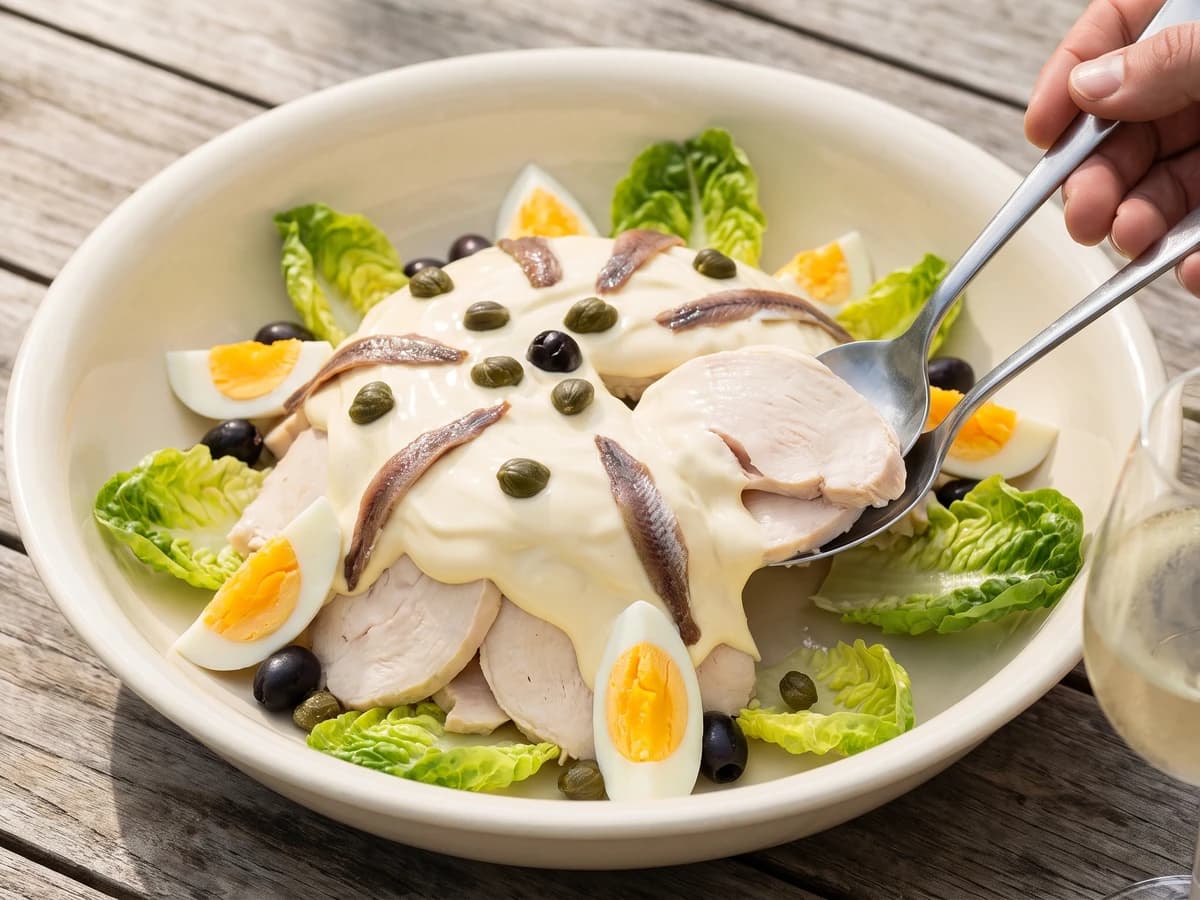
Cold roast chicken, ciseled lettuce, and a shining coat of homemade mayonnaise, arranged with capers, olives, anchovies, eggs, and lettuce hearts, then tossed at the table as the canon intends.
A cooking platform built around craft, culture, and the stories behind what we eat.
Created by Chef Juliette
Based on No. 1985, Simple Salads, from Le Guide Culinaire (1907) by Auguste Escoffier
Five leaves, one living rule: laitue, romaine, chicorée, mâche, or pissenlit must be washed, dried, and dressed only as they go to the table, while every leaf still carries its light vinaigrette.
Salades vertes simples teach timing. The finished leaves should be lively and cool, each carrying a fine gloss of vinaigrette without a puddle beneath it. The one true thing to know is this: a dressed leaf waits for nobody.
The source entry is professional shorthand, a catalog of laitue, romaine, chicorée, batavia, mâche, pissenlit, and the other leaves a garde-manger was expected to recognize, prepare, and season by judgment. It gives no brigade quantity or dressing formula because the salad station already had both at hand. The honest home translation is one bowl for four and a small three-to-one vinaigrette. A separate salad station is scaffolding; clean, dry leaves and last-second assaisonnement are the dish.
Choose one leaf for a salad with a clear character, or combine a few compatible ones for contrast. Dry them until a towel pressed against the leaves comes away clean, then wait to dress until everyone is ready to eat. That final minute decides everything.
The salade verte belongs to the everyday French table rather than one province, appearing at household suppers, Lyon bouchons, and Paris bistros alongside the main dish or before the cheese. The classical repertoire treats laitue, romaine, chicorée, batavia, mâche, pissenlit, celery leaves, purslane, and other greens as distinct simple salads, not merely interchangeable parts of a mixed bowl. Its long catalog records practical market knowledge: each leaf demanded its own trimming and handling, but all shared the same rule of immediate seasoning and service.
Quantity
8 loosely packed cups (1.9 L / 220 g)
trimmed and separated into leaves
Quantity
1½ tablespoons (22 ml / 22 g)
Quantity
½ teaspoon (2.5 ml / 3 g)
Quantity
¼ teaspoon (1.25 ml / 0.6 g)
Quantity
4½ tablespoons (67 ml / 61 g)
| Ingredient | Quantity |
|---|---|
| laitue, romaine, chicorée, batavia, mâche, pissenlit, or a compatible mixturetrimmed and separated into leaves | 8 loosely packed cups (1.9 L / 220 g) |
| red wine vinegar | 1½ tablespoons (22 ml / 22 g) |
| fine sea salt | ½ teaspoon (2.5 ml / 3 g) |
| freshly ground black pepper | ¼ teaspoon (1.25 ml / 0.6 g) |
| mild salad oil, such as sunflower or grapeseed | 4½ tablespoons (67 ml / 61 g) |
Discard yellowed, slimy, or badly bruised leaves, then trim according to character. Leave mâche rosettes whole after cutting away the root tuft, tear large laitue and romaine leaves along their natural divisions, and cut only the toughest chicorée or pissenlit stems. Choose one green for a distinct salad or combine tender leaves with a modest amount of something bitter. Hold back one small handful of dry leaves until the dressing is judged; it will join the bowl at the finish or rescue an overgenerous hand.
Lower the leaves into a large basin of cold water and move them gently with open fingers. Let the grit settle, then lift the leaves out instead of pouring the water away over them. Repeat with fresh water until no sand remains, paying particular attention to mâche and pissenlit. Spin in loose batches and spread the leaves over a clean towel until completely dry. If they are limp, soak them in very cold water for five to ten minutes before spinning. Ça se rattrape. Water left on the surface, however, dilutes the vinaigrette and prevents it from clinging.
Whisk the vinegar and salt until the salt dissolves, then add the pepper. Pour in the oil gradually while whisking to form a light, temporary emulsion. Taste it on a leaf, never from the spoon alone, because the green changes how the acidity reads. If it is too sharp, whisk in oil one teaspoon at a time; if it tastes dull, add vinegar by drops and another pinch of salt. Ça se rattrape. A vinaigrette naturally separates while it stands, so whisk it again just before dressing.
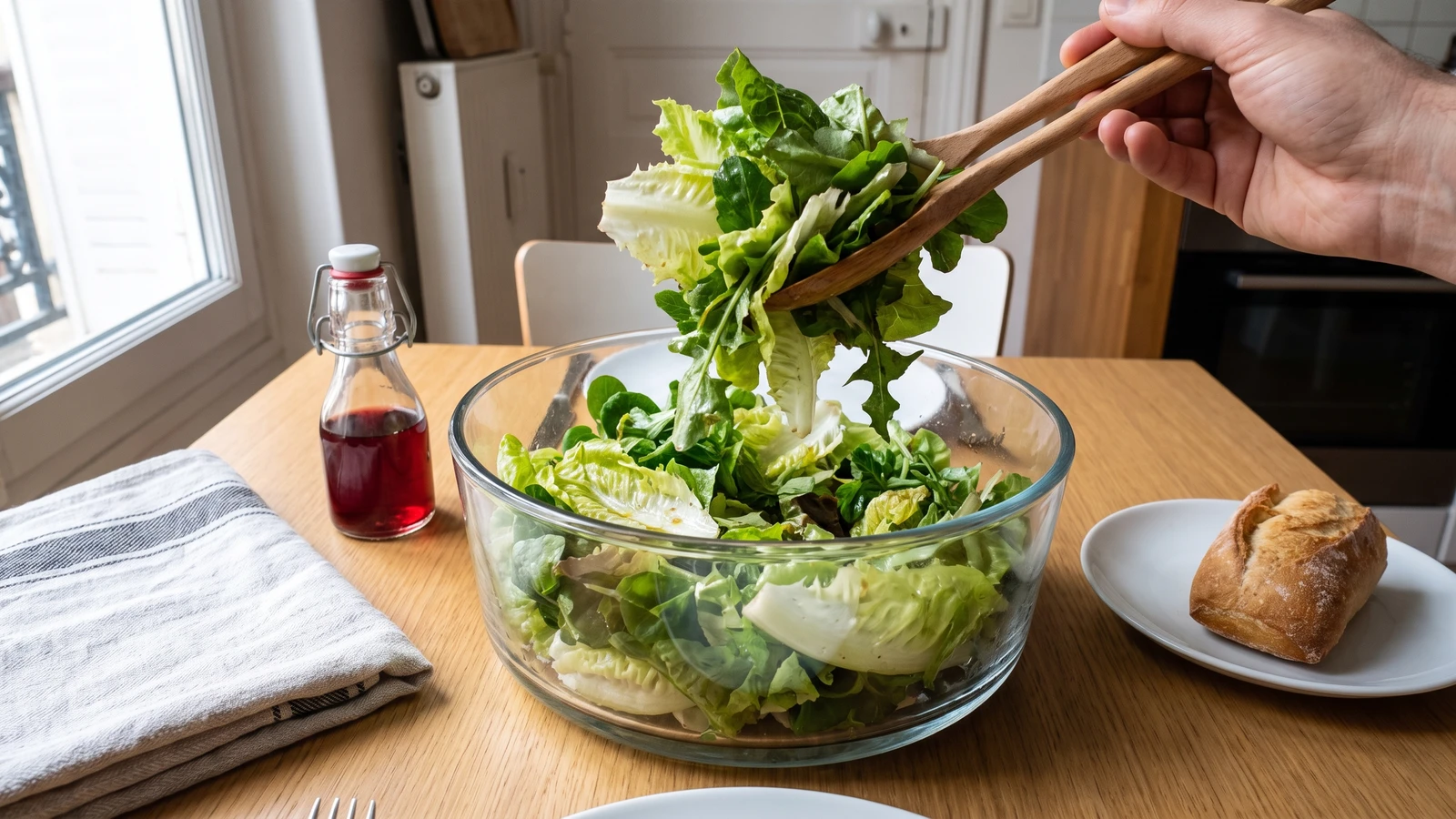
Assaisonnement, the final seasoning and dressing, happens only when the meal is ready. Put the dry leaves in a broad bowl, whisk the vinaigrette, and spoon two-thirds of it around the inside wall rather than dropping it heavily onto the centre. Lift and turn the leaves gently from the bottom until every surface carries a fine sheen. Taste one leaf and add only as much remaining vinaigrette as it needs. If dressing pools underneath, lift the salad into a clean dry bowl and toss in the reserved leaves. Never apologize at your own table. Correct it and carry on.
Add the reserved leaves if they were not needed for rescue, toss once more, and serve immediately while the greens remain crisp and distinct. Tender laitue should fold softly, romaine and batavia should keep their bite, mâche should remain in little rosettes, and chicorée or pissenlit should give the bowl its pleasant bitter edge. À table!
1 serving (about 77g)
Culinary guides, cultural storytelling, and the editorial depth that makes cooking meaningful.
Discover Culinary ExplorerChef Juliette
Cold roast chicken, ciseled lettuce, and a shining coat of homemade mayonnaise, arranged with capers, olives, anchovies, eggs, and lettuce hearts, then tossed at the table as the canon intends.

Chef Juliette
Cold roast or poached chicken with fine ribbons of lettuce, dressed at the final moment with oil and vinegar: a composed salad whose freshness depends entirely on timing.

Chef Juliette
Salade de Betteraves proves that baking, not boiling, is the whole argument: concentrated garnet sweetness, tender baked onion, sharp mustard, and herbs cut into a weeknight salad worth making ahead.

Chef Juliette
Salade de Céleri turns pale stalks into crisp curling fringes, then coats them with mustard and cream. The lesson is absolute: drain the celery hard, because water steals the sauce.