Chef Juliette
Mayonnaise de Volaille
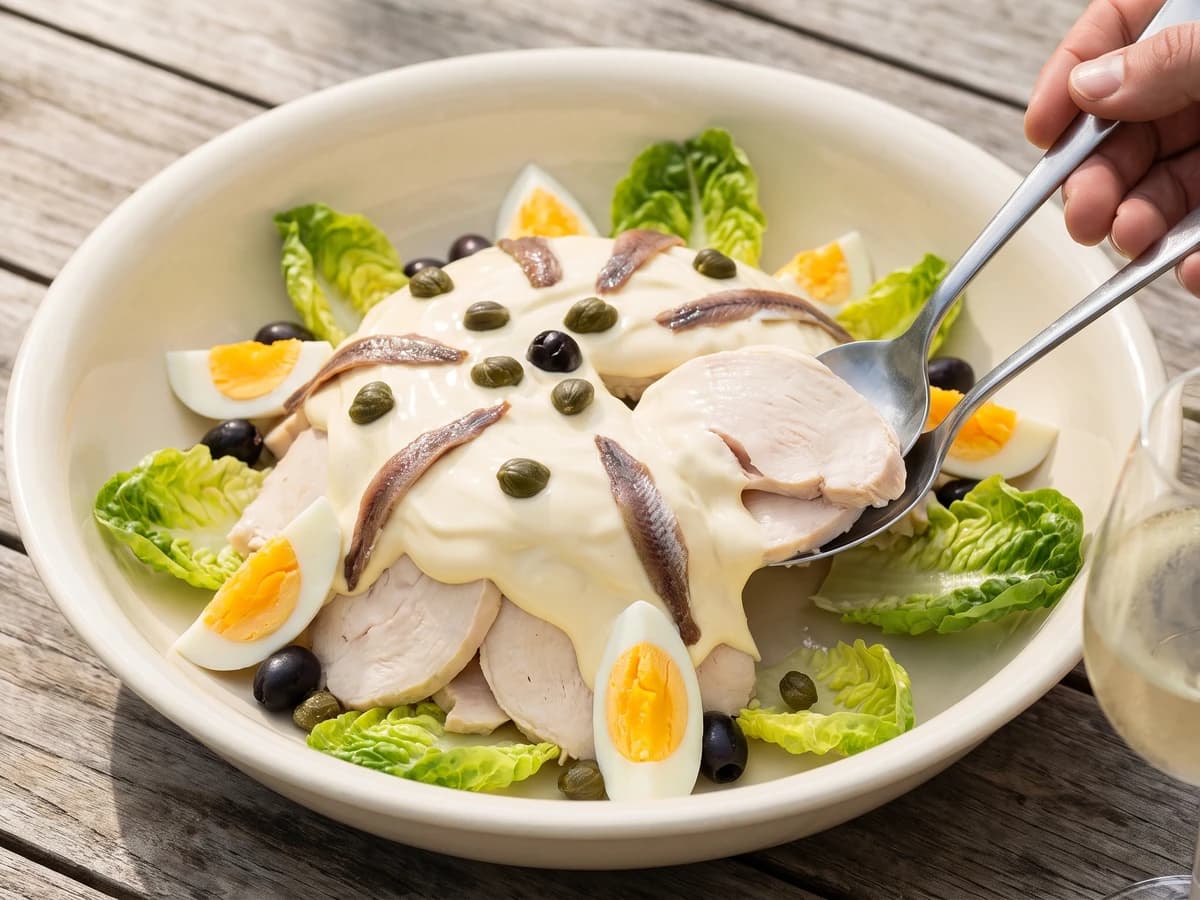
Cold roast chicken, ciseled lettuce, and a shining coat of homemade mayonnaise, arranged with capers, olives, anchovies, eggs, and lettuce hearts, then tossed at the table as the canon intends.
A cooking platform built around craft, culture, and the stories behind what we eat.
Created by Chef Juliette
Based on No. 1987, Celery Salad, from Le Guide Culinaire (1907) by Auguste Escoffier
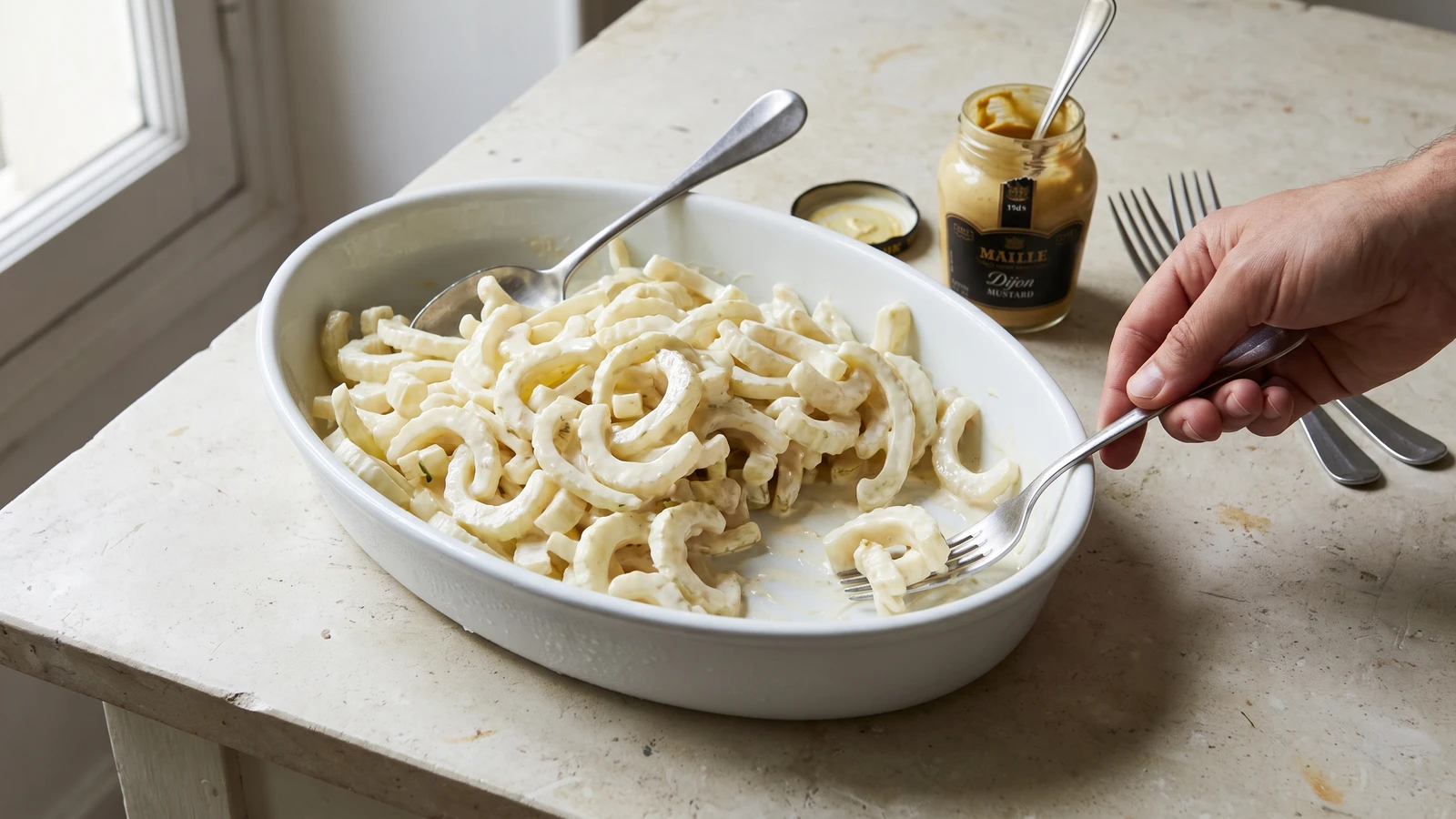
Salade de Céleri turns pale stalks into crisp curling fringes, then coats them with mustard and cream. The lesson is absolute: drain the celery hard, because water steals the sauce.
Salade de Céleri (celery salad) teaches a cold-kitchen truth: water left on a vegetable steals the body from its sauce. Pale stalks are cut into fine attached fringes, chilled until they curl, then coated with mustard and cream. It should eat with a crisp snap and a cool ivory gloss, not sit in a milky puddle.
The original formula assumed fibreless white celery and a garde-manger with a wide basin, hours of cold holding, and hands practiced at decorative knife work. It needed no saucier, stockpot, or salamander. At home, use the palest celery hearts you can find, peel away any stubborn strings, and replace the dedicated cold station with a bowl in the refrigerator, a salad spinner, and a clean towel. The brigade quantity and separate station are scaffolding; they can go. The cisel, the cold soak, and the mustard sauce with cream are the dish, so they stay. One cook, one stove left cold, one evening.
The one step that decides everything is the draining. Spin the curled celery thoroughly, spread it on a towel, and blot until it feels dry beneath your fingers. Do that honestly and the sauce clings; neglect it and even good cream runs away.
Salade de Céleri belongs to the cold hors-d'oeuvre repertoire of Parisian classical kitchens, where the garde-manger prized blanched, fibreless stalk celery and refreshed its fine cuts in water until they curled for service. English celery in the classical formula describes this pale, tender type of stalk, not a British dressing or regional claim. The salad moved easily from formal cold tables to bourgeois lunches, and it must not be confused with céleri rémoulade, which is made from grated celeriac rather than stalk celery.
Quantity
2 small hearts (about 1 pound / 450 g after trimming)
outer green stalks removed
Quantity
8 cups (1.9 L / 1.9 kg)
very cold
Quantity
1½ tablespoons (22.5 ml / 23 g)
Quantity
2 teaspoons (10 ml / 10 g)
Quantity
⅓ cup (80 ml / 80 g)
well chilled
Quantity
½ teaspoon (2.5 ml / 3 g)
Quantity
⅛ teaspoon (0.6 ml / 0.3 g)
| Ingredient | Quantity |
|---|---|
| fibreless white celery heartsouter green stalks removed | 2 small hearts (about 1 pound / 450 g after trimming) |
| cold watervery cold | 8 cups (1.9 L / 1.9 kg) |
| Dijon mustard | 1½ tablespoons (22.5 ml / 23 g) |
| white wine vinegar | 2 teaspoons (10 ml / 10 g) |
| heavy creamwell chilled | ⅓ cup (80 ml / 80 g) |
| fine salt | ½ teaspoon (2.5 ml / 3 g) |
| finely ground white pepper | ⅛ teaspoon (0.6 ml / 0.3 g) |
Separate the pale inner stalks and wash between every rib, where grit likes to hide. Trim away the root and leaves, then pull off any coarse strings with a vegetable peeler. Cut the stalks crosswise into pieces about 2 inches (5 cm) long. The source calls for fibreless white celery because dark outer stalks remain tough and bitter when served raw; peeling tender inner stalks is the honest modern equivalent when fully blanched celery is unavailable.
Place each celery piece trough-side down so it cannot rock. To cisel here means cutting it lengthwise into very fine parallel fringes, about 1/16 inch (1.5 mm) wide, while stopping 1/4 inch (6 mm) before the base so the strips remain attached like a little brush. Use the tip of a sharp knife and work deliberately. If the base separates, keep the loose strips; they will still curl and taste exactly right, though the shape will be less formal.
Submerge the cisel celery in the very cold water and refrigerate it for 2 hours. The fine fringes will firm and turn outward as they absorb the cold water. If they remain straight, replace the water with colder water and give them another 30 minutes; thick cuts curl reluctantly, but more time and colder water will improve them.
Lift the celery into a colander and leave it for 5 minutes, then spin it thoroughly in a salad spinner. Spread it over a clean kitchen towel and blot every surface, opening the curled fringes gently so no water hides inside. The celery should feel cold and dry, not merely drained. This is the step that makes the sauce cling.
Whisk the Dijon mustard, white wine vinegar, salt, and white pepper until smooth. Add the chilled cream in three additions, whisking gently after each, until the sauce is ivory, lightly thickened, and able to coat a spoon. Stop before the cream begins to hold peaks. Reserve one-quarter of the sauce in the cold; it is your insurance against any water the celery may still release.
Put the dry celery in a chilled bowl and fold in the remaining sauce a spoonful at a time, using only enough to coat every curl without burying it. Taste and adjust the salt, then serve at once or refrigerate for no more than 20 minutes. If a watery puddle forms, lift the celery out, spin and blot it again, then coat it with the reserved sauce. Ça se rattrape. Bring the salad to the table while the curls are still lively. À table!
1 serving (about 140g)
Culinary guides, cultural storytelling, and the editorial depth that makes cooking meaningful.
Discover Culinary ExplorerChef Juliette
Cold roast chicken, ciseled lettuce, and a shining coat of homemade mayonnaise, arranged with capers, olives, anchovies, eggs, and lettuce hearts, then tossed at the table as the canon intends.

Chef Juliette
Cold roast or poached chicken with fine ribbons of lettuce, dressed at the final moment with oil and vinegar: a composed salad whose freshness depends entirely on timing.

Chef Juliette
Five leaves, one living rule: laitue, romaine, chicorée, mâche, or pissenlit must be washed, dried, and dressed only as they go to the table, while every leaf still carries its light vinaigrette.

Chef Juliette
Salade de Betteraves proves that baking, not boiling, is the whole argument: concentrated garnet sweetness, tender baked onion, sharp mustard, and herbs cut into a weeknight salad worth making ahead.