Chef Juliette
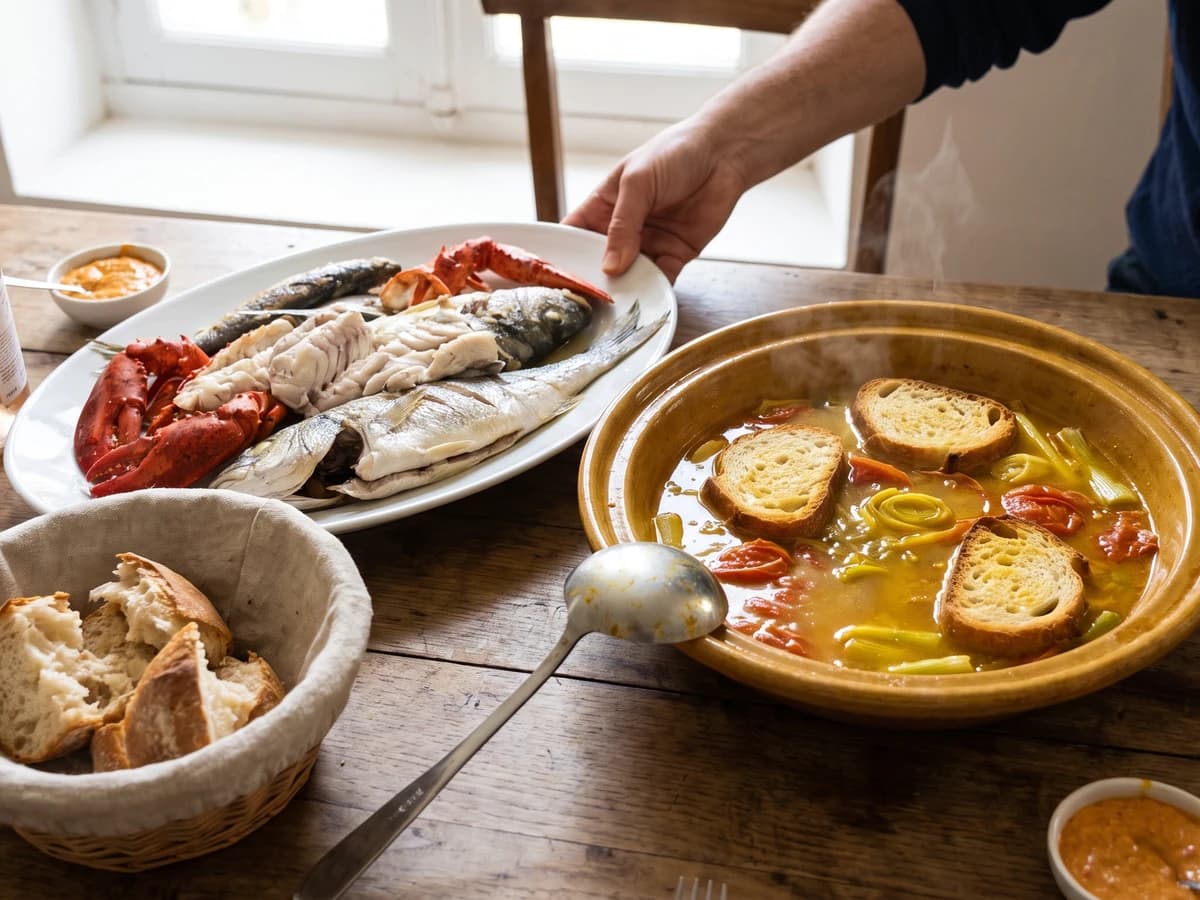
Bouillabaisse à la Marseillaise
Marseille's great fish stew, saffron-gold and garlic-scented, proves that a hard boil can be the careful choice: it binds olive oil into broth before the whole pot meets bread.
A cooking platform built around craft, culture, and the stories behind what we eat.
Created by Chef Juliette
Based on No. 728, Potage Lavallière, from Le Guide Culinaire (1907) by Auguste Escoffier
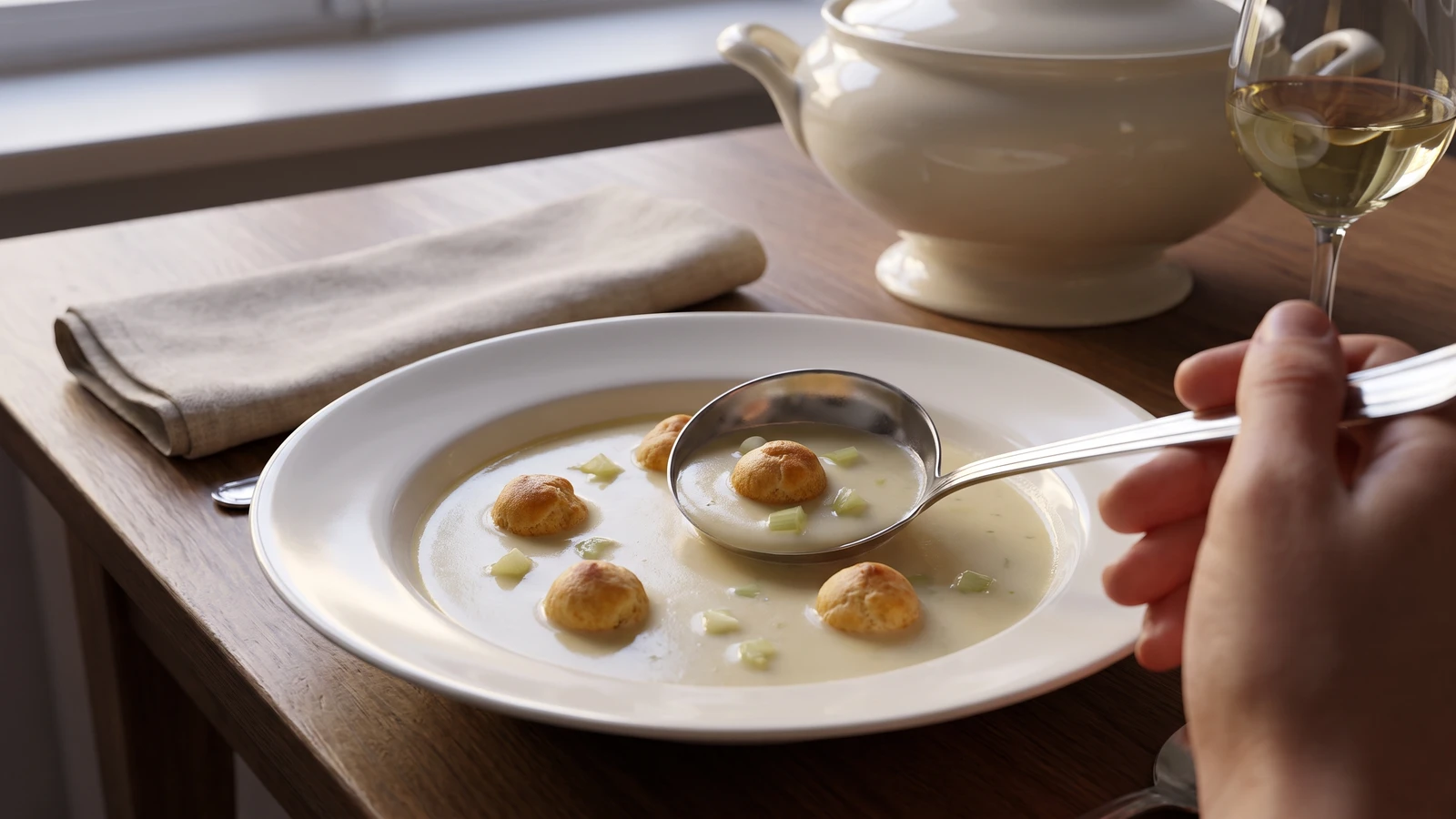
Two cream soups, chicken and celery, joined by a careful liaison and served with tiny chicken-filled profiteroles and cubes of celery royale: soft, rich, and quietly grand.
Potage Lavallière (a cream soup of chicken and celery) teaches the quiet discipline of the liaison, a yolk-and-cream binding that gives soup a satiny body without making it heavy. One truth decides everything before you touch the pan: once the yolks enter, the pot must never boil.
The original assumed a saucier tending two cream soups, a pastry cook producing trays of hazelnut-sized choux, and a stockpot never off the fire. Your kitchen needs two saucepans, the referenced preparations made ahead, and one shallow dish for the celery royale. Here the formula is scaled to about two quarts while preserving the original 9:4 balance of chicken cream to celery cream; twenty profiteroles keep the garnish proportional to the original twelve. The brigade handoffs are scaffolding and can go. The separately finished creams, the liaison, and the three-part garnish are the dish and must stay.
When it reaches the table, the potage should be cream-ivory and fluid enough to pour, with pale green cubes beneath its surface and little golden profiteroles floating on top. Temper both liaisons patiently, then keep the heat gentle. That is the step that matters.
Potage Lavallière belongs to the Parisian classical repertory of named composed soups, and its courtly name points to the La Vallière title rather than to a French region. It moved naturally from formal dining rooms to bourgeois dinner tables because its grandeur comes from preparations made ahead and assembled precisely, not from rare ingredients. Despite its seamless appearance, it is not one blended soup: the separate chicken and celery creams, each finished with liaison before marriage, define the dish.
Quantity
4¾ cups (1.12 L / about 1.15 kg) Crème de Volaille Princesse (No. 713)
prepared
Quantity
2⅛ cups (500 ml / about 515 g)
prepared
Quantity
¾ cup (180 ml / 175 g)
Quantity
3 large
Quantity
⅓ cup (80 ml / 78 g)
Quantity
1 large
Quantity
¼ cup (60 ml / 58 g)
Quantity
1½ cups (360 ml / 150 g)
thinly sliced
Quantity
2 tablespoons (30 ml / 28 g)
divided
Quantity
¼ cup (60 ml / 60 g)
Quantity
⅓ cup (80 ml / 78 g)
Quantity
2 large
Quantity
1 large
Quantity
¾ cup (180 ml / 175 g)
thoroughly chilled
Quantity
1 teaspoon (5 ml / 6 g), plus more as needed
Quantity
¼ teaspoon (1.25 ml / 0.6 g), plus more as needed
| Ingredient | Quantity |
|---|---|
| Crème de Volaille Princesseprepared | 4¾ cups (1.12 L / about 1.15 kg) Crème de Volaille Princesse (No. 713) |
| Crème de Céleriprepared | 2⅛ cups (500 ml / about 515 g) |
| heavy cream for the poultry liaison | ¾ cup (180 ml / 175 g) |
| egg yolks for the poultry liaison | 3 large |
| heavy cream for the celery liaison | ⅓ cup (80 ml / 78 g) |
| egg yolk for the celery liaison | 1 large |
| cold heavy cream for adjusting or rescue (optional) | ¼ cup (60 ml / 58 g) |
| tender inner celery stalksthinly sliced | 1½ cups (360 ml / 150 g) |
| unsalted butterdivided | 2 tablespoons (30 ml / 28 g) |
| water | ¼ cup (60 ml / 60 g) |
| heavy cream for the celery royale | ⅓ cup (80 ml / 78 g) |
| eggs for the celery royale | 2 large |
| egg yolk for the celery royale | 1 large |
| Profiterolles for Soupsbaked and unfilled | 20 small Profiterolles for Soups (No. 218) |
| fine chicken forcemeatthoroughly chilled | ¾ cup (180 ml / 175 g) |
| fine salt | 1 teaspoon (5 ml / 6 g), plus more as needed |
| ground white pepper | ¼ teaspoon (1.25 ml / 0.6 g), plus more as needed |
Heat the oven to 300°F (150°C). Melt 1 tablespoon of the butter in a small saucepan, add the sliced celery, water, and a small pinch each of salt and white pepper, then cover and cook gently for 10 to 12 minutes. The celery should become completely tender without taking colour. Uncover and let any loose water evaporate, then blend the celery with the royale cream until perfectly smooth. Whisk the 2 whole eggs and 1 yolk only until combined, stir them into the celery mixture, and pass everything through a fine sieve. Butter a shallow 6-inch (15 cm) square dish with the remaining butter, pour in the custard, and cover loosely with foil. Set the dish in a roasting pan and add hot water to reach halfway up its sides. Bake for 25 to 35 minutes, until the edges are set and the centre gives one soft tremble. If the surface begins to puff or bubble, remove the dish from the water at once and lower the oven by 25°F (15°C). Ça se rattrape: once chilled, trim away any porous edge and use the smooth centre. Cool, then chill until firm.
Heat the oven to 350°F (175°C). Make a small opening in the flat side of each Profiterolle for Soups (No. 218). Put the cold chicken forcemeat into a piping bag with a narrow plain tip and fill each shell without forcing it until it splits. Arrange the shells opening-side down on a tray and bake for 10 to 14 minutes, until the filling reaches 165°F (74°C) at the centre. If the shells soften before the filling is cooked, leave them a few minutes longer at the same heat; higher heat browns the choux before the chicken is safe. Keep them warm and dry.
Put the Crème de Volaille Princesse (No. 713) in one heavy saucepan and the Crème de Céleri in another. Warm them separately over medium-low heat, stirring often and scraping the pan floors, until each is hot and just beginning to quiver at the edges. Do not let either reduce or form a skin. Their original 9:4 balance must remain intact.
In one heatproof bowl, whisk the 3 poultry-liaison yolks with the ¾ cup cream. In a second bowl, whisk the remaining liaison yolk with the ⅓ cup cream. Whisk until smooth, not foamy. Air has no work here; the liaison should thicken the soup quietly.
Whisk two ladlefuls of hot Crème de Volaille Princesse (No. 713) gradually into its three-yolk liaison, then return the mixture to the poultry saucepan. Temper the celery liaison in the same way with the hot Crème de Céleri and return it to its pan. Stir each over the gentlest heat until it lightly coats the back of a spoon, about 170 to 175°F (77 to 80°C). Never boil a liaison. If either cream becomes grainy, pull it from the heat immediately, whisk in 1 tablespoon of the reserved cold cream, blend briefly, and pass it through a fine sieve. Ça se rattrape, provided you act before the yolks become firm curds.
Pour both finished creams into one clean saucepan and stir until the colour and texture are completely even. Hold the Potage Lavallière over very low heat, never above 175°F (80°C). It should pour in a broad ribbon and leave a light veil on a spoon. If it is too thick, loosen it with the remaining cold cream, one spoonful at a time. Taste for salt and white pepper, seasoning carefully so the celery remains distinct beneath the chicken.
Run a thin knife around the cold celery royale and turn it onto a board. Cut it into neat ¼-inch (6 mm) dice with a damp knife. If the custard tries to crumble, chill it for another 20 minutes and cut slightly larger cubes; cold custard cuts cleanly, warm custard sulks. Divide the dice among warmed soup bowls or place them in the bottom of a warmed soupière.
Ladle the Potage Lavallière over the celery royale and add the warm chicken-filled Profiterolles for Soups (No. 218) at the final moment so their golden shells retain some delicacy. Allow four for a generous bowl, or two to three for smaller dinner-party portions. Serve immediately, while the surface is glossy and the liaison still fluid. À table!
1 serving (about 340g)
Culinary guides, cultural storytelling, and the editorial depth that makes cooking meaningful.
Discover Culinary ExplorerChef Juliette
Marseille's great fish stew, saffron-gold and garlic-scented, proves that a hard boil can be the careful choice: it binds olive oil into broth before the whole pot meets bread.
Chef Juliette
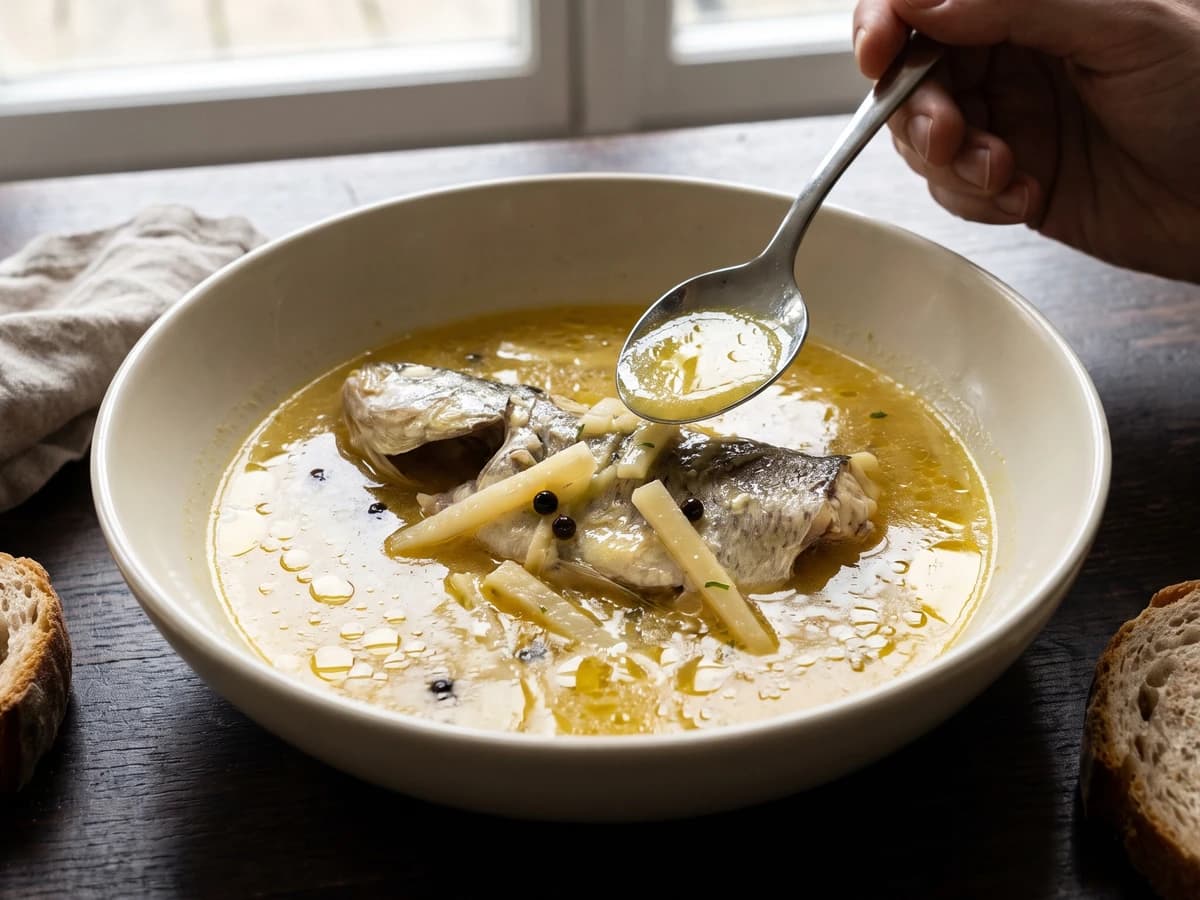
Waterzoi asks fresh, bone-in river fish to thicken its own buttery broth, with parsley root and pepper for company. No flour, no stockpot, just a brisk simmer watched closely.
Chef Juliette
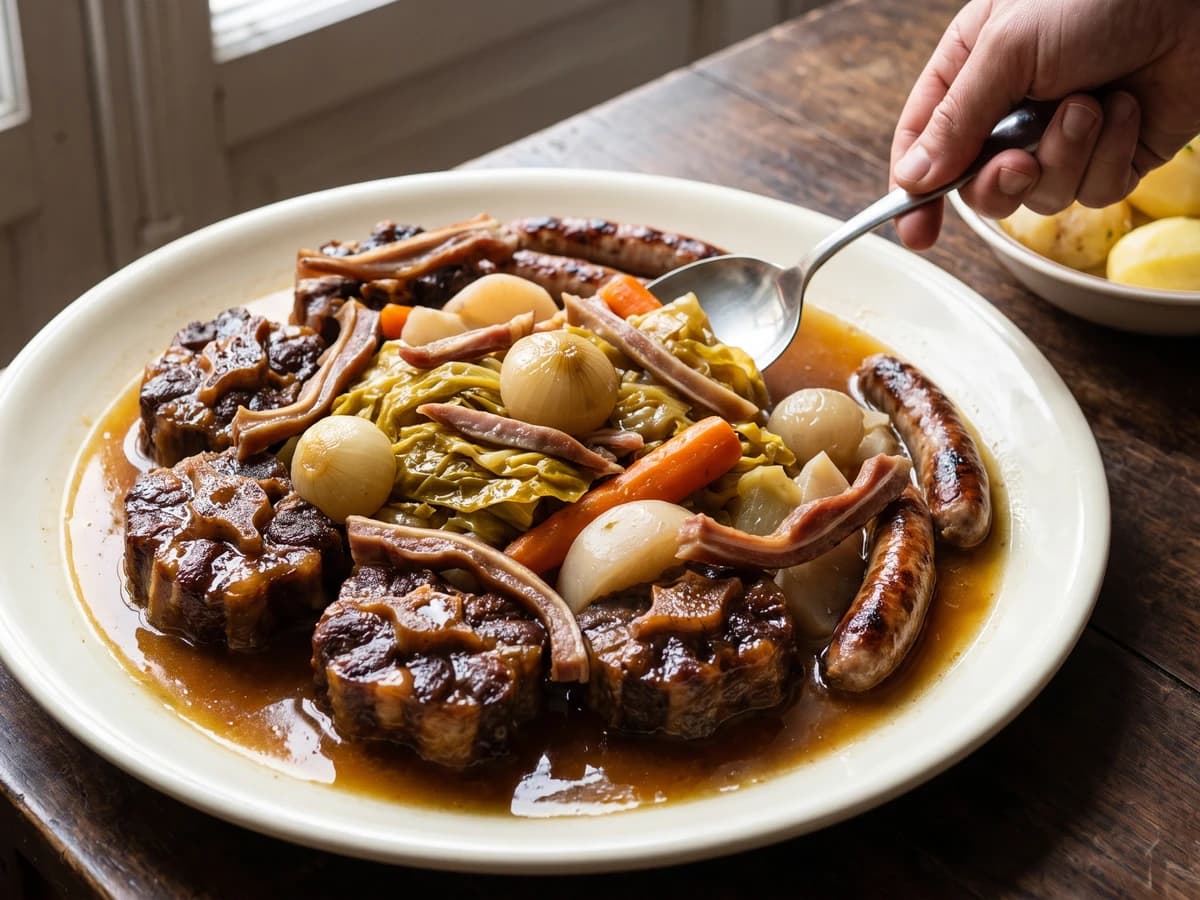
Queue de Bœuf en Hochepot gathers oxtail, pig's trotter and ear, cabbage, roots, and grilled chipolatas around a clear, gelatin-rich broth whose quiet simmer keeps every piece tender and distinct.
Chef Juliette
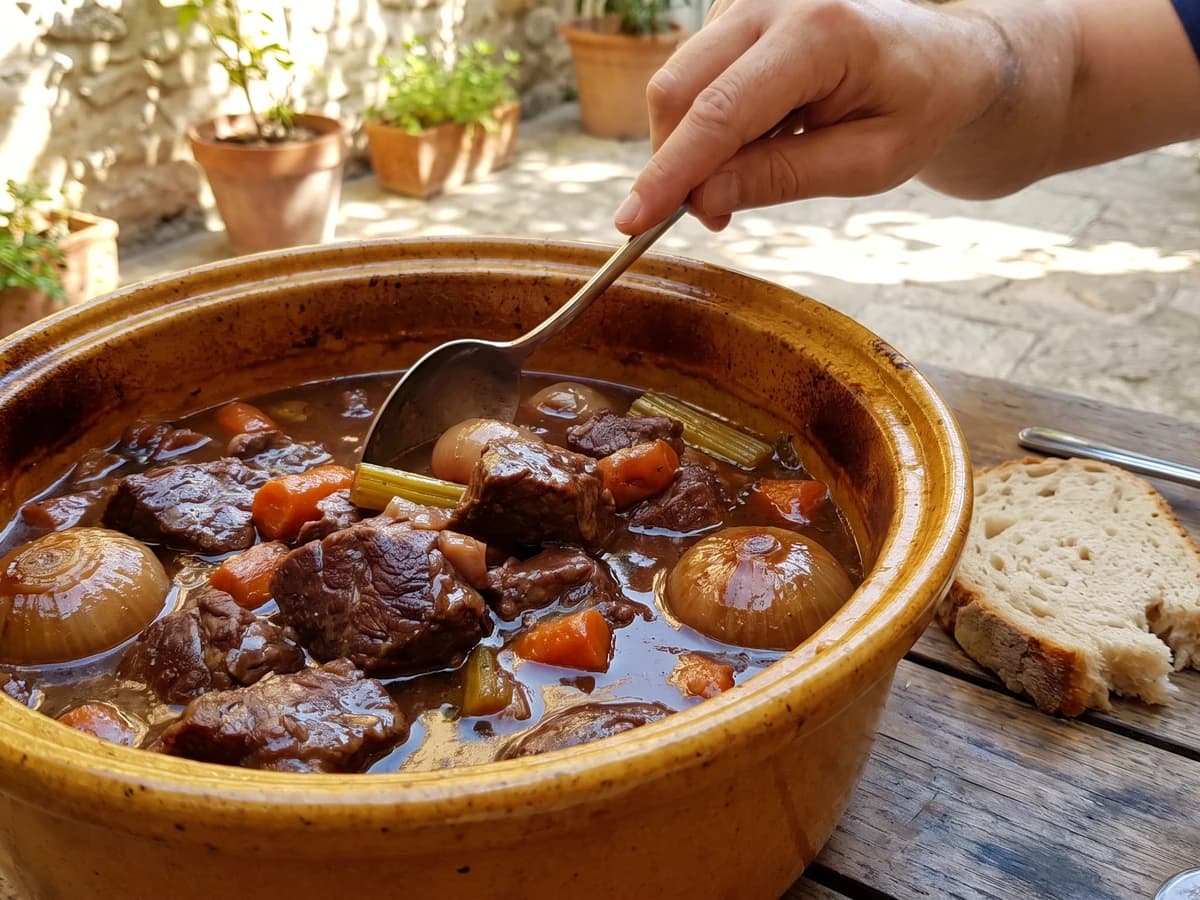
Beef shoulder larded with bacon, sharpened by red wine and vinegar, then sealed with garlic, vegetables, and dry lemon peel until the low oven turns it yielding and the gravy darkly glossy.