Chef Juliette
Bouillabaisse à la Marseillaise
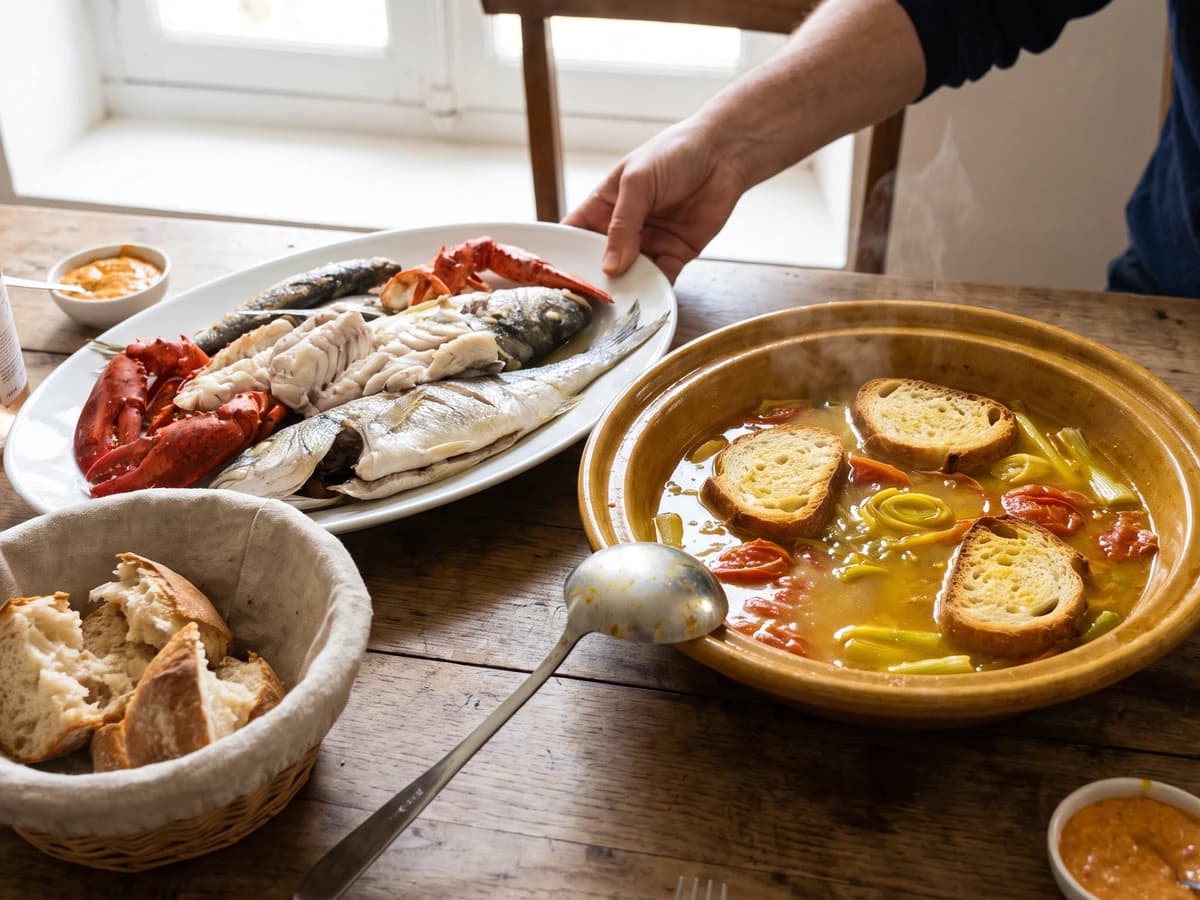
Marseille's great fish stew, saffron-gold and garlic-scented, proves that a hard boil can be the careful choice: it binds olive oil into broth before the whole pot meets bread.
A cooking platform built around craft, culture, and the stories behind what we eat.
Created by Chef Juliette
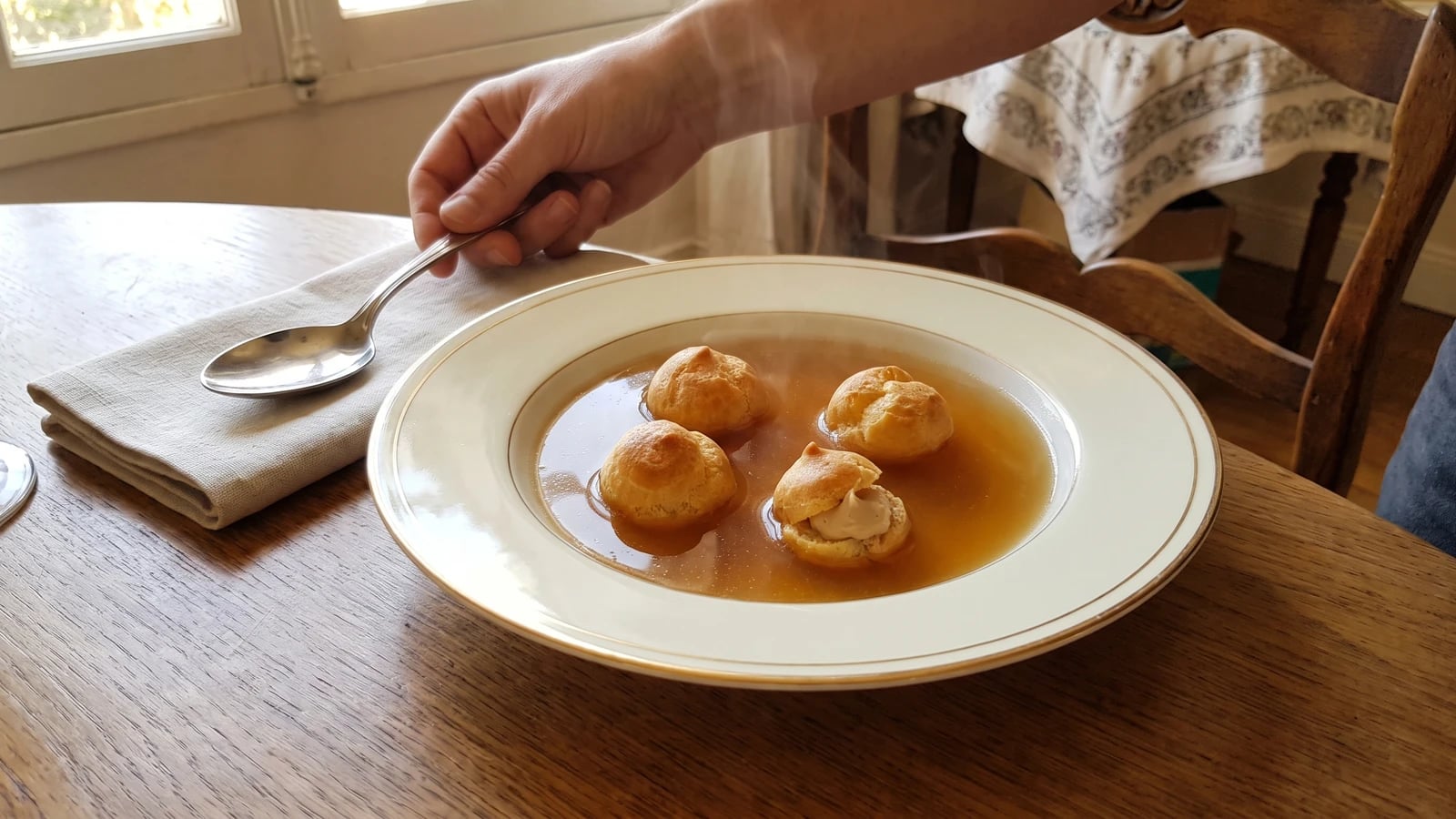
Based on No. 218, Profiterolles for Soups, from Le Guide Culinaire (1907) by Auguste Escoffier
Hazelnut-small savory choux teach precision in miniature: pipe evenly, gild lightly, and bake them dry before filling each golden shell with foie gras or chicken purée and floating four in clear consommé.
Profiterolles pour potages (savory choux for soups) teach precision in miniature. The one true thing to know before you touch the piping bag is that rising isn't enough: these little choux must dry completely, or the filling and consommé turn them sodden before the spoon reaches your mouth.
The original entry assumed a brigade batch of paste, a smooth quarter-inch pipe, a stockpot of consommé never off the fire, and several finished purées ready to fill hundreds of shells. Your home equivalent is 60 grams of the finished referenced paste, a 6-millimeter plain tip, one sheet pan, and one small filling, enough for sixteen profiterolles at four per bowl. A smooth pâté de foie gras beaten with cream replaces a separate prepared foie gras purée; cooked chicken, butter, and cream make the honest second choice. What changes is the volume and the number of waiting hands, not the intent. The hazelnut size, egg gilding, and full drying stay because they are the dish. One cook, one stove, one evening.
Done properly, the shells are golden and feather-light, the purée is cool and silken inside, and the clear consommé catches them at the surface without swallowing them. Judge one sacrificial shell before filling the rest: its center must be hollow, light, and fully dry. That is the step that decides everything.
Profiterolles pour potages belong to the Parisian grand-kitchen service of clear soups, where small garnishes gave each consommé its character without clouding the broth. They traveled from the pastry station to the soup course as unsweetened pâte à choux, piped in hazelnut-small portions, dried thoroughly, and filled with foie gras, chicken, or vegetable purée. Contrary to the common assumption, profiterolles were never confined to dessert; in this savory register, four filled choux formed the measured garnish for each bowl.
Quantity
¼ cup (60 ml / 60 g) Common Pâte à Choux (for Souffléd Fritters, Gnochi, Potatoes à la Dauphine) (No. 2374)
finished and unsweetened
Quantity
1
beaten for gilding
Quantity
¼ cup (60 ml / 60 g)
Quantity
1 tablespoon (15 ml / 15 g)
Quantity
⅓ cup (80 ml / 55 g)
finely chopped
Quantity
2 tablespoons (30 ml / 30 g)
Quantity
1 teaspoon (5 ml / 5 g)
softened
Quantity
1 small pinch
Quantity
1 small pinch
Quantity
5 cups (1.2 L / 1.2 kg)
prepared separately and kept hot for serving
| Ingredient | Quantity |
|---|---|
| Common Pâte à Choux (for Souffléd Fritters, Gnochi, Potatoes à la Dauphine)finished and unsweetened | ¼ cup (60 ml / 60 g) Common Pâte à Choux (for Souffléd Fritters, Gnochi, Potatoes à la Dauphine) (No. 2374) |
| large eggbeaten for gilding | 1 |
| smooth pâté de foie gras, for the foie gras filling (optional) | ¼ cup (60 ml / 60 g) |
| heavy cream, for the foie gras filling (optional) | 1 tablespoon (15 ml / 15 g) |
| cooked chicken, for the chicken filling instead (optional)finely chopped | ⅓ cup (80 ml / 55 g) |
| heavy cream, for the chicken filling instead (optional) | 2 tablespoons (30 ml / 30 g) |
| unsalted butter, for the chicken filling instead (optional)softened | 1 teaspoon (5 ml / 5 g) |
| fine salt (optional) | 1 small pinch |
| ground white pepper | 1 small pinch |
| clear chicken or beef consomméprepared separately and kept hot for serving | 5 cups (1.2 L / 1.2 kg) |
Heat the oven to 375°F (190°C) with a rack in the middle, and line a heavy sheet pan with parchment. Fit a piping bag with a smooth ¼-inch (6 mm) plain tip, then spoon in the finished, unsweetened Common Pâte à Choux (for Souffléd Fritters, Gnochi, Potatoes à la Dauphine) (No. 2374). Press the paste toward the tip and twist the bag firmly above it so every squeeze is controlled.
Hold the tip straight above the tray and pipe 16 rounded portions no wider than a small hazelnut, about ⅝ inch (1.5 cm), leaving 1 inch (2.5 cm) between them. Stop squeezing before lifting the tip so each portion stays round. If the sizes wander, scrape the unbaked paste back into the bag and pipe again; this is the moment to correct them, because uneven choux dry at different rates.
Gild each choux with the thinnest coat of beaten egg, using a fine brush and barely touching the surface. Smooth any sharp piping points with the brush. Keep the egg from running onto the tray, where it can glue the base and restrain the rise; if it puddles, lift it away with the corner of a clean paper towel.
Bake without opening the oven for 12 minutes, until the profiterolles have risen and taken an even butter-gold color. Lower the heat to 325°F (165°C) and continue baking for 8 to 12 minutes, until the shells feel firm and remarkably light. Split one sacrificial shell: the center must be hollow, with dry inner walls and no soft ribbon of paste. If it is damp, ça se rattrape. Return the tray to the oven for 5-minute intervals until another test shell is dry, then cool them completely on a rack.
For the foie gras filling, beat the pâté de foie gras with the cream until perfectly smooth and pipeable. For the chicken filling, process the chopped chicken with the softened butter, then add the cream gradually until it becomes a close, silky purée; press it through a fine sieve if any fibers remain. Season either filling with white pepper and taste before adding salt. If the purée runs, chill it for 15 minutes; if it is too stiff to pipe, loosen it with cream a few drops at a time.
Make a tiny opening in the flat underside of each cooled shell with a skewer or paring-knife point. Transfer the chosen purée to a piping bag fitted with a narrow plain tip, insert it through the opening, and fill until the shell gains a little weight but does not split. Wipe the underside clean. Keep the filled profiterolles chilled while the consommé is heated.
Bring the consommé to a bare simmer and taste it for seasoning; the choux will soften its force slightly, so the broth must be clear and confident. Warm four shallow soup bowls, place four profiterolles in each, and ladle the consommé around them rather than directly over their gilded tops. Carry the bowls to the table at once, while the shells still offer a tender bite against the hot broth. À table!
1 serving (about 330g)
Culinary guides, cultural storytelling, and the editorial depth that makes cooking meaningful.
Discover Culinary ExplorerChef Juliette
Marseille's great fish stew, saffron-gold and garlic-scented, proves that a hard boil can be the careful choice: it binds olive oil into broth before the whole pot meets bread.
Chef Juliette
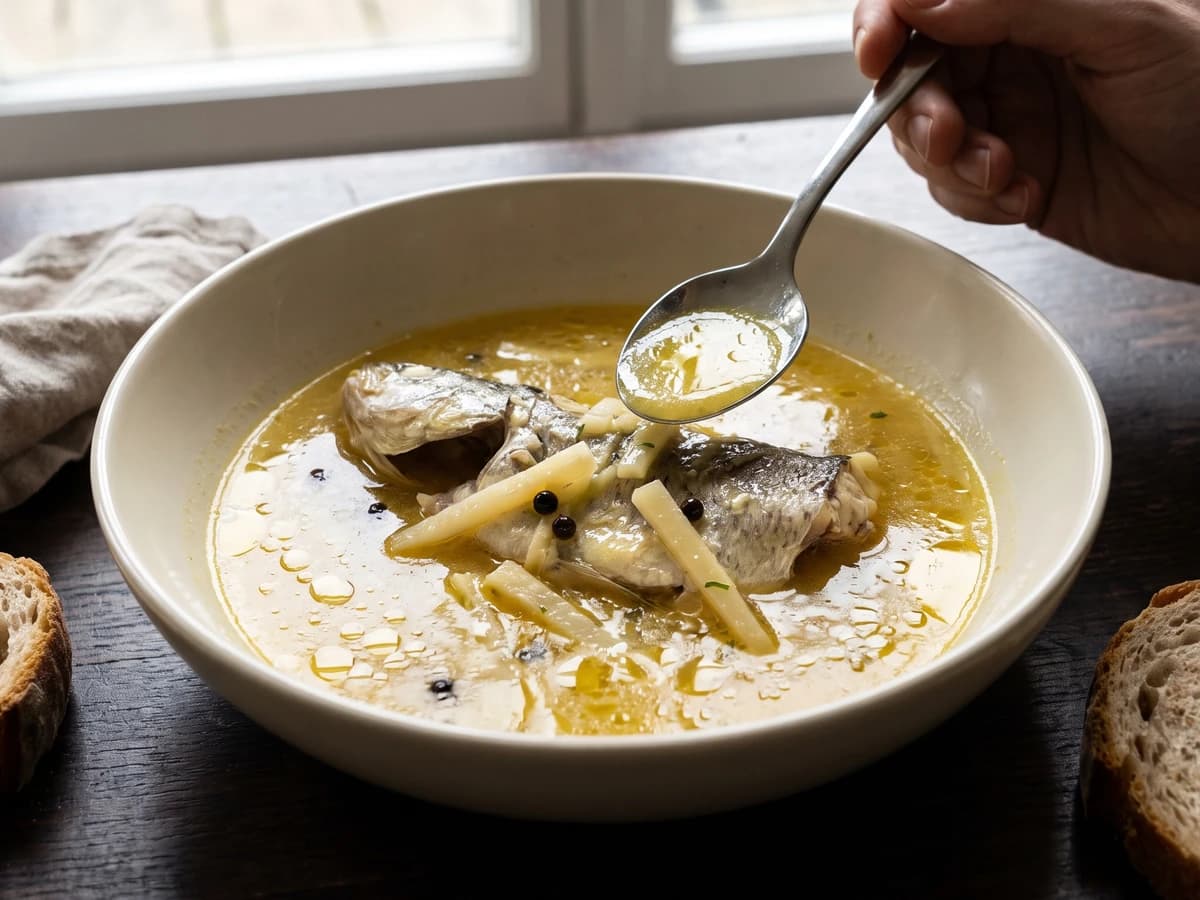
Waterzoi asks fresh, bone-in river fish to thicken its own buttery broth, with parsley root and pepper for company. No flour, no stockpot, just a brisk simmer watched closely.
Chef Juliette
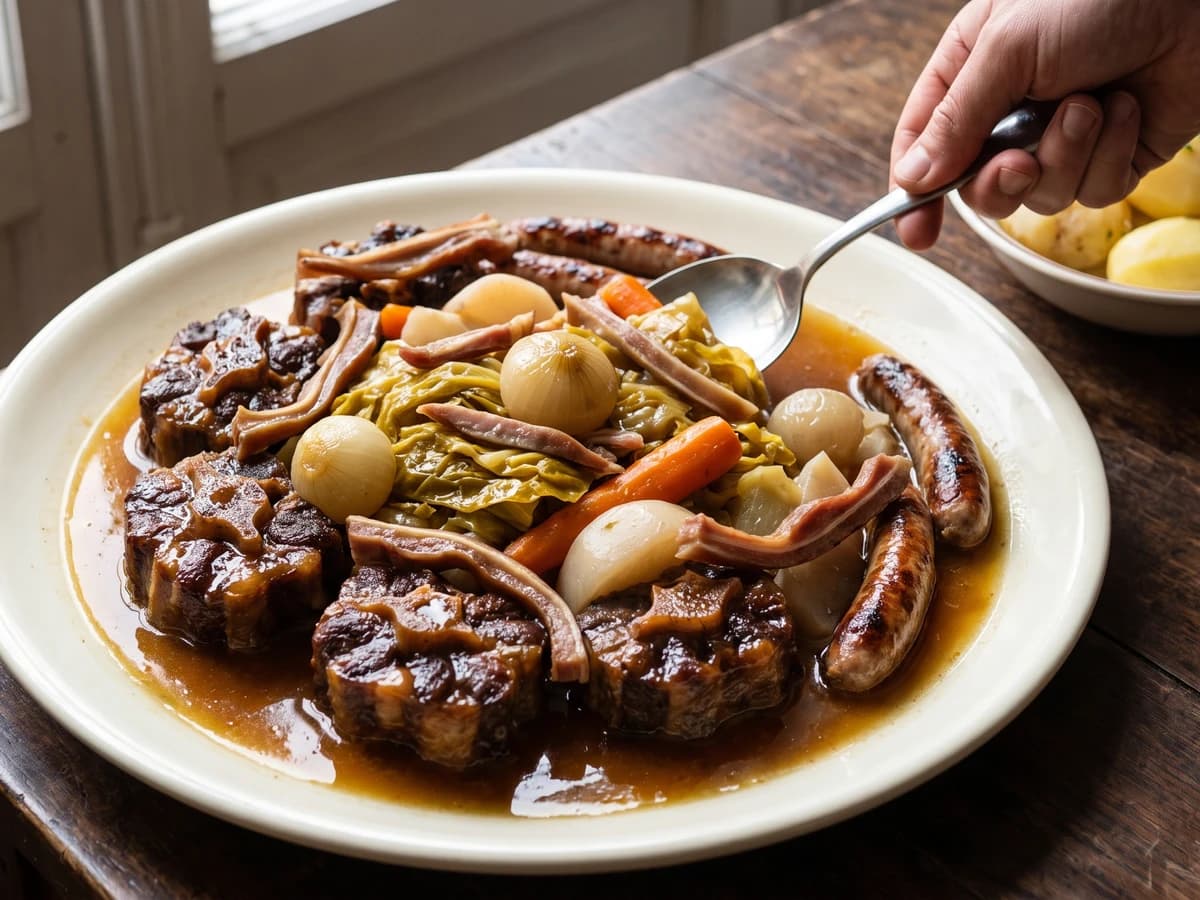
Queue de Bœuf en Hochepot gathers oxtail, pig's trotter and ear, cabbage, roots, and grilled chipolatas around a clear, gelatin-rich broth whose quiet simmer keeps every piece tender and distinct.
Chef Juliette
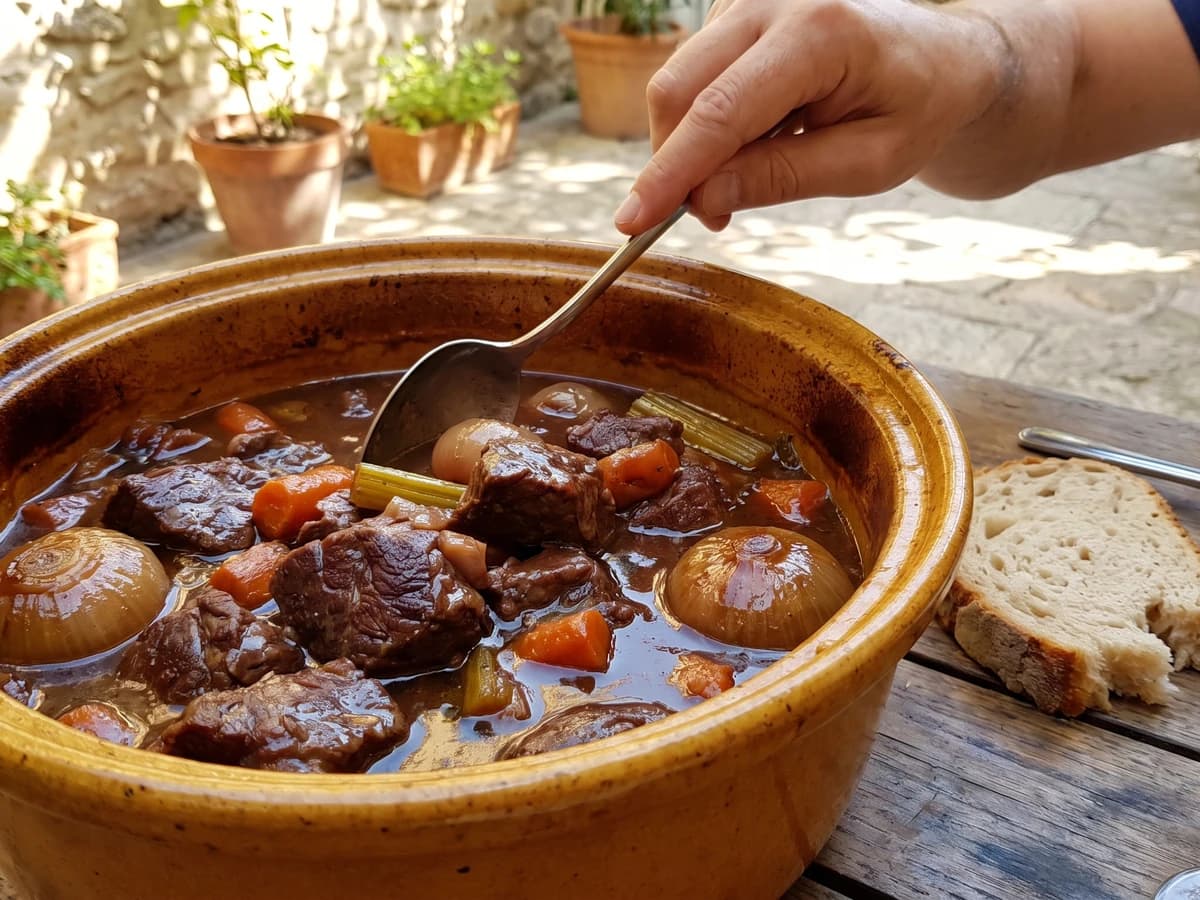
Beef shoulder larded with bacon, sharpened by red wine and vinegar, then sealed with garlic, vegetables, and dry lemon peel until the low oven turns it yielding and the gravy darkly glossy.